


Japanese Kaidan & Urban Legends
Japanese Kaidan & Urban Legends traditions, cosmology, and ancient mythology.
Mythological Figures & Lore
Showing all 18 records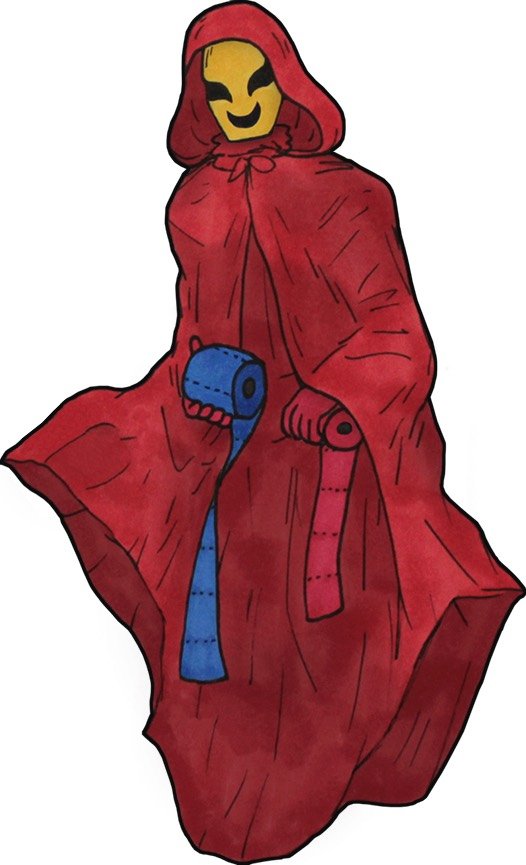 spirit
Aka Manto
A voice in the toilet stall asks, 'Red cloak or blue cloak?' Red brings death drenched in blood, blue death drained of it. The earliest documented outbreak was the Aka Manto panic among Tokyo schoolchildren in February 1939.
 tale
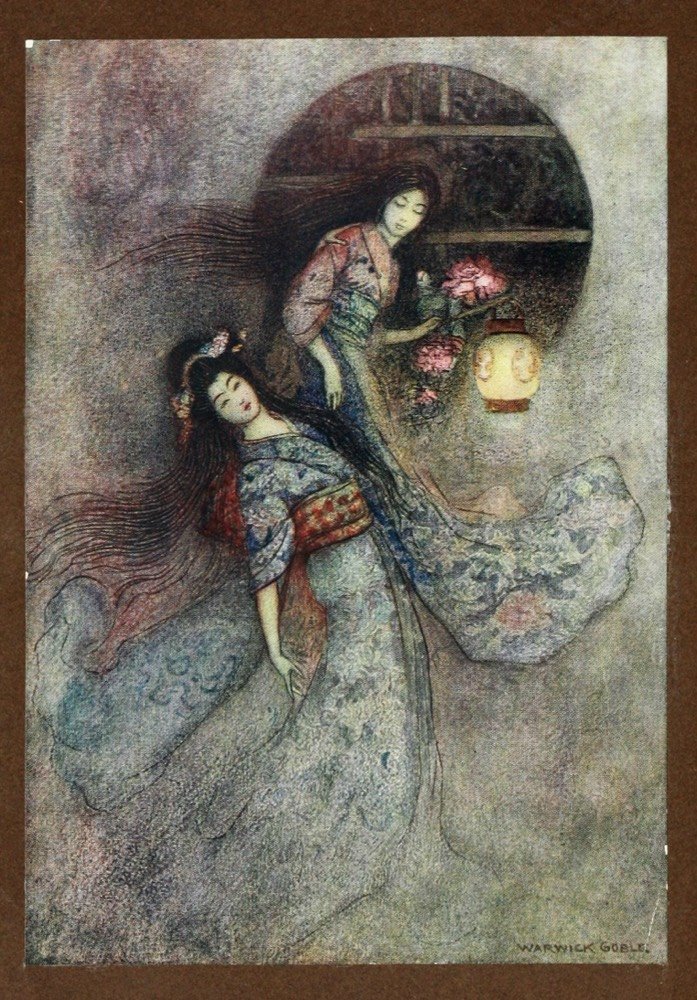
The Peony Lantern
Night after night the ronin Shinzaburo meets his lover Otsuyu, who arrives with a peony lantern, geta clacking. A neighbor peers in and sees a skeleton in his arms. The most romantic of Edo's great ghost tales.
 spirit
Hanako-san of the Toilet
Knock three times on the third stall of the third-floor school toilet and ask, 'Hanako-san, are you there?' A small voice answers, 'I'm here.' The best-known figure of Japanese school ghost lore, a nationwide craze by the 1980s.
 spirit
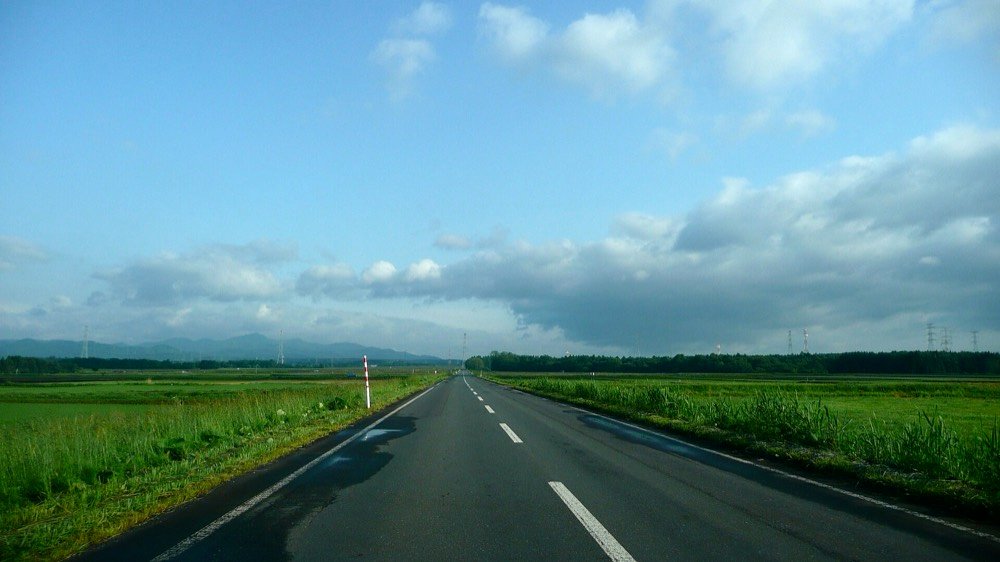
Hasshaku-sama
A woman some eight shaku tall, often in a wide-brimmed hat, voicing an odd 'po po po'; young people she takes a liking to are carried off within days. Posted to 2channel's Sharekowa thread series in August 2008.
 place
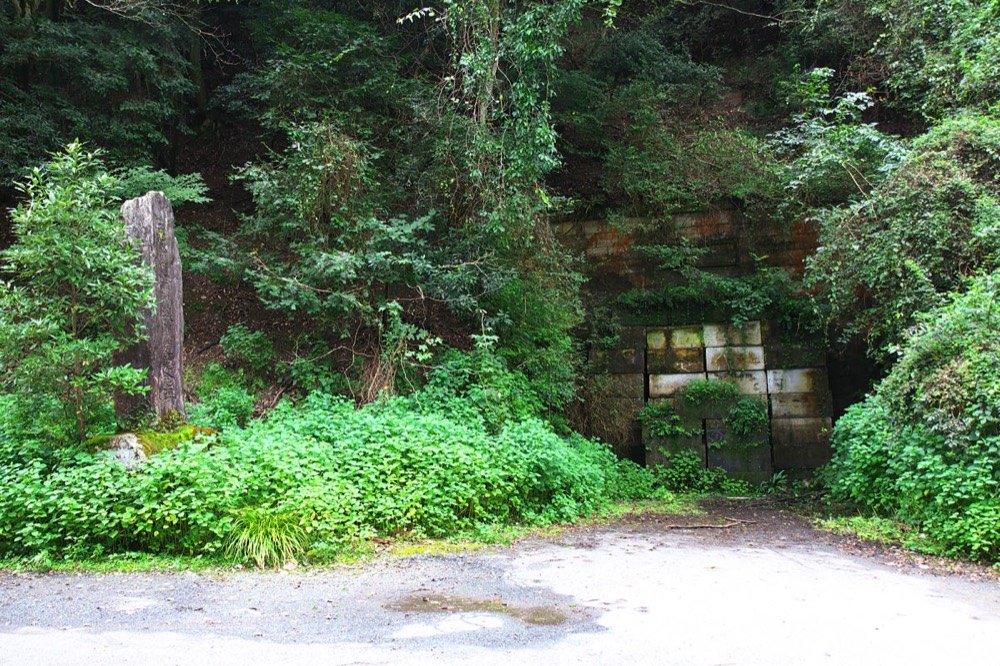
Inunaki Village
Beyond the old tunnel at Inunaki Pass in Fukuoka, legend places a village on no map, its entrance signed 'The constitution of Japan does not apply beyond this point.' The story spread online from the late 1990s.
 creature
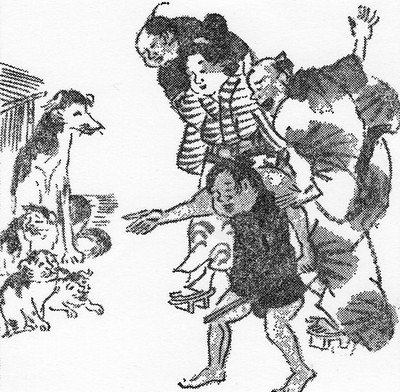
Jinmenken
A stray dog by the garbage turns its head to show a tired middle-aged man's face and says, 'Leave me alone.' A sighting craze that swept Japan via magazines and late-night radio in 1989-1990.
 tale
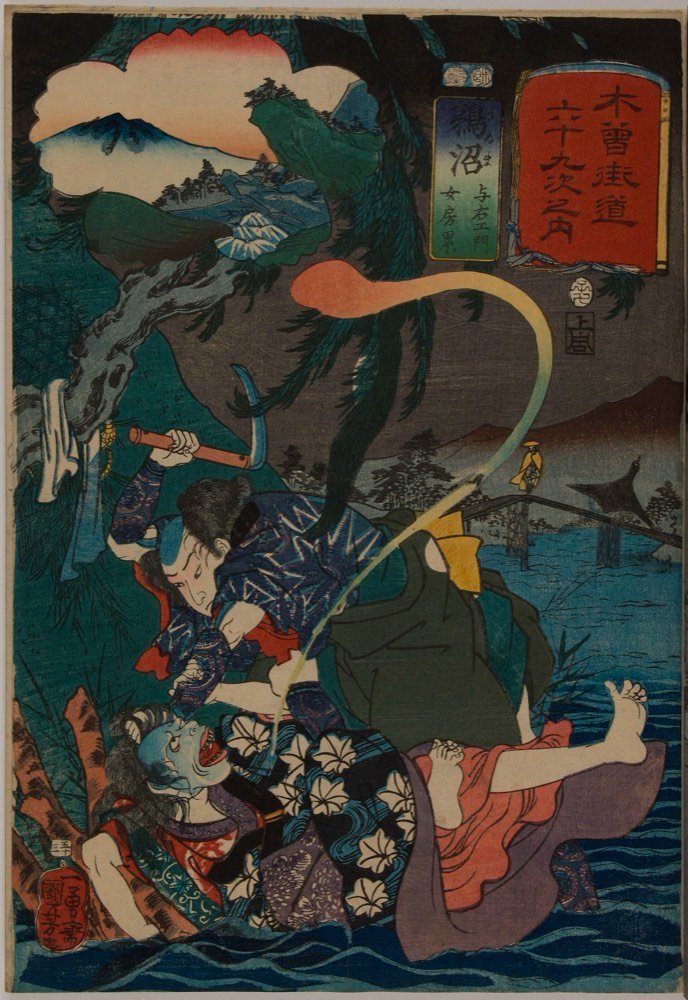
Kasane-ga-fuchi
Kasane, a farm wife of Hanyu village, is drowned by her husband in the Kinugawa river; her ghost possesses a later daughter until the priest Yuten uncovers an identical murder a generation earlier.
 place
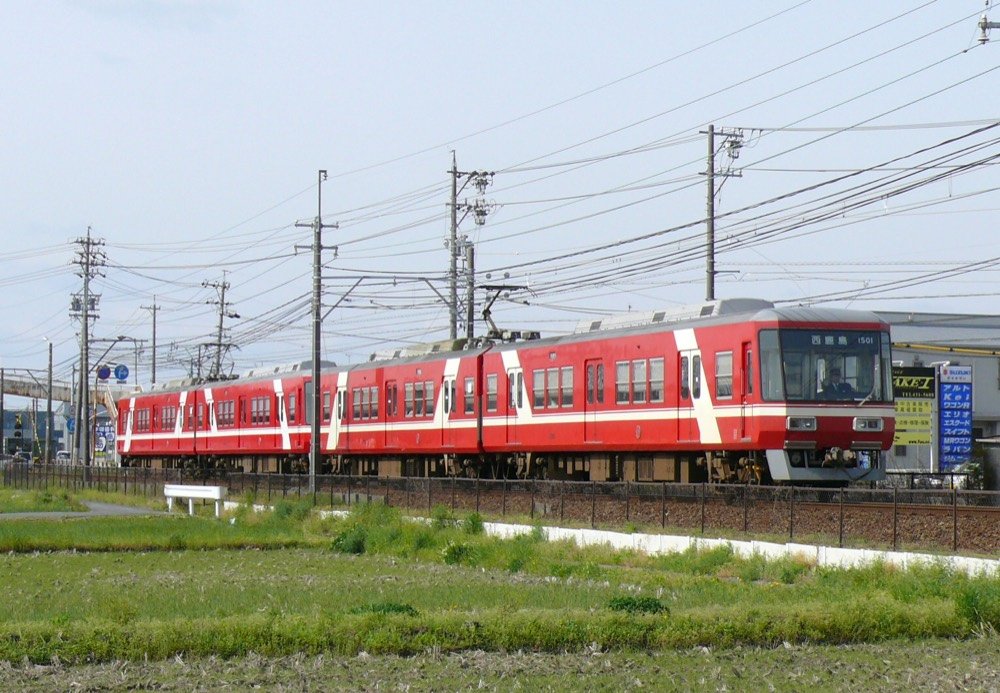
Kisaragi Station
Late on 8 January 2004, a 2channel user posting as Hasumi live-reported that her train from Shin-Hamamatsu had passed every stop and left her at a deserted station called Kisaragi. Her posts ended after she accepted a stranger's ride.
 tale
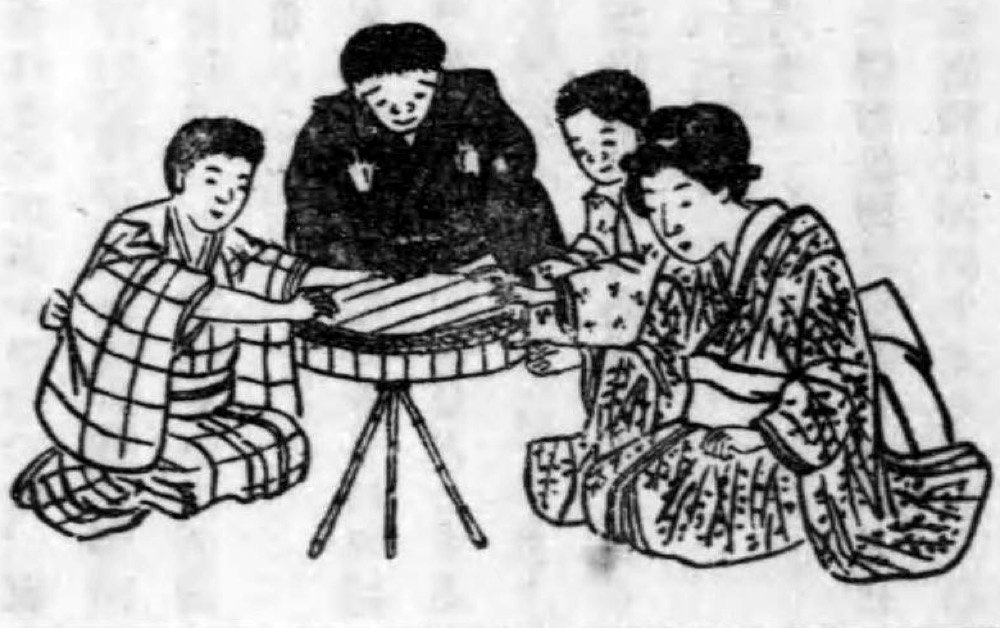
Kokkuri-san
Fingers on a ten-yen coin over a paper of kana and a torii gate, children chant 'Kokkuri-san, please come,' and the coin moves to spell answers. Western table-turning arrived in 1884; the school craze peaked in the 1970s.
 spirit
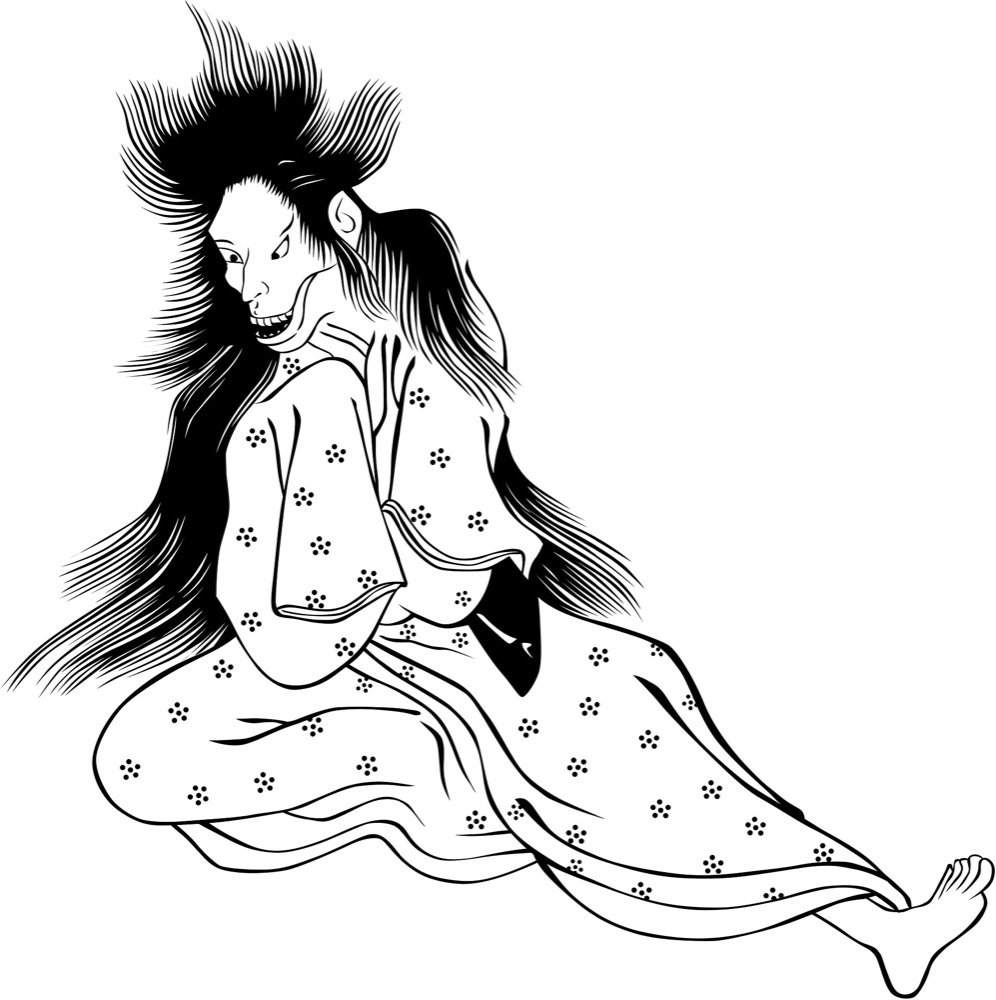
Kuchisake-onna
A masked woman stops schoolchildren to ask 'Am I pretty?', then pulls the mask down on a mouth slit to the ears and asks again. The rumor rose in Gifu in winter 1978 and swept Japan by summer 1979.
 spirit
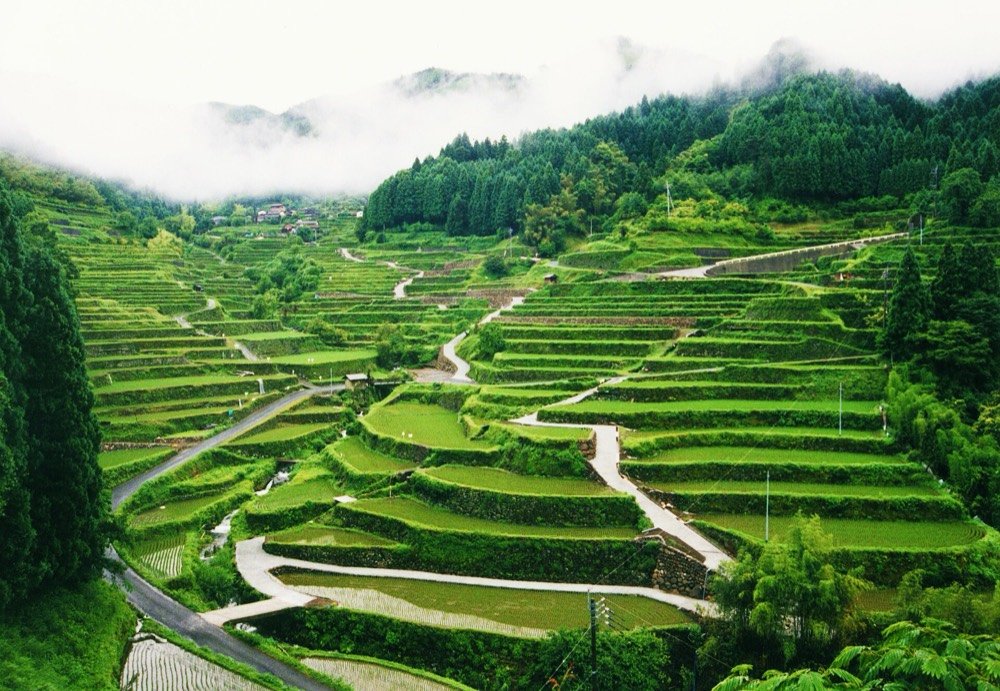
Kunekune
Far off across summer paddies or open water, a slender white figure writhes where there is no wind. Seen from afar it is harmless; whoever makes out what it is goes mad. Spread via 2channel's occult board in summer 2003.
 spirit
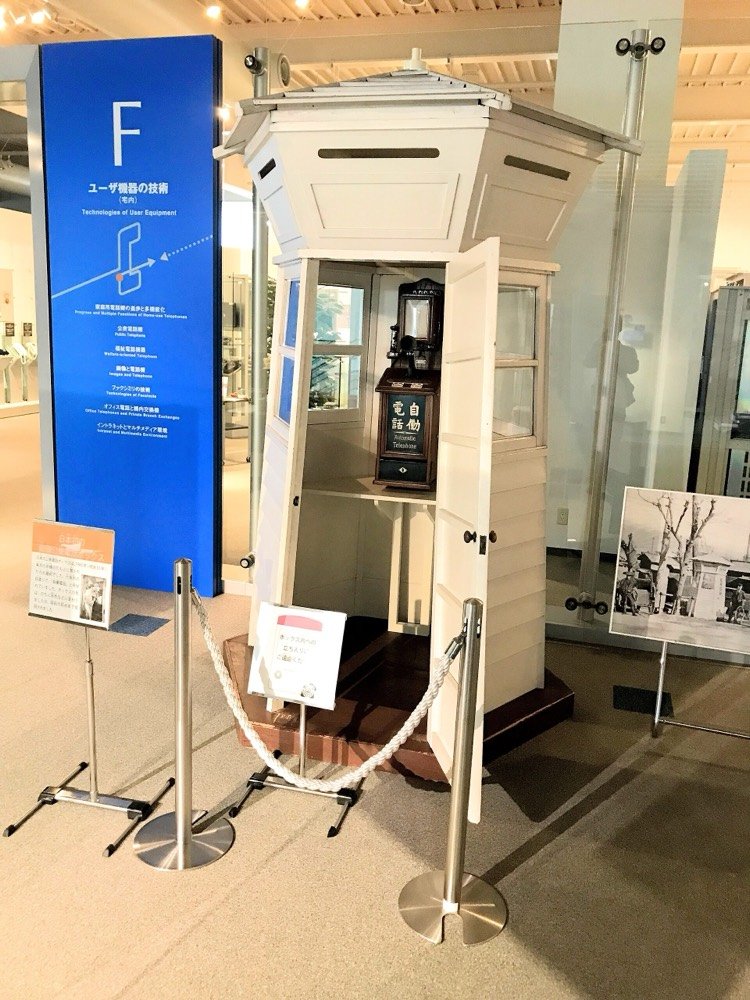
Mary-san's Phone Call
The doll you threw away telephones: 'This is Mary. I'm at the dump now.' Each call she is closer, and the last one says: 'I'm right behind you.' Told among Japanese children since the 1970s-80s.
 hero
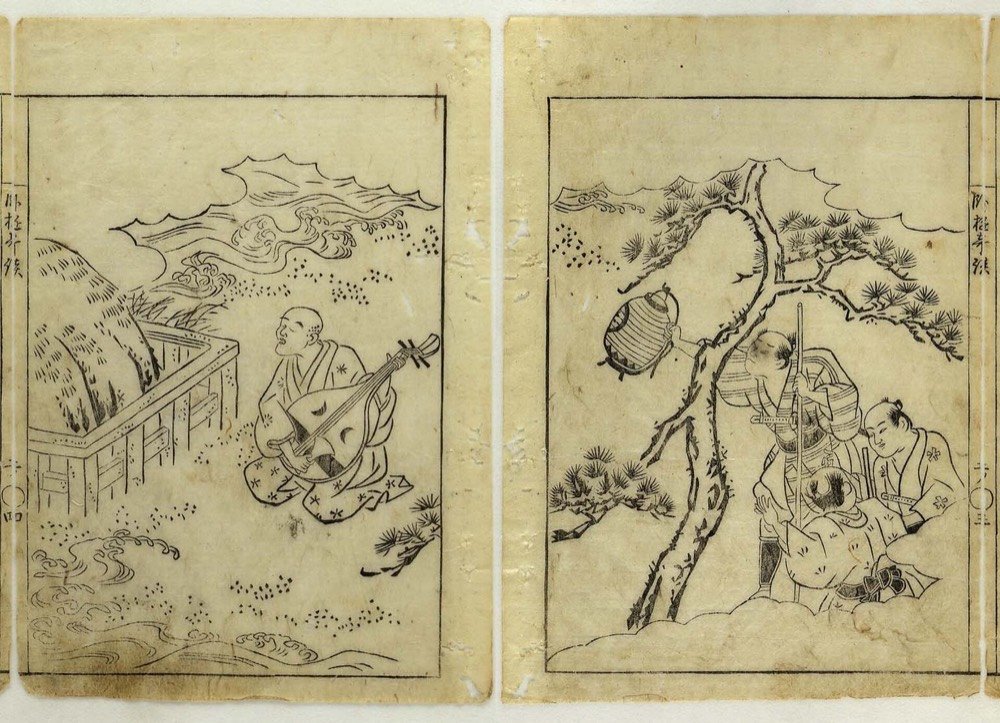
Hoichi the Earless
Hoichi, a blind biwa player at Amidaji temple in Shimonoseki, is led nightly by Heike ghosts to sing their fall. The priest inks sutras over his whole body but misses his ears, and the ghost tears them off.
 tale
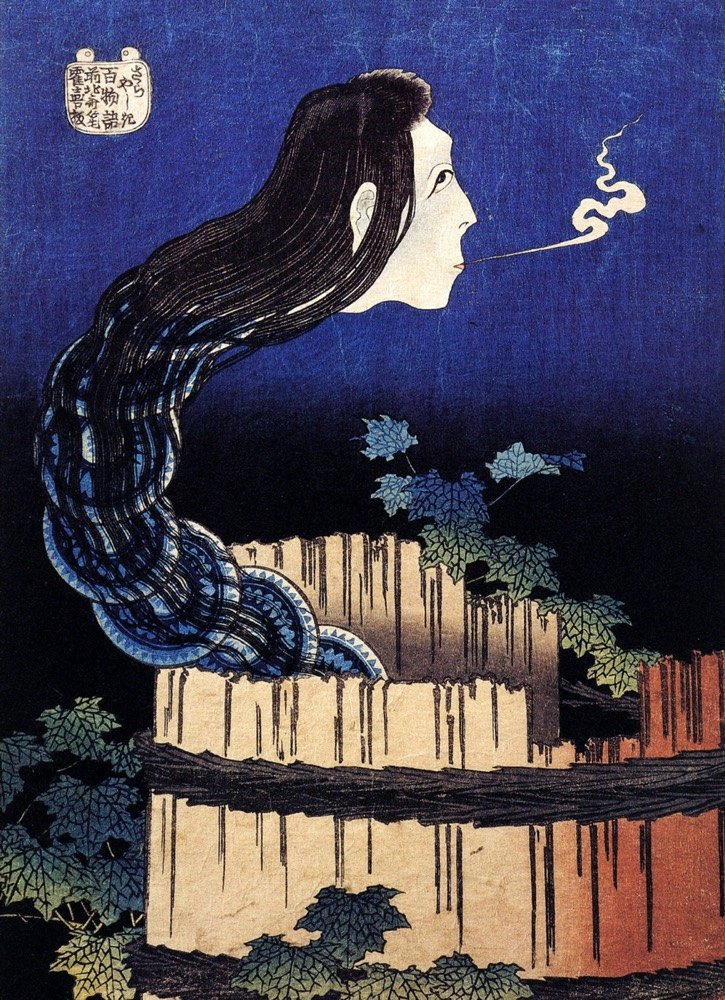
Sarayashiki (Okiku)
The maidservant Okiku, blamed for losing one of ten heirloom plates, is killed and thrown down a well. At night her voice counts from the well: one plate, two plates... breaking into wails at nine.
 spirit
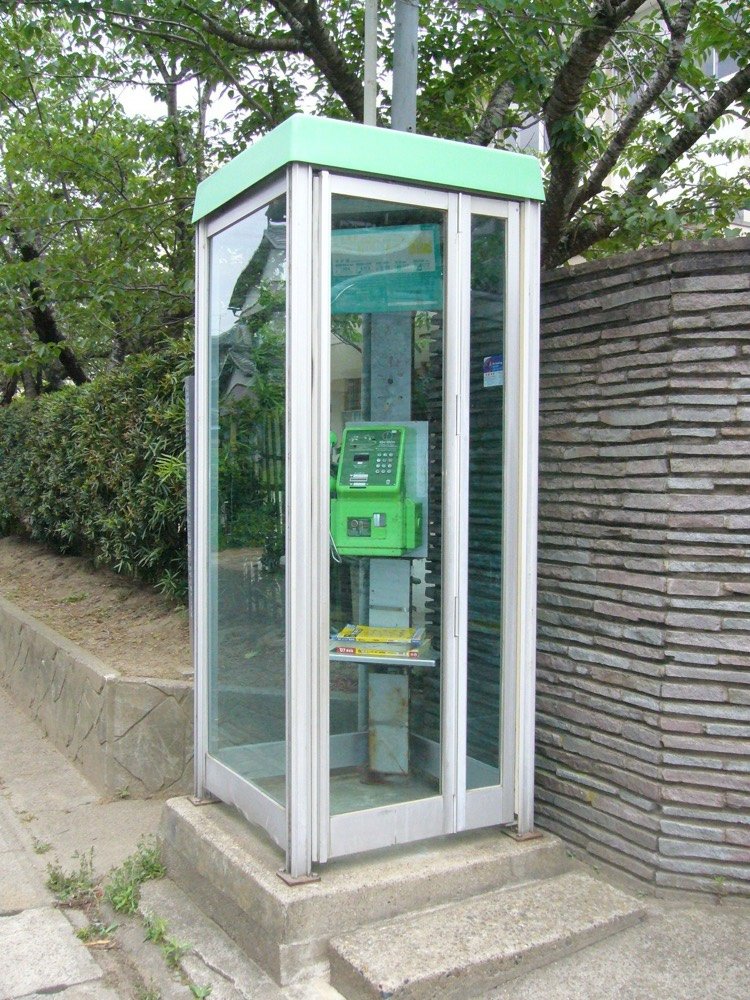
Satoru-kun
Call your own mobile from a pay phone and recite the summons: Satoru-kun phones back ever closer, finally standing behind you to answer any one question. Never turn around, never fail to ask. Spread online in the 2000s.
 place
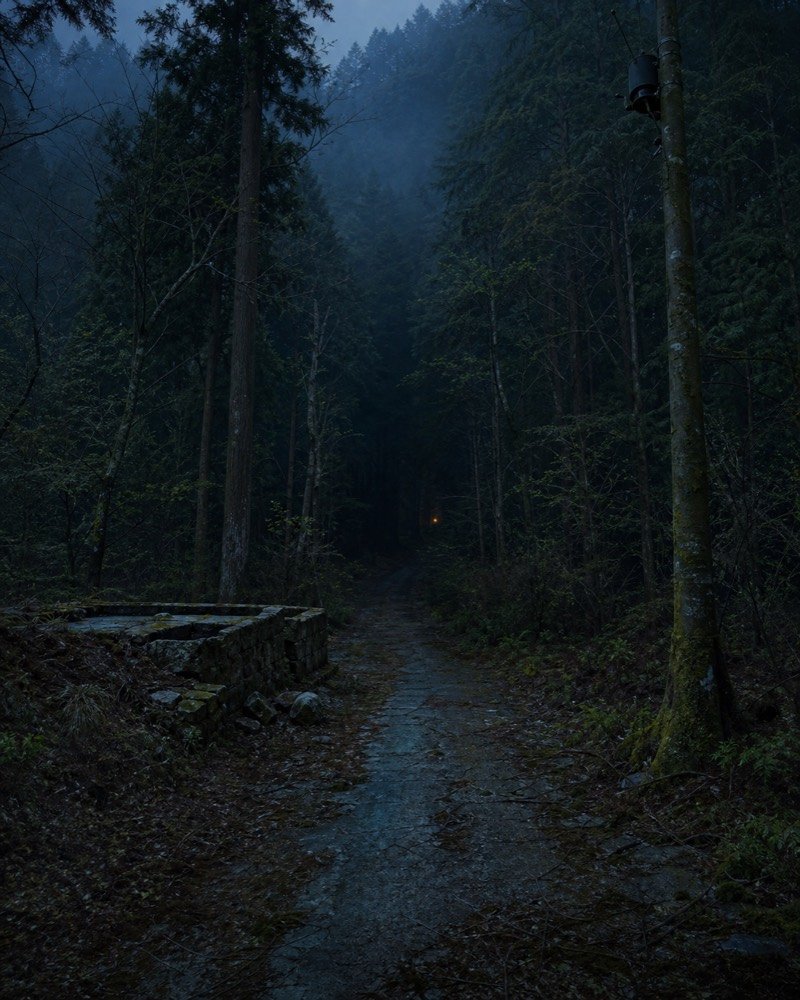
Sugisawa Village
In the mountains of Aomori, the story goes, a villager went mad in the early Showa years and slaughtered Sugisawa entire; the village was struck from maps and records. A TV feature in 2000 made it famous nationwide.
 spirit
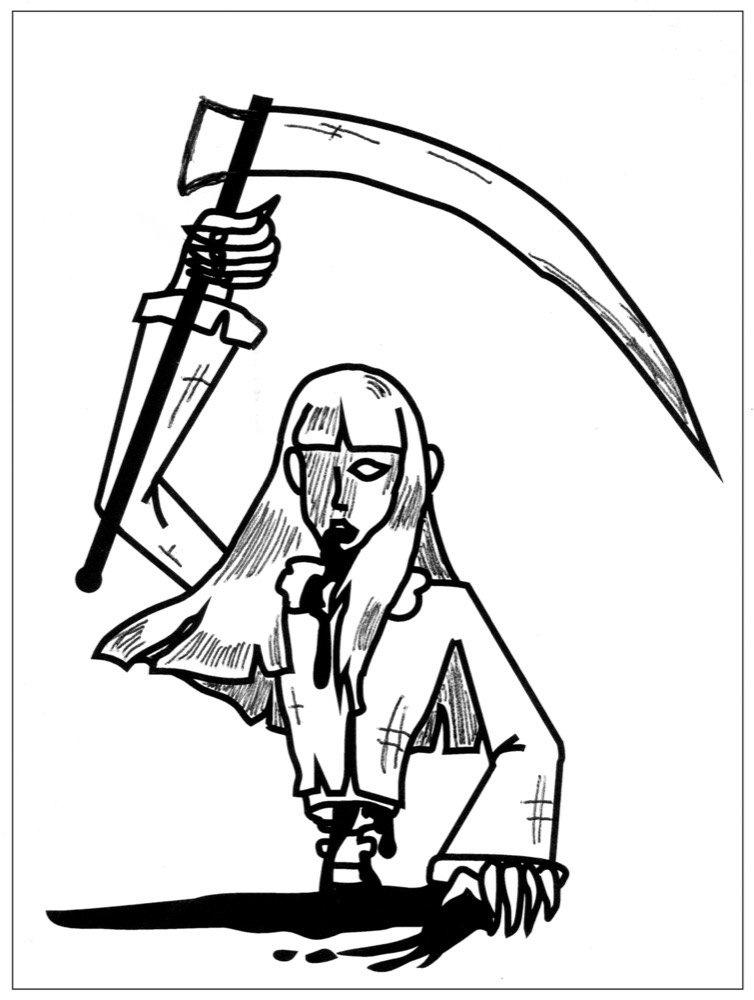
Teke-Teke
A woman cut in half by a train survives as a torso that sprints on its elbows with a 'teke-teke' clatter and slices those it catches in two. A staple of 1980s Japanese school ghost lore.
 tale
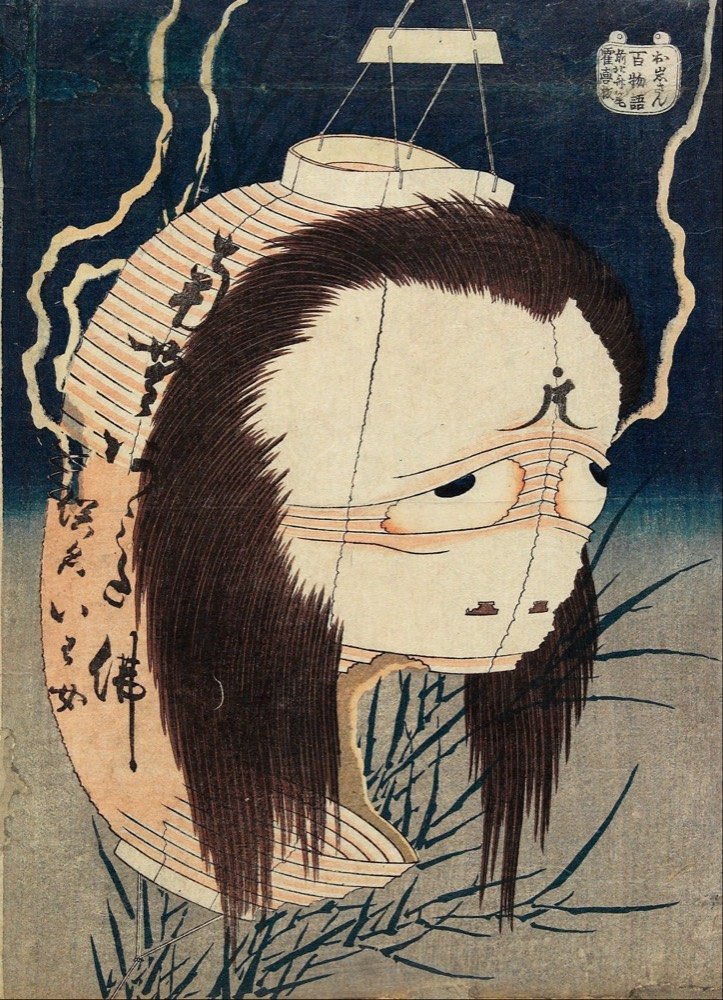
Yotsuya Kaidan (Oiwa)
The ronin Iemon poisons his wife Oiwa; her face hideously disfigured, she dies cursing him and returns as a vengeful ghost. Tsuruya Nanboku's 1825 kabuki play made her the archetype of the Japanese onryo.