

The Museum of Antiquities
Tangible physical artifacts connecting living mythology to ancient archaeology. Curated from world-renowned archaeological institutions with verified provenance, accession records, and primary-source linkage.
Bronze statuette of Herakles
An Italic representation of the hero. The museum places it among statuettes showing Herakles advancing with club and bow; it does not identify a particular labour.
Marble relief fragment with scenes from the Trojan War
This small relief belongs to the tabulae iliacae, which depict Trojan War scenes. The museum identifies a signature by Theodoros on the reverse. It documents Roman engagement with the story, not an event from the war.
Perseus with the Head of Medusa
Canova's sculpture presents Perseus holding Medusa's head. Made in the early nineteenth century, it shows the myth's later artistic reception rather than an ancient depiction.
Statuette of Osiris
This figure shows Osiris in mummy form with the crook and flail of kingship. It provides evidence for his representation in Egyptian religious art, rather than depicting the full account of his death and restoration.
Foundation figure of Ur-Namma holding a basket
The inscription identifies this figure with a temple of Inanna built or restored by Ur-Namma. It shows the ruler, not Inanna, and provides context for her worship rather than illustrating her descent to the underworld.
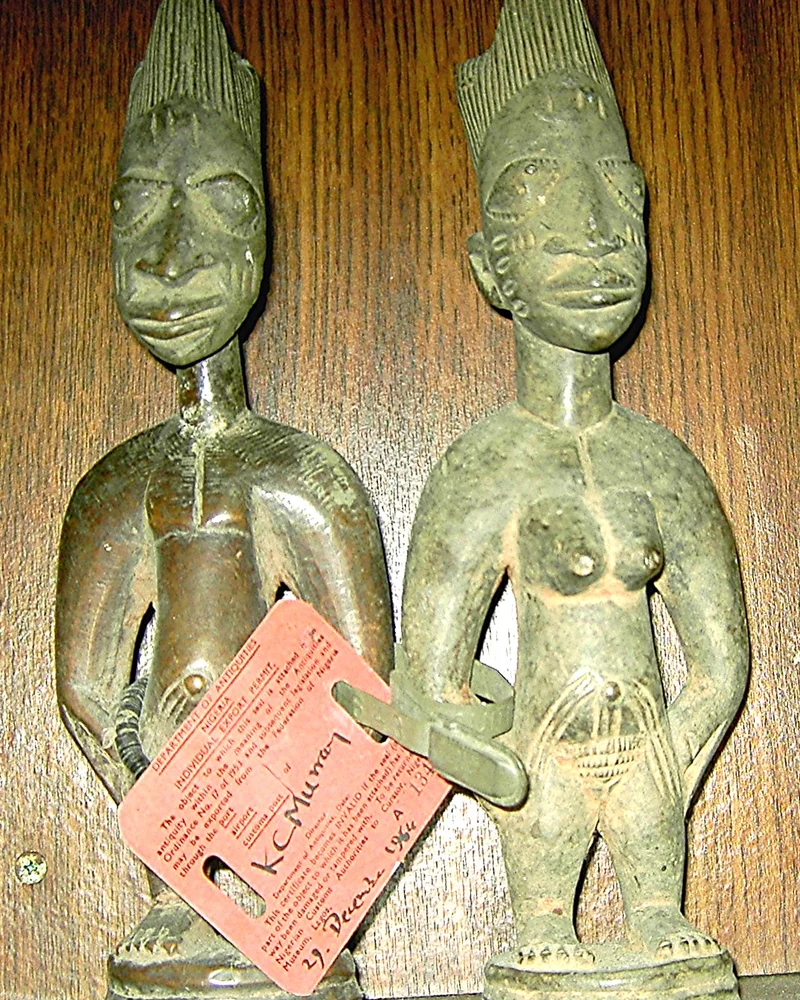
Ibeji Twin Figure
The museum connects ere ibeji figures with care for a deceased twin. This object supports the page’s discussion of remembrance; it is not evidence for the origin episode formerly published here.
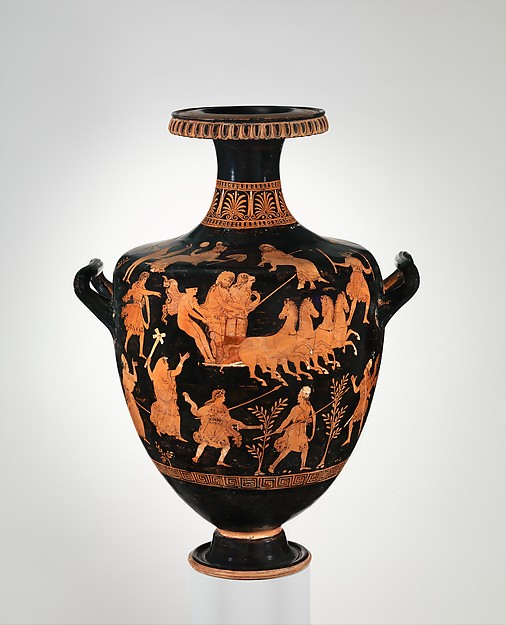
Terracotta hydria (water jar)
A South Italian water jar whose painted frieze the museum tags as showing Hecate alongside Zeus, Athena, Aphrodite, and Eros. It documents her place among the Olympian company in fourth-century Apulian vase painting.
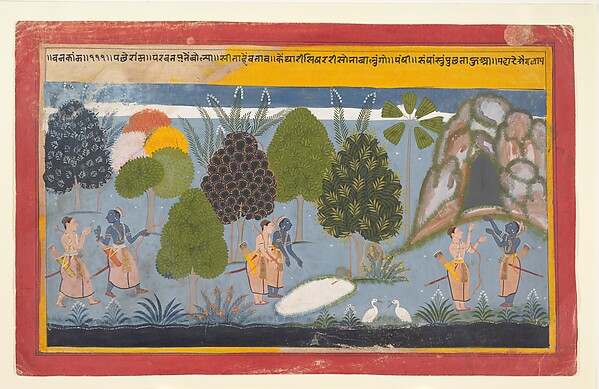
Rama and Lakshmana Search in Vain for Sita: Illustrated folio from a dispersed Ramayana series
A Rajasthani manuscript illustration from a dispersed Ramayana series showing Rama and Lakshmana searching for Sita after her abduction. It reflects the story's reception in Mewar court painting rather than an ancient attestation.
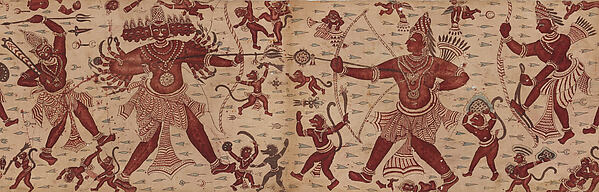
The Combat of Rama and Ravana
A painted and dyed cotton hanging from the Coromandel Coast depicting the battle between Rama and Ravana. The museum's own title names both figures directly.
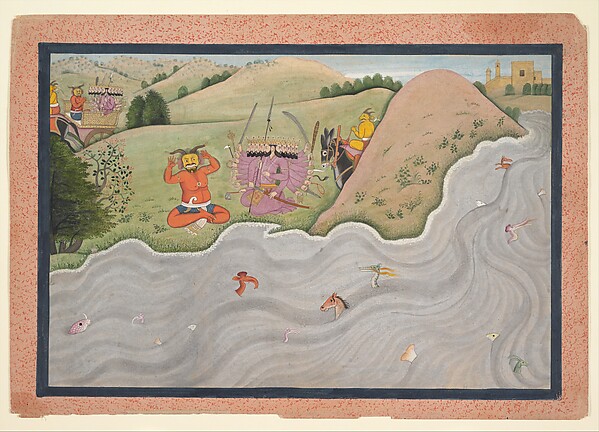
The Demon Marichi Tries to Dissuade Ravana; Illustrated folio from a dispersed Ramayana series
A Kangra-school folio from a dispersed Ramayana series showing the demon Marichi trying to talk Ravana out of his plan. The museum's title names Ravana explicitly as the recipient of the advice.
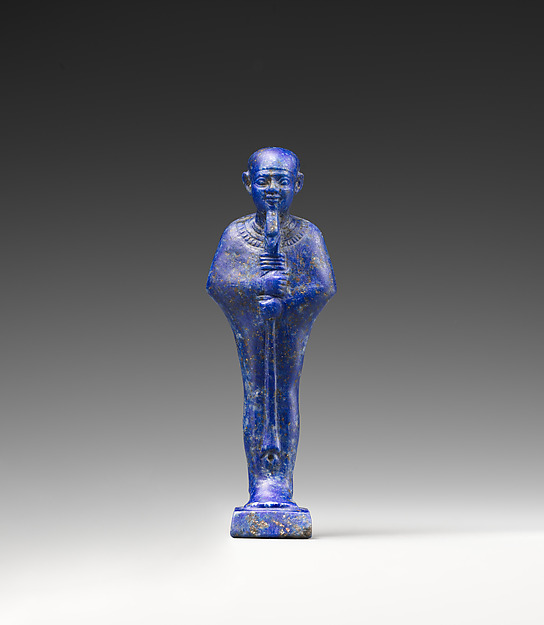
Cult Image of the God Ptah
A lapis lazuli statuette identified by the museum as a cult image of Ptah, shown in his standard mummiform pose holding a staff. Small images like this were placed in shrines or temples as votive offerings.
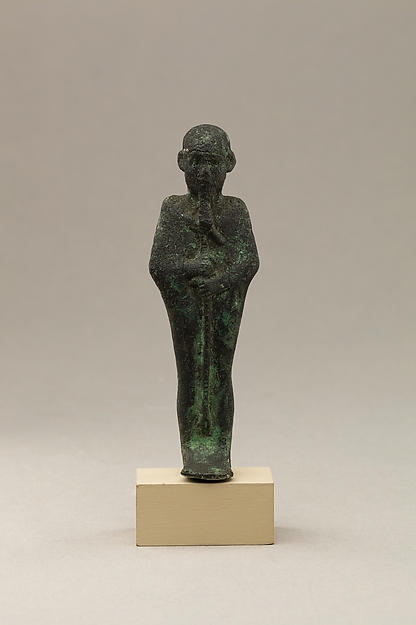
Ptah
A cast metal statuette the museum catalogs simply as Ptah, showing the god's characteristic close-fitting cap and mummiform body. Votive figures of this type were mass-produced for temple donation in the Late Period.
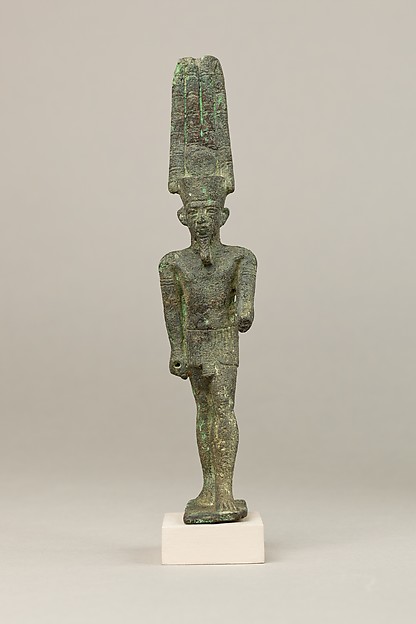
Amun
A cast metal statuette the museum identifies simply as Amun, wearing the god's characteristic tall plumed crown. Figures like this were dedicated at temples as personal acts of devotion.
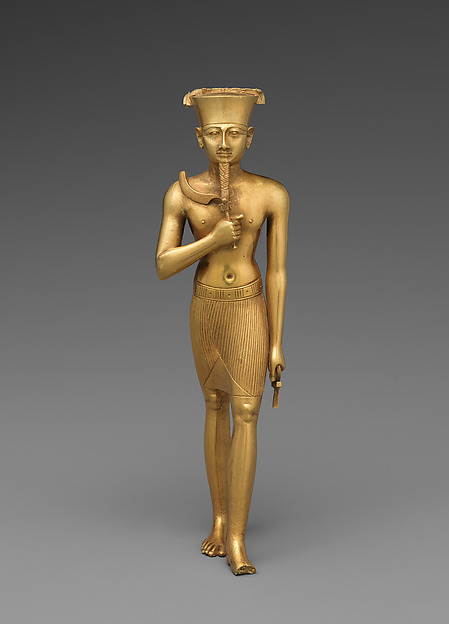
Statuette of Amun
A gold statuette of Amun standing in a striding pose, tagged by the museum as depicting the god by name. Gold examples like this were rarer and costlier votive or funerary offerings than the more common bronze figures.
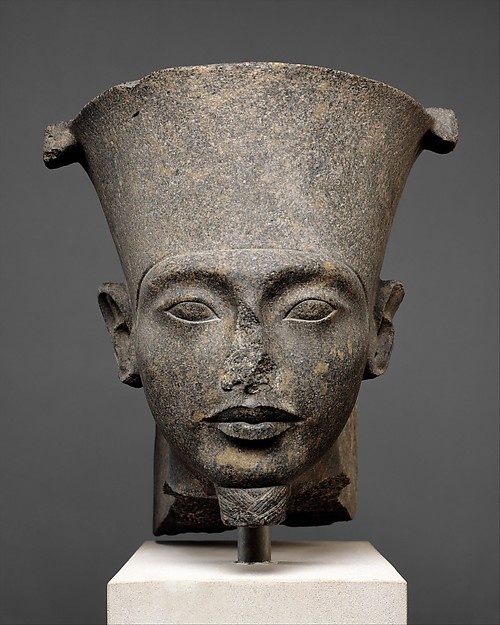
Head of the god Amun
A granodiorite head from a statue of Amun, dated by the museum to the years after the Amarna Period when his cult was restored to prominence. The scale of the stone points to an original temple statue rather than a personal votive.
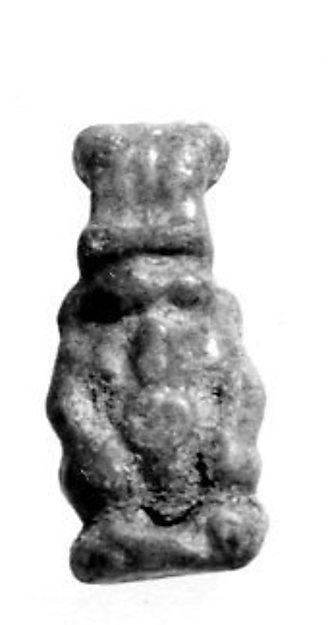
Bes amulet
A faience amulet of the dwarf god Bes, tagged by the museum with his name. Bes amulets were worn for protection, especially of households, women in childbirth, and children.
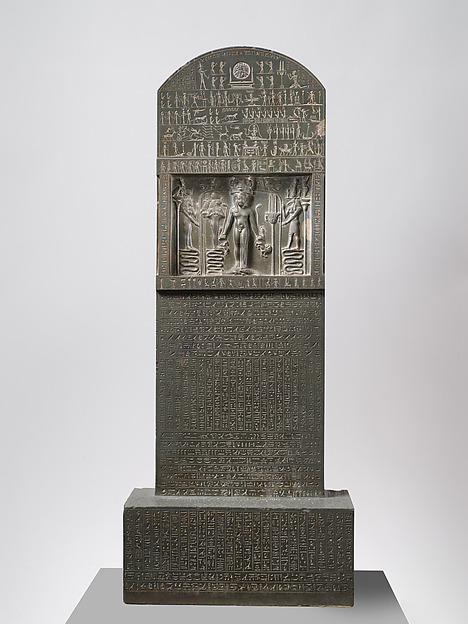
Magical Stela with Horus the Child
The Metternich Stela, a magical healing stela carved with spells against venomous bites; the museum tags it with figures including Bes and Horus the Child, whose image dominates the front. Owners would pour water over the inscribed surface and drink the water as a cure.
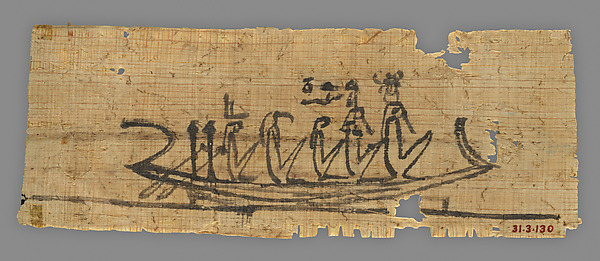
Papyrus fragment with a painting of Khepri, Shu, Tefnut, Thoth, and Isis in a solar boat
A fragment from a funerary papyrus painted with a scene of deities in a solar boat; the museum's own title lists Shu among the figures depicted, alongside Khepri, Tefnut, Thoth, and Isis.
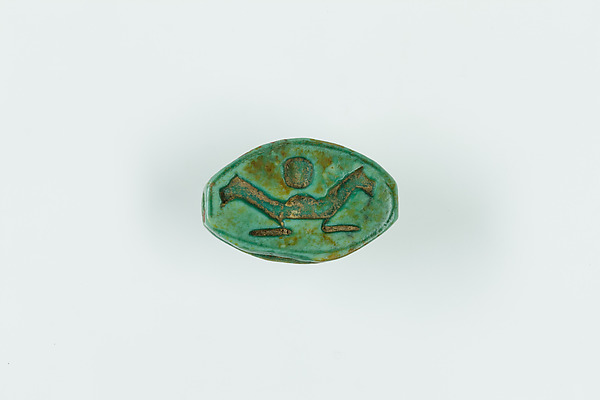
Cowroid with Outward-facing Merged Lions and Sun Disk
A glazed steatite cowroid seal whose inscription and design the museum catalogs as invoking Re, Shu, and Tefnut alongside a sun disk and lions. It served as an amuletic seal rather than a temple image.
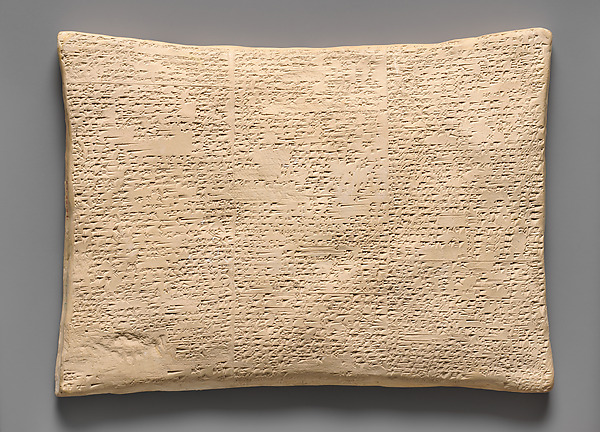
Cast reconstruction of Babylonian Flood Tablet
A nineteenth-century plaster cast reproducing the Babylonian Flood Tablet, the Gilgamesh Epic tablet in which Utnapishtim recounts surviving the great flood. The cast documents how the deciphered tablet circulated among museums after its 1872 translation, not an ancient depiction of Utnapishtim himself.

Terracotta column-krater (vase for mixing wine and water)
An Attic column-krater whose painted scene the museum tags as including Zeus among other figures. Large mixing vessels like this were used at the symposium, the Greek drinking party where mythological imagery was common.

Terracotta Nolan neck-amphora (jar)
An Attic neck-amphora whose painted figure the museum's record tags as Zeus, together with a bow and arrow, an unusual attribute for him. Nolan amphorae like this were a favored shape for single mythological figures in the Classical period.
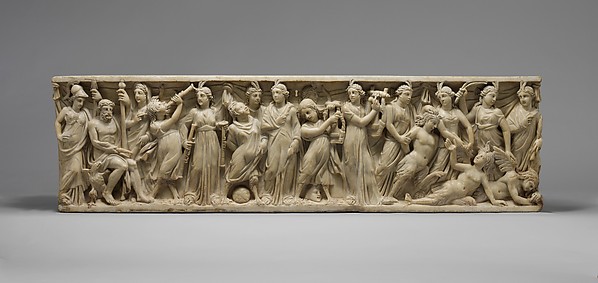
Marble sarcophagus with the contest between the Muses and the Sirens
Fragments of a Roman marble sarcophagus carved with the contest between the Muses and the Sirens; the museum's tags list Hera among the figures on the surrounding frieze. The relief shows how Greek mythological subjects continued to furnish Roman funerary art centuries later.

Bronze statuette of a god, possibly Poseidon
A Hellenistic bronze statuette the museum identifies as possibly depicting Poseidon, shown in a striding pose that would originally have held an attribute such as a trident. The tentative identification reflects how sea deities and river gods shared similar iconography.

Terracotta hydria: kalpis (water jar)
An Attic water jar painted with a scene the museum tags as showing Poseidon among seahorses. The imagery reflects his domain over the sea on a vessel shape used for carrying water.

Terracotta kylix (drinking cup)
An Archaic Attic drinking cup painted with a battle scene the museum tags as including Poseidon among warriors, horses, and an Iliad-related subject. Poseidon's involvement in the Trojan War appears throughout the Iliad.

Bronze statuette of Athena
A Roman bronze statuette the museum catalogs simply as Athena, shown helmeted in her role as goddess of war and wisdom. Small bronzes like this circulated widely as household or votive images across the Roman world.
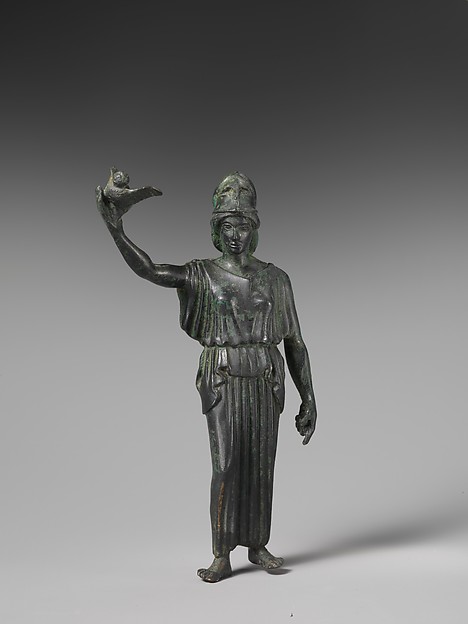
Bronze statuette of Athena flying her owl
A Classical Greek bronze statuette the museum titles as Athena flying her owl, her sacred bird and symbol of wisdom. The pairing of goddess and owl was one of her most recognizable attributes in Greek art.

Terracotta Panathenaic prize amphora (jar)
An Archaic Panathenaic prize amphora, the type of vessel filled with olive oil and awarded to victors at the Panathenaic Games in Athens; the museum tags its painted side as showing Athena, the festival's patron goddess.
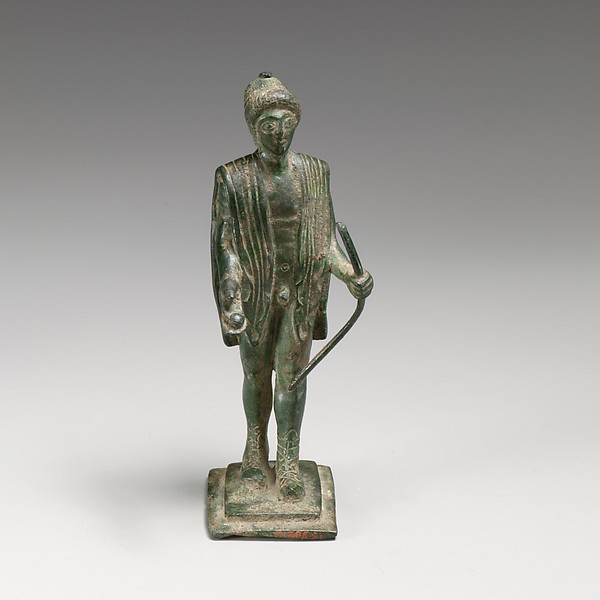
Bronze statuette of Apollo
A Classical Greek bronze statuette the museum catalogs as Apollo. Bronze figurines of the god were common votive gifts at his sanctuaries.
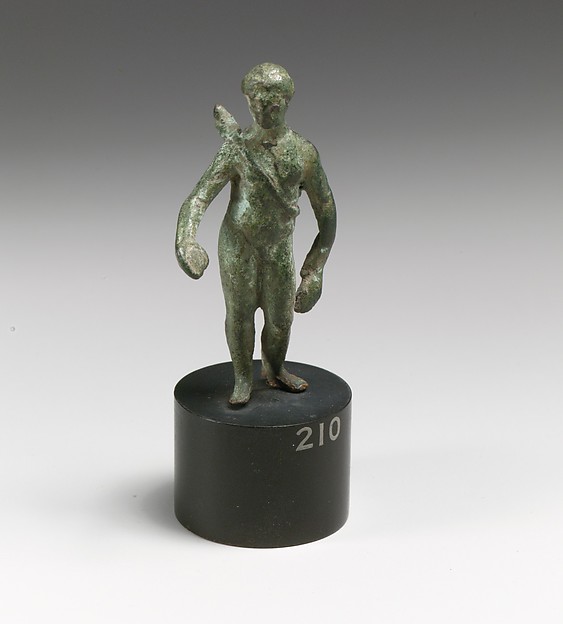
Bronze statuette of Apollo
A Roman bronze statuette the museum titles as Apollo with a quiver, referencing his role as archer god. Roman households and shrines used small bronzes like this for private devotion.
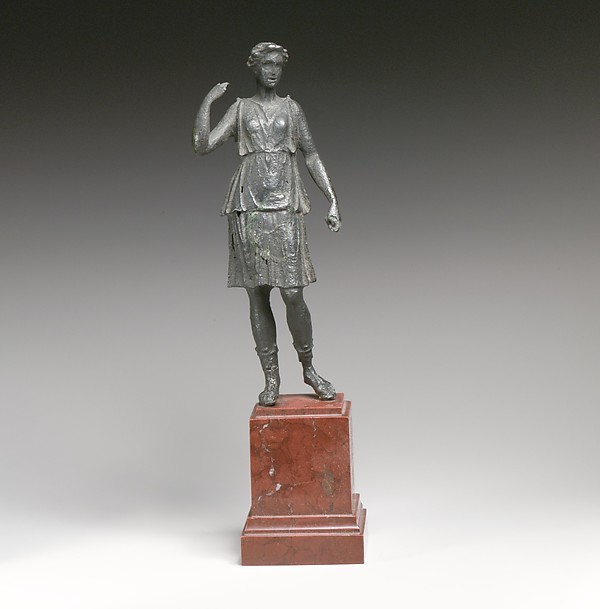
Bronze statuette of Artemis
A Hellenistic bronze statuette the museum catalogs as Artemis, goddess of the hunt and wilderness. Figures of this type were common temple and household dedications.
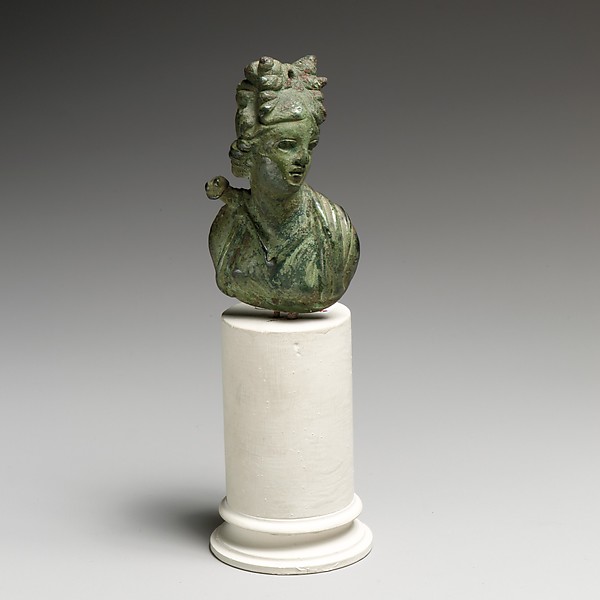
Bronze bust of Artemis
A Roman bronze bust the museum identifies as Artemis. Portrait-style busts of deities were used as decorative fittings as well as objects of devotion.

Marble statuette of Aphrodite
A Hellenistic Greek marble statuette the museum catalogs as Aphrodite. Small-scale marble statuettes of the goddess were popular for private display in the Hellenistic period.

Marble statue of a crouching Aphrodite
A Roman marble statue the museum identifies as a crouching Aphrodite, a popular type derived from a lost Hellenistic original showing the goddess bathing. The crouching pose was copied widely across the Roman world.
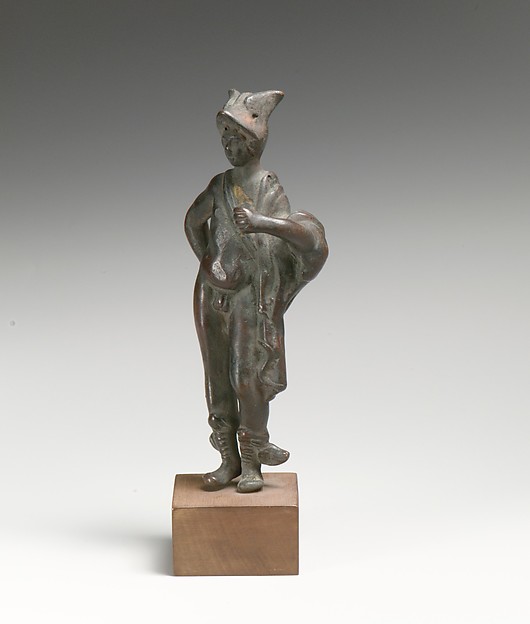
Bronze statuette of Hermes
A bronze statuette the museum catalogs as Hermes, messenger god and patron of travelers and trade. Its Greek-or-Roman dating reflects how the type continued across the transition between the two cultures.

Terracotta jug in the form of Dionysos
A terracotta jug shaped as the head of Dionysos, tagged by the museum with his name. Vessels formed as deity heads were a specialty of Hellenistic pottery workshops.

Terracotta column-krater (bowl for mixing wine and water)
An Archaic Attic mixing bowl painted with a scene the museum tags as showing Dionysos with maenads and satyrs, his usual retinue of ecstatic followers. Vessels of this shape mixed wine and water at the symposium, fitting for imagery of the wine god.

Ten marble fragments of the Great Eleusinian Relief
Fragments of the Great Eleusinian Relief, a Roman marble copy of a lost Greek original; the museum's tags identify Demeter and Persephone among the figures. The relief reflects imagery from the Eleusinian Mysteries, the cult centered on Demeter and her daughter.

Bronze statuette of Jupiter Capitolinus
A Roman bronze statuette the museum titles as Jupiter Capitolinus, referencing the cult image of Jupiter enshrined on Rome's Capitoline Hill. Statuettes of this type reproduced the pose of the great temple statue for private worship.
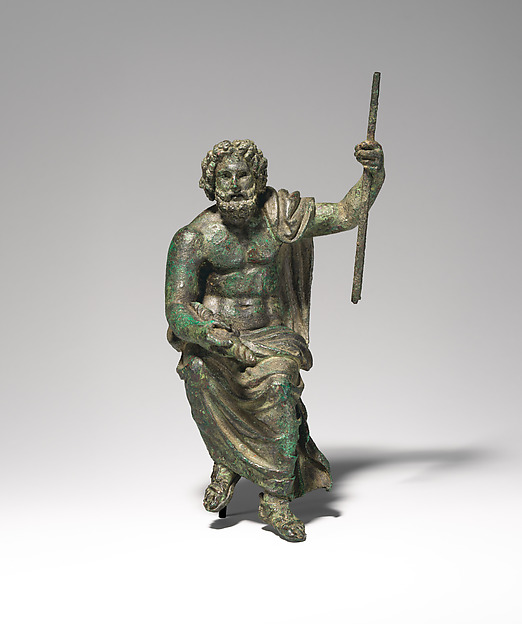
Bronze statuette of Jupiter Capitolinus
A second Roman bronze statuette the museum titles as Jupiter Capitolinus, showing the same enthroned type associated with the god's Capitoline cult statue.

Bronze statuette of Neptune
A Roman bronze statuette the museum catalogs as Neptune, god of the sea. The figure's now-missing attribute would originally have been a trident.
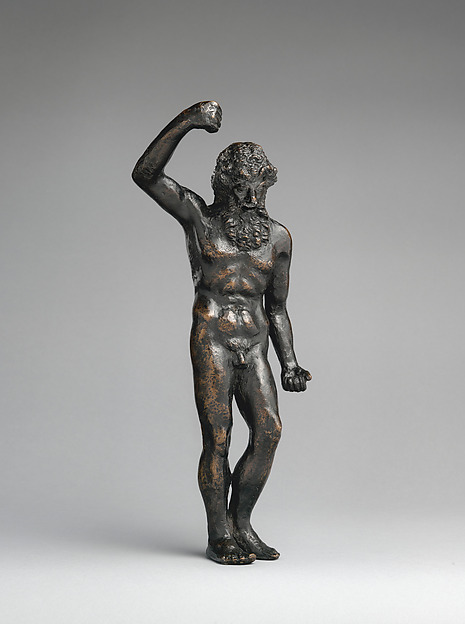
Neptune
A mid-sixteenth-century Italian bronze statuette by Severo Calzetta da Ravenna depicting Neptune. It reflects the Renaissance revival of classical sea-god imagery in collectors' bronzes, not an ancient cult image.
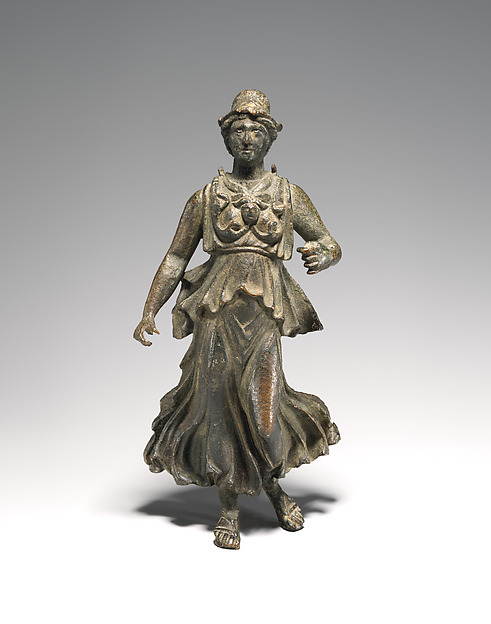
Bronze statuette of Minerva
A Roman bronze statuette the museum catalogs as Minerva, the Roman goddess of war and wisdom equated with Athena. Small bronzes of this kind were common household devotional objects.
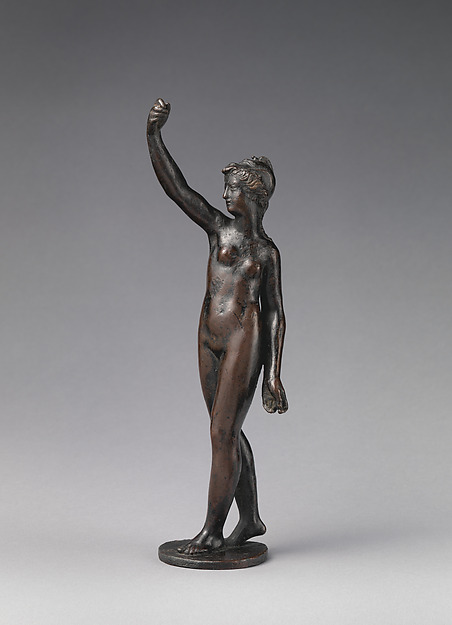
Minerva
A sixteenth-century Italian bronze statuette attributed to Benvenuto Cellini depicting Minerva. It belongs to the Renaissance fashion for small classical-style bronzes made for collectors rather than an ancient cult object.

Marble statue of Aphrodite, the so-called Venus Genetrix
A Roman marble statue of the so-called Venus Genetrix type, named by the museum in its own title. The type descends from a cult statue associated with Venus as ancestress of the Julian imperial line.
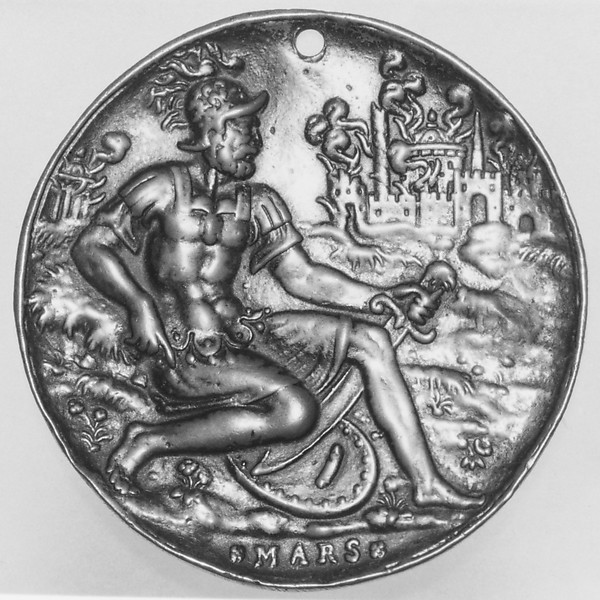
Mars
A bronze plaquette of about 1610 by the French goldsmith François Briot depicting Mars with shield and sword, tagged by the museum with the god's name. Plaquettes like this were decorative collectors' objects modeled on classical armed figures.

Bronze statuette of Isis with infant Horus
A bronze statuette showing Isis nursing the infant Horus, a widely produced devotional type from the Late Period onward. The museum's own title names both figures.
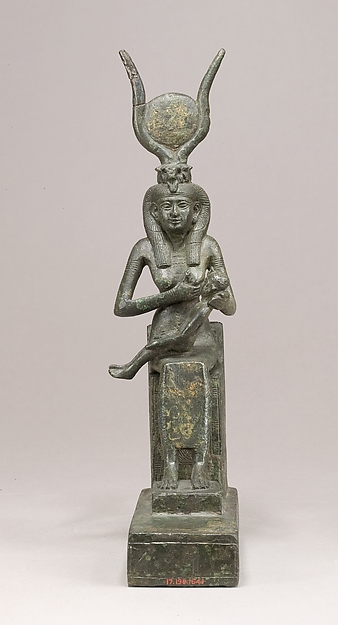
Isis nursing Horus
A second bronze figure of Isis nursing Horus, one of the most common devotional images in later Egyptian religion. Such figures were placed in shrines by worshippers seeking the goddess's maternal protection.

Horus falcon
A faience amulet in the form of the Horus falcon wearing the double crown, tagged by the museum with his name. Falcon amulets invoked Horus's protection and his association with kingship.
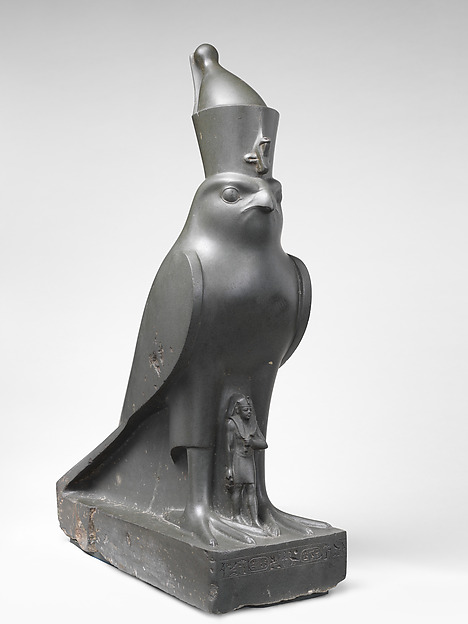
Statue of Horus as a falcon protecting King Nectanebo II
A stone statue showing Horus as a falcon protecting King Nectanebo II, who stands beneath the god's wings. The museum's title identifies both the god and the specific king he shelters.
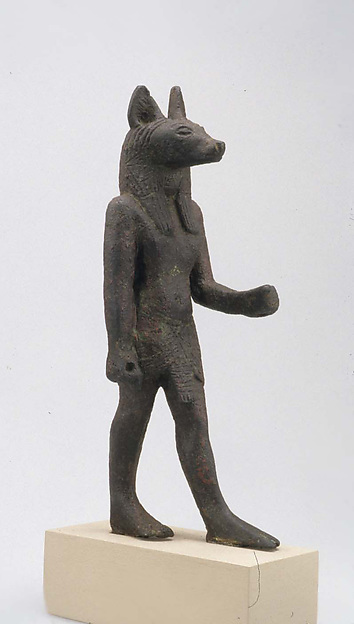
Anubis
A cast metal statuette the museum catalogs simply as Anubis, god of embalming and the dead, in his jackal-headed form. Such figures were dedicated by worshippers concerned with proper burial and the afterlife.
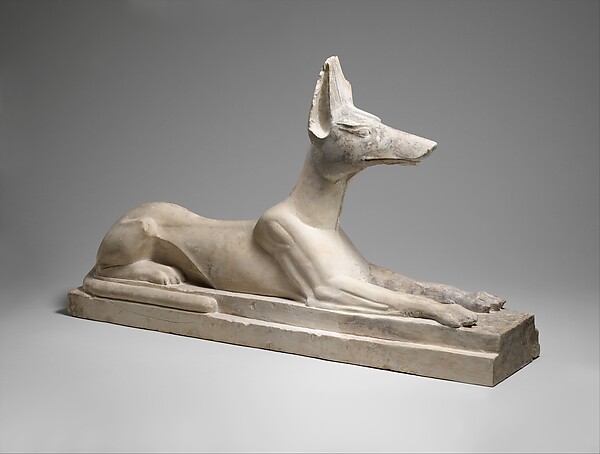
Statue of Anubis as a recumbent canid
A limestone statue of Anubis as a recumbent canid, originally painted black, the color associated with fertile Nile silt and rebirth. Statues of this type guarded tombs and funerary equipment.

Striding Thoth
A faience statuette the museum titles as Striding Thoth, shown in his ibis-headed form as god of writing and knowledge. Faience figures of Thoth were common votive gifts at his cult centers.

Ibis-headed god, Thoth
A bronze statuette the museum identifies as the ibis-headed god Thoth. Thoth's ibis form referenced the bird's association with wisdom and the recording of knowledge.
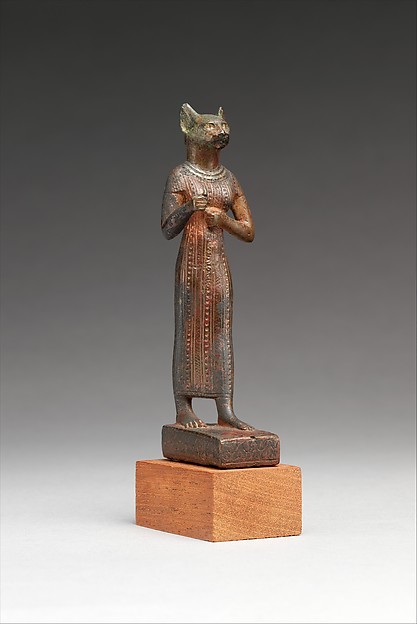
Bastet
A bronze figure of Bastet inlaid with precious metal, catalogued by the museum under her name. Cat-headed images of Bastet were popular votive and household objects associating her with protection and fertility.

Bastet
A cast metal figure of Bastet, one of many produced in the Late and Ptolemaic Periods when her cult at Bubastis drew large numbers of pilgrims and votive offerings.
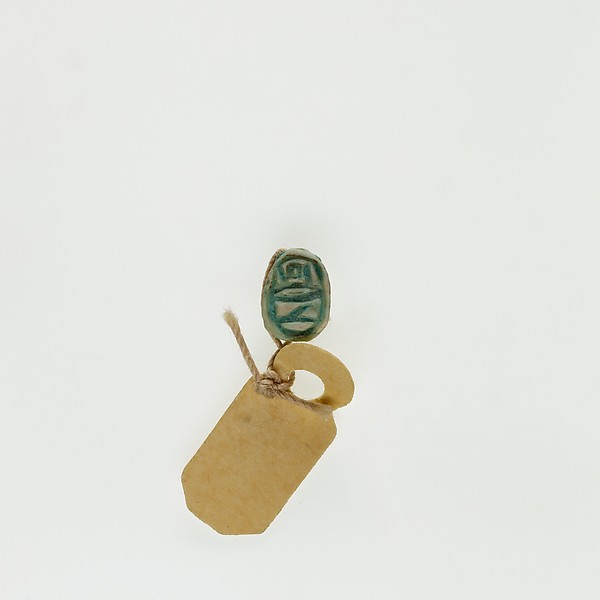
Scarab Inscribed with a Blessing Related to Re
A green glazed steatite scarab inscribed with a blessing formula invoking Re. Scarabs like this were worn as amulets or used as seals, carrying the god's name rather than a figural image of him.

Lion-Headed Goddess
A cast metal statuette of a lion-headed goddess the museum tags as Sekhmet, the fierce protector deity associated with war and healing. Bronze figures of Sekhmet were dedicated by worshippers seeking her dual powers of destruction and protection.
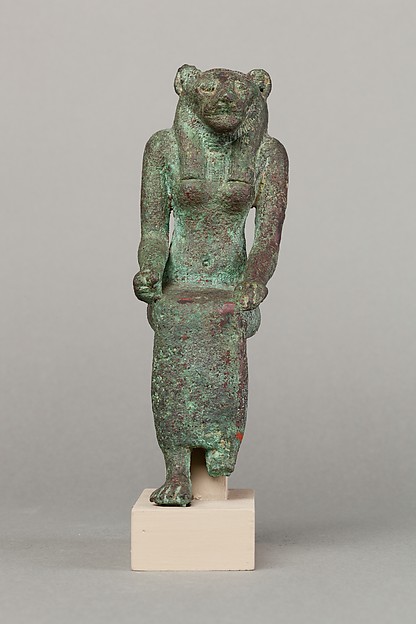
Lion-headed goddess
A second lion-headed goddess statuette tagged by the museum as Sekhmet, part of the large body of Late Period bronze votive figures dedicated to her.

Menat counterpoise with figures of Hathor as a woman and a cow
A menat counterpoise, the weight balancing a beaded ceremonial necklace used in Hathor's cult, cast with images of the goddess as both a woman and a cow. The museum's own title names Hathor directly.

Bronze statuette of Osiris
A second bronze statuette of Osiris in his mummiform pose, holding the crook and flail. Figures like this were among the most commonly dedicated votive bronzes in the Late Period, reflecting Osiris's central role in beliefs about the afterlife.

Vishnu
A gilded copper-alloy figure of Vishnu from Nepal's Kathmandu Valley, dated by inscription to 1105 CE. The museum catalogs it simply as Vishnu, standing in his four-armed form holding his usual attributes.

Standing Vishnu
A Chola-period bronze of Vishnu standing in a formal frontal pose, cast in South India for temple processional use. Chola bronzes of this kind were carried in festival processions rather than kept fixed in a shrine.
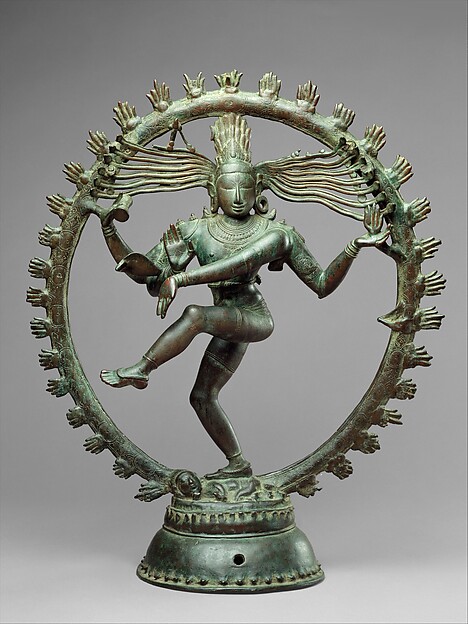
Shiva as Lord of Dance (Nataraja)
A Chola bronze of Shiva as Nataraja, Lord of the Dance, encircled by a ring of flame. This is one of the most celebrated forms of Hindu bronze sculpture, cast for temple processions in South India.

Shiva Seated with Uma (Umamaheshvara)
A Pala-period bronze showing Shiva seated with his consort Uma, a form known as Umamaheshvara. It reflects the eastern Indian bronze-casting tradition centered in Bihar and Bengal.
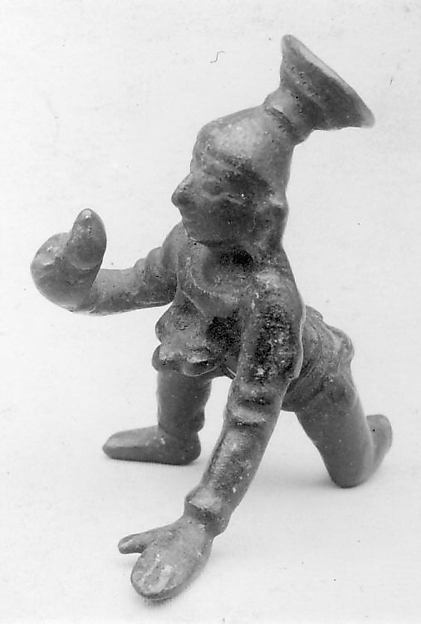
Krishna
A South Indian bronze portable idol the museum catalogs simply as Krishna, made for personal devotional use. Portable images like this were carried and dressed in household worship.

Yashoda with the Infant Krishna
A Chola bronze showing Krishna's foster mother Yashoda holding the infant Krishna, tagged by the museum with his name. The tender maternal subject was a popular one in South Indian temple bronzes.

Seated Ganesha
A Thai bronze of a seated, elephant-headed Ganesha, tagged by the museum with his name. Ganesha's worship spread from India across Buddhist and Hindu Southeast Asia.
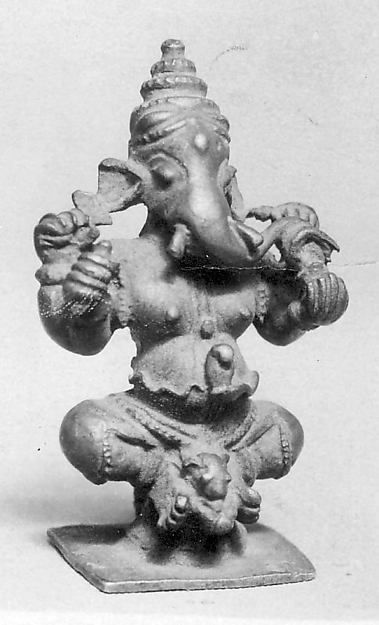
Ganesha
A South Indian bronze figurine of Ganesha, part of the continuous tradition of casting the elephant-headed god for household and temple shrines.
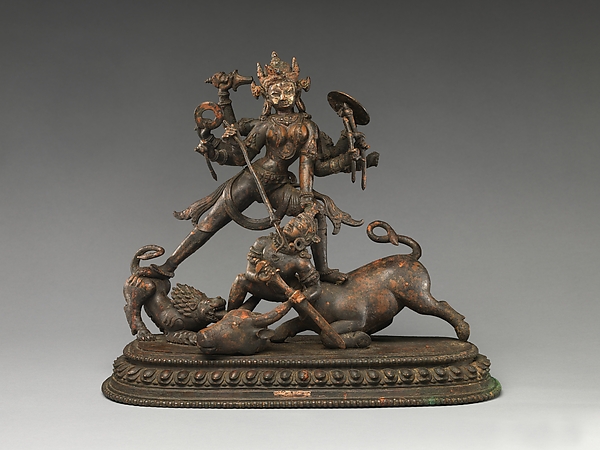
The Goddess Durga Slaying Mahisha
A Nepali bronze the museum titles as the goddess Durga slaying Mahisha, the buffalo demon. The subject depicts her defining myth, in which she was created by the gods to defeat a demon none of them could kill alone.
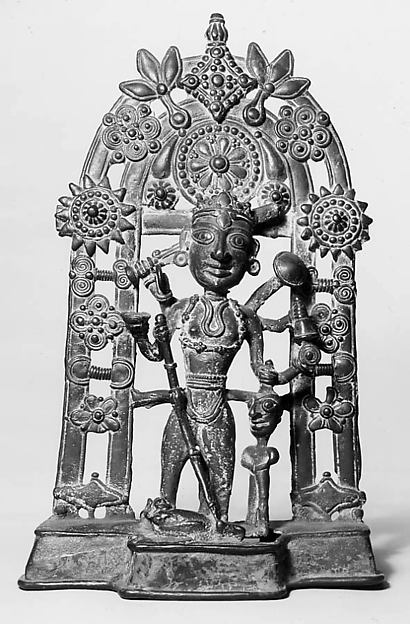
Durga Mahishasura
A bronze figure the museum titles Durga Mahishasura, showing the goddess triumphing over the same buffalo demon. Images of this victory were widely produced across medieval India.

Hanuman Conversing
A Chola-period bronze the museum titles Hanuman Conversing, showing the monkey god in a gesture of speech. Hanuman's devotion to Rama made him one of the most widely worshipped figures from the Ramayana.
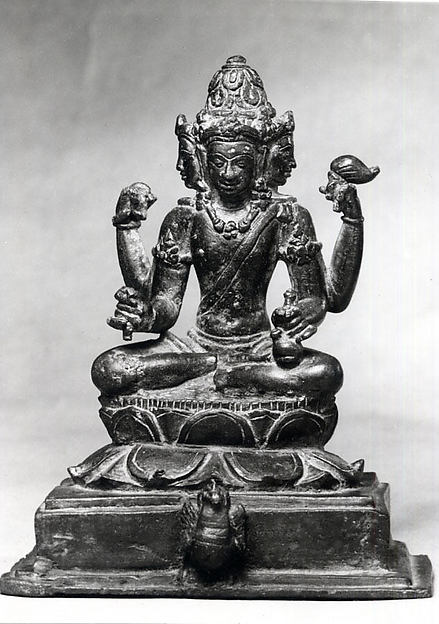
Seated Brahma
A Central Javanese bronze the museum titles Seated Brahma, showing the creator god enthroned on a lotus. It reflects the spread of Hindu bronze-casting traditions to Java.
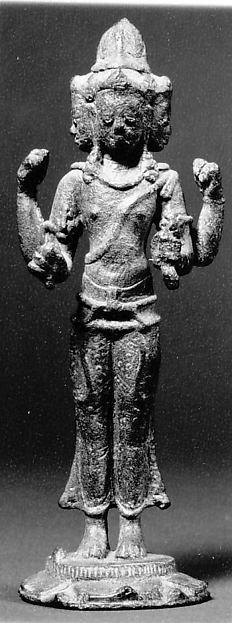
Brahma with Silver Eyes
A Javanese bronze the museum titles Brahma with Silver Eyes, its inlaid eyes a refinement typical of fine Central Javanese metalwork.

Bodhisattva Avalokiteshvara (Guanyin)
A Yuan-dynasty wood sculpture the museum titles Bodhisattva Avalokiteshvara (Guanyin), dated by inscription to 1282. Guanyin, the East Asian form of the bodhisattva of compassion, became one of the most widely venerated figures in Chinese Buddhism.
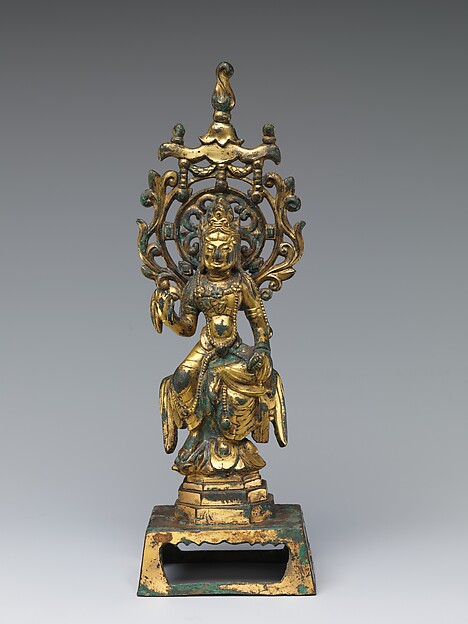
Bodhisattva Avalokiteshvara (Guanyin)
A gilt bronze figure from the Five Dynasties period the museum titles Bodhisattva Avalokiteshvara (Guanyin), an early example of the type before the fully Sinicized feminine form became standard.

Luring the Sun Goddess Amaterasu Out of a Cave with Music; Death of the Historical Buddha
A pair of Meiji-period hanging scrolls whose title the museum gives as Luring the Sun Goddess Amaterasu Out of a Cave with Music, depicting the myth in which the other gods coax her out of hiding to restore light to the world.

The God Izanagi and Goddess Izanami
An Edo-period hanging scroll the museum titles The God Izanagi and Goddess Izanami, depicting the primordial couple credited in Shinto myth with creating the islands of Japan.
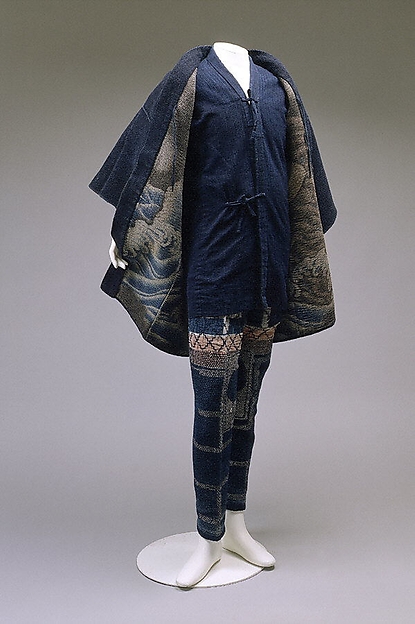
Fireman’s Jacket (Hikeshi-Banten) with Susanoo-no-mikoto Deity Scene
A quilted cotton fireman's jacket dyed with a scene the museum titles as depicting Susanoo-no-mikoto. Edo-period firemen commissioned dramatic mythological and heroic scenes for the linings of their protective coats.

The Moon Goddess Chang E
A Ming-dynasty hanging scroll the museum titles The Moon Goddess Chang E, showing the goddess who, in the best-known version of her myth, drank an elixir of immortality and rose to live on the moon.

The Monkey King Songokū, from the Chinese novel Journey to the West
A Japanese surimono print titled by the museum The Monkey King Songoku, from the Chinese novel Journey to the West, using the Japanese reading of Sun Wukong's name. It shows the Chinese Monkey King's story reaching Japanese print culture in the early nineteenth century.

Chalchiuhtlicue
A Mexica (Aztec) basalt figure the museum catalogs simply as Chalchiuhtlicue, goddess of lakes, rivers, and running water. Stone images like this were carved in the century before the Spanish conquest.
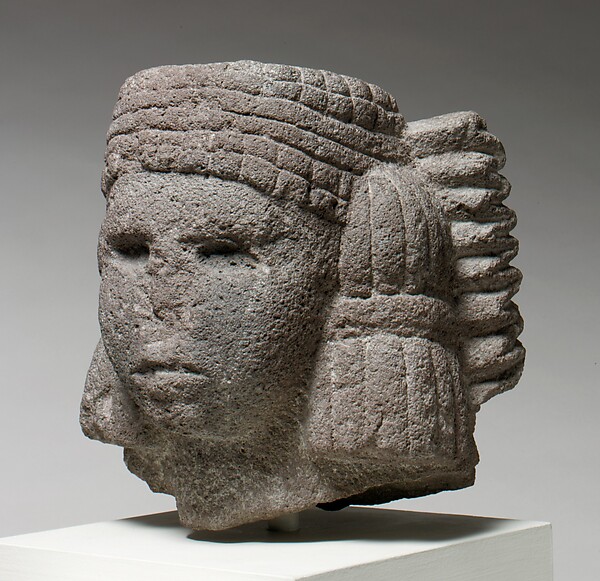
Head of a Water Deity (Chalchiuhtlicue)
A basalt head the museum titles Head of a Water Deity (Chalchiuhtlicue), broken from a larger figure of the Mexica water goddess.
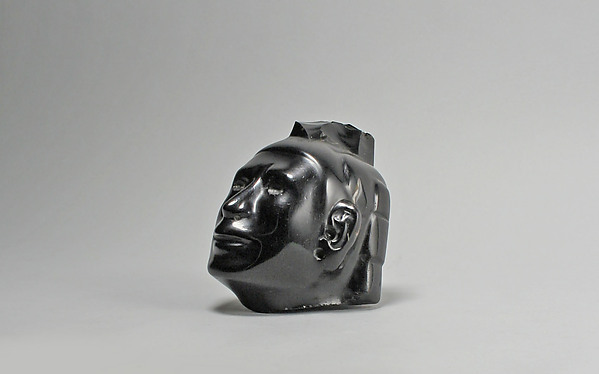
Head from a figure, Xochipilli-Macuilxochitl
An obsidian head the museum titles Head from a figure, Xochipilli-Macuilxochitl, naming the Mexica flower prince associated with music, pleasure, and the arts, closely linked with the god Macuilxochitl.
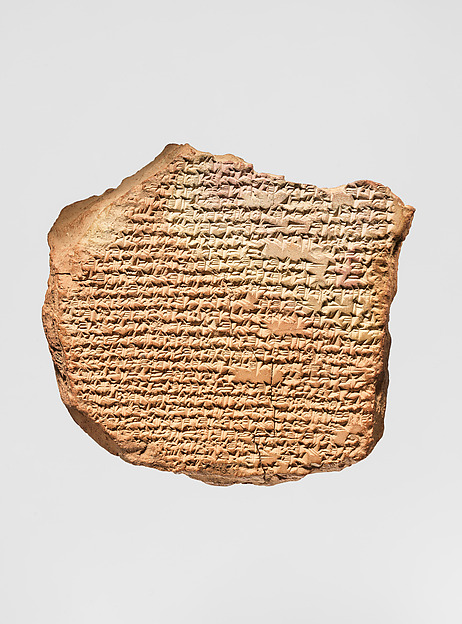
Cuneiform tablet: hymn to Marduk
A cuneiform clay tablet the museum catalogs as a hymn to Marduk, chief god of the Babylonian pantheon. The tablet is a textual rather than figural attestation of his worship.

Marble stele (grave marker) with a youth and little girl, and a capital and finial in the form of a sphinx
An Archaic Attic grave stele topped by a small sphinx finial, tagged by the museum with the creature's name. Sphinxes were common protective figures on Greek funerary monuments.

Sphinx of Amenhotep III, possibly from a Model of a Temple
A faience sphinx bearing the name of Amenhotep III, possibly from a model temple. Egyptian sphinxes combined a lion's body with a royal human head to guard sacred sites.
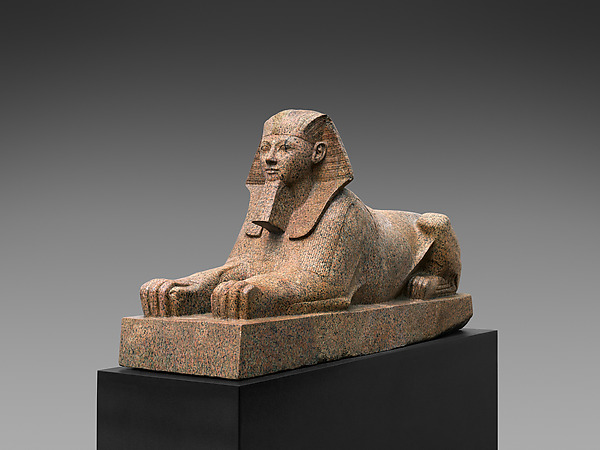
Sphinx of Hatshepsut
A granite sphinx carved with the features of Queen Hatshepsut, one of the best-known royal sphinxes in the museum's Egyptian collection.

Sardonyx cameo fragment with Hercules tying up Cerberus
A sardonyx cameo fragment the museum titles Hercules Tying Up Cerberus, showing the hero's final labor of capturing the three-headed hound of the underworld.
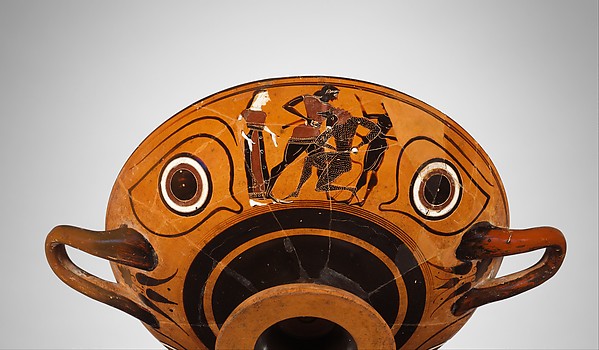
Terracotta kylix: eye-cup (drinking cup)
Between painted eyes, Theseus confronts the Minotaur, with youths and maidens as spectators. The scene appears on both sides of the cup.

Terracotta skyphos (deep drinking cup)
Theseus appears on one side and the Minotaur on the other. The museum describes the figures as separate protagonists rather than a continuous narrative.
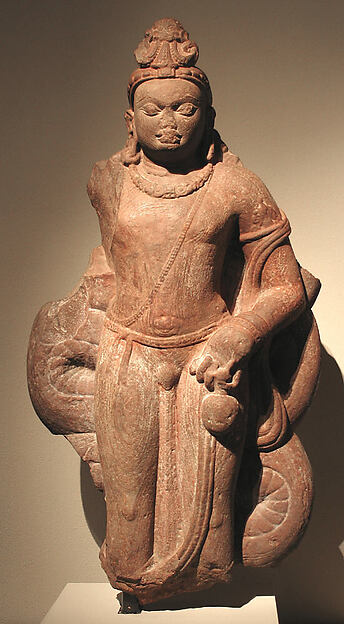
Standing Nagaraja (Serpent King)
A Gupta-period red sandstone figure the museum titles Standing Nagaraja (Serpent King), a divine serpent-being whose cobra hood rises behind his head.
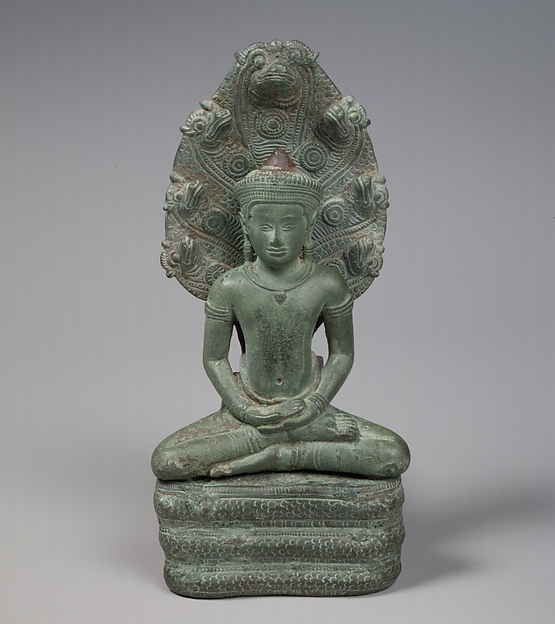
Buddha Sheltered by a Naga
A Khmer bronze the museum titles Buddha Sheltered by a Naga, showing the multi-headed serpent Mucalinda protecting the meditating Buddha, a well-known episode from Buddhist legend.
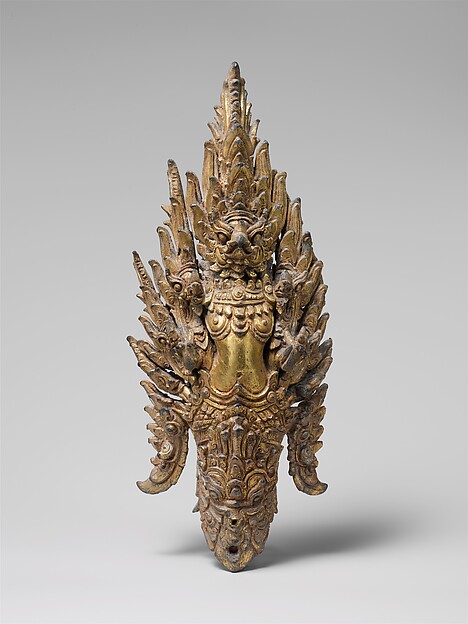
Garuda Finial
A gilt bronze finial in the form of Garuda, the half-man, half-bird creature and mount of Vishnu, made in Thailand for architectural decoration.
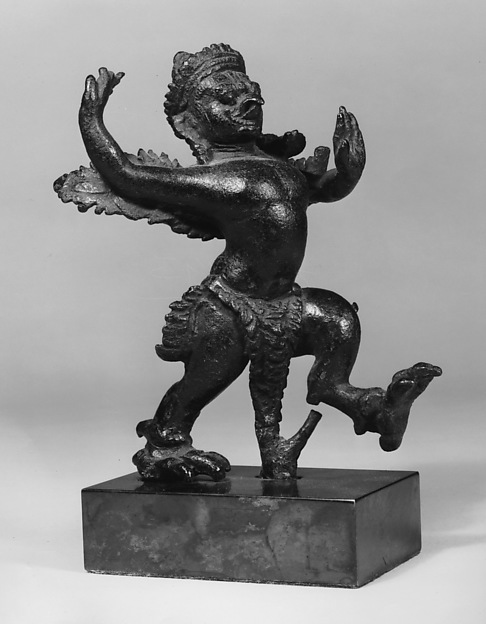
Striding Garuda (The Royal Solar Bird)
A Thai bronze the museum titles Striding Garuda (The Royal Solar Bird), showing the creature in an active pose rather than as a static architectural ornament.

Mirror With the Design of a Nine-Tailed Fox
An Edo-period Japanese print the museum titles Mirror With the Design of a Nine-Tailed Fox, depicting the shapeshifting kitsune associated in folklore with trickery and transformation.

Tale of the Fox (Kitsune no sōshi)
An illustrated Edo-period handscroll titled Tale of the Fox (Kitsune no soshi), a narrative built around a shapeshifting kitsune. The handscroll documents the fox's role as a recurring figure in Japanese storytelling.