

Sanctuaries & Sacred Realms
Step through 184 sacred mountains, mythological underworld portals, classical oracles, and celestial capitals grounded in Homeric, Eddic, Vedic, and Mesoamerican primary records.
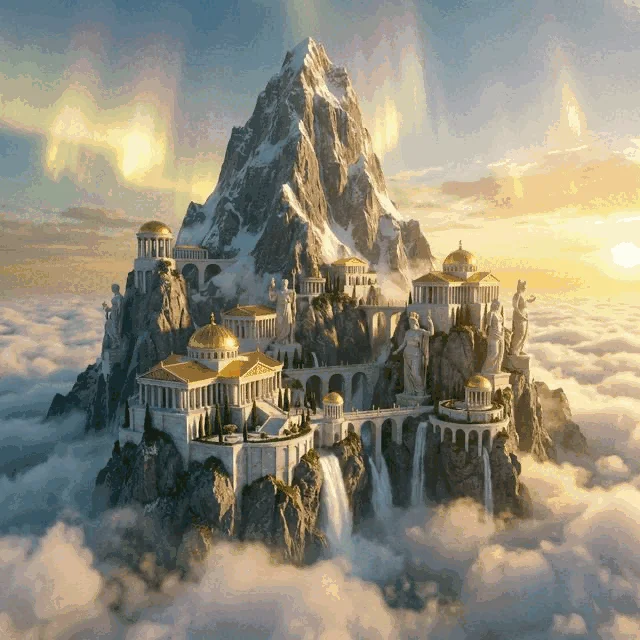
Mount Olympus
The highest mountain in Greece, on the border of Thessaly and Macedonia, which Homer and Hesiod made the home of Zeus and the Olympian gods, a peak above the clouds where the gods feast and hold council.
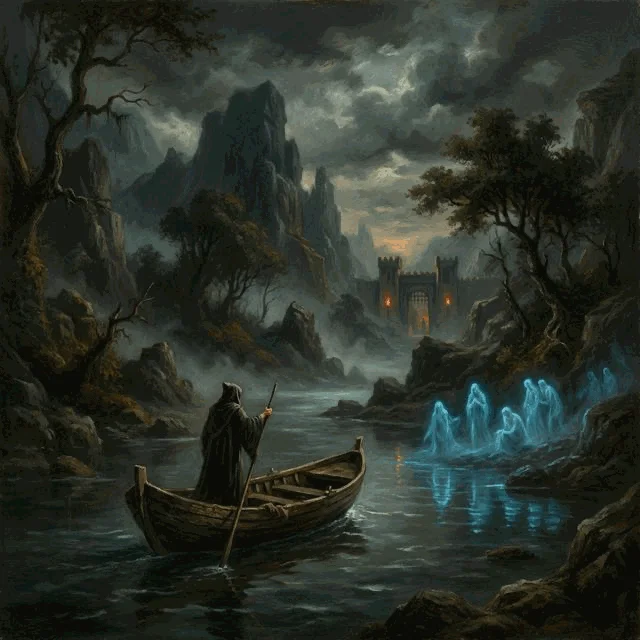
The Underworld
The realm of the dead beneath the earth, ruled by Hades and Persephone, which Greek poets filled over time with rivers, gates, judges, and the dog Cerberus; the Odyssey's Book 11 is its earliest great portrait.
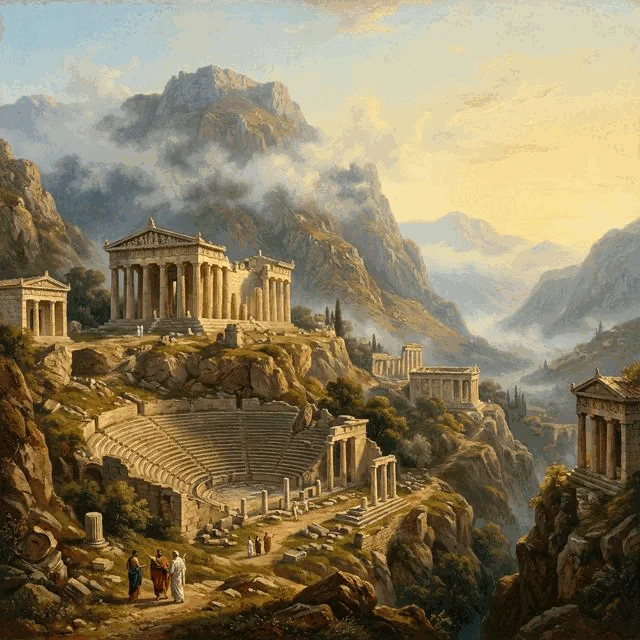
Delphi
The site of the oracle of Apollo, considered the center of the world (omphalos) by the ancient Greeks.
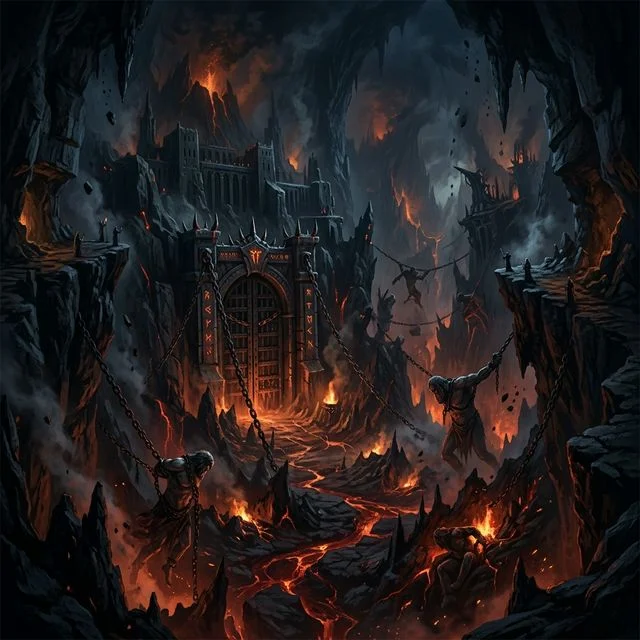
Tartarus
The deepest abyss of the underworld, a dungeon of torment where the Titans were imprisoned and the wicked punished for eternity.
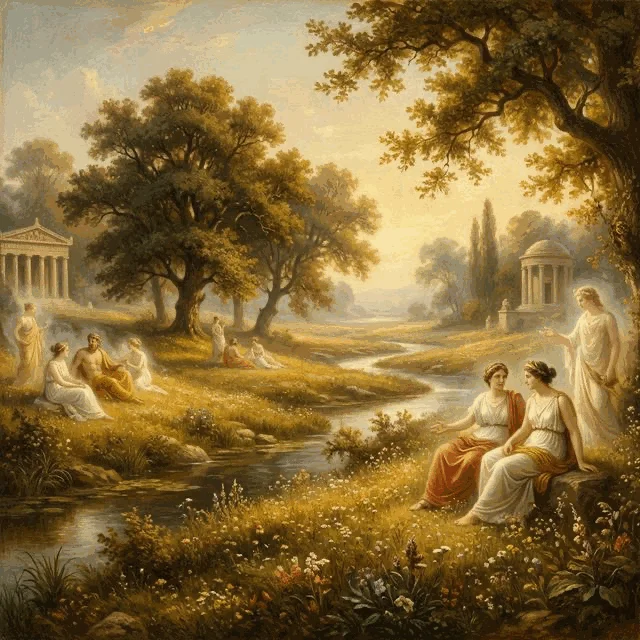
Elysian Fields
A paradise at the end of the earth where heroes and the virtuous were sent after death to live in eternal bliss.
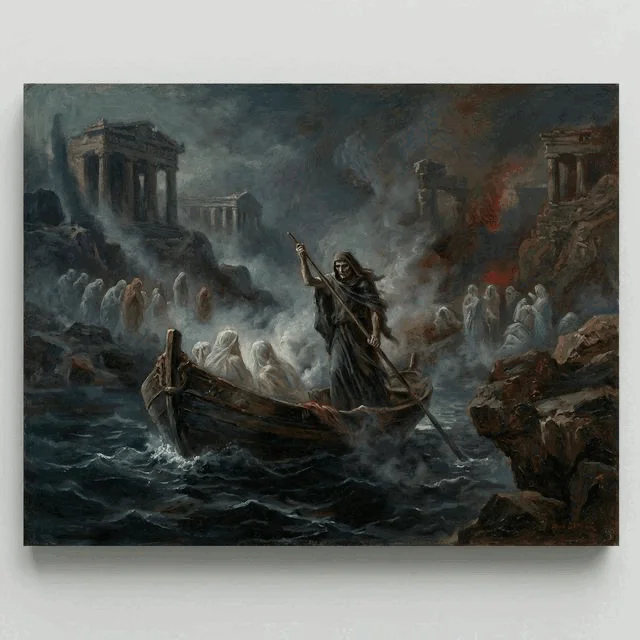
River Styx
The principal river of the underworld, upon which even the gods swore binding oaths. Charon ferried the dead across its dark waters.
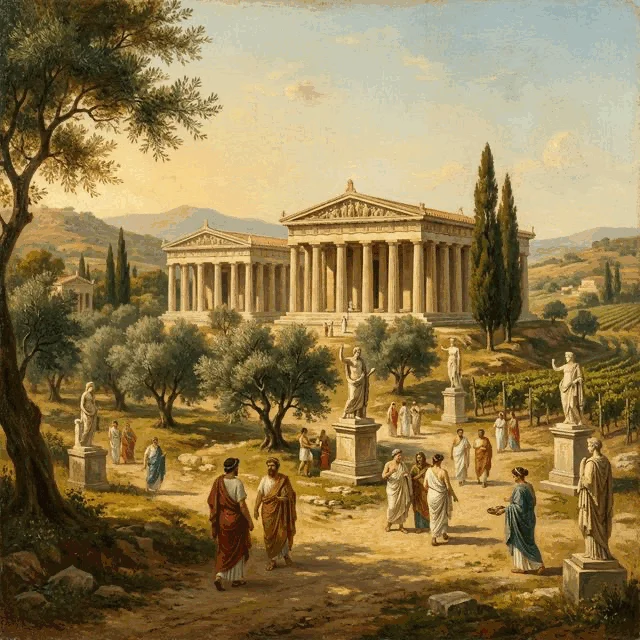
Olympia
The sanctuary of Zeus and site of the ancient Olympic Games, featuring a colossal statue of Zeus—one of the Seven Wonders.
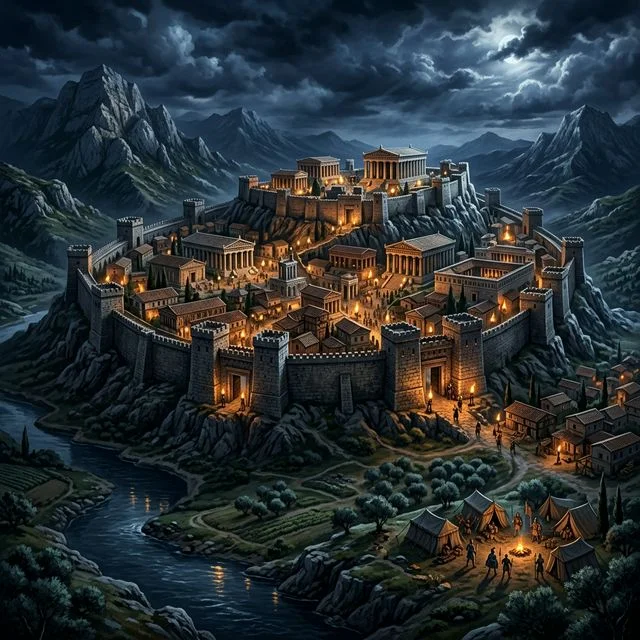
Thebes
A powerful city-state and setting of many tragic myths including Oedipus, the Seven Against Thebes, and Dionysus's revenge.
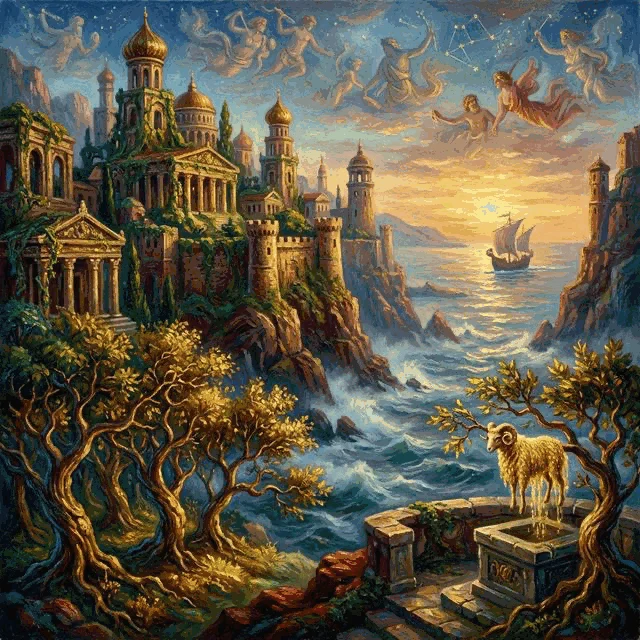
Colchis
The distant kingdom at the edge of the known world where the Golden Fleece was kept, guarded by an ever-watchful dragon.
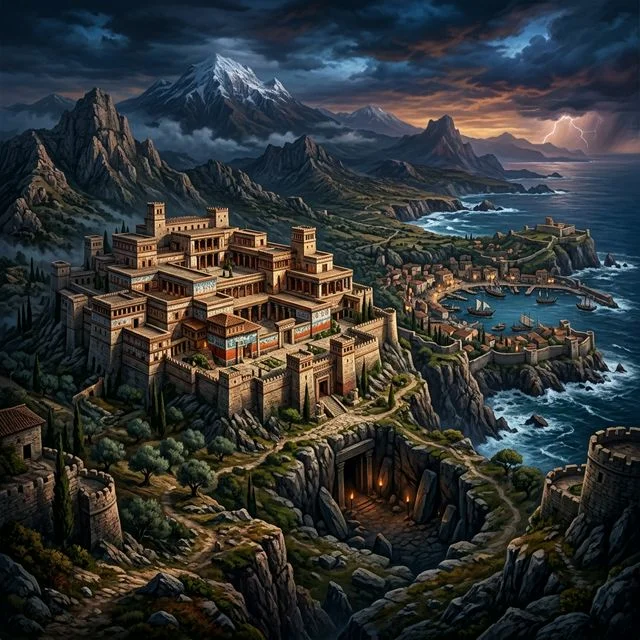
Crete
The great island kingdom of King Minos, home to the Labyrinth where the Minotaur dwelt, and birthplace of Zeus.
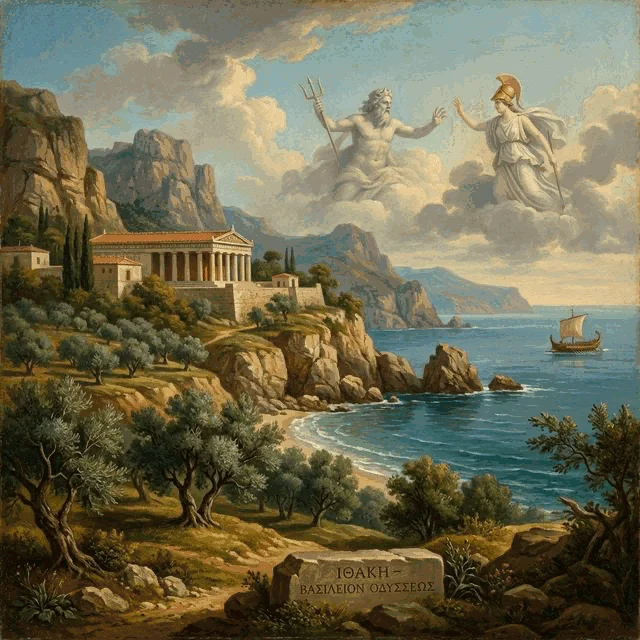
Ithaca
The island kingdom of Odysseus, whose twenty-year journey home from Troy is told in Homer's Odyssey.
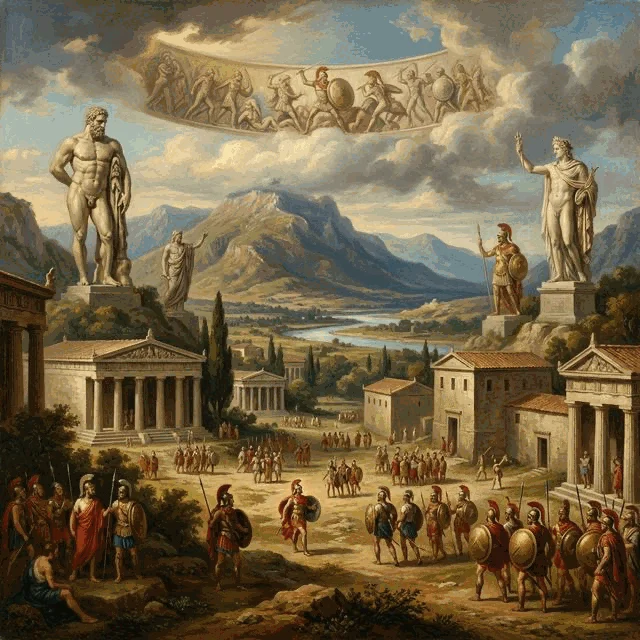
Sparta
The powerful warrior city-state, home of Helen whose abduction sparked the Trojan War, and Menelaus her husband.
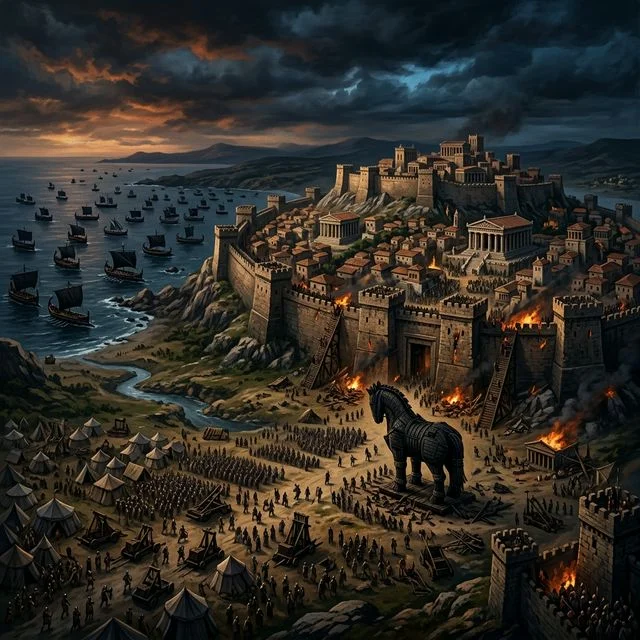
Troy
The legendary walled city besieged for ten years by the Greeks, eventually fallen to the cunning of the wooden horse.
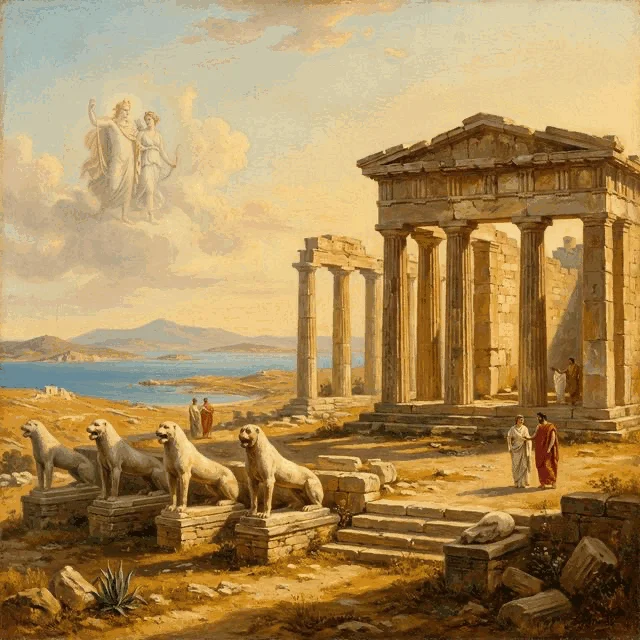
Delos
The sacred island birthplace of Apollo and Artemis, where their mother Leto finally found refuge to give birth.
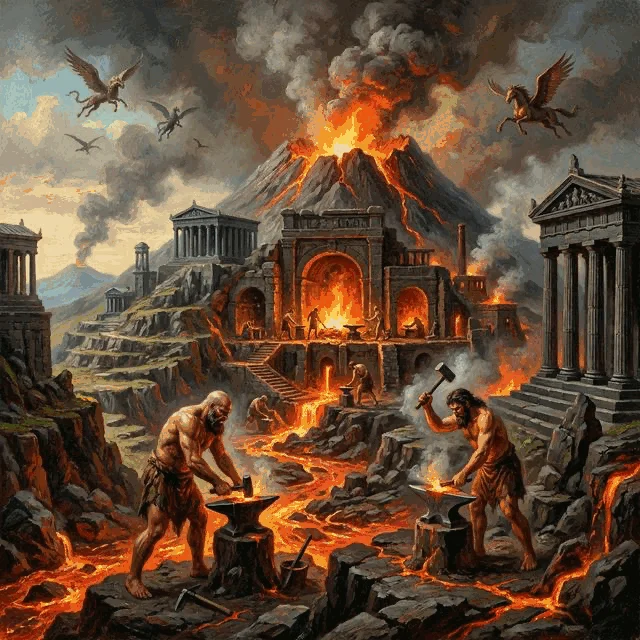
Lemnos
The volcanic island where Hephaestus landed after being cast from Olympus, and where he established his forge.
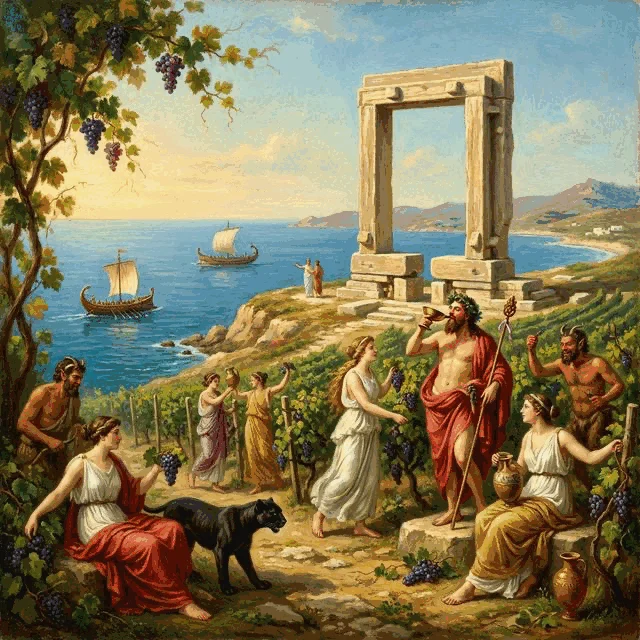
Naxos
The island where Theseus abandoned Ariadne, only for Dionysus to find and marry her, making it sacred to the wine god.
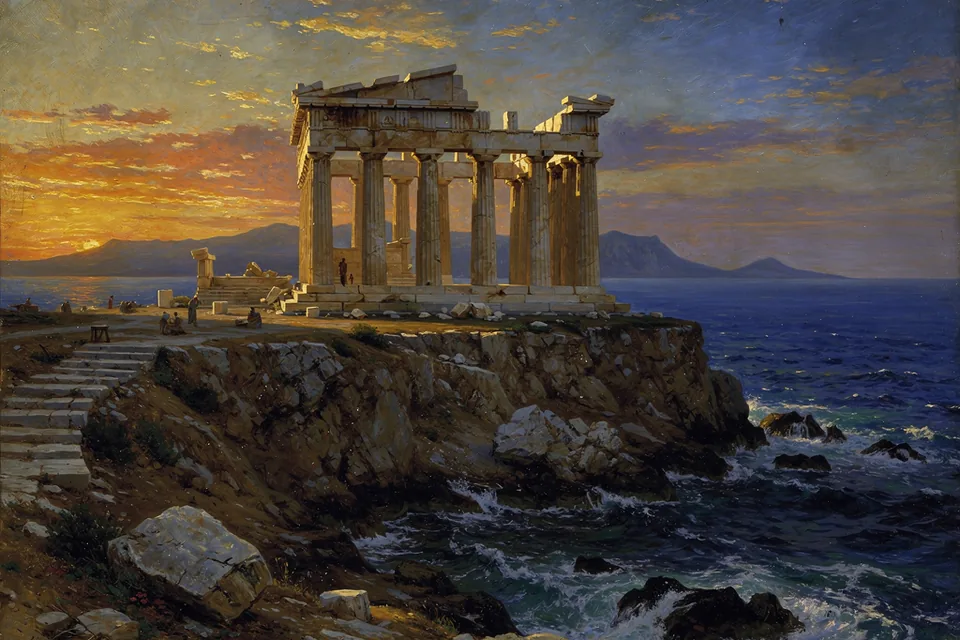
Cape Sounion
A dramatic clifftop promontory crowned by the Temple of Poseidon, where Aegeus leapt to his death upon seeing black sails.
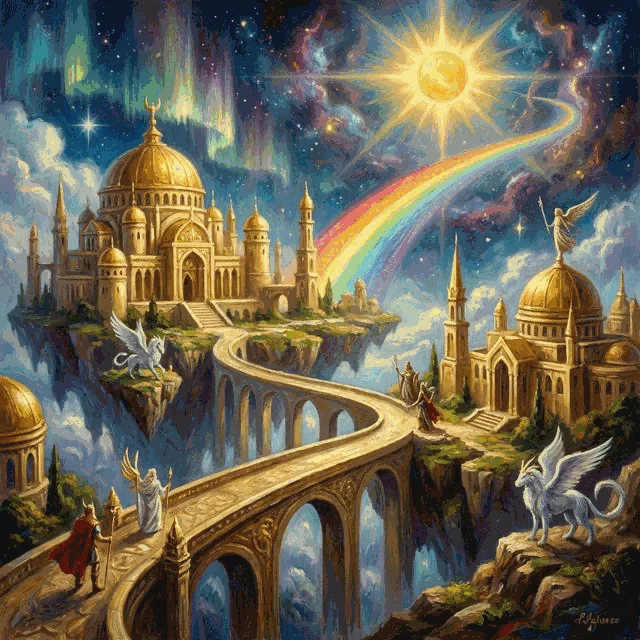
Asgard
One of the Nine Worlds and home to the Aesir tribe of gods, connected to Midgard by the rainbow bridge Bifrost.
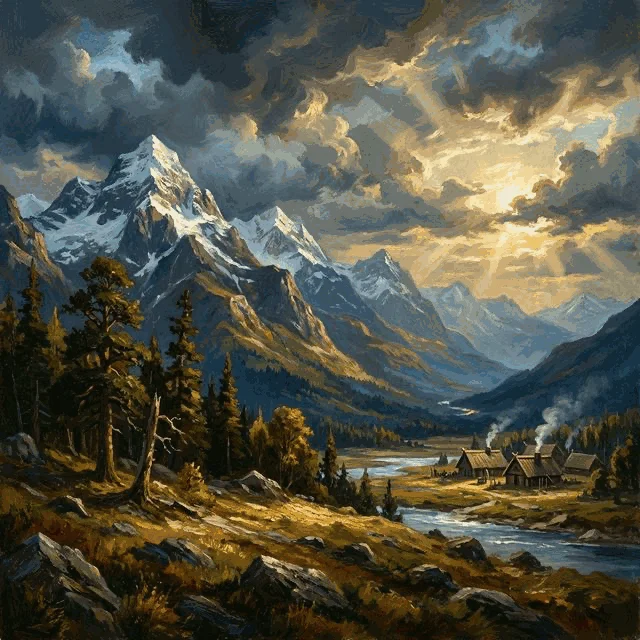
Midgard
The realm of humanity (Earth), encircled by the world serpent Jormungandr and connected to Asgard by the Bifrost bridge.
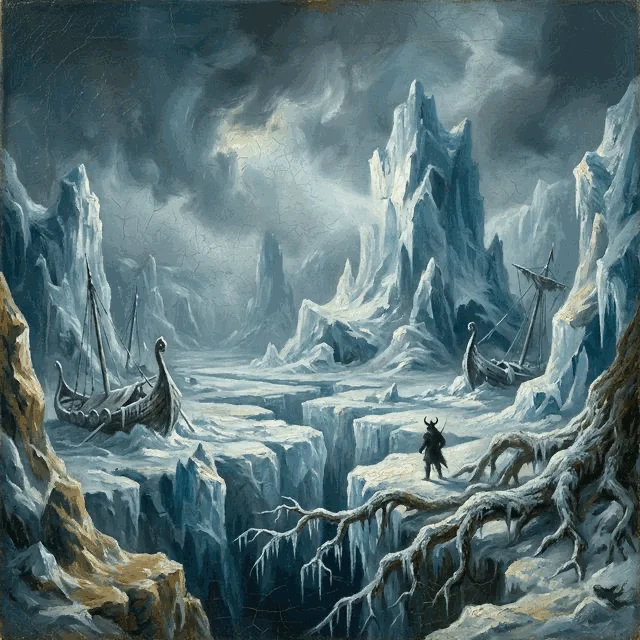
Niflheim
The primordial realm of ice, mist, and cold. Its frozen rivers combined with Muspelheim's fire to create the first life.
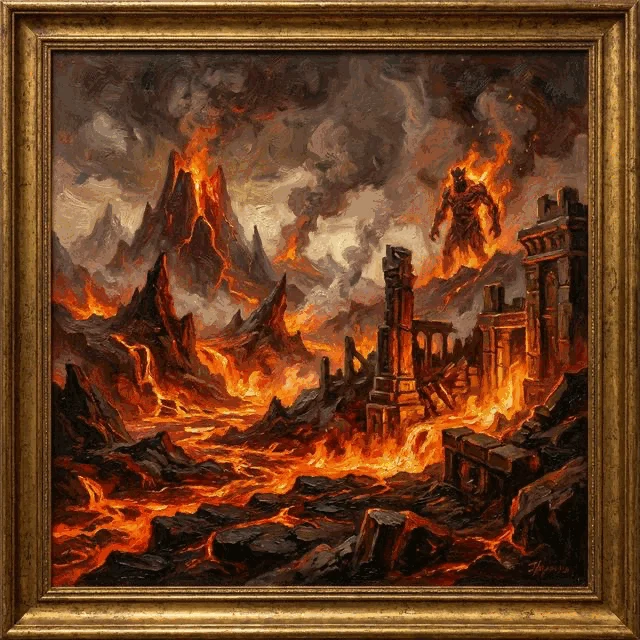
Muspelheim
The primordial realm of fire, ruled by the fire giant Surtr, whose flames will consume the world at Ragnarok.
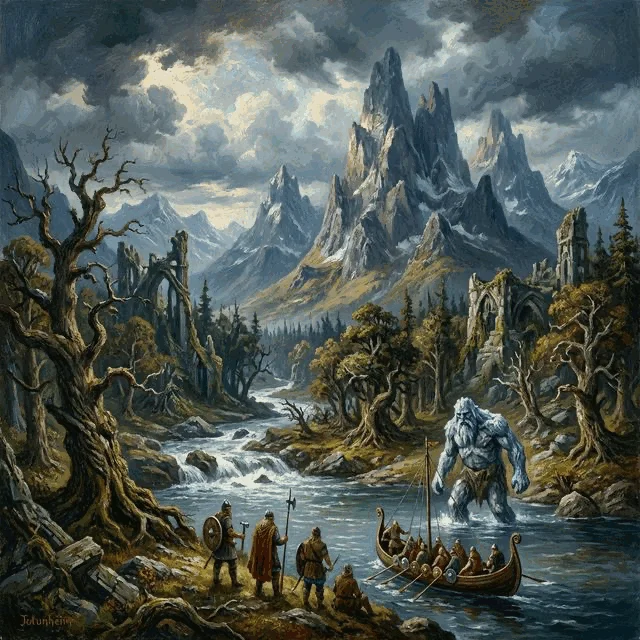
Jotunheim
The land of the frost giants and other jotnar, a harsh wilderness of mountains and forests bordering Asgard.
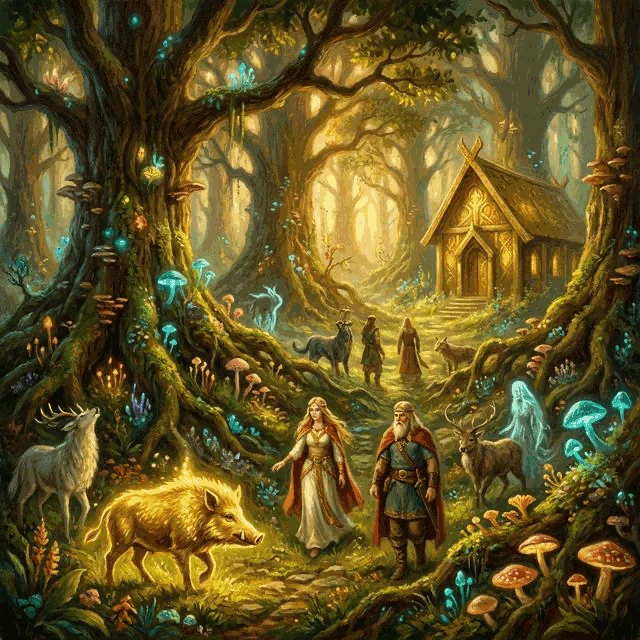
Vanaheim
Home of the Vanir gods associated with fertility, wisdom, and nature—including Freya, Freyr, and Njord.
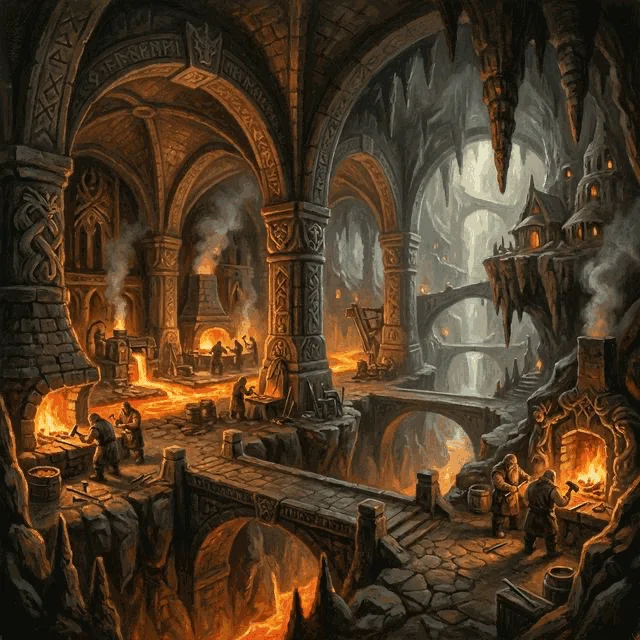
Svartalfheim
The underground realm of the dwarves (dark elves), master craftsmen who forged Mjolnir, Gungnir, and other legendary items.
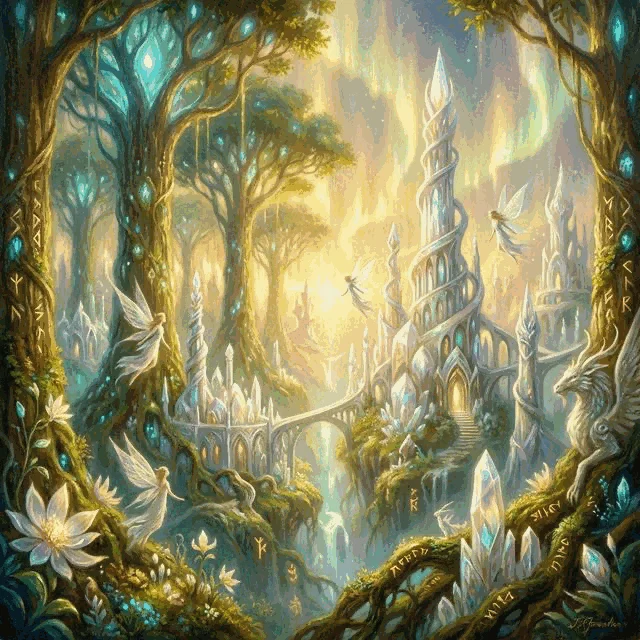
Alfheim
The radiant realm of the light elves, beautiful beings associated with fertility and given to Freyr as a tooth-gift.
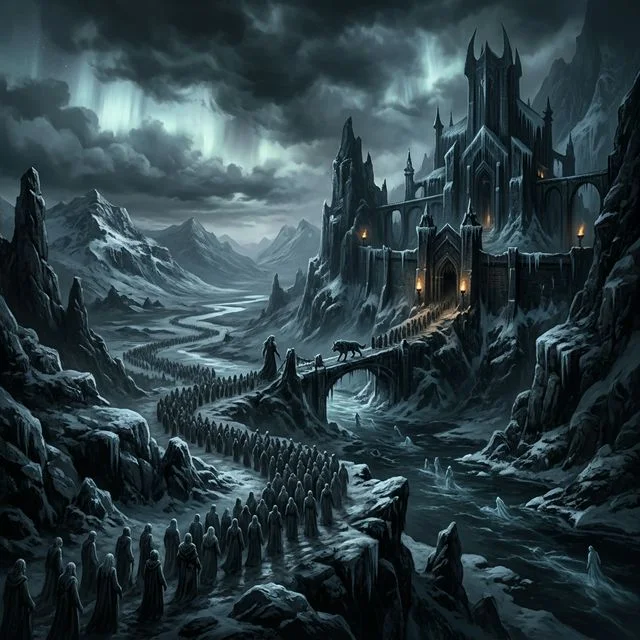
Helheim
The realm of the dead ruled by Hel, daughter of Loki. Those who died of illness or old age dwell here in cold monotony.
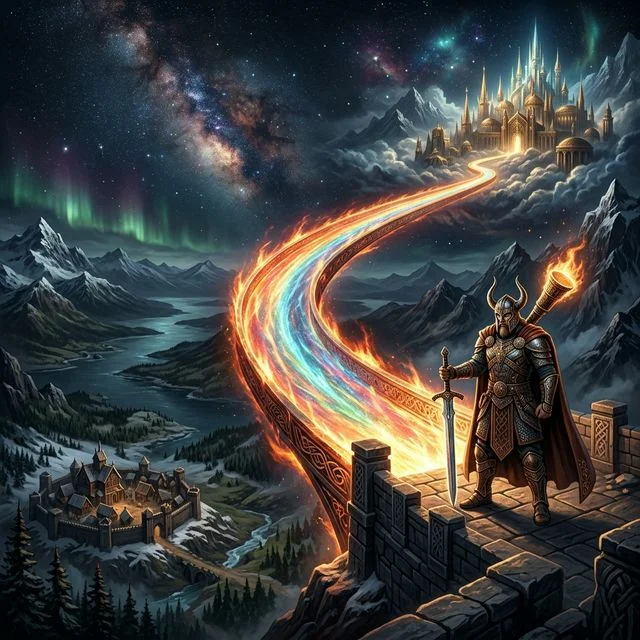
Bifrost
The burning rainbow bridge connecting Asgard to Midgard, guarded by the vigilant god Heimdall with his Gjallarhorn.
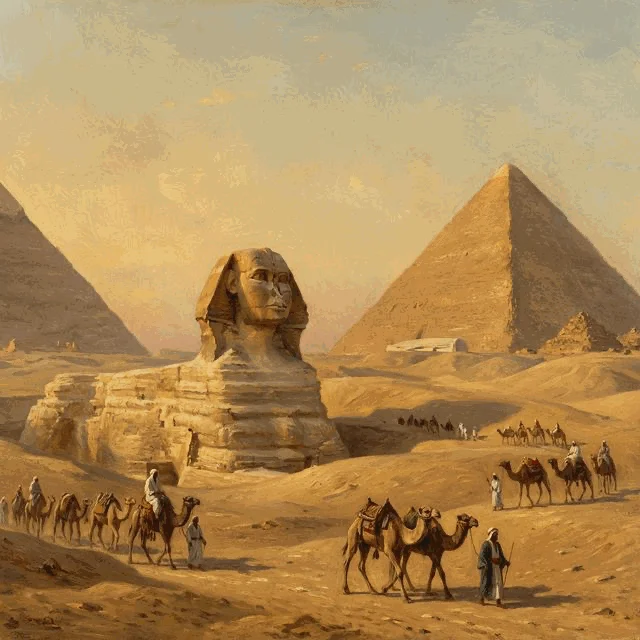
Giza Plateau
The desert plateau west of Cairo with the pyramids of Khufu, Khafre, and Menkaure and the Great Sphinx, monuments of Old Kingdom kingship and the king's hoped-for ascent to the stars and the sun.
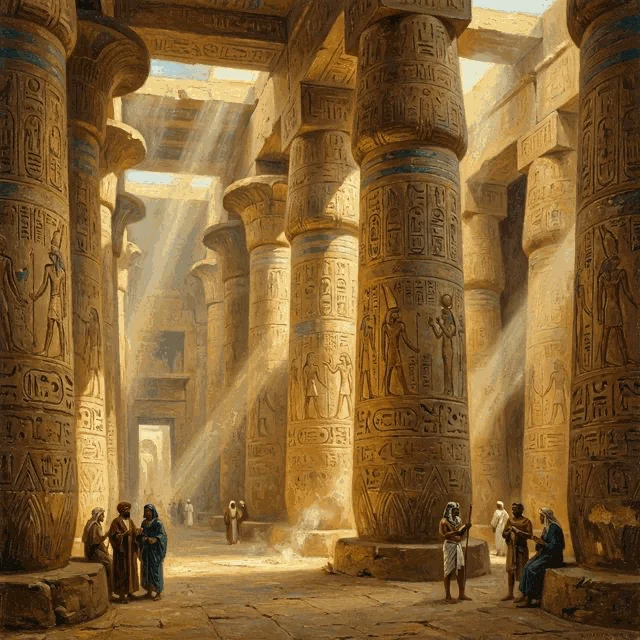
Karnak Temple Complex
A vast mix of decayed temples, chapels, pylons, and other buildings near Luxor, primarily dedicated to Amun.
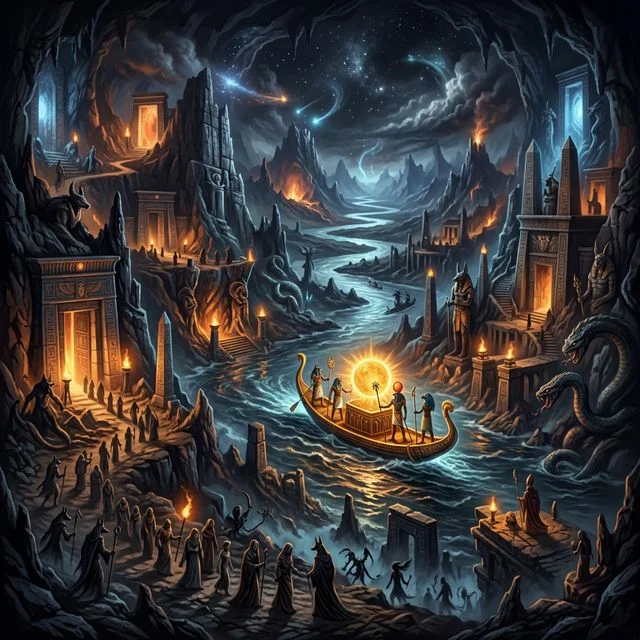
Duat
The Egyptian underworld through which Ra travels each night and the dead must journey, facing trials before Osiris's judgment.
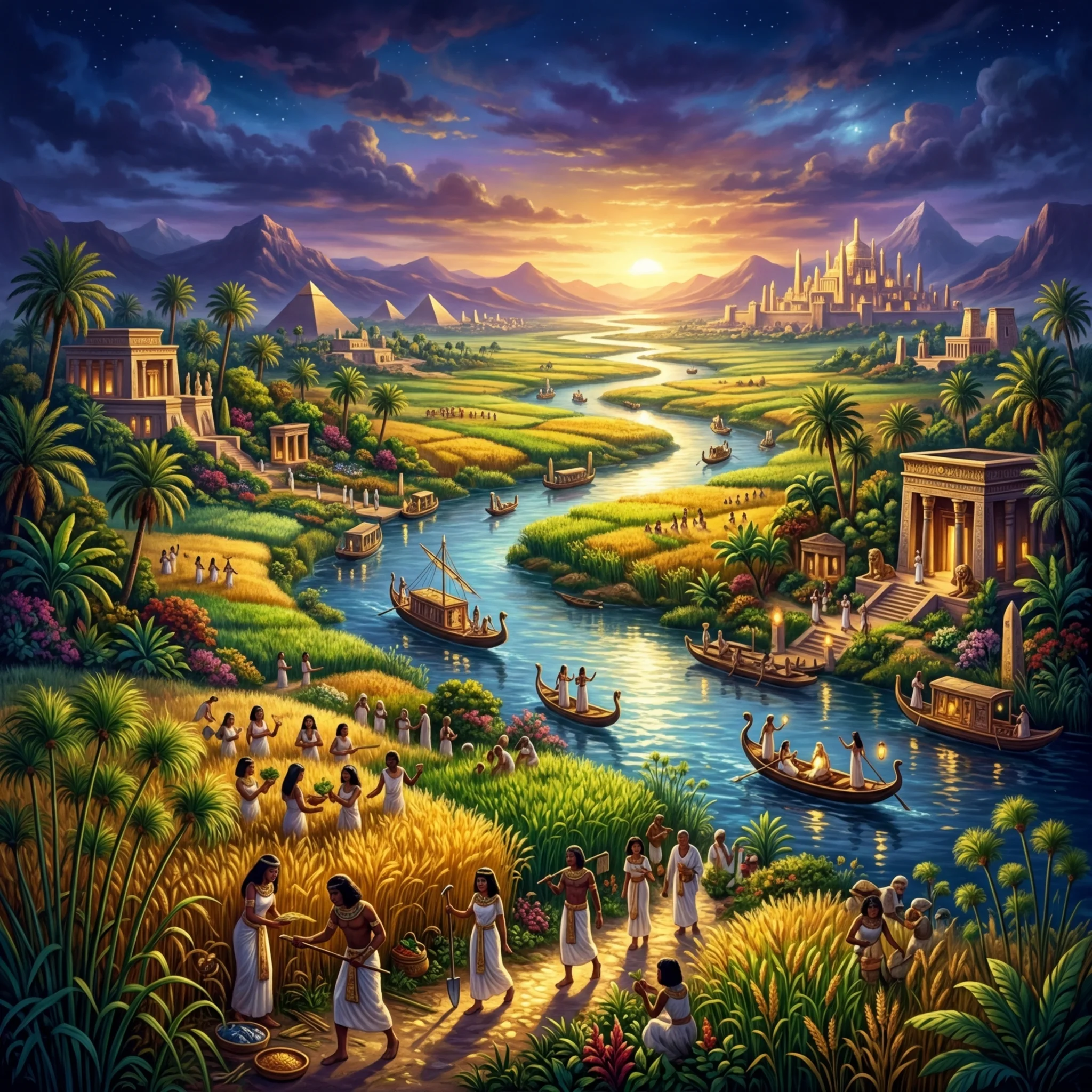
Field of Reeds (Aaru)
The Egyptian paradise, a heavenly realm of abundance where the righteous dead lived eternally in peace and plenty.
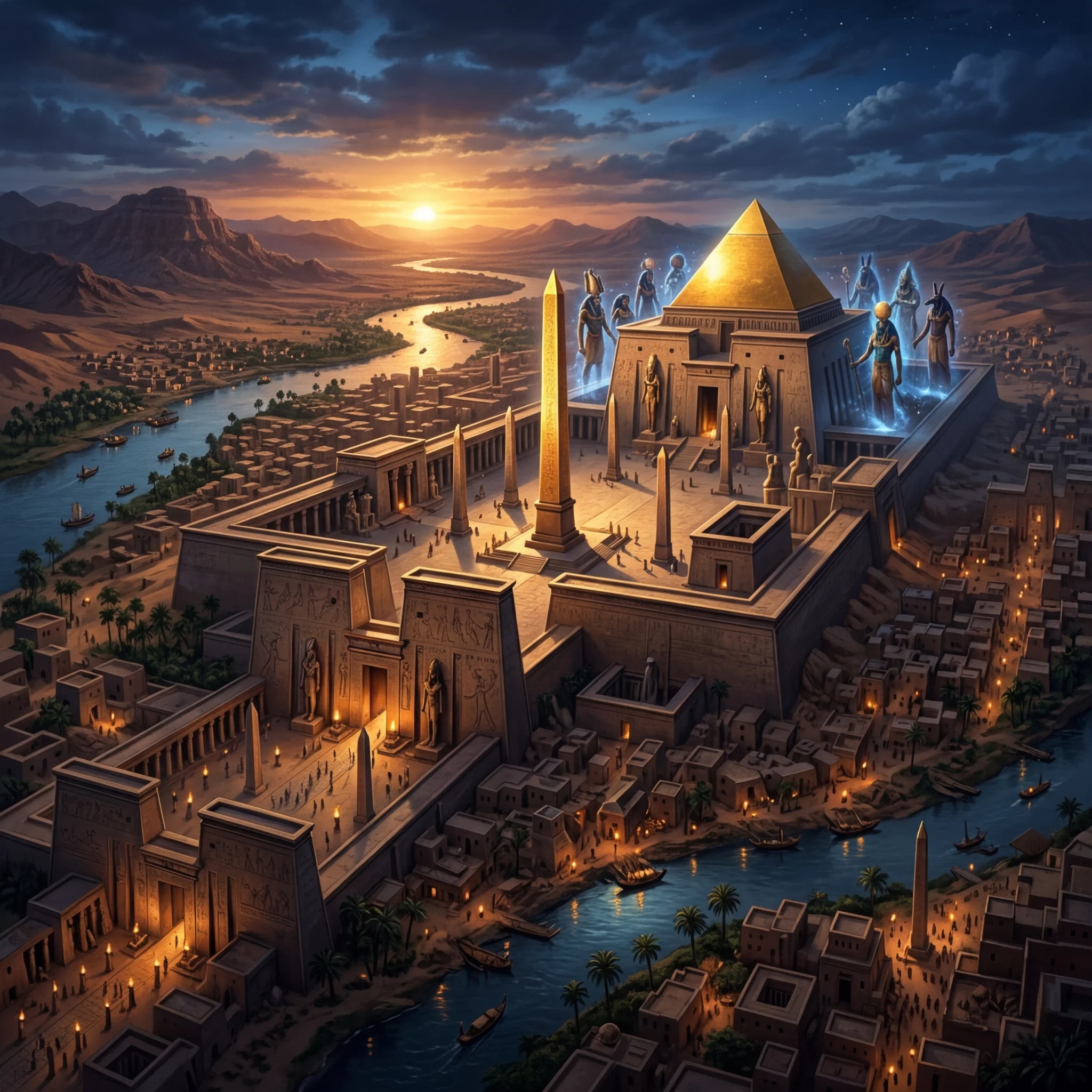
Heliopolis
The ancient City of the Sun, center of Ra worship and home to the Ennead—the nine primordial creator gods.
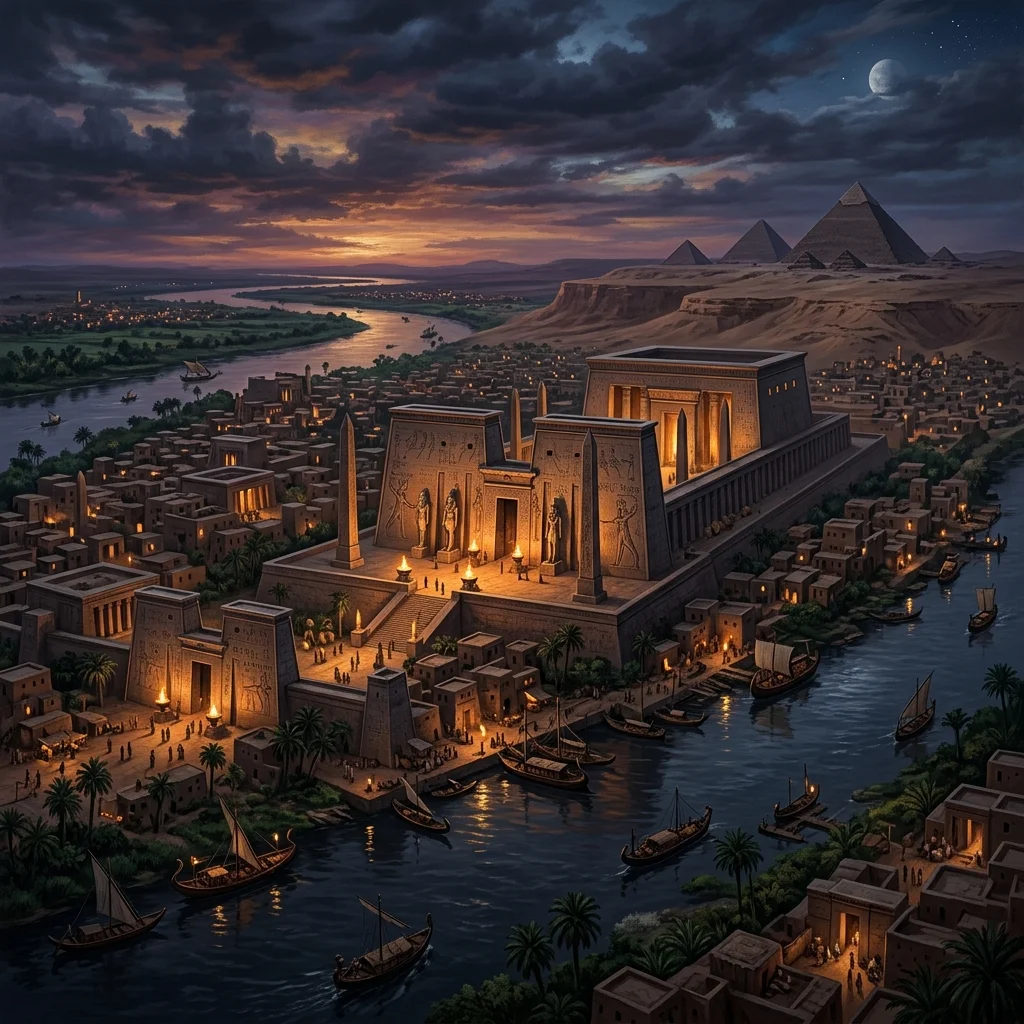
Memphis
The ancient capital of Egypt, cult center of Ptah the creator god, and gateway between Upper and Lower Egypt.
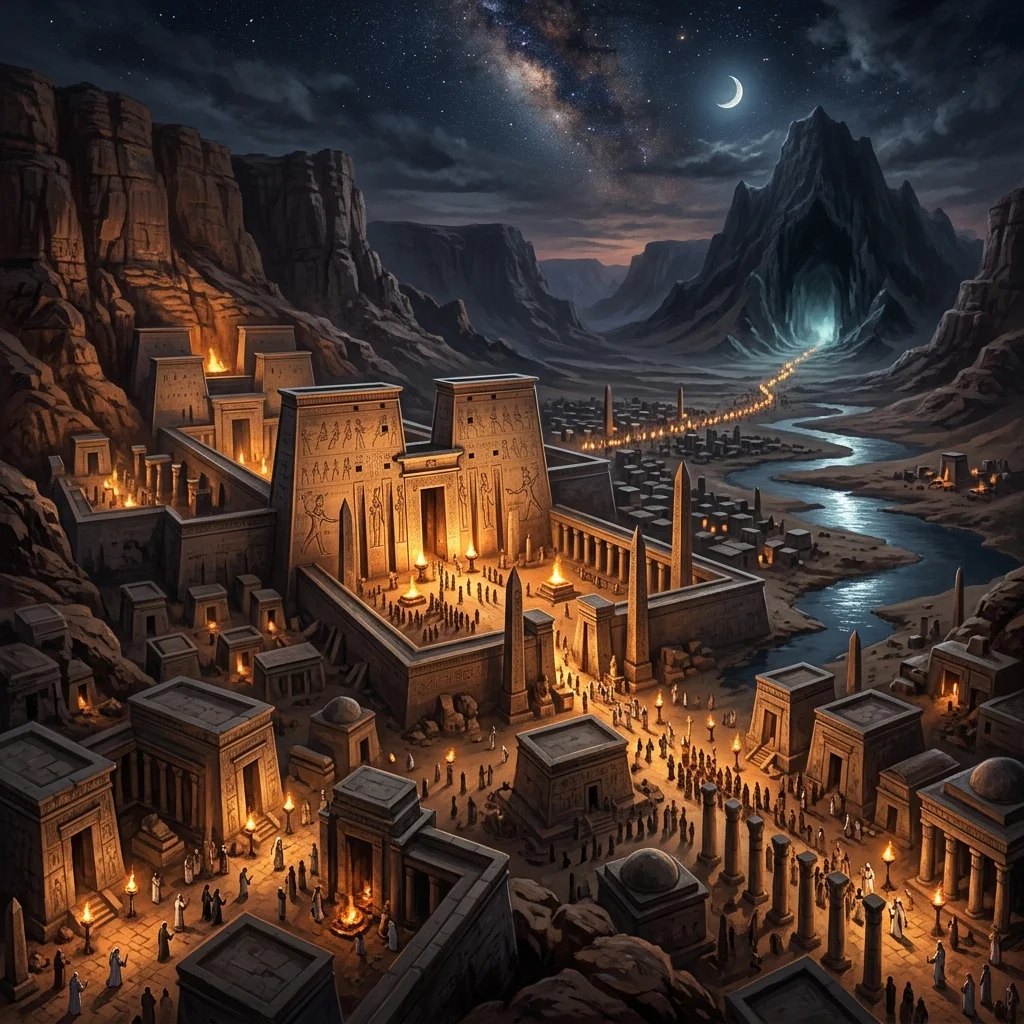
Abydos
The cult center of Osiris and gateway to the underworld, where pharaohs built cenotaphs to be near the god of the dead.
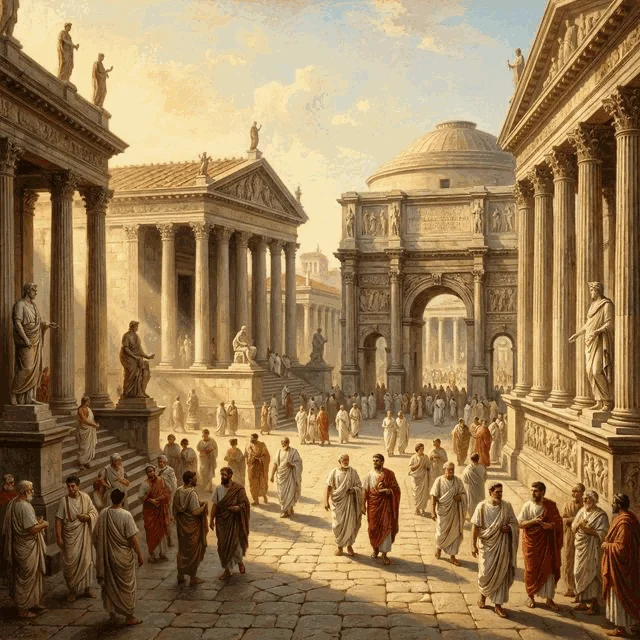
Roman Forum
The center of Roman public life, containing major temples including the Temple of Vesta and Temple of Saturn.
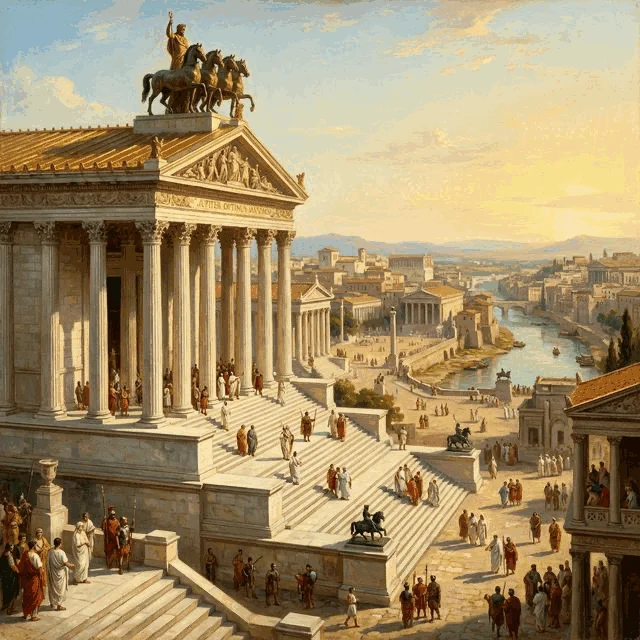
Capitoline Hill
The smallest and most sacred of Rome's hills, citadel of the earliest city and site of the Temple of Jupiter Optimus Maximus, Juno, and Minerva, where triumphs ended and the state's vows were paid.
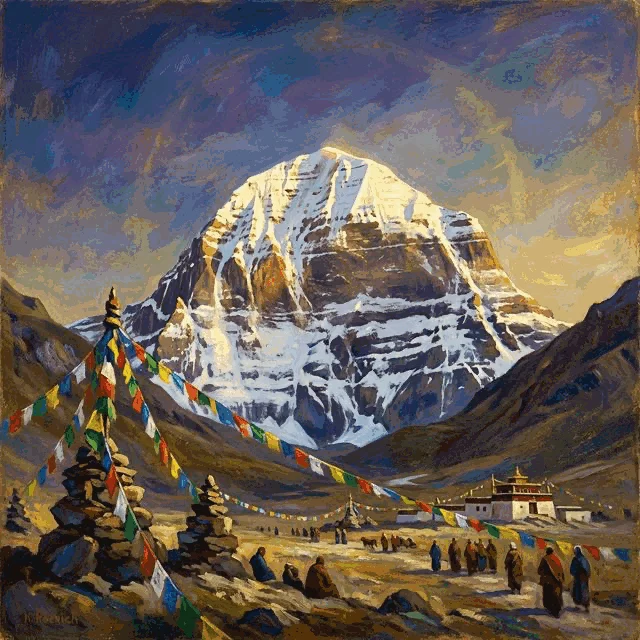
Mount Kailash
The sacred peak in western Tibet revered in Hindu tradition as the abode of Shiva and Parvati, identified with the mythic Kailasa of the Puranas and circled by pilgrims of several faiths.
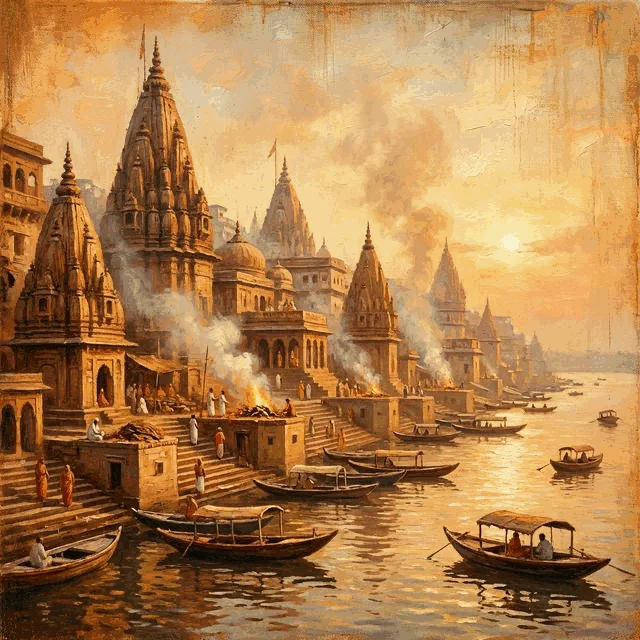
Varanasi
The spiritual capital of India, situated on the banks of the Ganges, one of the oldest continuously inhabited cities and sacred to Shiva.
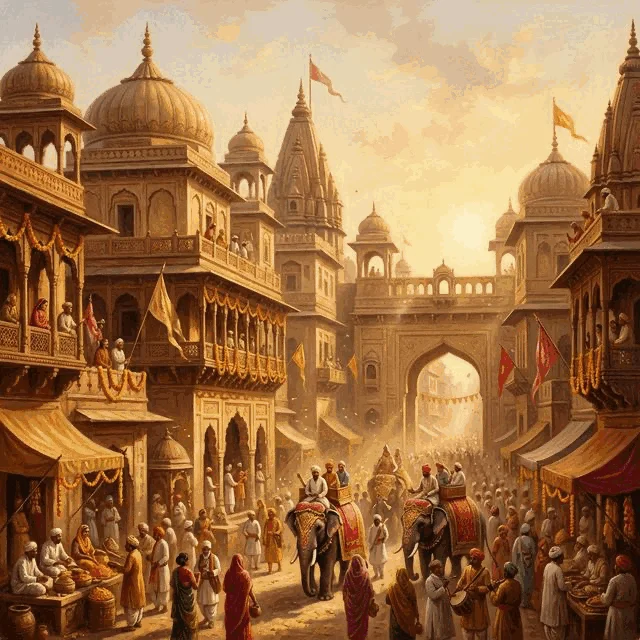
Ayodhya
The birthplace and capital of Lord Rama, setting of the great epic Ramayana and one of Hinduism's seven sacred cities.
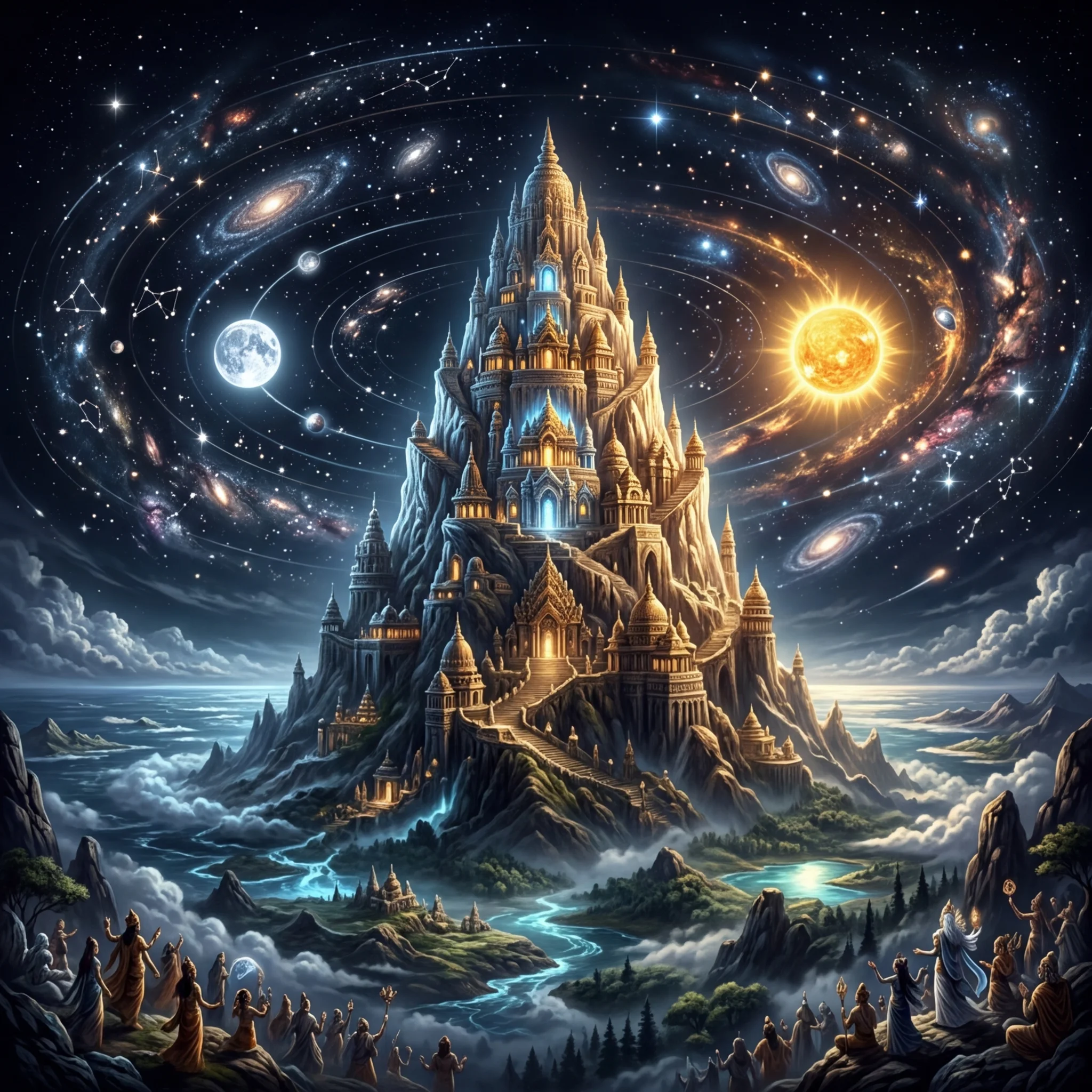
Mount Meru
The cosmic mountain at the center of the universe, around which the sun, moon, and stars revolve. Home of the devas.
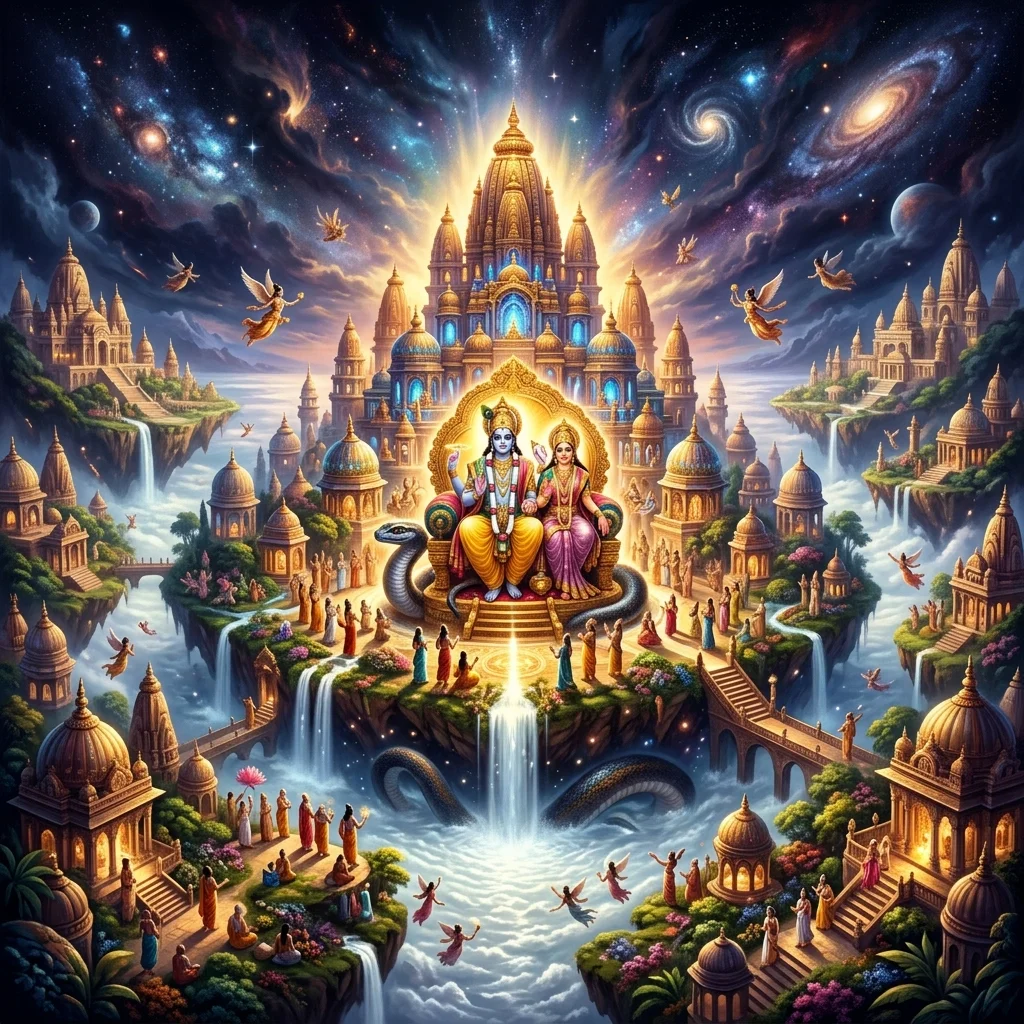
Vaikuntha
The eternal abode of Lord Vishnu and Lakshmi, a celestial realm of infinite bliss beyond the material universe.
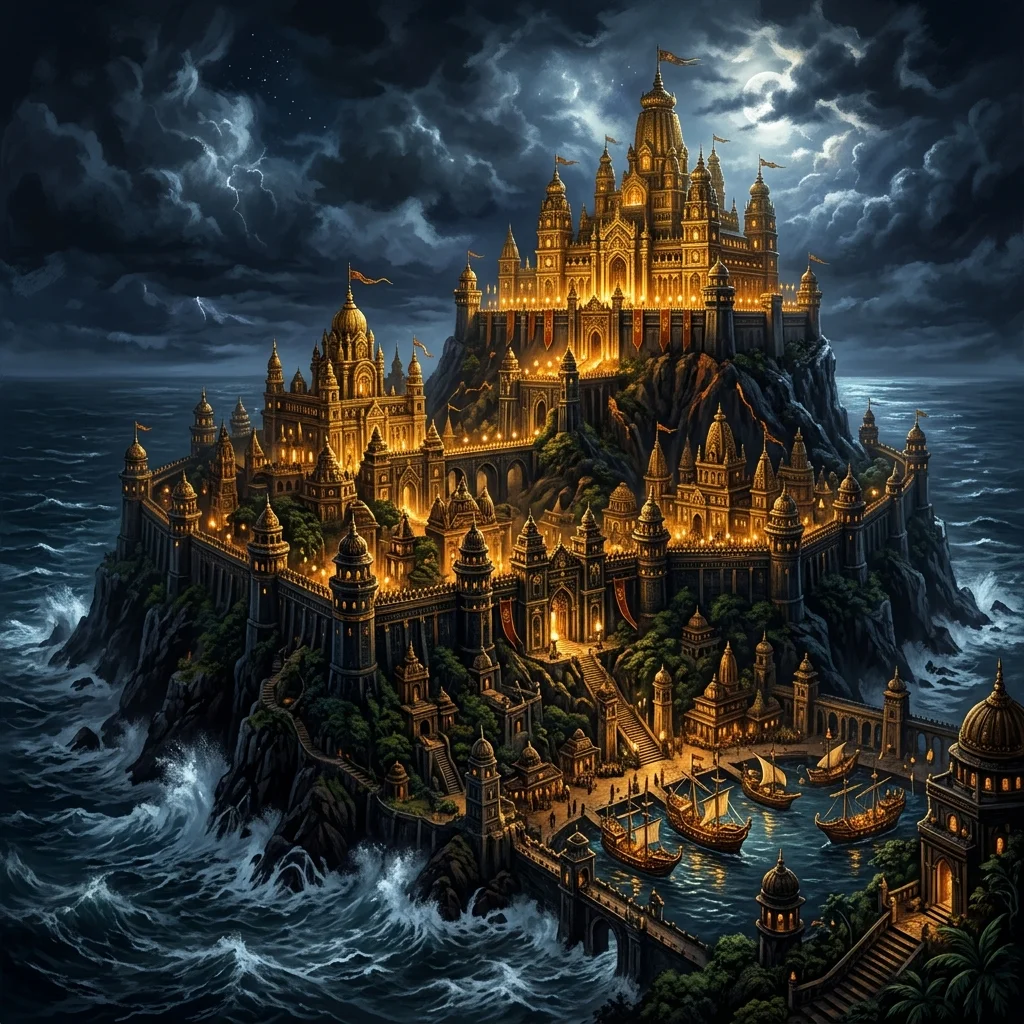
Lanka
The golden island kingdom of the demon king Ravana, who abducted Sita and was defeated by Rama's army.
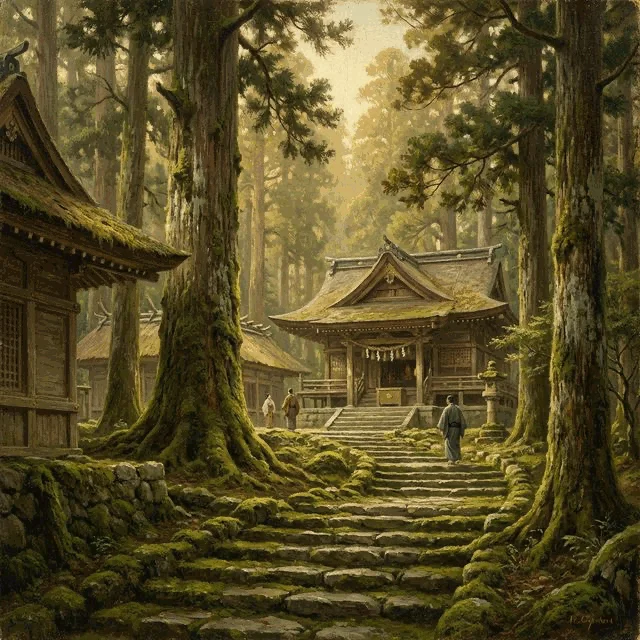
Ise Grand Shrine
The most sacred Shinto shrine, dedicated to Amaterasu the sun goddess, ritually rebuilt every 20 years.
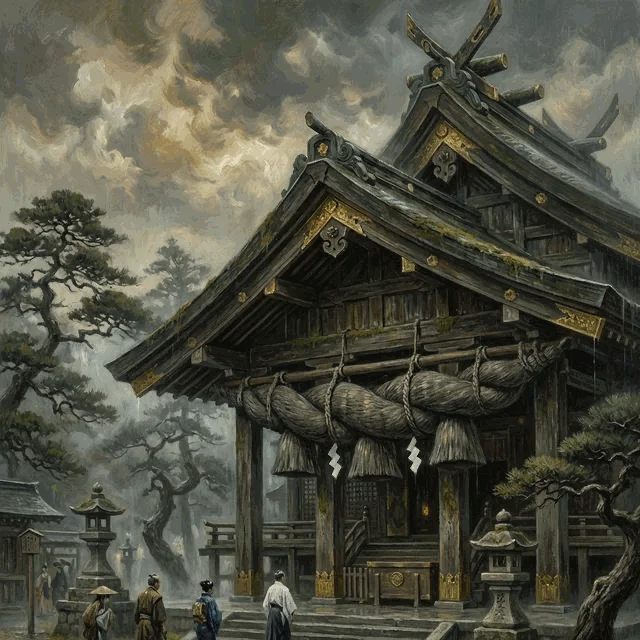
Izumo Taisha
One of the most ancient and important Shinto shrines, dedicated to Okuninushi, lord of the unseen world.
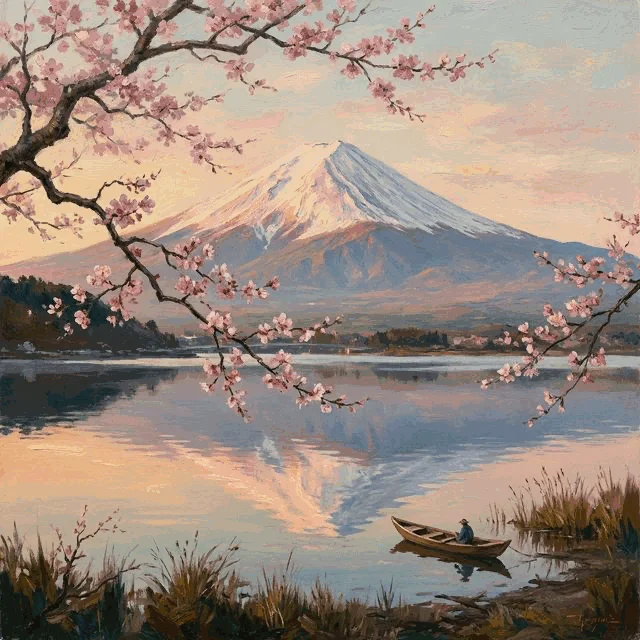
Mount Fuji
Japan's highest and most sacred mountain, believed to be the dwelling place of kami and a source of immortality.
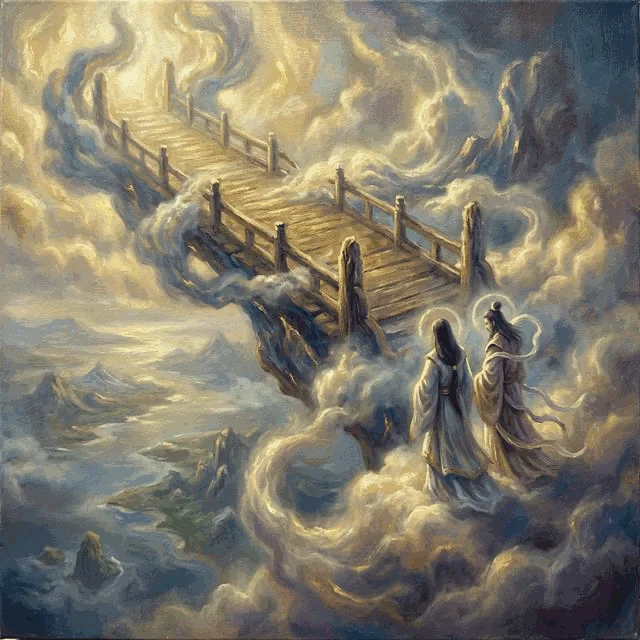
Floating Bridge of Heaven
The celestial bridge from which Izanagi and Izanami stirred the primordial ocean to create the islands of Japan.
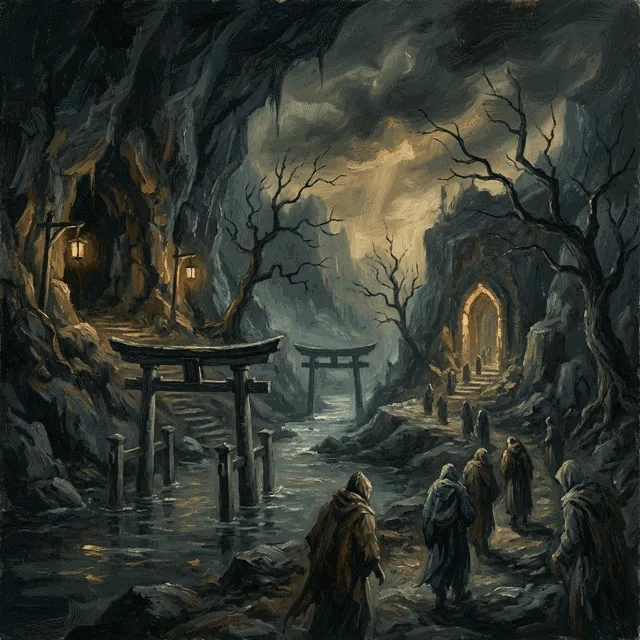
Yomi
The shadowy land of the dead ruled by Izanami, from which Izanagi barely escaped after seeing his wife's decayed form.
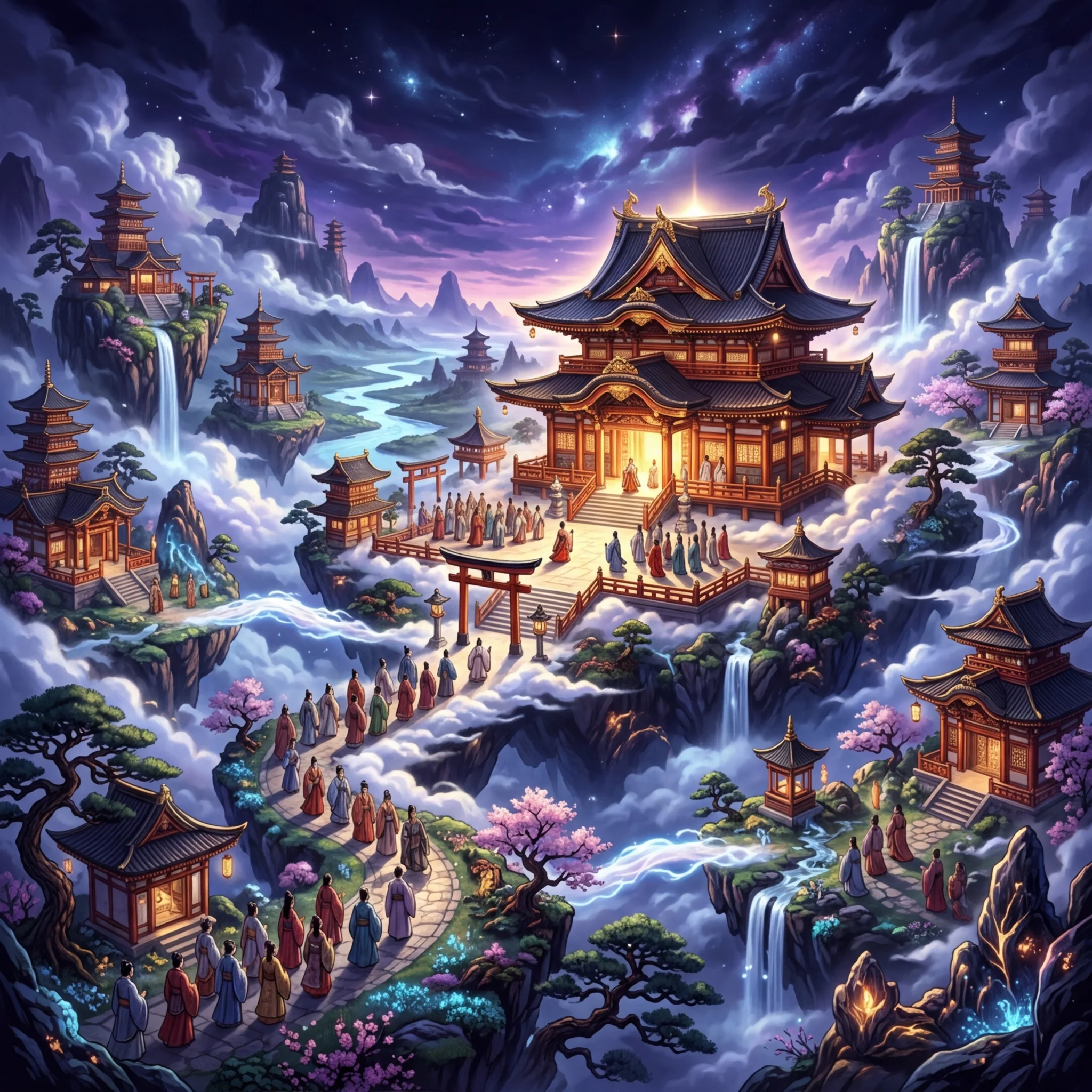
Takamagahara
The High Plain of Heaven, dwelling place of the heavenly kami including Amaterasu and the celestial court.
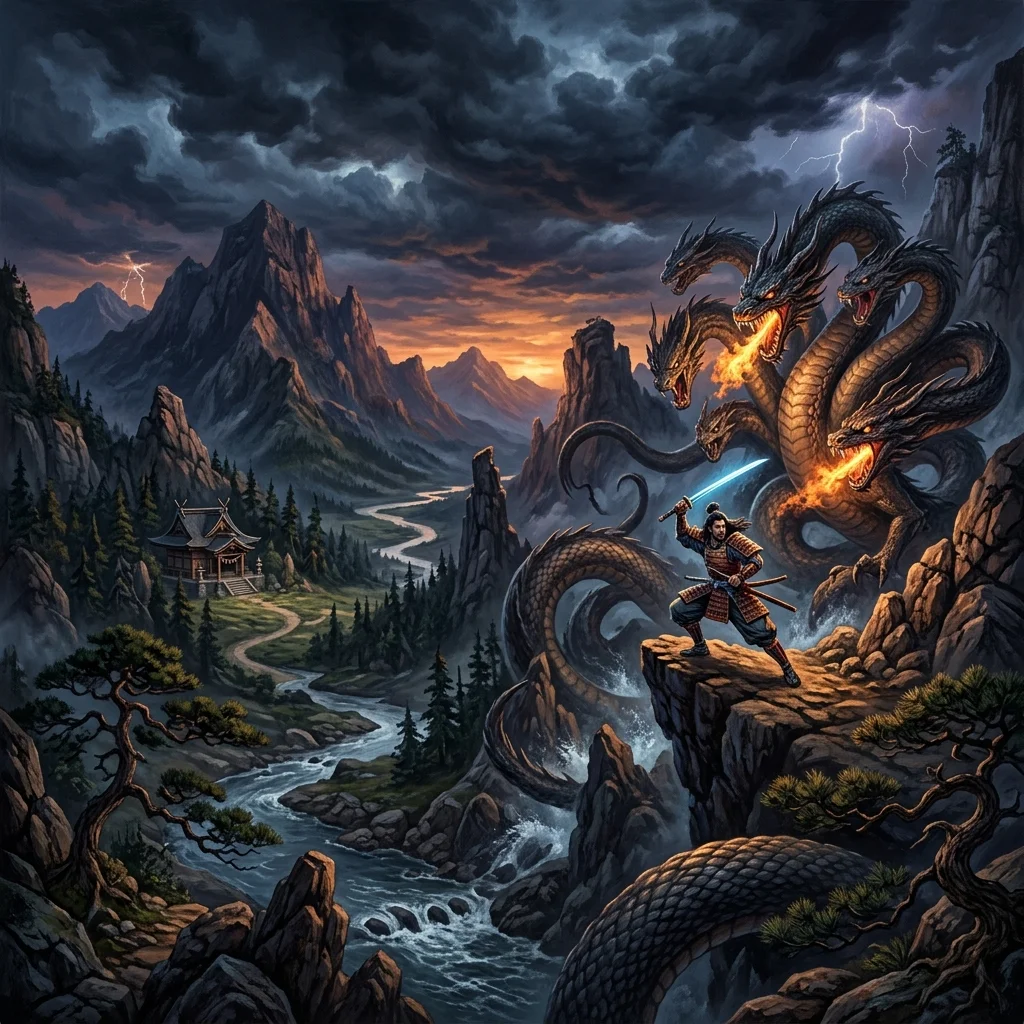
Izumo Province
The earthly domain granted to Susanoo after his exile from heaven, where he slew the eight-headed serpent Yamata no Orochi.
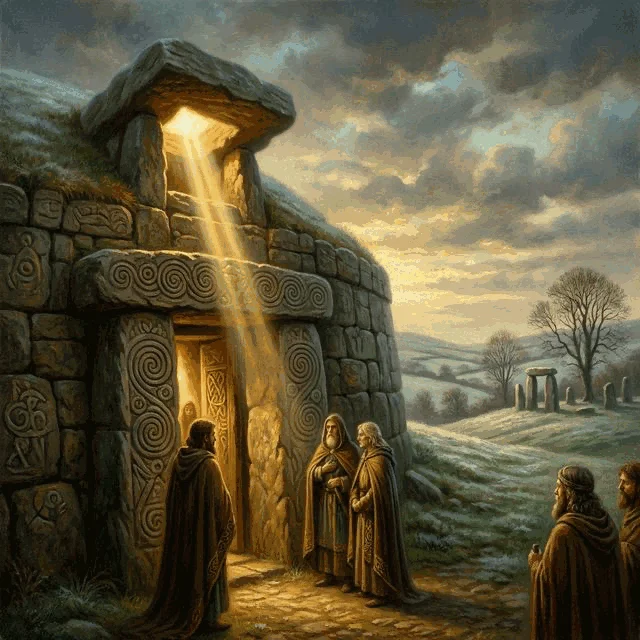
Newgrange (Sí an Bhrú)
A grand prehistoric passage tomb and the home of the Dagda (and later Aengus). Associated with the winter solstice.
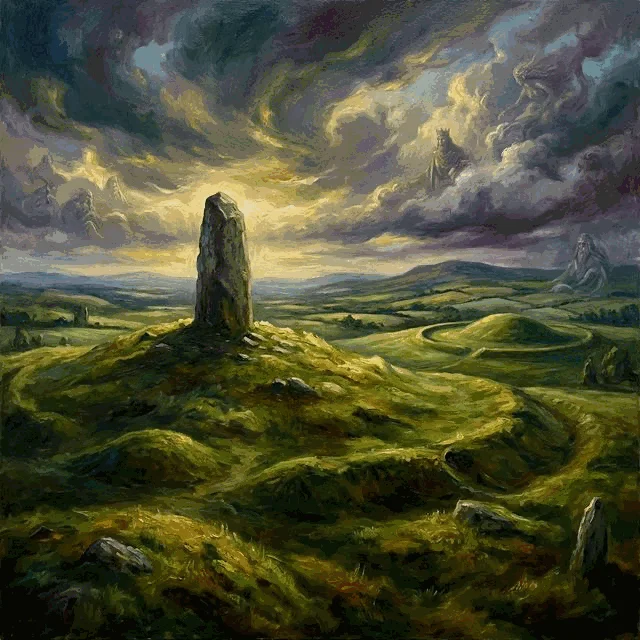
Hill of Tara
The Hill of Tara in County Meath, ancient ceremonial seat of the high kings of Ireland in medieval tradition, with the Lia Fáil, the stone said to cry out under the rightful king.
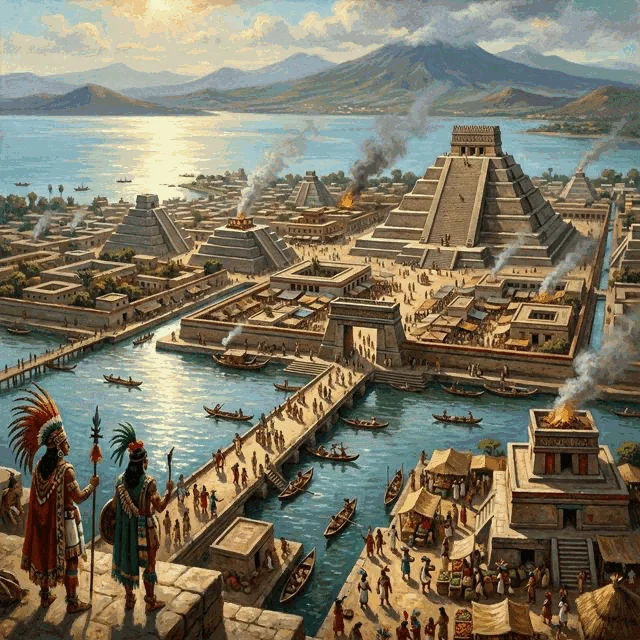
Tenochtitlan
The Mexica capital on an island in Lake Texcoco, founded where Huitzilopochtli's sign of an eagle on a cactus appeared, and centred on the Templo Mayor; the heart of present-day Mexico City.
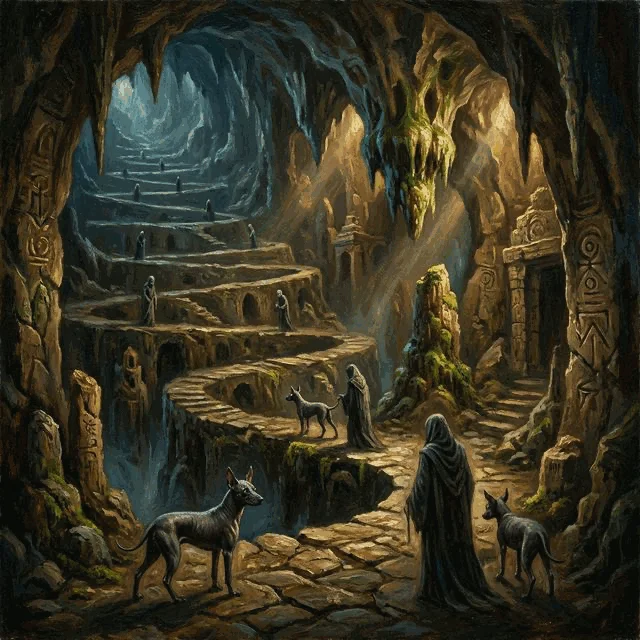
Mictlan
The nine-level underworld of Aztec mythology, a perilous four-year journey for the souls of the dead to reach Mictlantecuhtli.
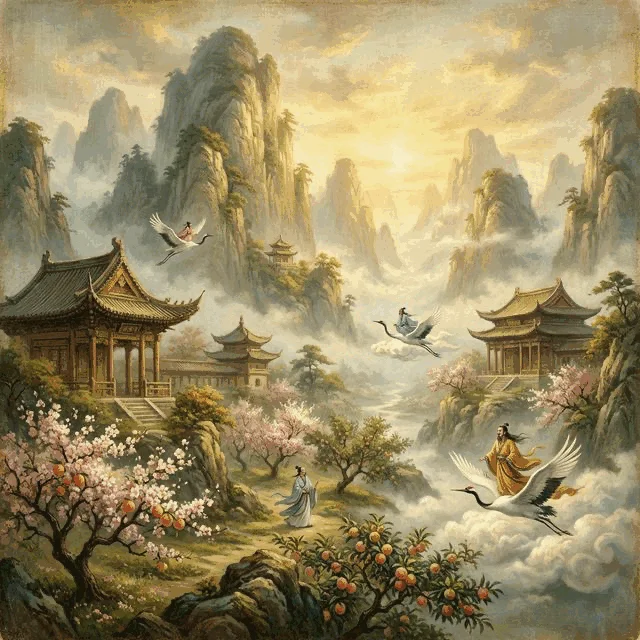
Mount Kunlun
The mythical mountain paradise in the west, dwelling of Xiwangmu (Queen Mother of the West) and source of the peaches of immortality.
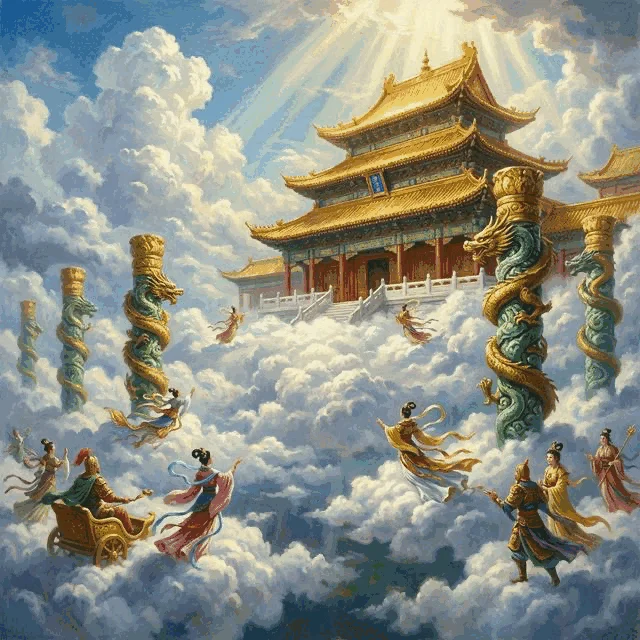
The Heavenly Palace
The opulent celestial court of the Jade Emperor, where the celestial bureaucracy governs all of heaven and earth. Also known as the Lingxiao Palace, it is the seat of divine government.
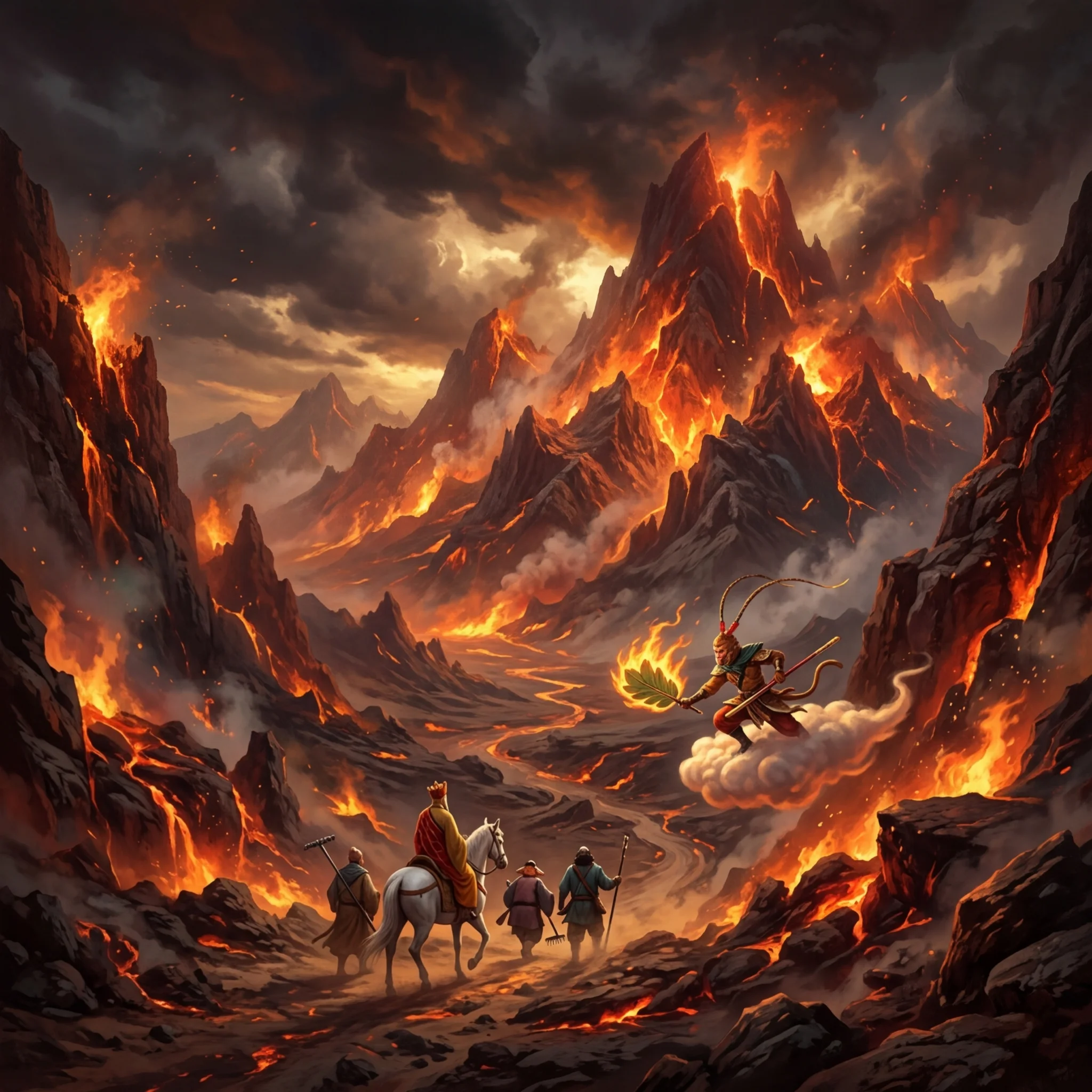
Flaming Mountains
A range of scorching mountains created when Sun Wukong kicked over Laozi's alchemical furnace during his rampage in Heaven. The monk Tang Sanzang and his disciples had to obtain the Banana Leaf Fan from Princess Iron Fan to extinguish the flames and pass through.
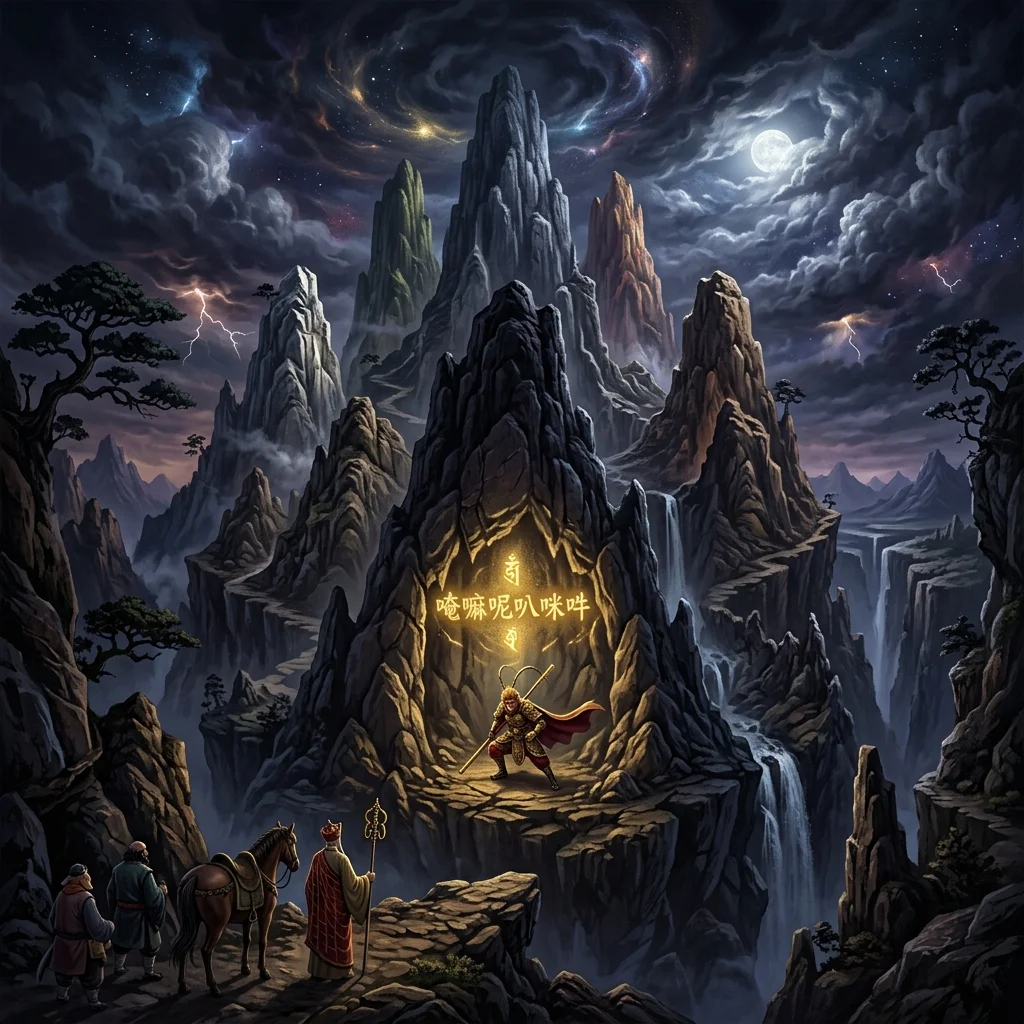
Five Elements Mountain
The mountain created by Buddha to imprison Sun Wukong for 500 years after his rebellion against Heaven. The Buddha placed a seal on the mountain, and only the destined pilgrim Tang Sanzang could release the Monkey King.
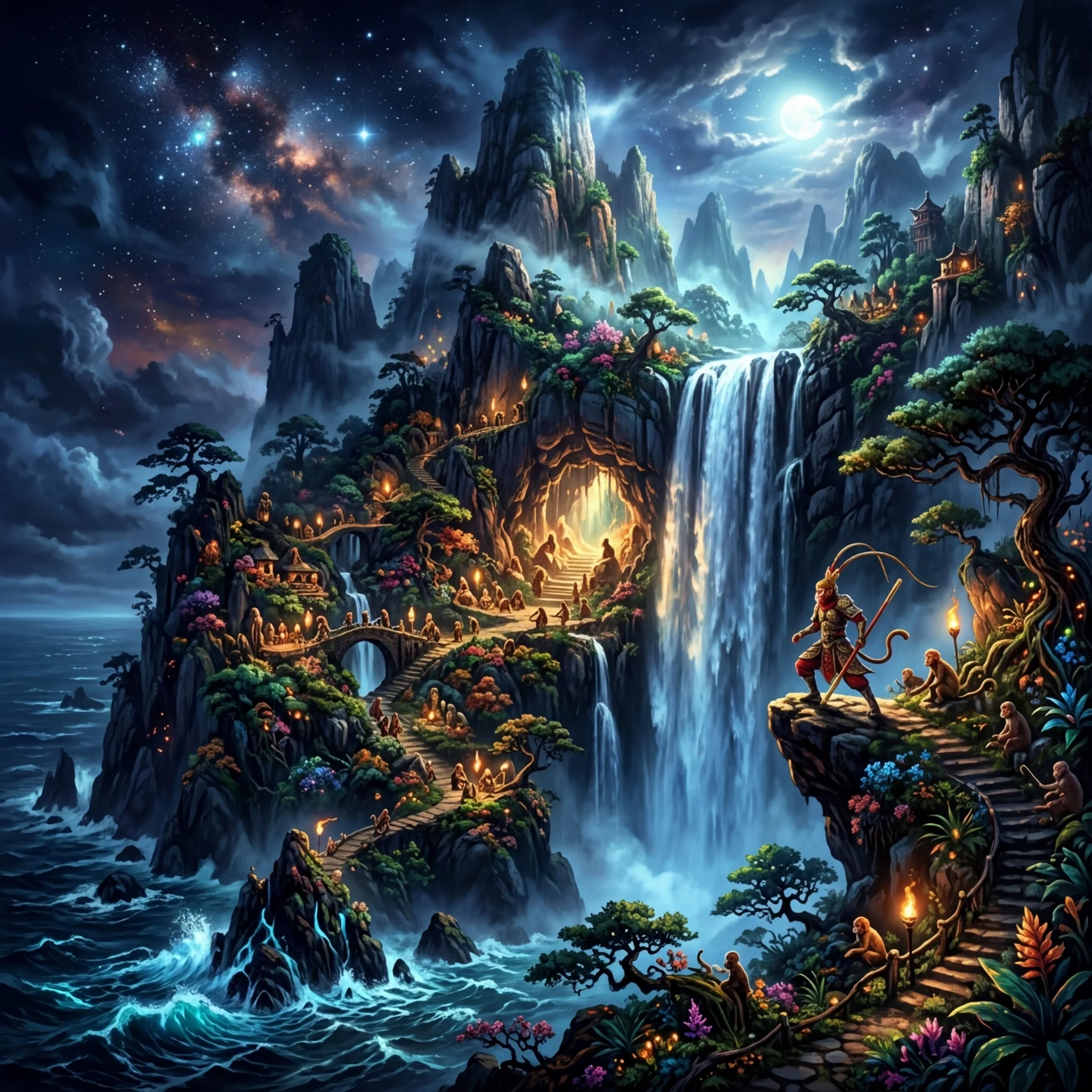
Mountain of Flowers and Fruit
The mystical mountain in the Eastern Sea where Sun Wukong was born from a stone egg. Behind the Water Curtain Cave, he established his kingdom of monkeys and ruled as their king before seeking immortality.
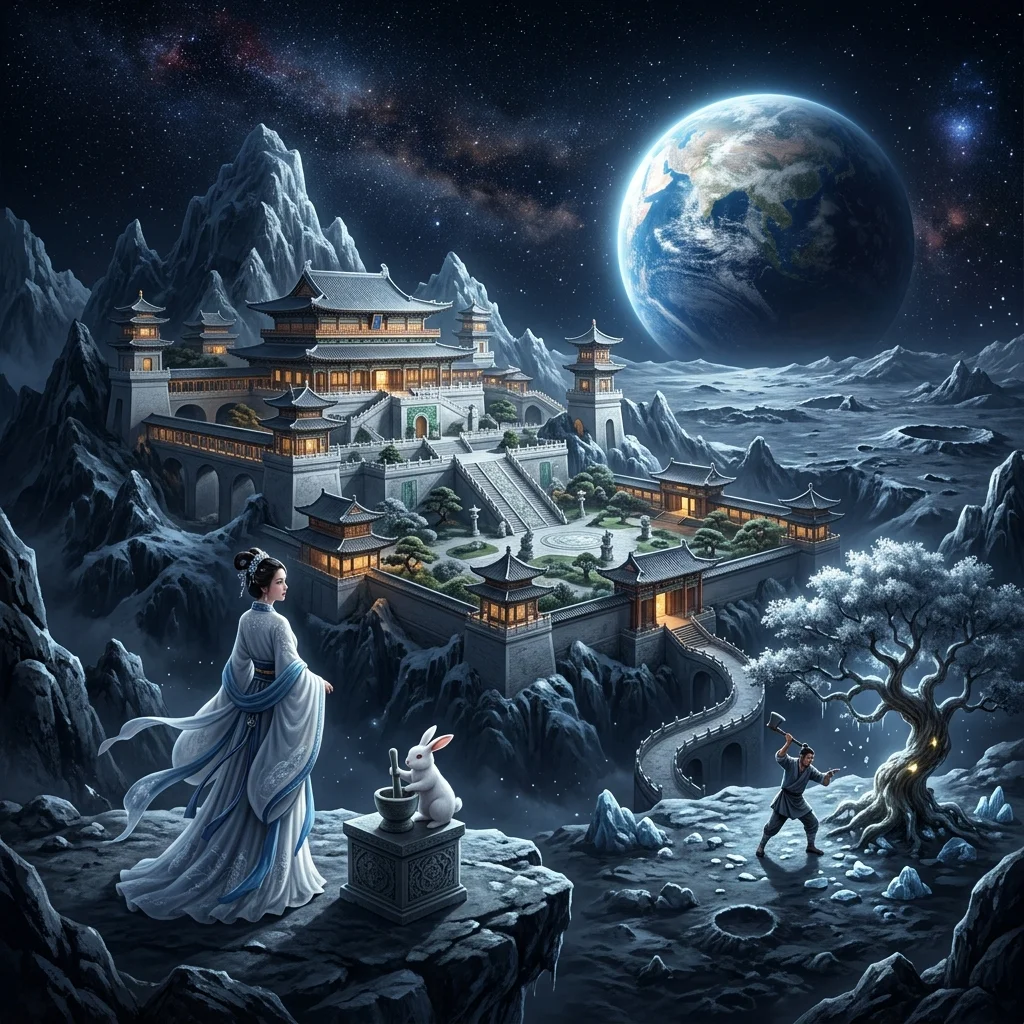
Guanghan Palace
The Palace of Cold Vastness on the moon, where Chang'e lives in eternal solitude after drinking the elixir of immortality. She is accompanied only by the Jade Rabbit and the woodcutter Wu Gang.
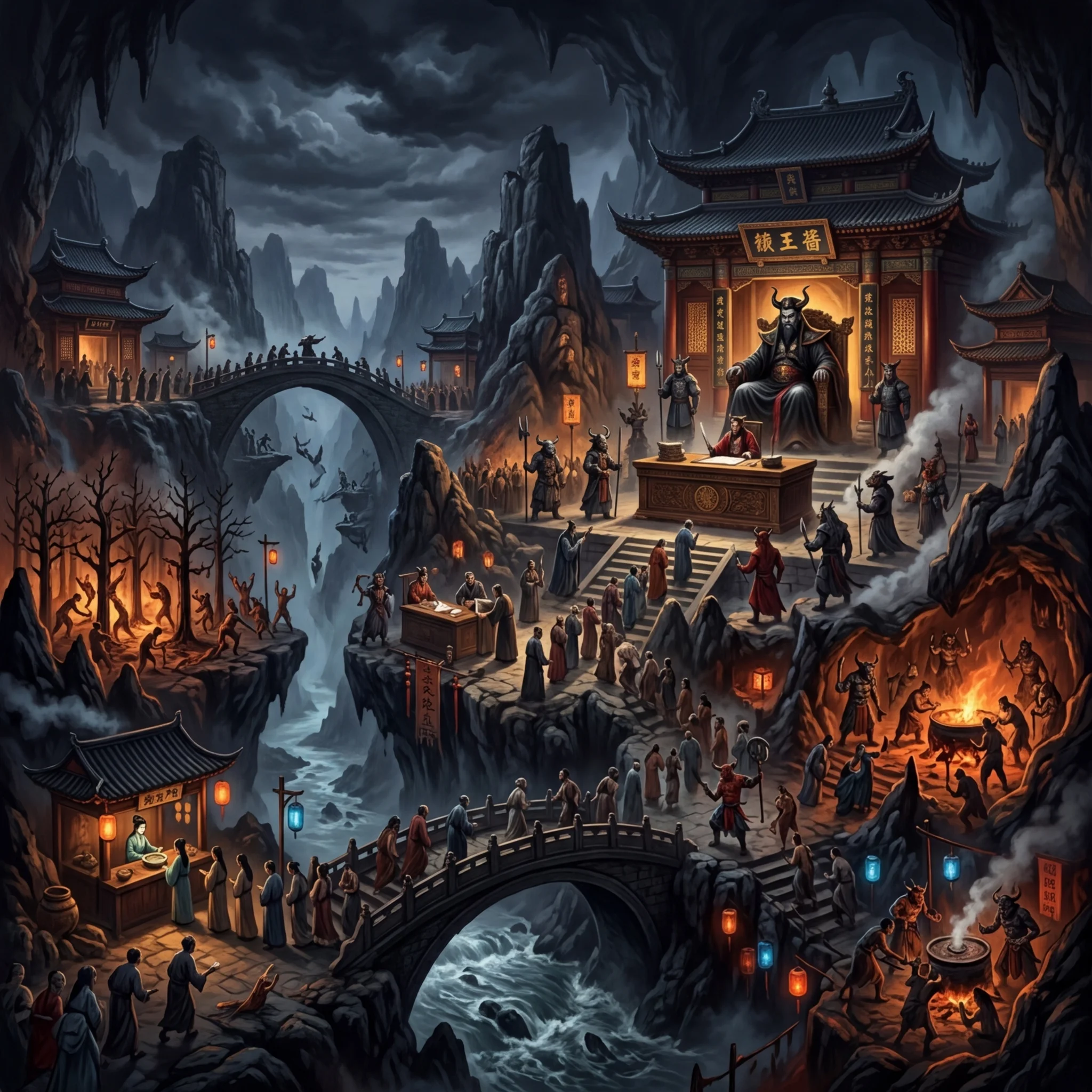
Diyu (Chinese Underworld)
The realm of the dead where souls are judged by Yan Wang (King Yama) and punished or rewarded based on their earthly deeds. It contains multiple courts and hells, after which souls drink from the River of Oblivion before reincarnation.
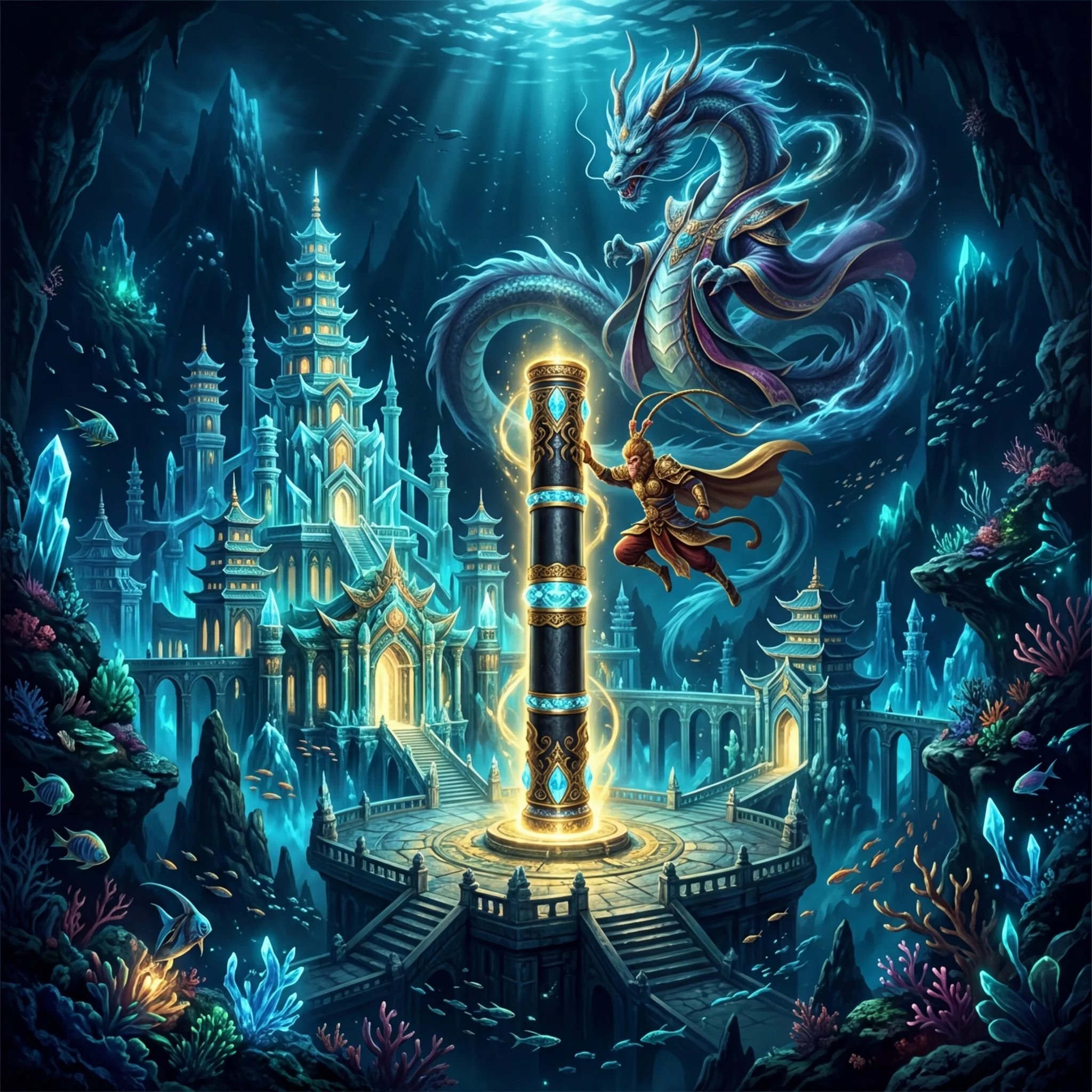
Crystal Palace of the Eastern Sea
The underwater palace of Ao Guang, the Dragon King of the Eastern Sea. It was here that Sun Wukong obtained his famous weapon, the Ruyi Jingu Bang, originally a pillar used to measure sea depths.
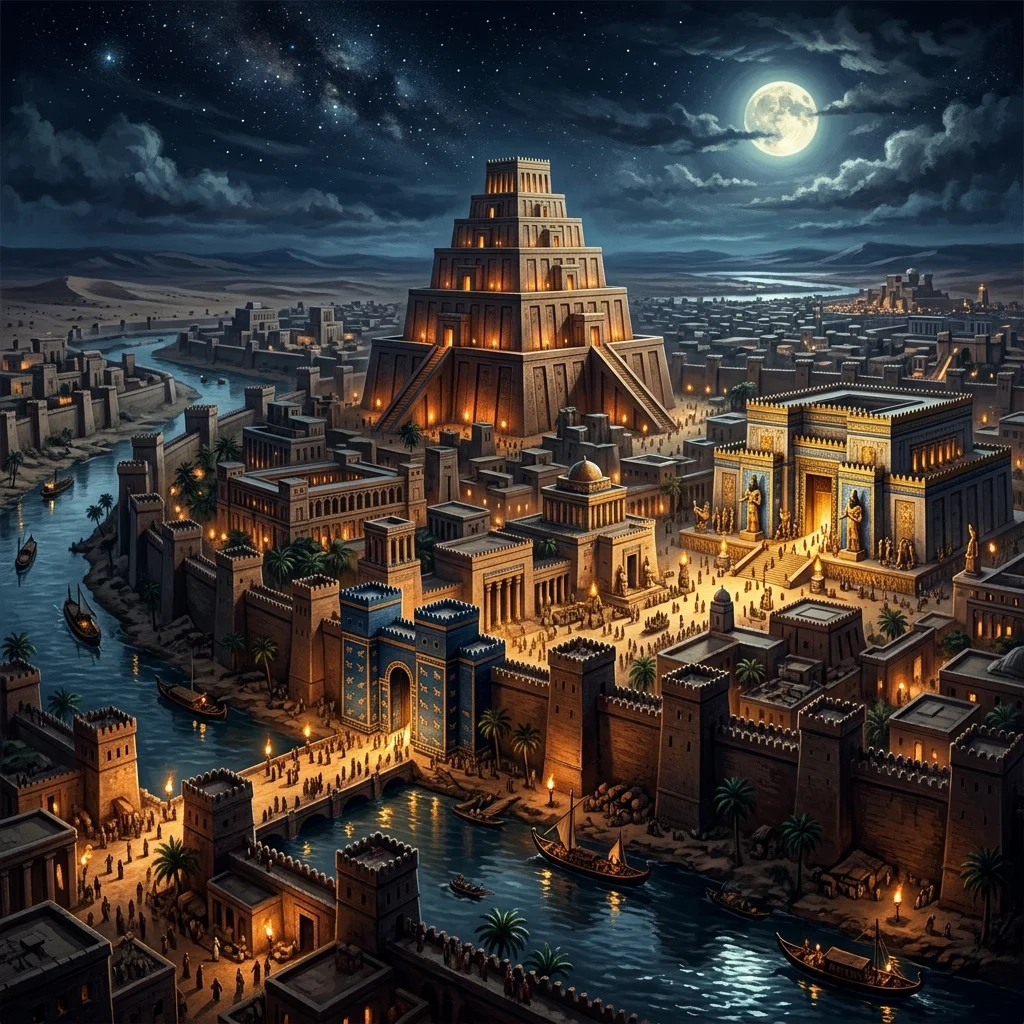
Babylon
The great city of Marduk, center of the Babylonian Empire and home to the Esagila temple and the ziggurat Etemenanki. The name means 'Gate of the Gods' and the city was considered the axis mundi of the Mesopotamian cosmos.
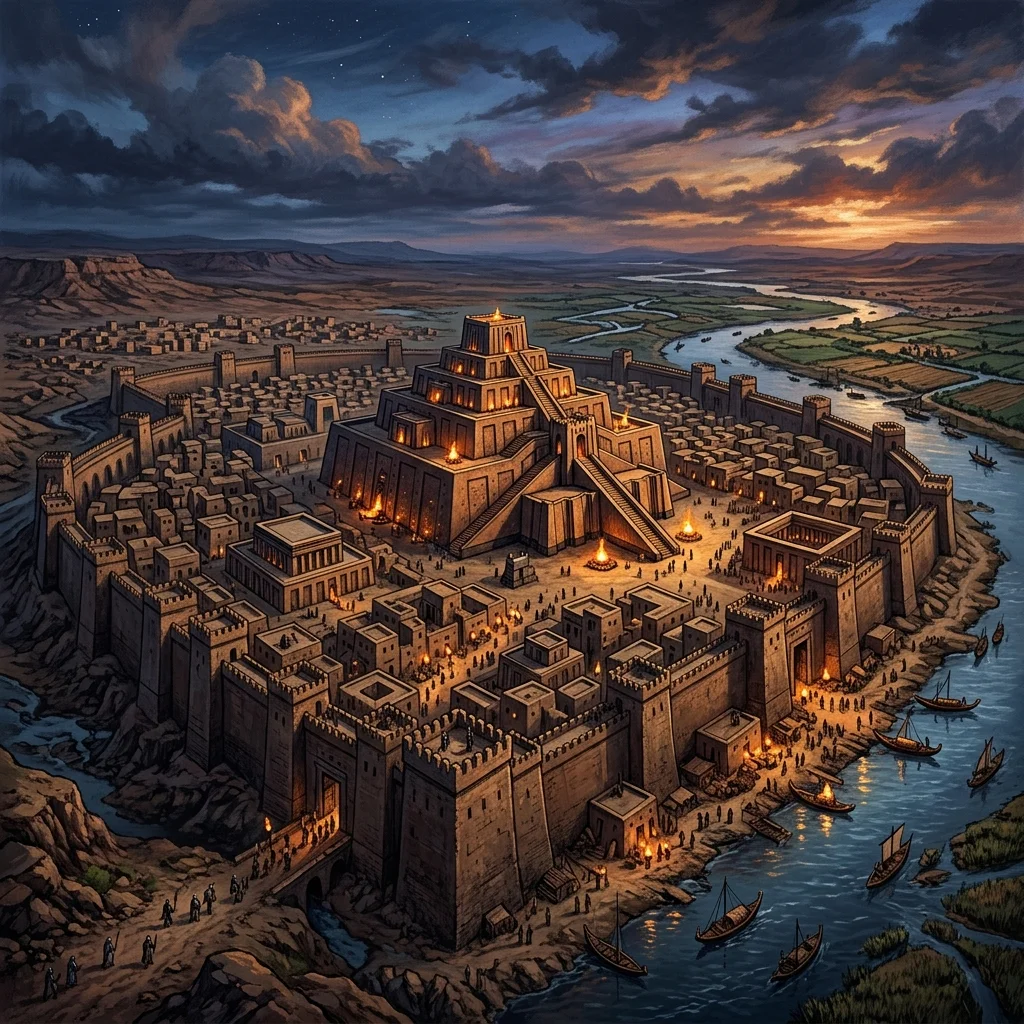
Uruk
The city of Gilgamesh and Inanna, one of the first true cities in human history. Its mighty walls, said to be built by Gilgamesh himself, enclosed the great E-anna temple complex sacred to both Anu and Inanna.
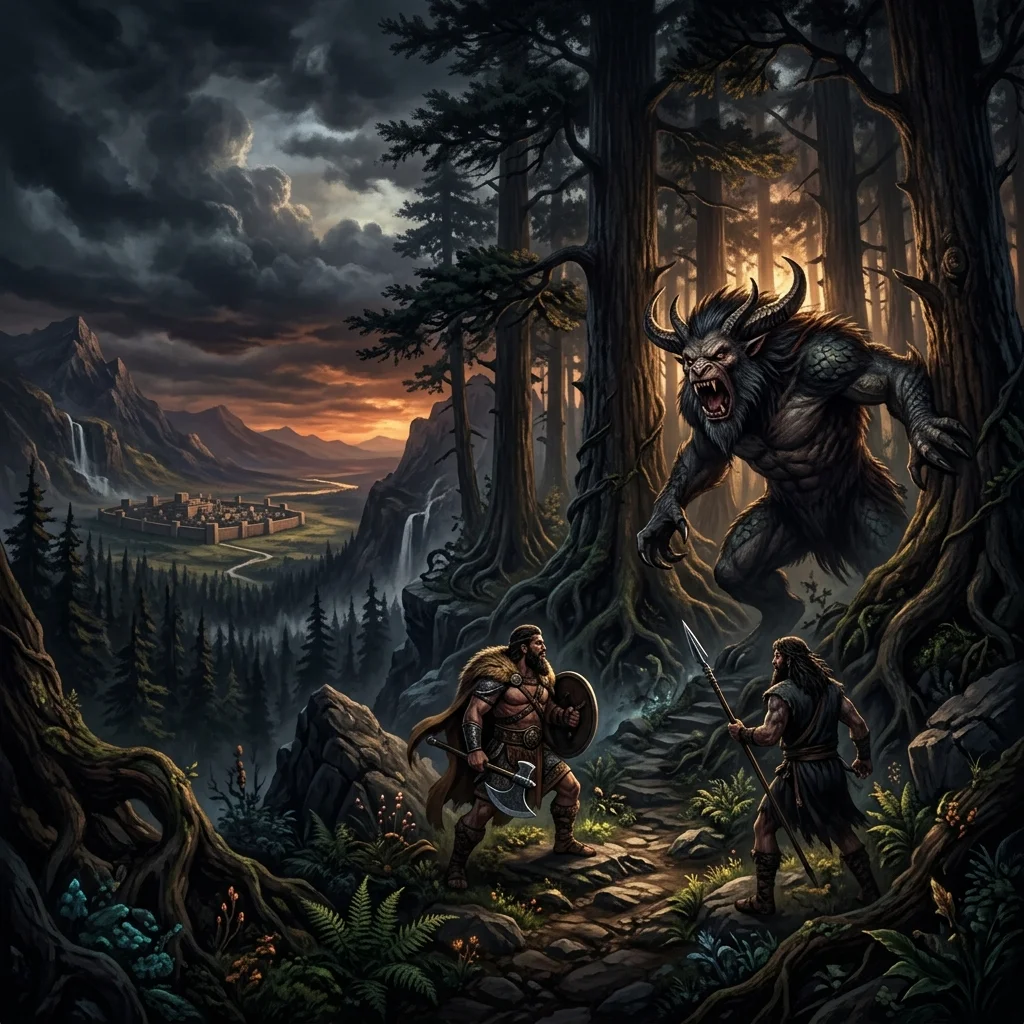
The Cedar Forest
A vast primordial forest at the edge of civilization, guarded by the monster Humbaba appointed by Enlil. Gilgamesh and Enkidu ventured here to slay Humbaba and make their names immortal.
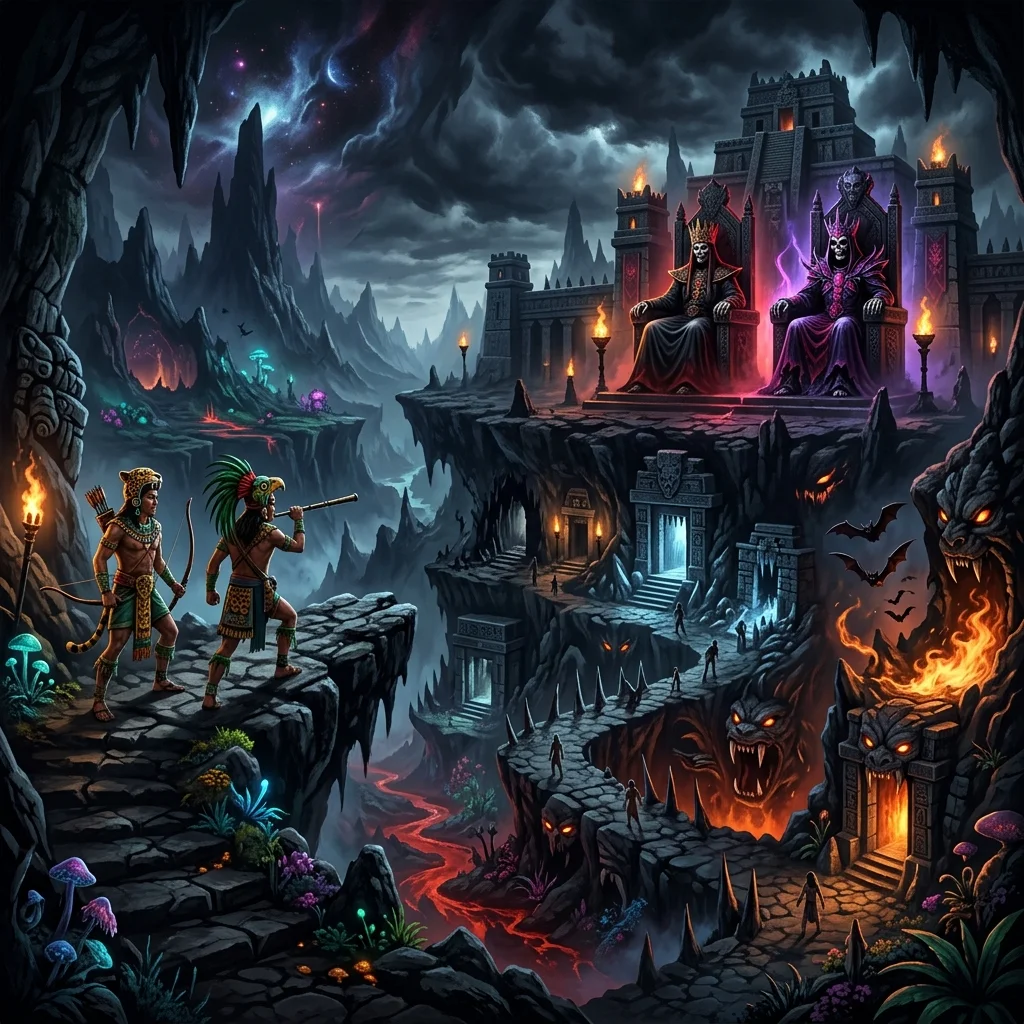
Xibalba
The Maya underworld, 'Place of Fear,' ruled by the death lords One Death and Seven Death. Souls must pass through houses of darkness, knives, cold, jaguars, fire, and bats. The Hero Twins descended here to defeat death itself.
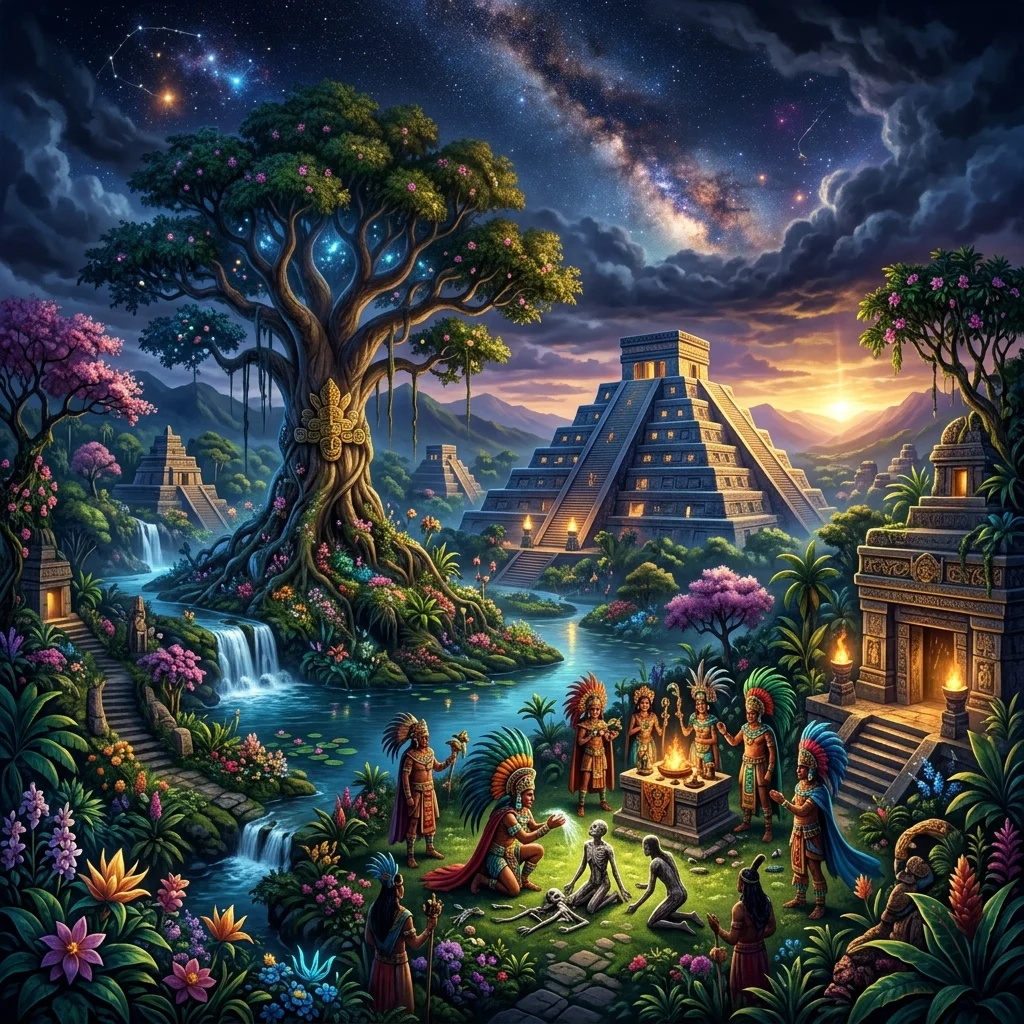
Tamoanchan
The Aztec paradise where the gods created humanity from the bones retrieved from Mictlan. A place of flowering trees and eternal spring, Tamoanchan represents the original state of creation before the current world age.
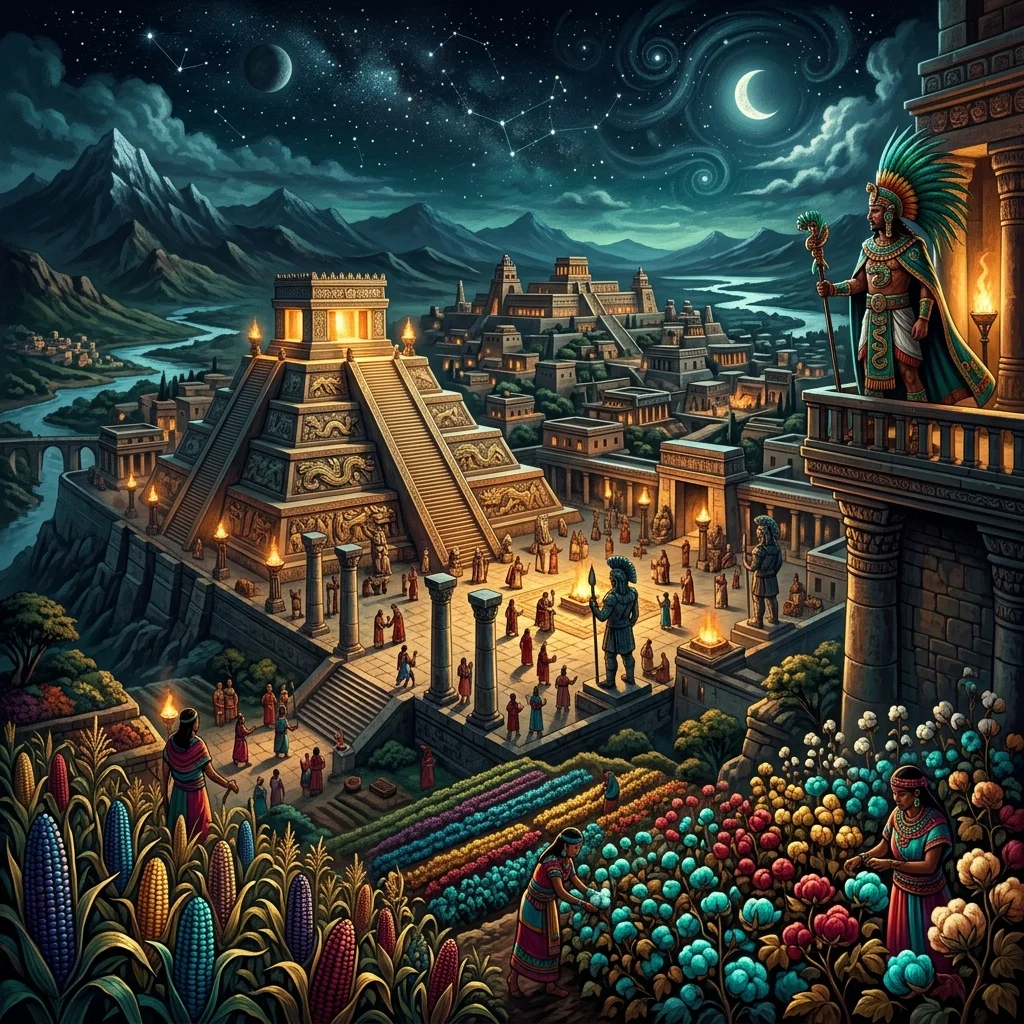
Tollan (Tula)
The legendary Toltec capital associated with Quetzalcoatl as priest-king. A place of artistic and cultural perfection where corn grew in brilliant colors and cotton grew already dyed. Quetzalcoatl was tricked into disgrace here by Tezcatlipoca.
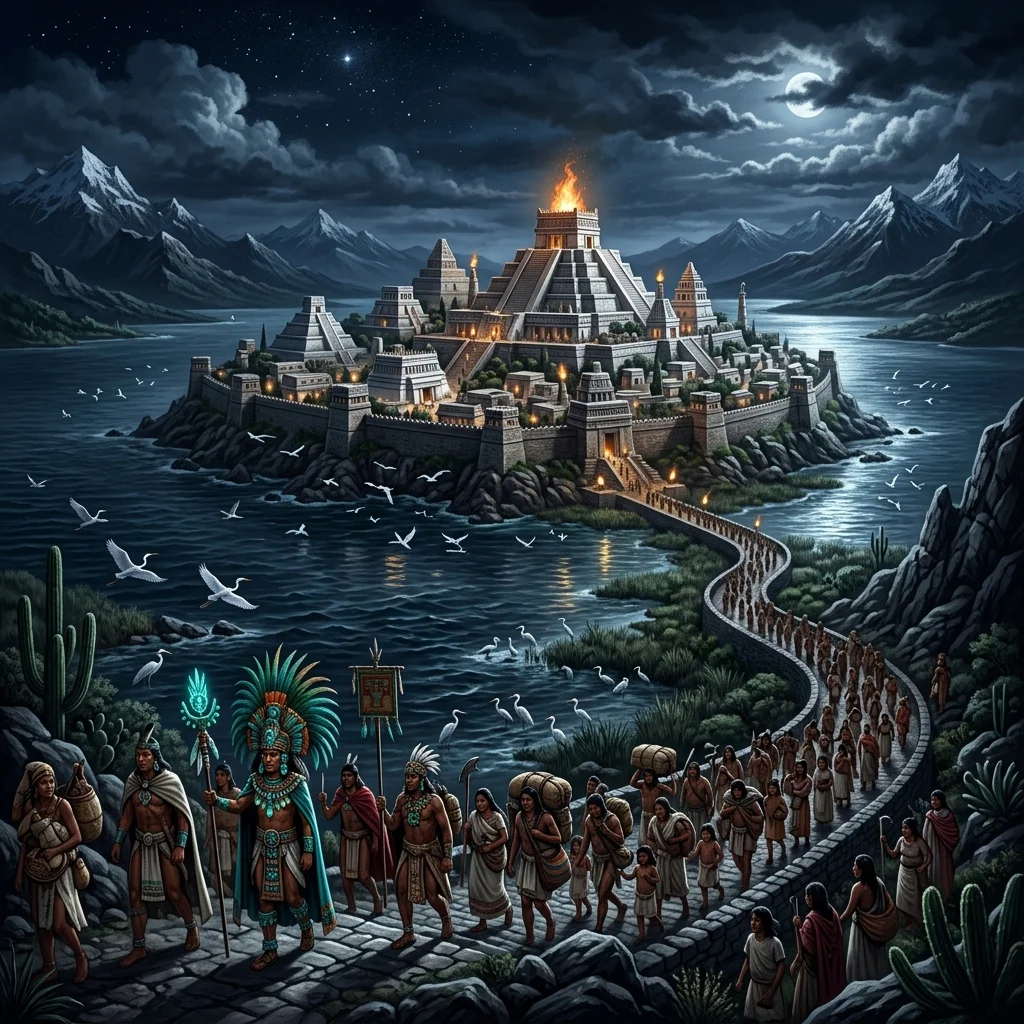
Aztlan
The mythical homeland of the Aztec people, 'Place of Whiteness' or 'Place of Herons.' From this island city, the Mexica began their long migration south, guided by Huitzilopochtli, until they found the eagle on the cactus that marked Tenochtitlan.
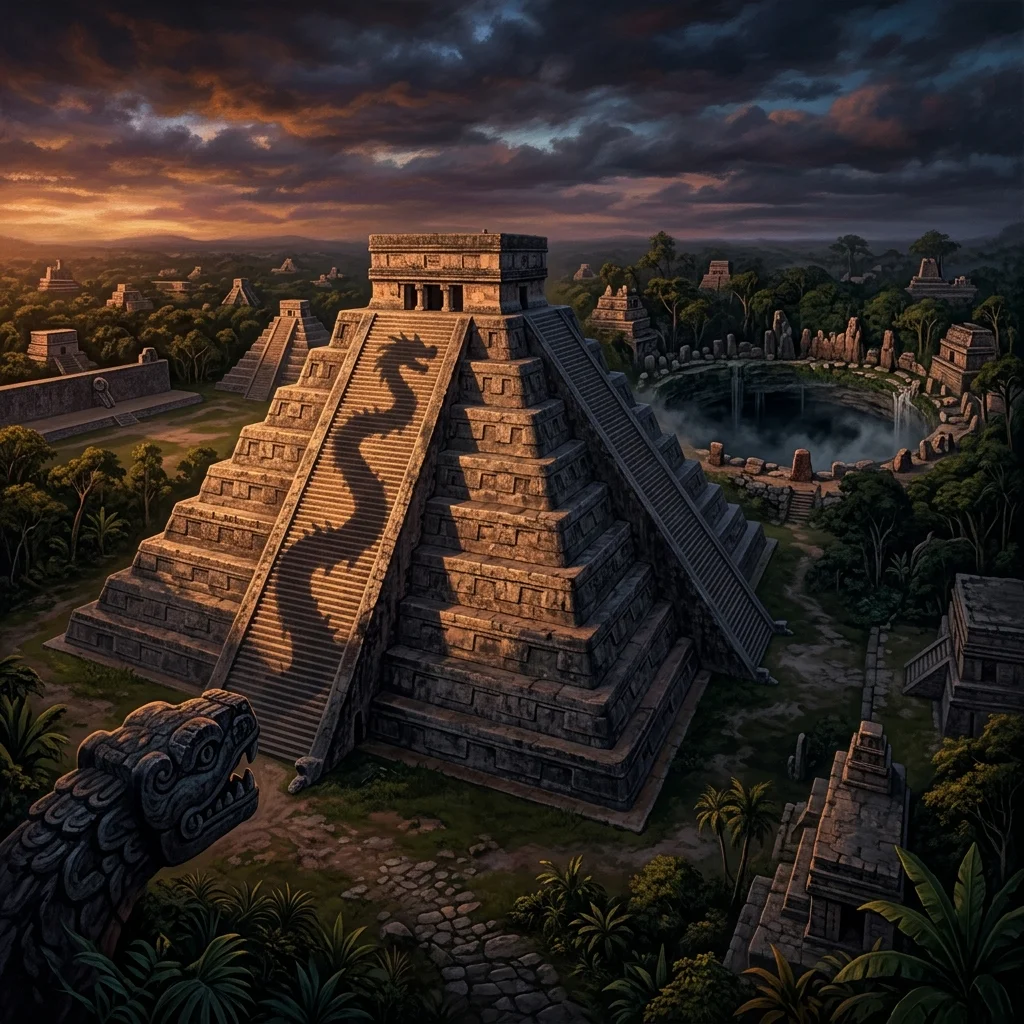
Chichen Itza
The great Maya-Toltec city dominated by El Castillo, the pyramid of Kukulkan. During the equinoxes, shadows create the illusion of a serpent descending the stairs. The cenote here received sacrificial offerings to Chaac.
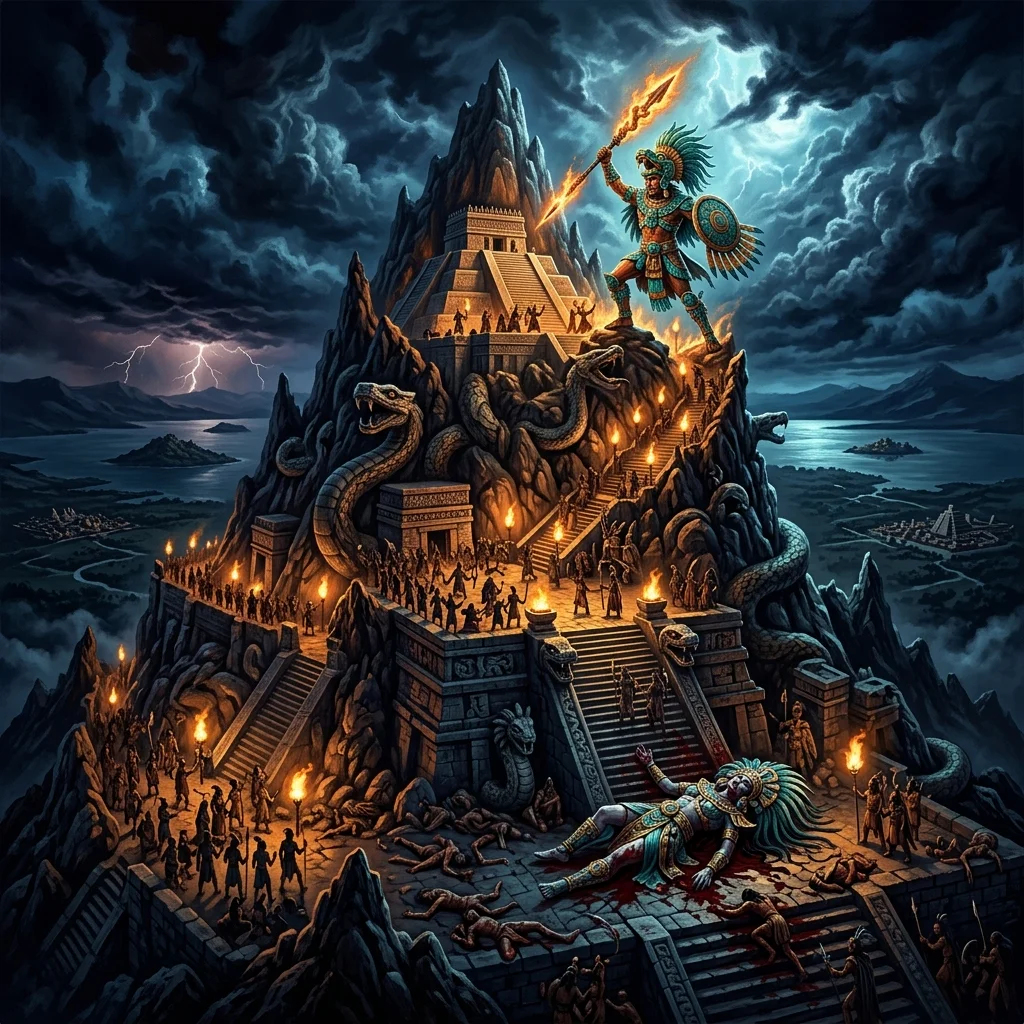
Coatepec (Serpent Mountain)
The mythical mountain where Huitzilopochtli was born fully armed to defeat his sister Coyolxauhqui and four hundred brothers. The Templo Mayor of Tenochtitlan was a recreation of this sacred mountain.
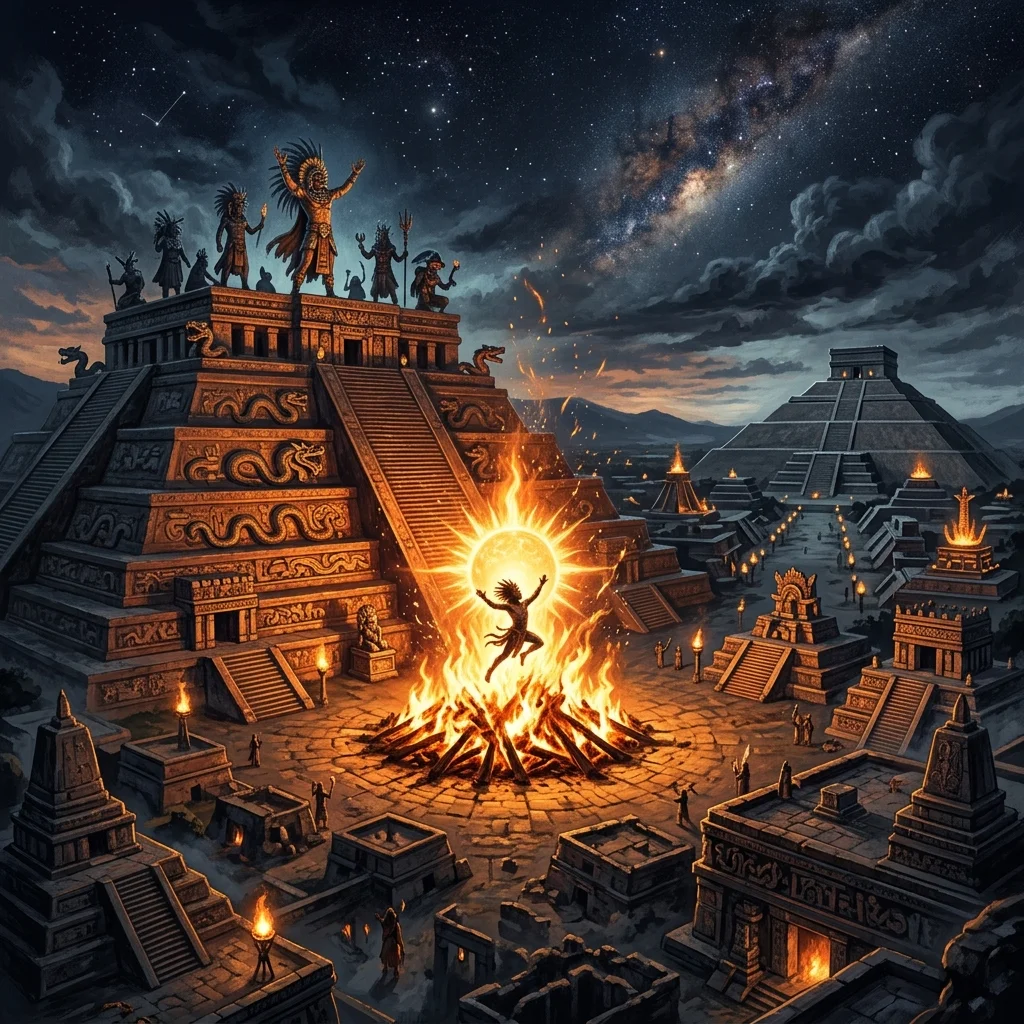
Teotihuacan
The 'Place Where Gods Are Made,' site of the Fifth Sun's creation. Here the gods gathered in darkness, and Nanahuatzin sacrificed himself in fire to become the sun. The Pyramid of the Sun and Pyramid of the Moon mark this sacred ground.
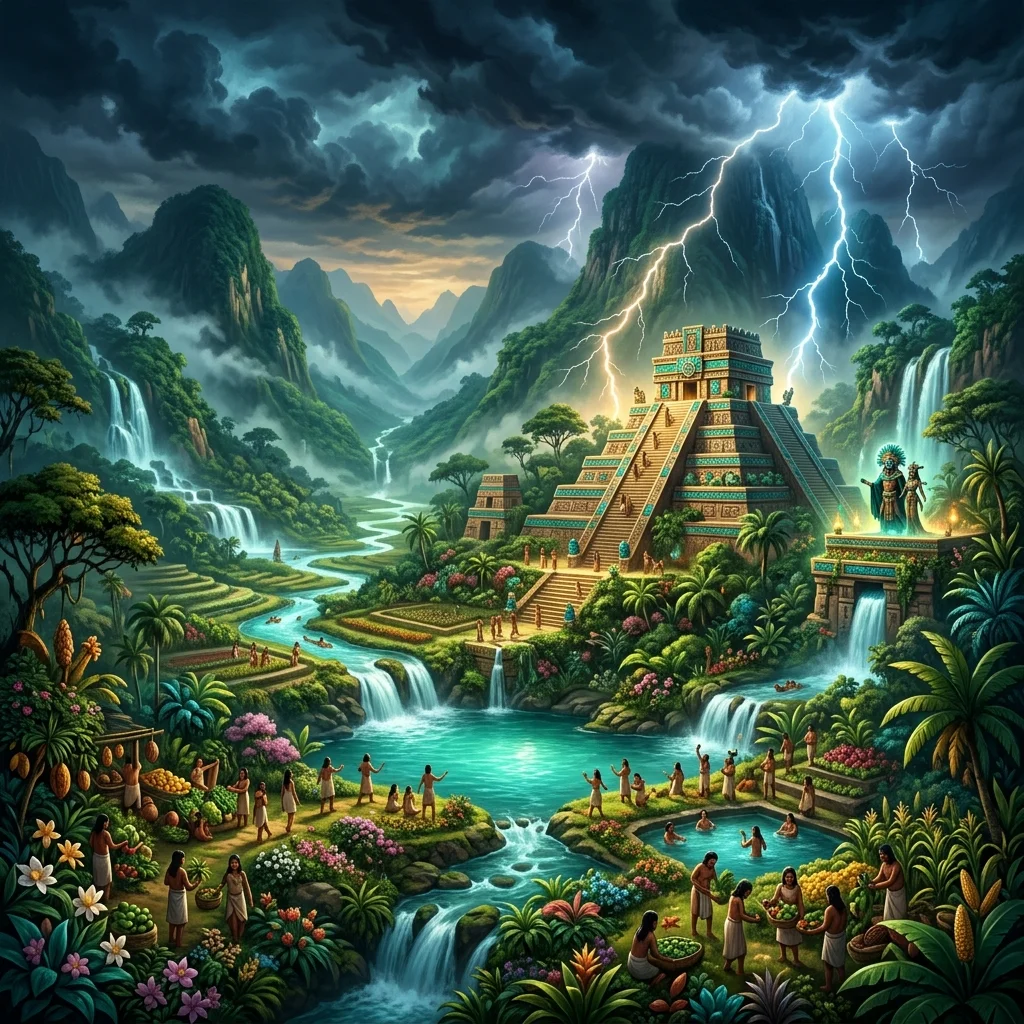
Tlalocan
The earthly paradise ruled by Tlaloc, a place of eternal spring and abundance. Those who died by drowning, lightning, or water-related diseases went to Tlalocan rather than Mictlan, considered a blessed fate.
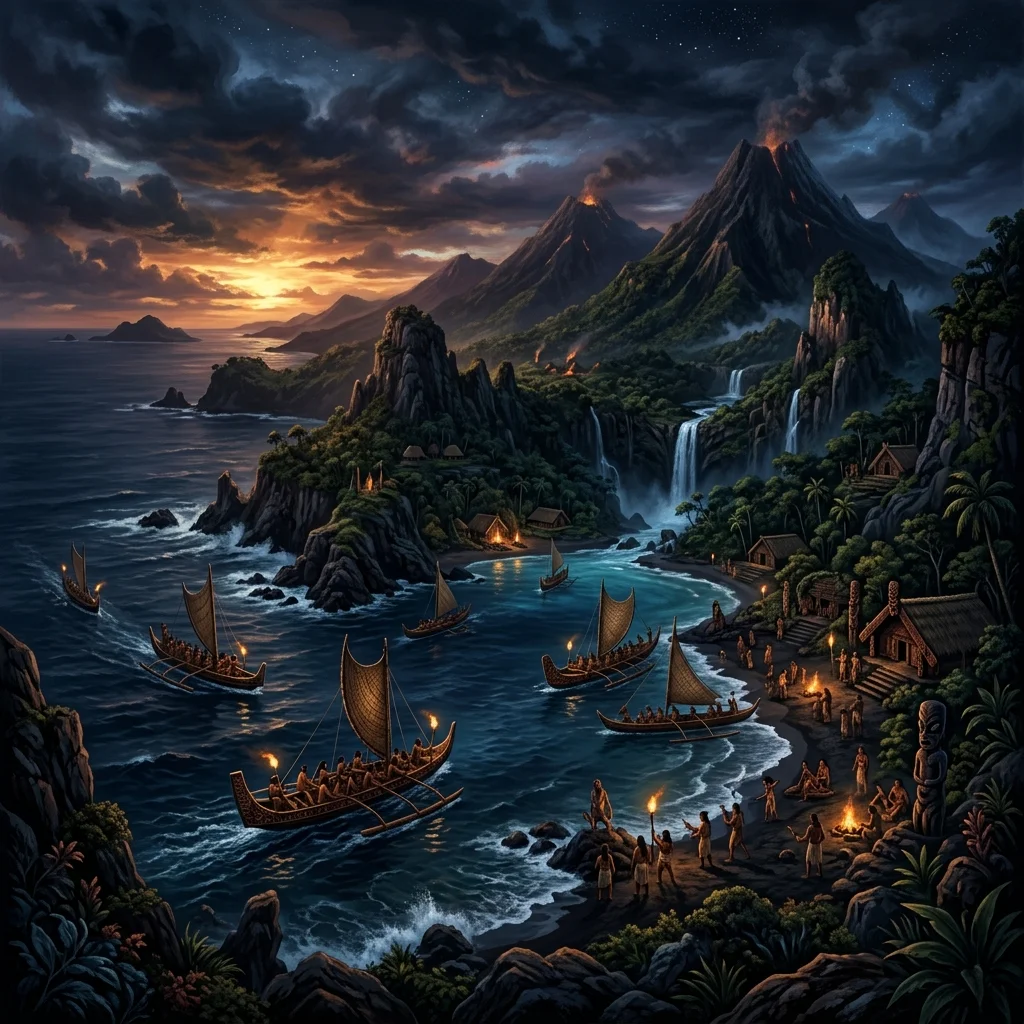
Hawaiki
The legendary ancestral homeland of the Polynesian peoples, from which the great voyaging canoes departed to settle the Pacific islands. Hawaiki is both a physical place (possibly in the Society Islands) and a spiritual realm where souls return after death.
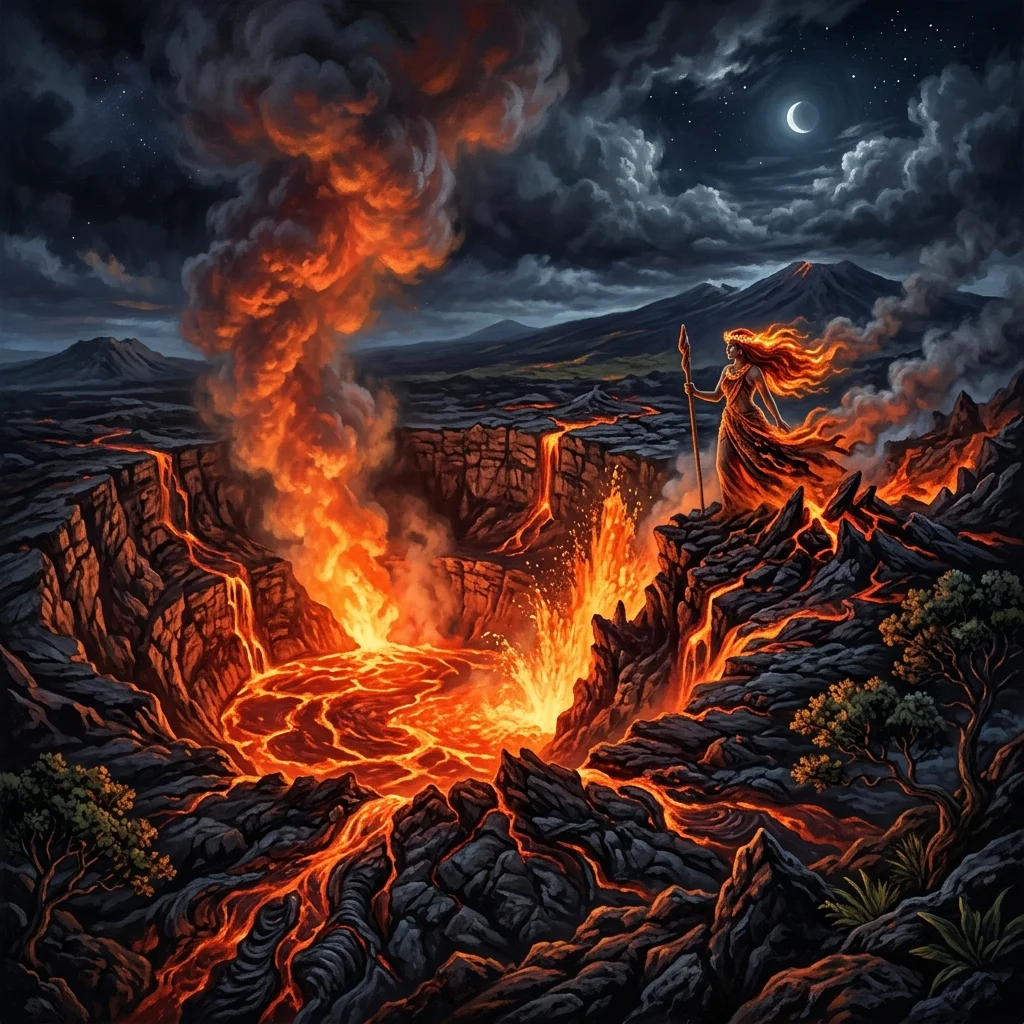
Kilauea Volcano
The home of Pele, goddess of volcanoes, located on the Big Island of Hawaii. The Halemaumau crater within Kilauea is considered Pele's residence, where she creates new land through volcanic eruptions. One of the most active volcanoes on Earth.
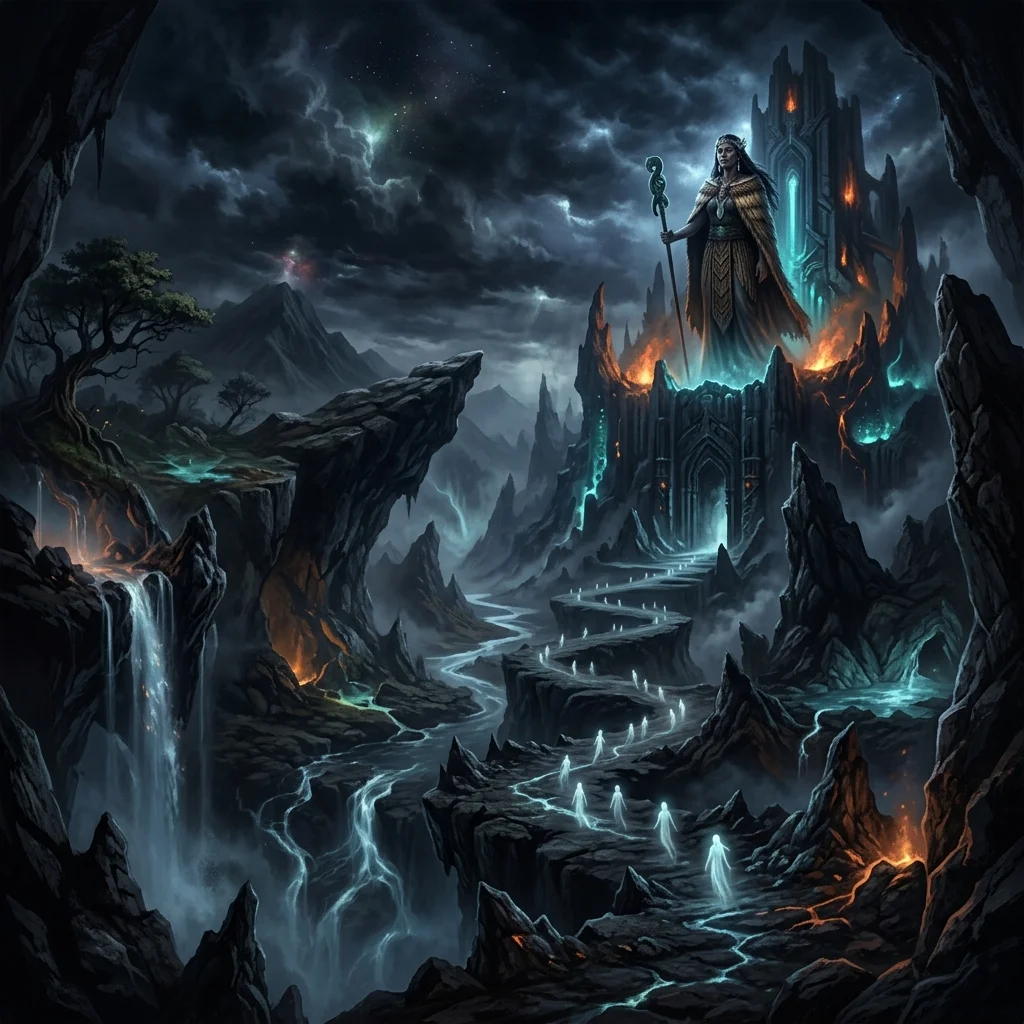
Te Po (The Underworld)
The Polynesian realm of darkness and the dead, ruled by Hine-nui-te-po, the goddess of death. Te Po is where souls journey after death, a shadowy realm contrasting with Te Ao (the world of light). Maui died attempting to conquer Te Po.
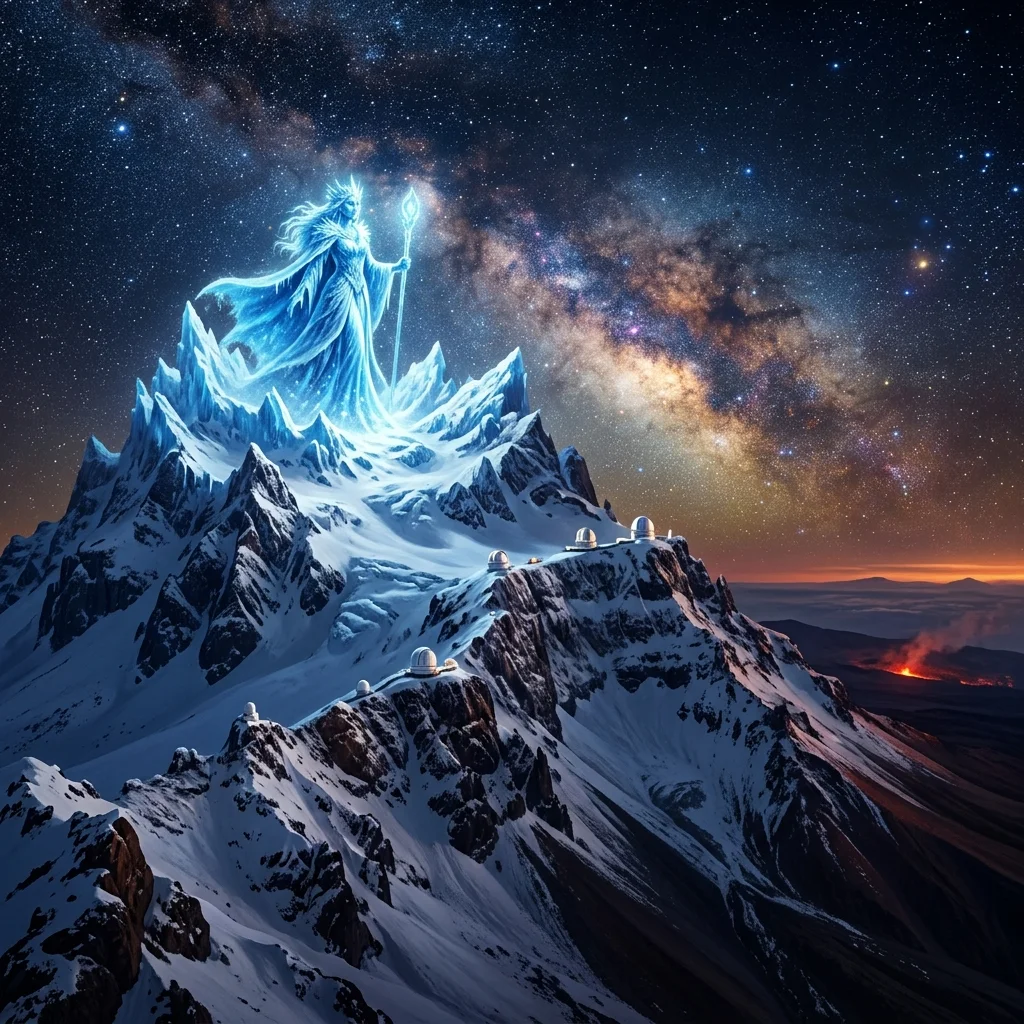
Mauna Kea
The tallest mountain in Hawaii and home of Poliahu, the snow goddess. Its summit, often covered with snow, is considered sacred and represents the realm of ice that opposes Pele's volcanic fire. The name means 'White Mountain.'
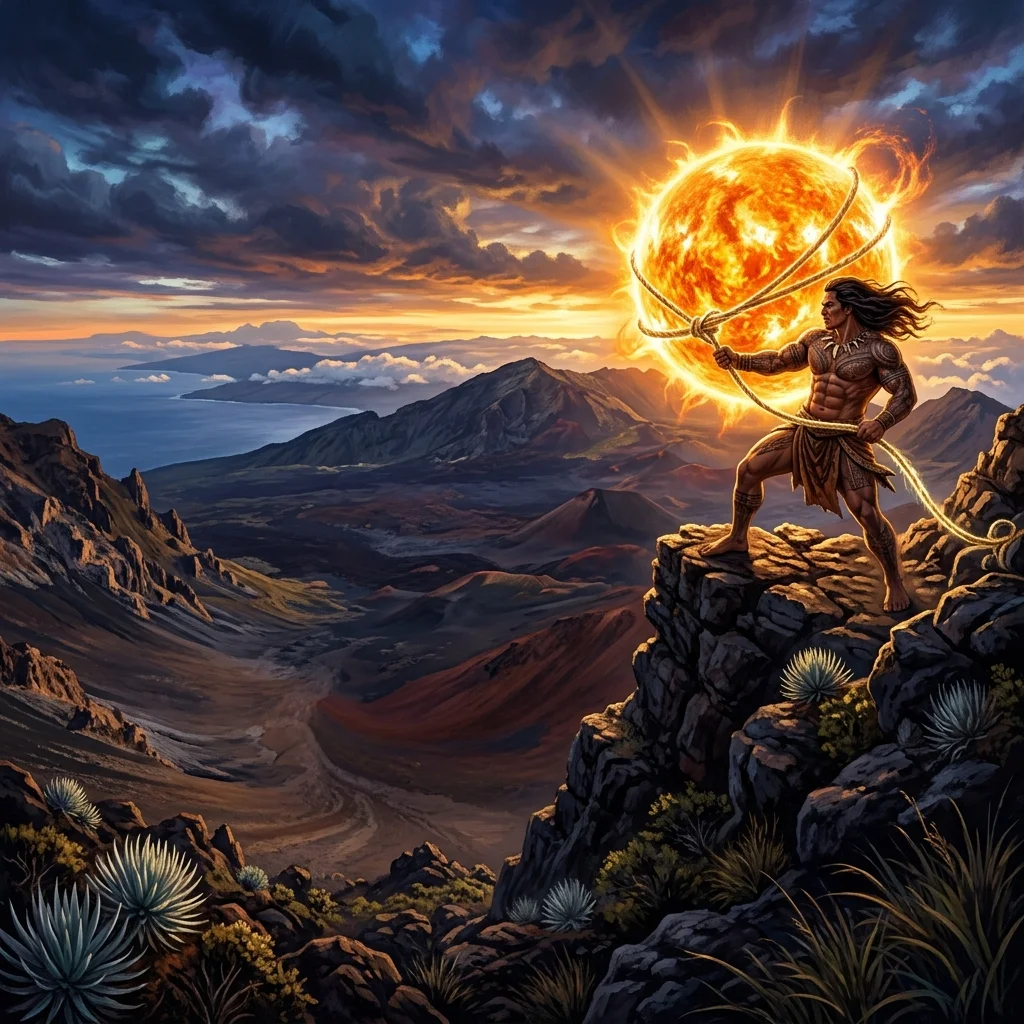
Haleakala
The 'House of the Sun' on the island of Maui, where according to Hawaiian tradition, Maui captured and beat the sun to slow its passage across the sky. The massive volcanic crater is one of Hawaii's most sacred sites.
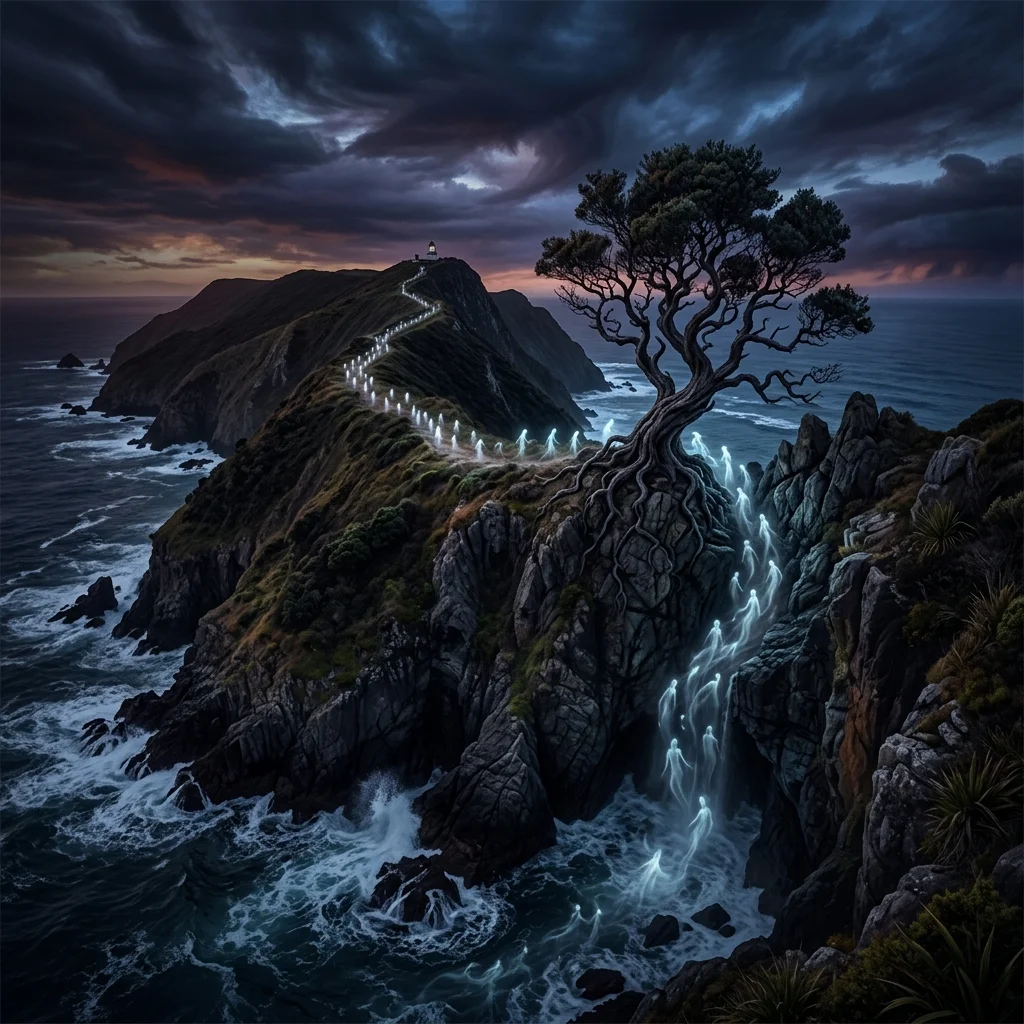
Te Rerenga Wairua (Cape Reinga)
The northernmost tip of New Zealand, where Maori tradition holds that the spirits of the dead depart for the afterlife. Souls travel north along the island, descend an ancient pohutukawa tree, and slide down its roots into the sea to journey to Hawaiki.
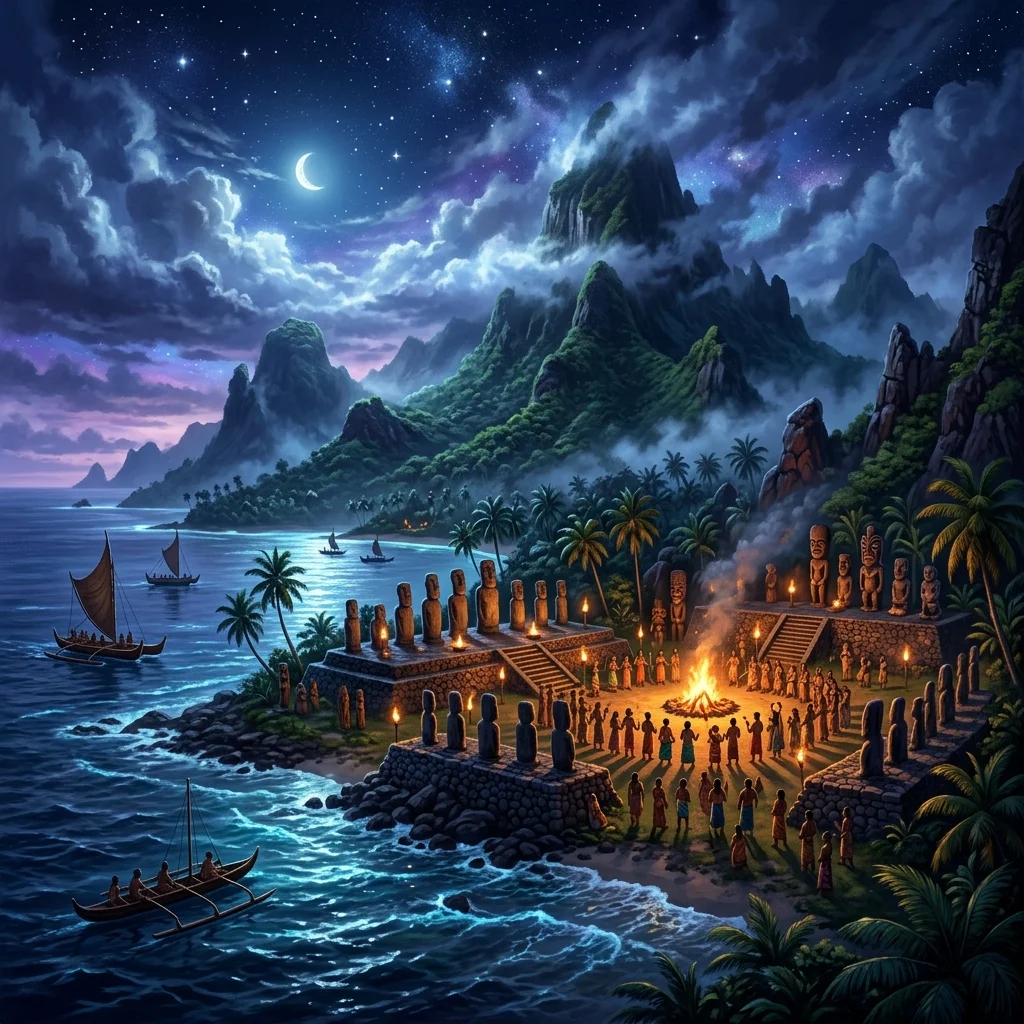
Ra'iatea (Sacred Island)
An island in the Society Islands group, traditionally considered one of the most sacred places in Polynesia. The marae (temple) of Taputapuatea was a center of religious and political power, from which voyaging canoes departed to settle distant islands.
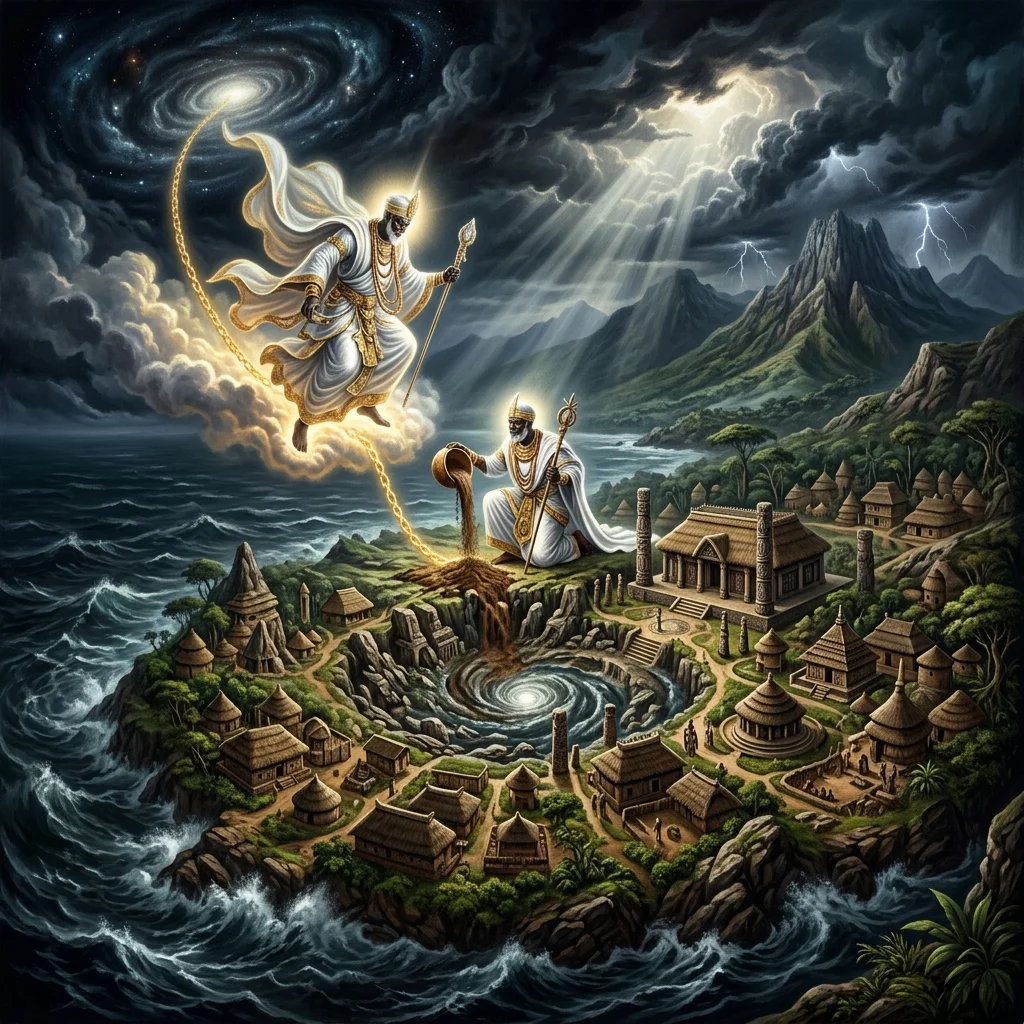
Ile-Ife
The holiest city in Yoruba religion, where Obatala first descended from heaven and created land from the primordial waters. Known as 'the navel of the world' and the place where creation began. The city remains the spiritual center of Yoruba tradition, and its kings trace descent from the Orishas.
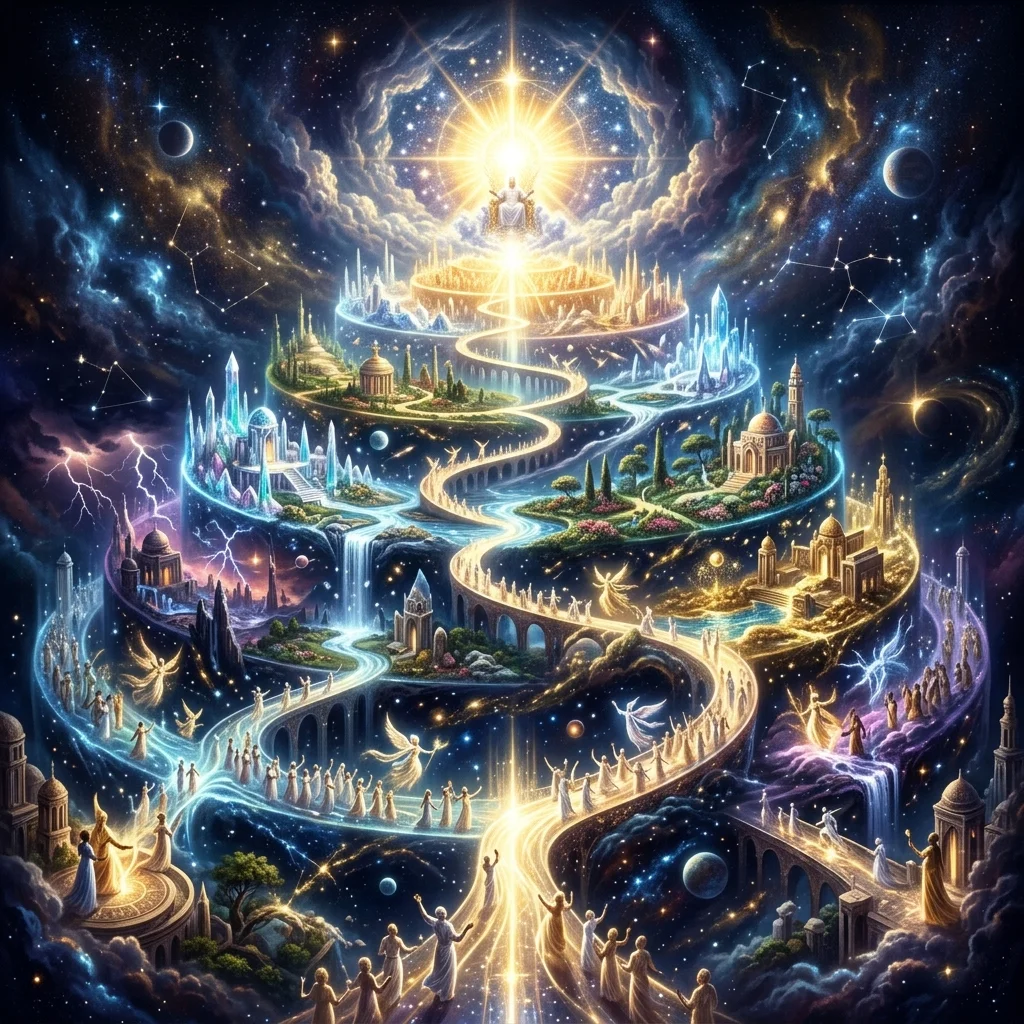
Orun (Heaven)
The heavenly realm where Olodumare and the Orishas dwell. Orun exists in layers, with the supreme being at the highest level. It is also the destination of righteous souls after death, where they join the ancestors and may eventually be reborn into the earthly realm (Aye).
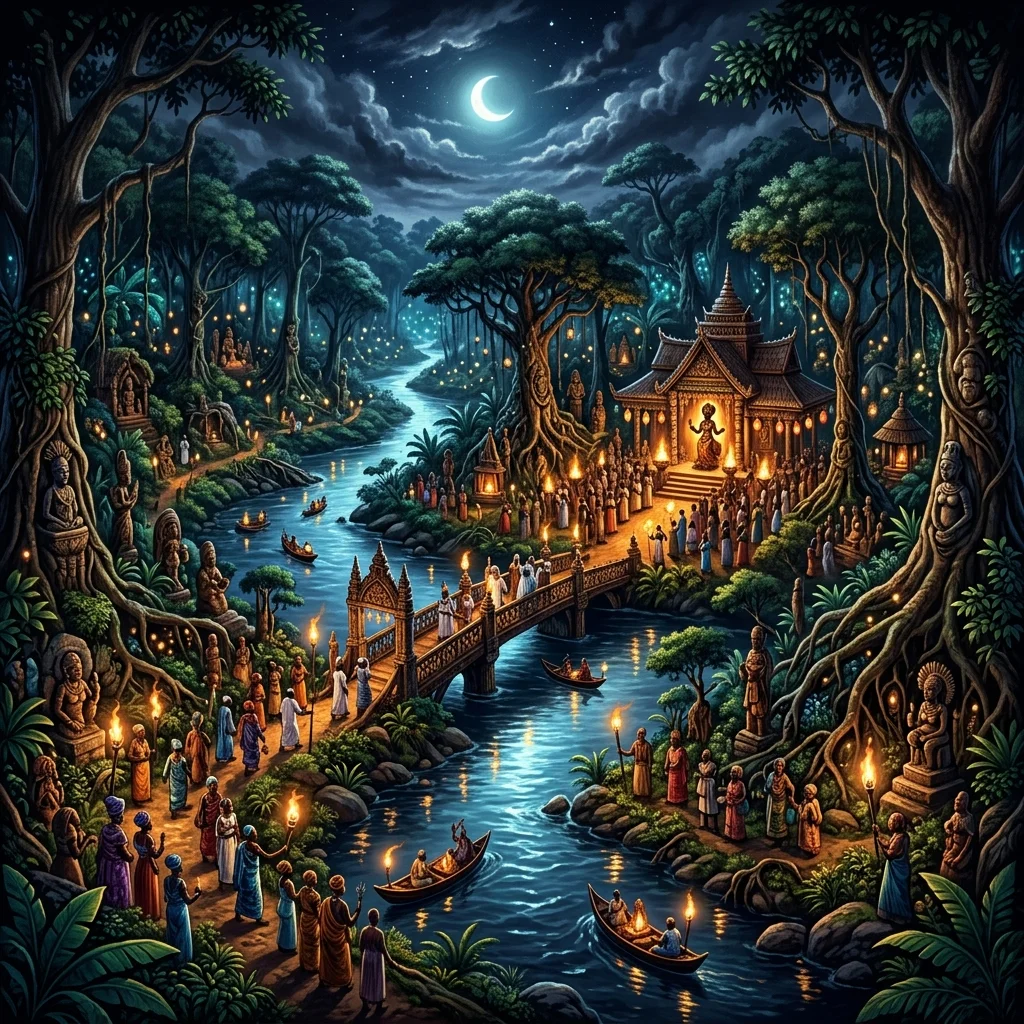
Osun-Osogbo Sacred Grove
A UNESCO World Heritage Site and the most important shrine to the goddess Oshun. Located along the Osun River in Nigeria, the grove contains ancient sculptures, shrines, and sanctuaries. The annual Osun-Osogbo Festival draws hundreds of thousands of worshippers from around the world.
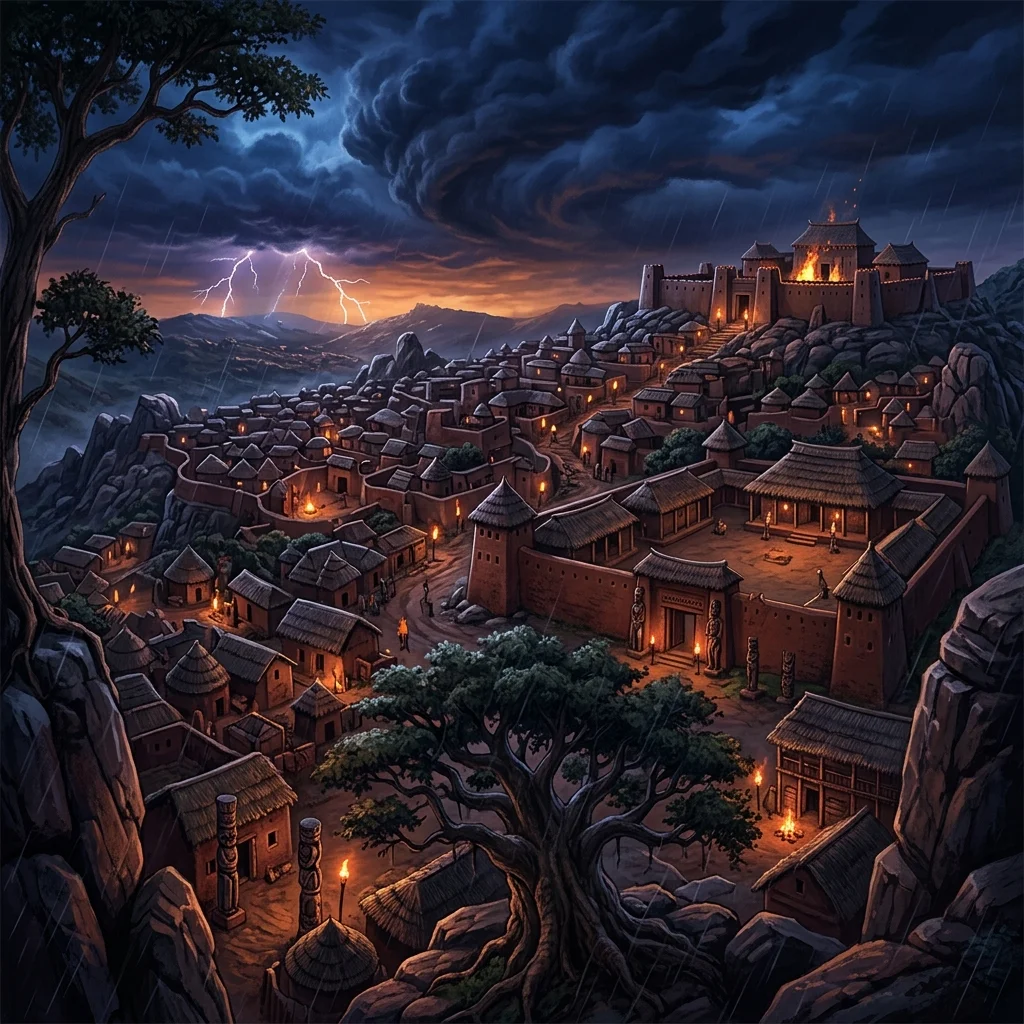
Oyo
The capital of the ancient Oyo Empire and the city where Shango ruled as the fourth Alaafin (king). After his tragic death and deification, Oyo became a center of Shango worship. The city represents the intersection of historical kingship and divine mythology in Yoruba tradition.
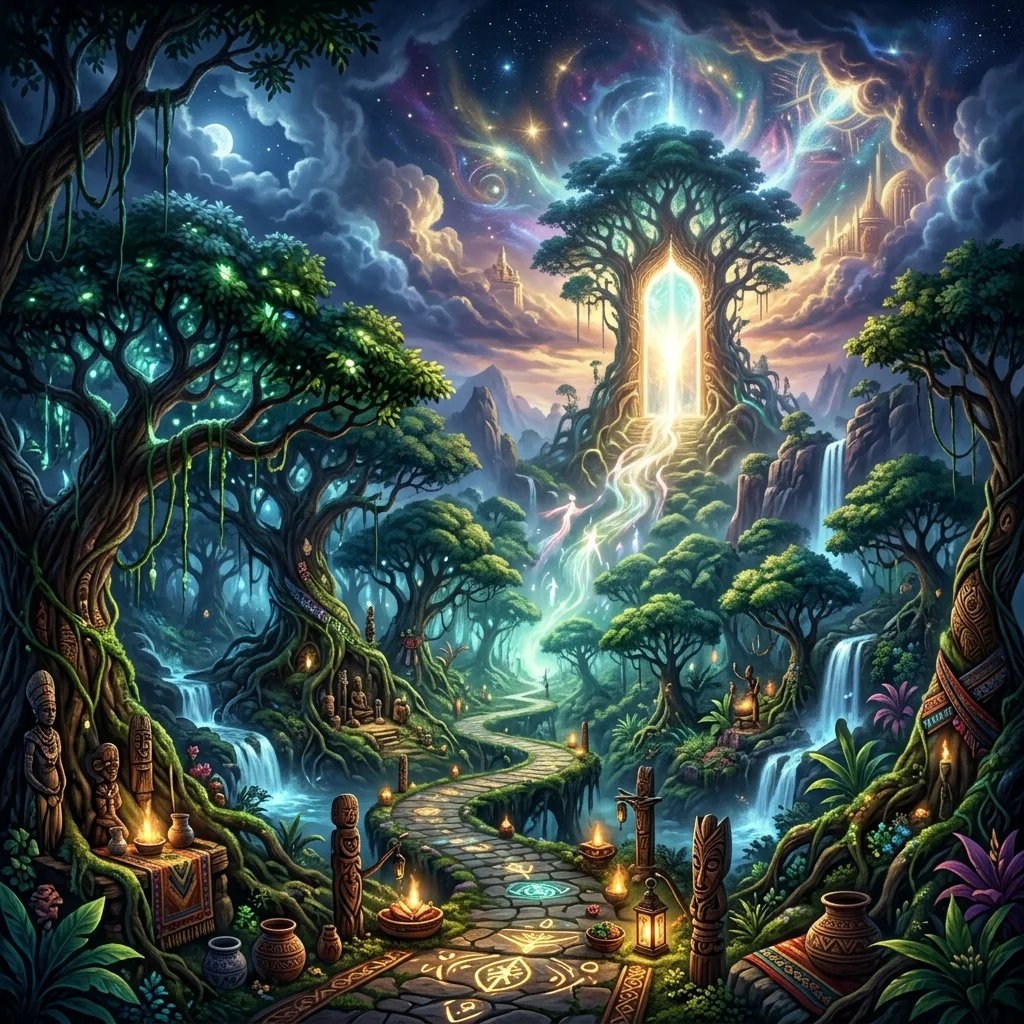
Igbo-Orun (Forest of Heaven)
A sacred forest believed to be a physical connection point between the earthly realm (Aye) and the heavenly realm (Orun). Such forests throughout Yorubaland are protected as dwelling places of the Orishas and sites for important rituals and initiations.
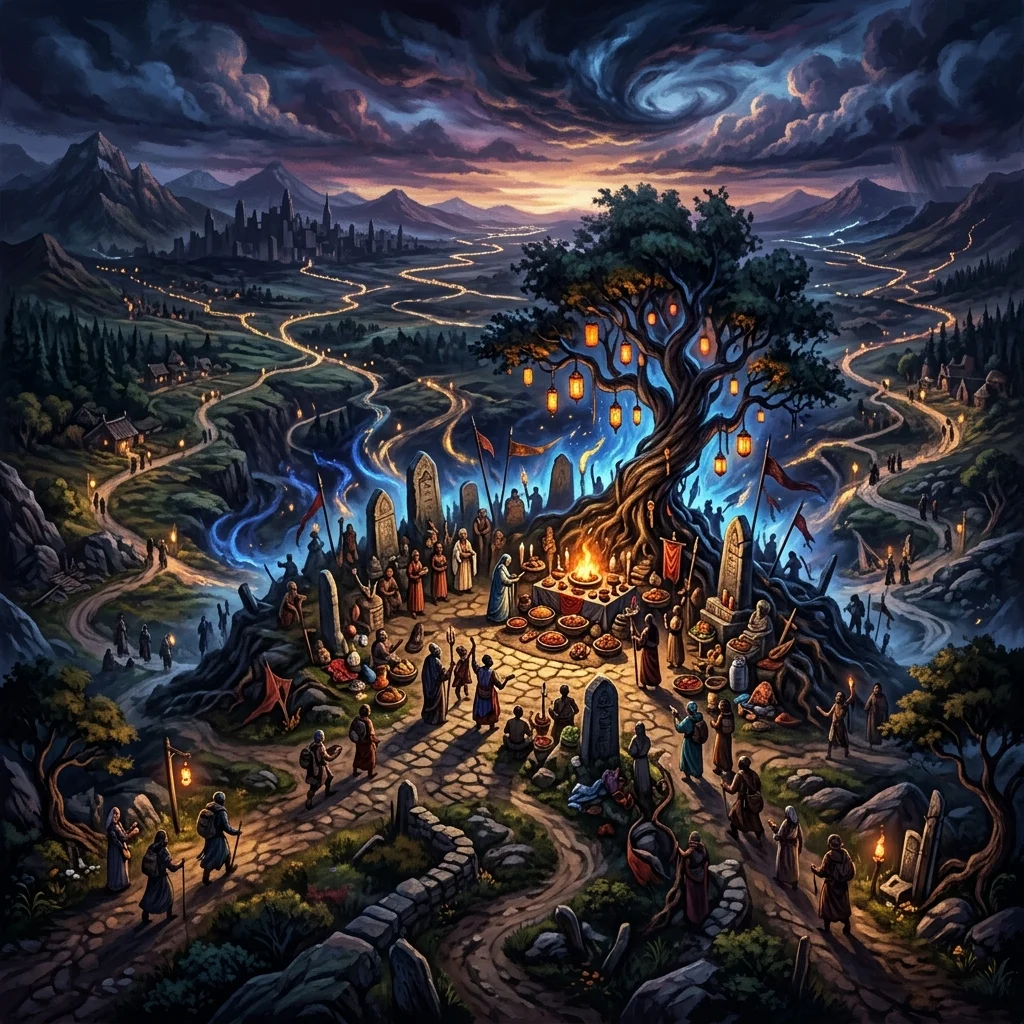
The Crossroads
Not a single location but every place where paths meet. The crossroads is the domain of Eshu, where decisions are made and fates are determined. Offerings to Eshu are placed at crossroads, and all Yoruba rituals must honor Eshu at the crossroads before proceeding to other Orishas.
Cicones Coast
The Thracian coast of the Cicones at Ismarus, where Odysseus's fleet made its first raid after Troy and lost men when the crews lingered and the inland Cicones counterattacked (Odyssey 9).
Land of the Lotus-Eaters
The unnamed shore in Odyssey 9 where people live on the honey-sweet lotus, whose fruit made Odysseus's scouts forget their homecoming until he dragged them back to the ships in tears.
Cave of Polyphemus
The cave of the Cyclops Polyphemus in Odyssey 9, where Odysseus, calling himself Nobody, blinded the one-eyed son of Poseidon and escaped beneath his sheep; later tradition placed it in Sicily.
Island of Aeolus
Aeolia, the floating island with a bronze wall where Aeolus, keeper of the winds, gave Odysseus the storm-winds tied in a bag, which his crew opened within sight of Ithaca (Odyssey 10).
Laestrygonian Harbor
The enclosed harbour of the giant Laestrygonians in Odyssey 10, where the giants speared Odysseus's men and smashed eleven of his twelve ships; only his own ship, moored outside, escaped.
Aeaea (Circe's Island)
Aeaea, the island of the goddess Circe in Odyssey 10, where her drugs turned Odysseus's men into pigs until Hermes gave him the herb moly, and where he stayed a year before seeking the dead.
Sirens' Strait
The waters of the Sirens in Odyssey 12, whose song promised knowledge and lured sailors to their deaths; Odysseus heard it bound to the mast while his crew rowed with wax-stopped ears.
Scylla and Charybdis
The narrow passage of Odyssey 12 between six-headed Scylla on her cliff and the whirlpool Charybdis, later identified with the Strait of Messina; Odysseus chose Scylla and lost six men.
Thrinacia
The island of the sun god Helios in Odyssey 12, pasture of his immortal cattle, where Odysseus's starving crew slaughtered the herds and were destroyed by Zeus's thunderbolt at sea.
Ogygia (Calypso's Isle)
Ogygia, the wooded island of the nymph Calypso in Odyssey 5, where she kept Odysseus seven years and offered him immortality until Hermes brought Zeus's order to let him go.
Phaeacia (Scheria)
Scheria, land of the seafaring Phaeacians in Odyssey 6 to 13, where Nausicaa found the shipwrecked Odysseus and King Alcinous heard his tale before a magic ship carried him home to Ithaca.
Iolcos
The Thessalian city of King Pelias on the Gulf of Pagasae, from which Jason set out in the Argo to win the Golden Fleece, and to which he returned with Medea (Pindar, Pythian 4; Argonautica).
Samothrace
The northern Aegean island of the Great Gods, whose mystery rites promised safety at sea; in Apollonius's Argonautica the Argonauts stop there to be initiated.
Cyzicus
The city of the Doliones on the Propontis, where in Argonautica Book 1 the Argonauts, blown back by night, fought their former hosts unrecognised and killed the young king Cyzicus.
Land of the Bebryces
The Bithynian land of the Bebryces, whose king Amycus forced strangers to box with him until Polydeuces defeated him for the Argonauts (Argonautica 2; Theocritus, Idyll 22).
Symplegades (Clashing Rocks)
The Clashing Rocks at the entrance to the Black Sea, which crushed anything passing between them until the Argo, following Phineus's advice and a dove, slipped through and fixed them in place.
Libyan Desert Shore
The desert coast of North Africa where, in Argonautica Book 4, the Argonauts were stranded in the shallows of the Syrtis and carried the Argo overland for twelve days before Triton showed them the sea.
Nidavellir
Niðavellir, 'dark fields', named in the Völuspá as a place of the dwarves and a hall of gold; modern retellings often treat it as the dwarves' forge-realm and equate it with Svartalfheim.
Western Horizon
The akhet of the west, where the sun god sets each evening to enter the Duat, and the direction of the dead, whom Egyptian texts call 'westerners' under the rule of Osiris.
First Gate of the Duat
The first of the gates the sun god's night barque passes in the New Kingdom underworld books such as the Book of Gates, each guarded by serpents and doorkeepers whose names must be known.
Hall of Ma'at
The Hall of the Two Truths, where the heart of the dead is weighed against the feather of Maat before Osiris and forty-two judges, as described in Book of the Dead Spell 125.
Lake of Fire
A lake of flame in the Egyptian underworld books and Book of the Dead, which destroys the enemies of the sun god and the unjust dead while refreshing the justified.
Throne of Osiris
The throne of Osiris as king of the dead and ruler of the West, the goal of the justified dead in the Egyptian afterlife texts, and in cult associated above all with Abydos.
Nemea
The valley in the northeast Peloponnese where Heracles performed his first labour, strangling the Nemean lion whose hide no weapon could pierce; later the site of the Nemean Games.
Lerna
The spring-fed marsh near Argos where Heracles and Iolaus killed the many-headed Hydra in the second labour, burning each neck and burying the immortal head under a rock.
Ceryneia
The Arcadian hills of the Ceryneian hind, the golden-horned deer sacred to Artemis that Heracles pursued for a year in his third labour and brought back alive.
Mount Erymanthos
The Arcadian mountain of the Erymanthian boar, which Heracles drove into deep snow and captured alive in his fourth labour, after a fatal fight with the centaurs on the way.
Augean Stables
The cattle stables of King Augeas of Elis, uncleaned for years, which Heracles cleared in a single day in his fifth labour by diverting the rivers Alpheus and Peneus through them.
Lake Stymphalus
The Arcadian lake and marsh of the Stymphalian birds, which Heracles startled into flight with a bronze rattle from Athena and shot down in his sixth labour.
Thrace
The wild northern land of the Thracians, home of King Diomedes, son of Ares, whose man-eating mares Heracles captured in his eighth labour after feeding the king to them.
Themiscyra
The Amazon city on the river Thermodon on the southern Black Sea coast, where Heracles went in his ninth labour for the war-belt of the Amazon queen Hippolyta.
Erytheia
The red island of the far west, beyond the Ocean, where the three-bodied giant Geryon kept his cattle; Heracles sailed there in the Sun's golden cup for his tenth labour.
Garden of the Hesperides
The garden at the western edge of the world where the Hesperides and the serpent Ladon guarded Hera's golden apples, which Heracles obtained, with or without Atlas's help, in his eleventh labour.
Eridu
The ancient city in southern Iraq that the Sumerian King List names as the first seat of kingship, home of Enki's temple the E-abzu over the freshwater deep, and one of the oldest settlements in Mesopotamia.
Nippur
The holy city of Enlil in central Mesopotamia, whose Ekur temple conferred divine approval on kingship over Sumer and Akkad, and whose scribal schools preserved much of Sumerian literature.
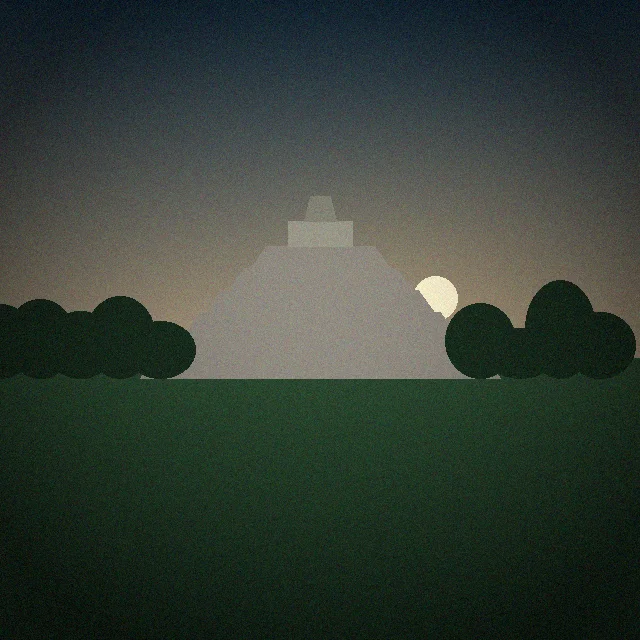
Palenque
Maya city of Pakal's dynasty — temples of the sun, cross, and inscriptions that map royal myth onto stone.
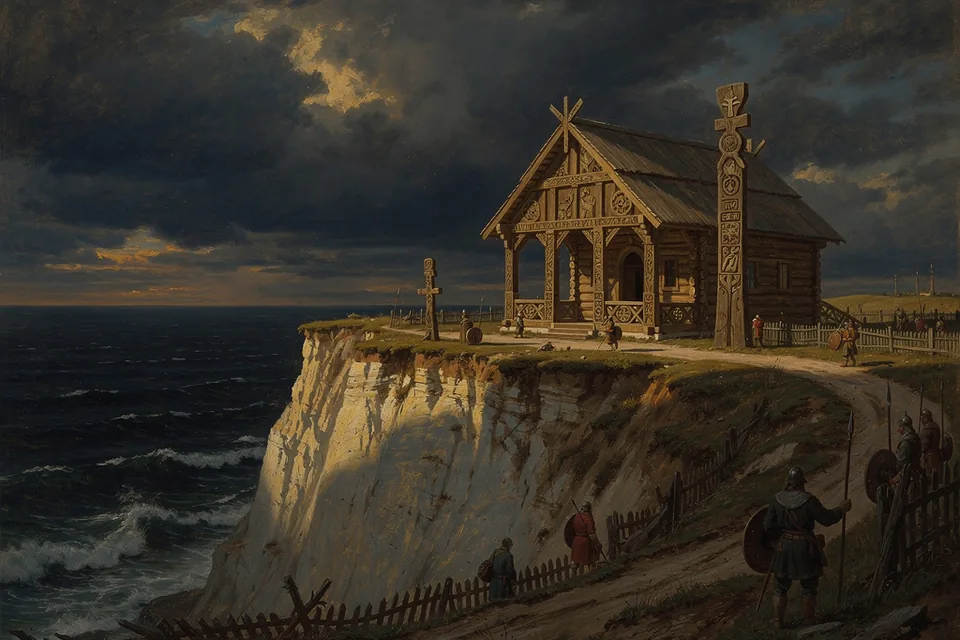
Arkona
The temple of Svantevit on Cape Arkona, the northern tip of the island of Rügen, the last great pagan shrine of the Baltic Slavs before its destruction by the Danes in 1168.
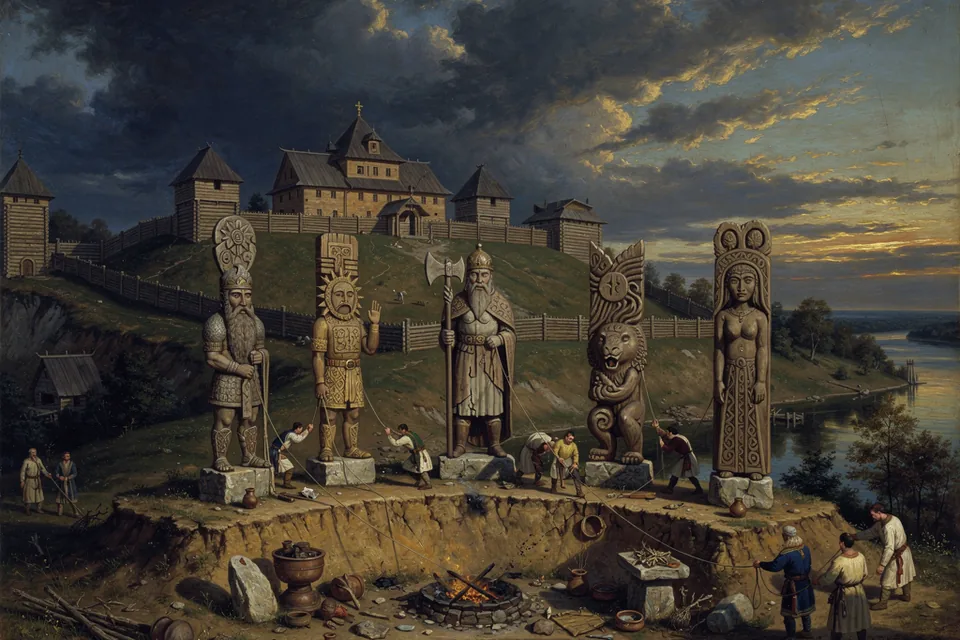
Starokyivska Hill
The hill outside Prince Vladimir's palace in Kiev where, per the Russian Primary Chronicle, six idols — Perun, Khors, Dazhbog, Stribog, Simargl, and Mokosh — were raised in 980 and pulled down again in 988.
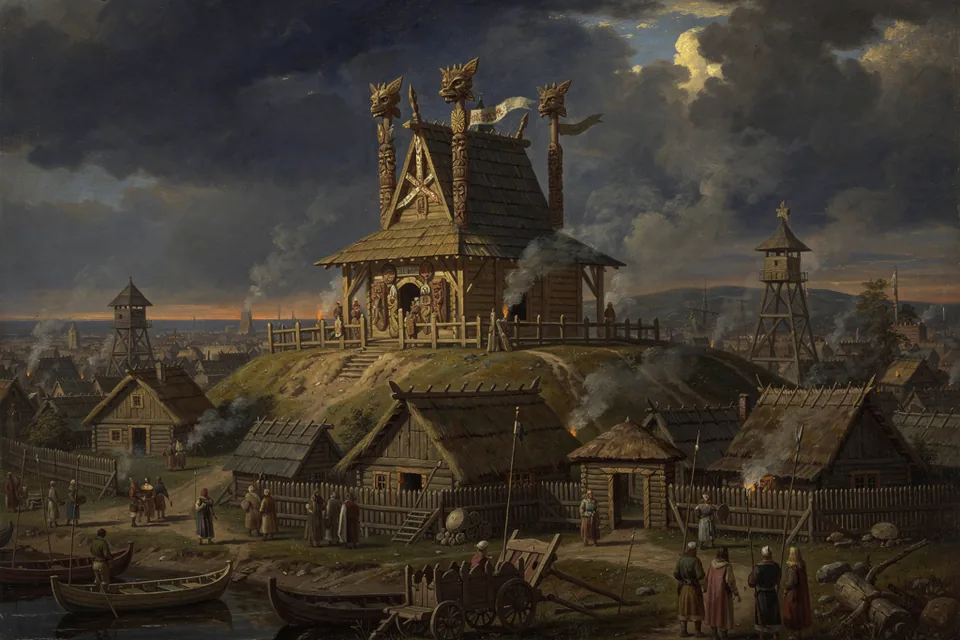
Szczecin (Triglav's Temple)
The Pomeranian city where Bishop Otto of Bamberg's mission of 1124–1128 destroyed the temple of the three-headed god Triglav, according to the near-contemporary Lives of Otto written by Ebbo and Herbord.
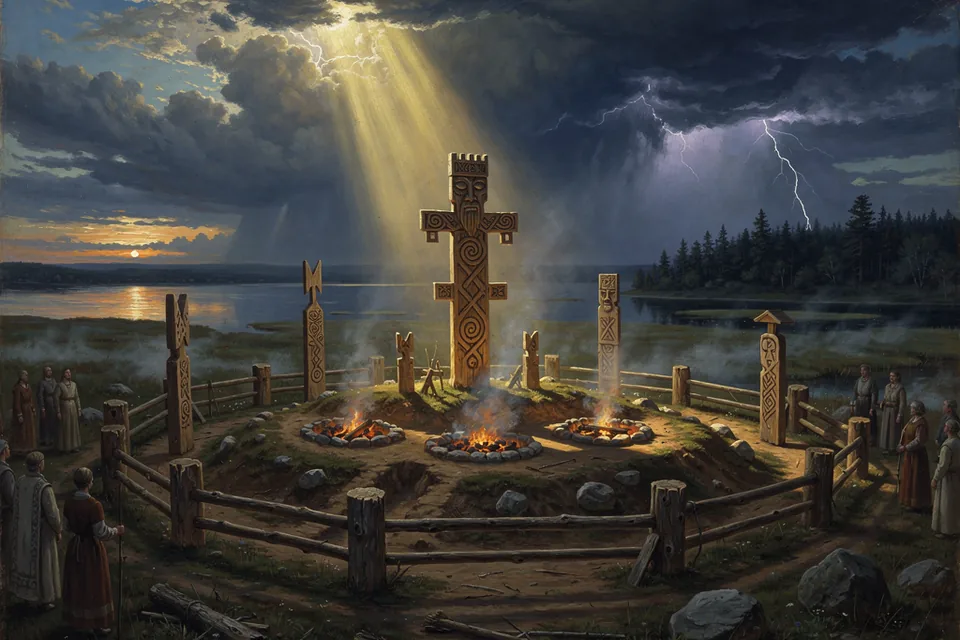
Peryn
An open-air sanctuary south of Novgorod on the Volkhov river, identified by archaeologists as a likely Perun cult site and named by the First Novgorod Chronicle as the place where his idol was thrown into the river in 989.
Onondaga Lake
The lake near present-day Syracuse, New York, where, in the account the Onondaga Nation and the Haudenosaunee Confederacy publish today, the Peacemaker and Hiawatha united the warring nations and planted the Great Tree of Peace.
Haida Gwaii
The archipelago off the coast of British Columbia, formerly called the Queen Charlotte Islands, that is the Haida nation's homeland, and the setting of the story of Raven and the clamshell of the first people at Rose Spit.
The Sky World
The world above the sky in Haudenosaunee cosmology, with its people, lodges, and a great light-giving tree, from which Sky Woman fell through the hole left when the tree was uprooted.
Cohoes Falls
The great falls on the Mohawk River near its meeting with the Hudson, where, in the account the Onondaga Nation publishes, the Mohawk tested the Peacemaker by felling the tree he stood in over the water.
Nass River
The river of northern British Columbia at whose head, in the Tlingit Raven cycle, the wealthy old man kept the stars, moon, and sun in boxes; it is also one of the rivers Raven made from Petrel's stolen water.
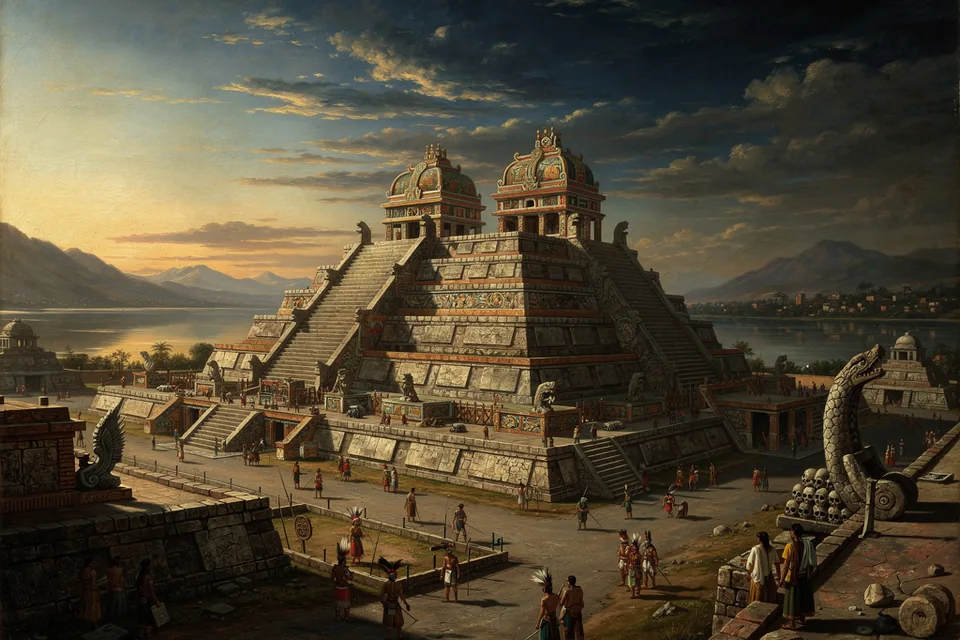
Templo Mayor
The great twin temple at the heart of Tenochtitlan, dedicated to Huitzilopochtli and Tlaloc, built as an image of the mountain Coatepec where Huitzilopochtli was born; excavated since 1978 in the centre of Mexico City.
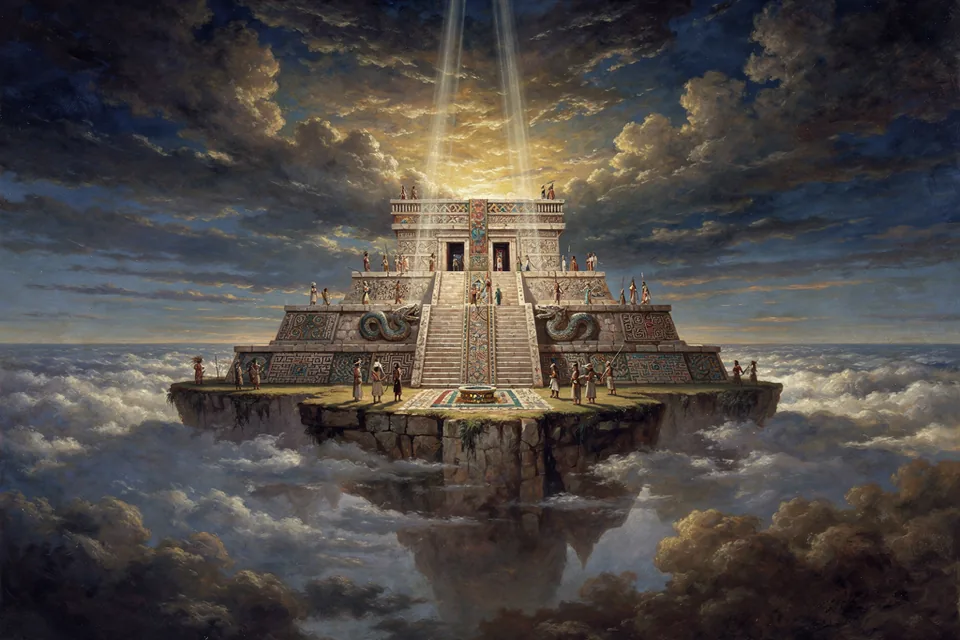
Omeyocan
The 'place of duality', the highest of the thirteen heavens in Nahua cosmology, home of the creator pair Ometecuhtli and Omecihuatl (Ometeotl), from which the souls of children were said to descend.
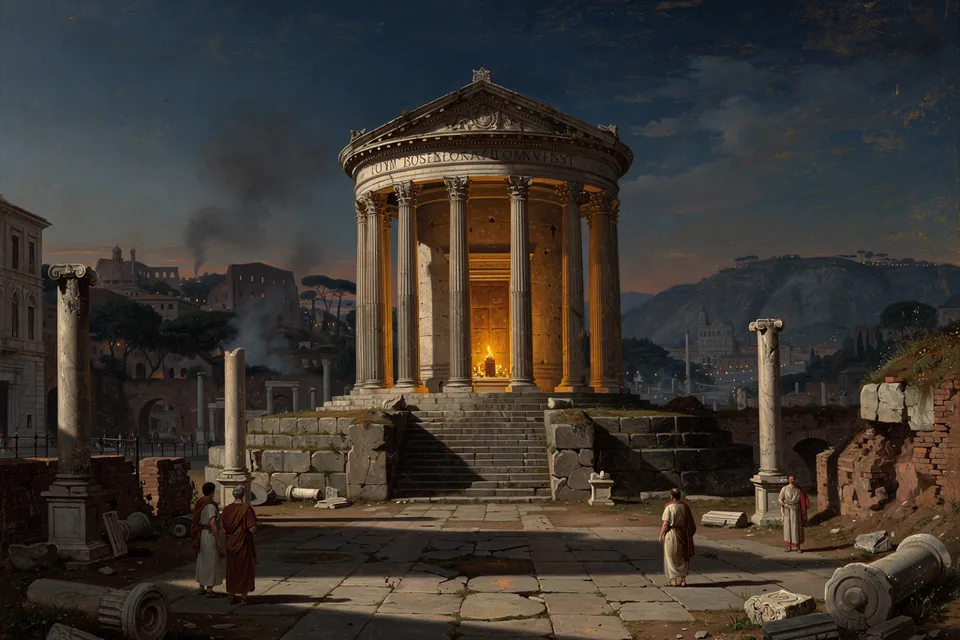
Temple of Vesta
The small round temple in the Roman Forum where the Vestal Virgins kept the eternal fire of the state burning and guarded sacred objects, among them, tradition said, the Palladium brought from Troy.
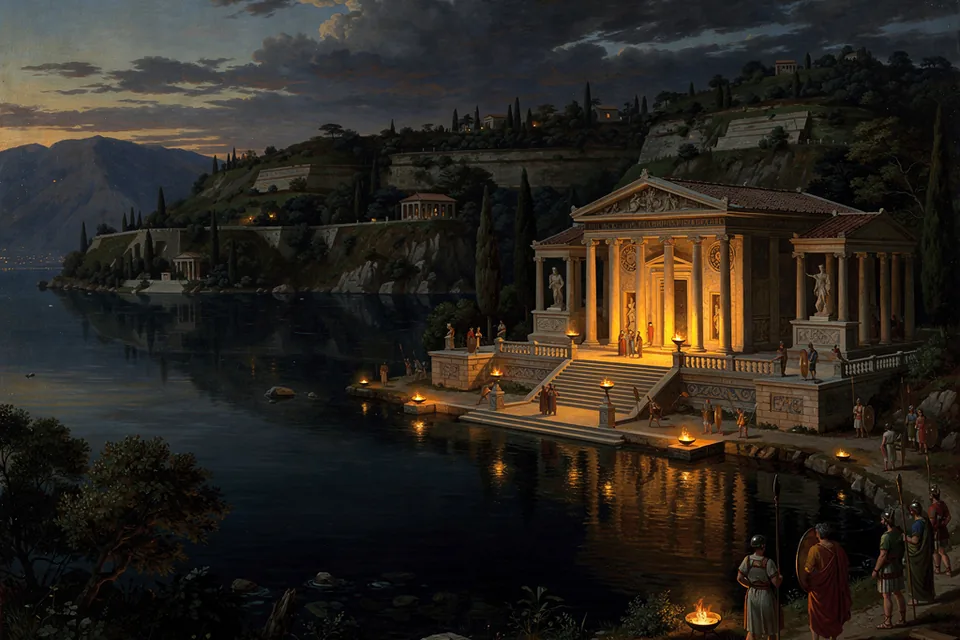
Lake Nemi
The volcanic crater lake in the Alban Hills called Diana's Mirror, beside the sanctuary of Diana Nemorensis, whose priest, the rex Nemorensis, won his office by killing his predecessor.
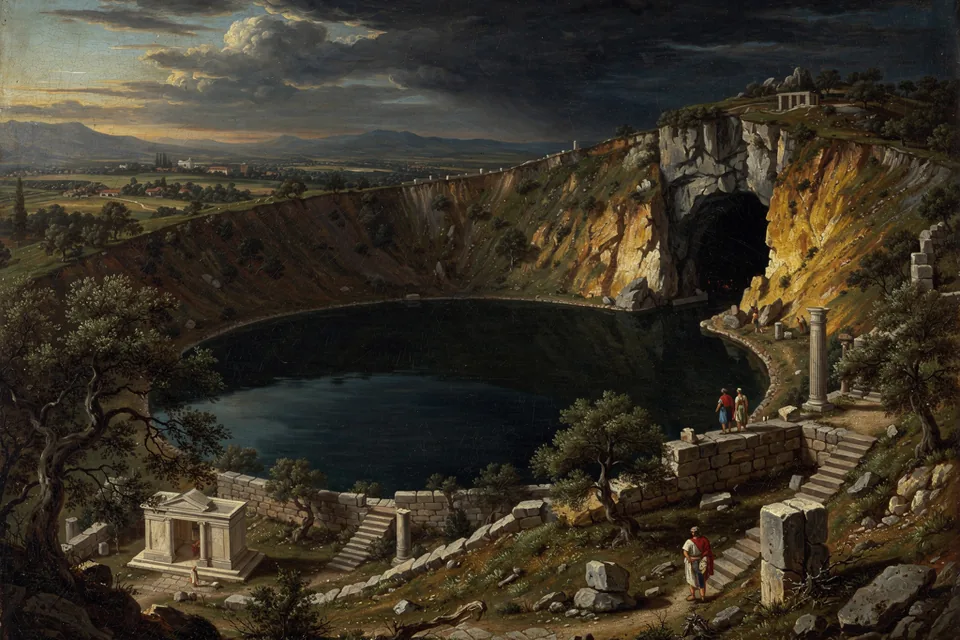
Lake Avernus
The crater lake near Cumae in Campania that Roman poets placed at the entrance to the underworld; in the Aeneid, the Sibyl leads Aeneas down to the dead through the cave beside it.
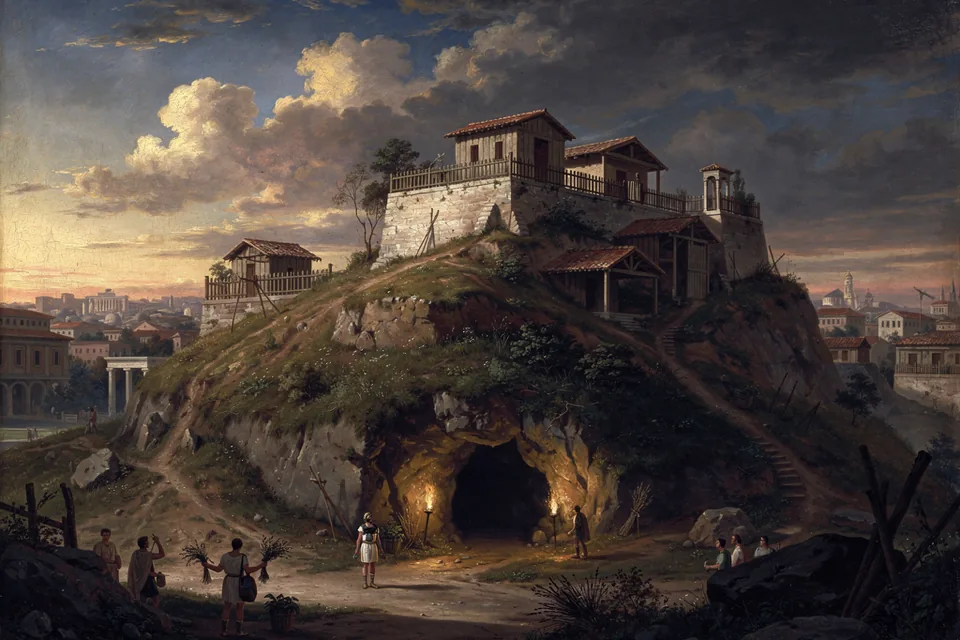
Palatine Hill and the Lupercal
The hill where Romulus founded his city, with the Lupercal cave at its foot where tradition said the she-wolf nursed Romulus and Remus, and where the Lupercalia began each February.
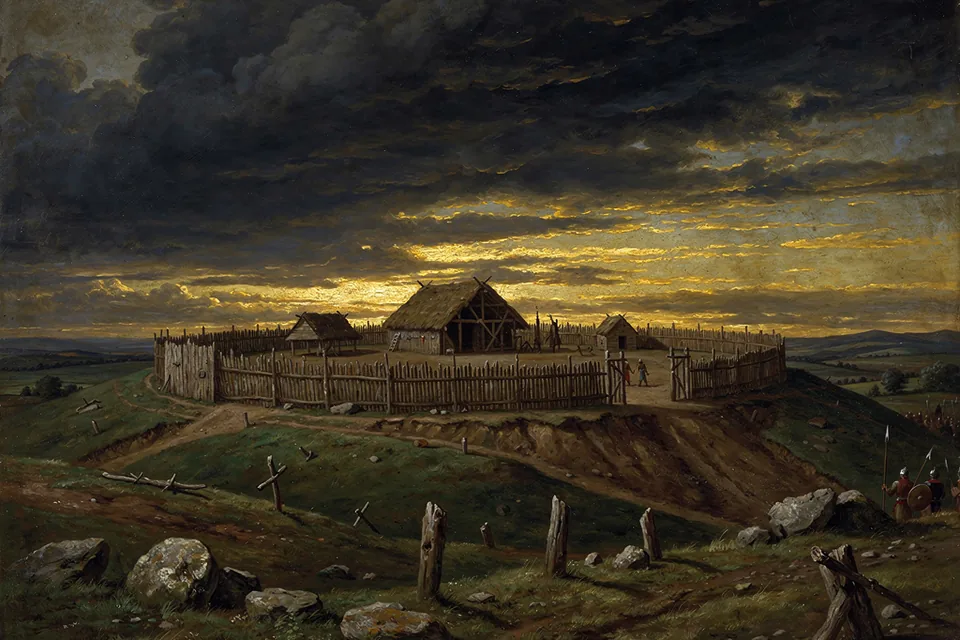
Emain Macha
Navan Fort in County Armagh, the royal seat of Ulster in the Ulster Cycle, where King Conchobar held court and where Macha, forced to race while pregnant, cursed the men of Ulster.
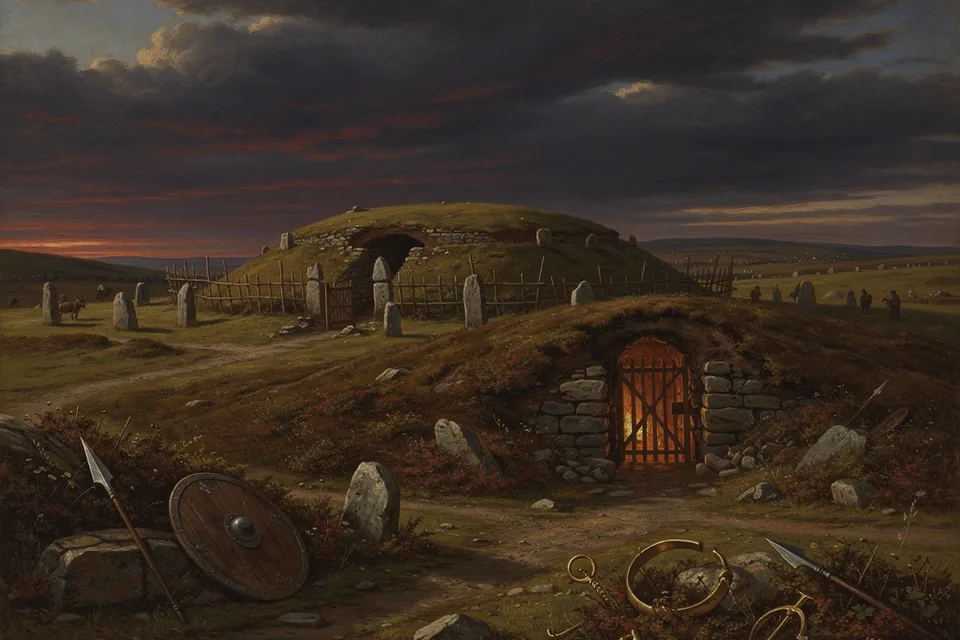
Rathcroghan (Cruachan)
The royal complex of Connacht in County Roscommon, seat of Queen Medb and King Ailill in the Táin, whose cave Oweynagat was said to be a door to the otherworld.
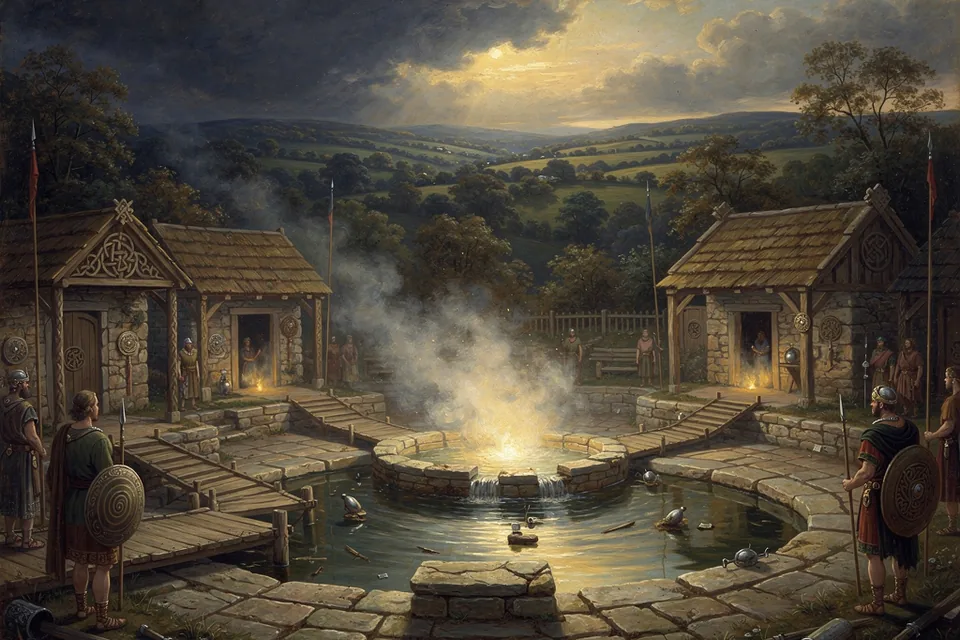
Aquae Sulis (Bath)
The hot springs at Bath in southwest England, sacred to the British goddess Sulis, whom the Romans identified with Minerva; worshippers cast curse tablets into the sacred spring asking her to punish thieves.
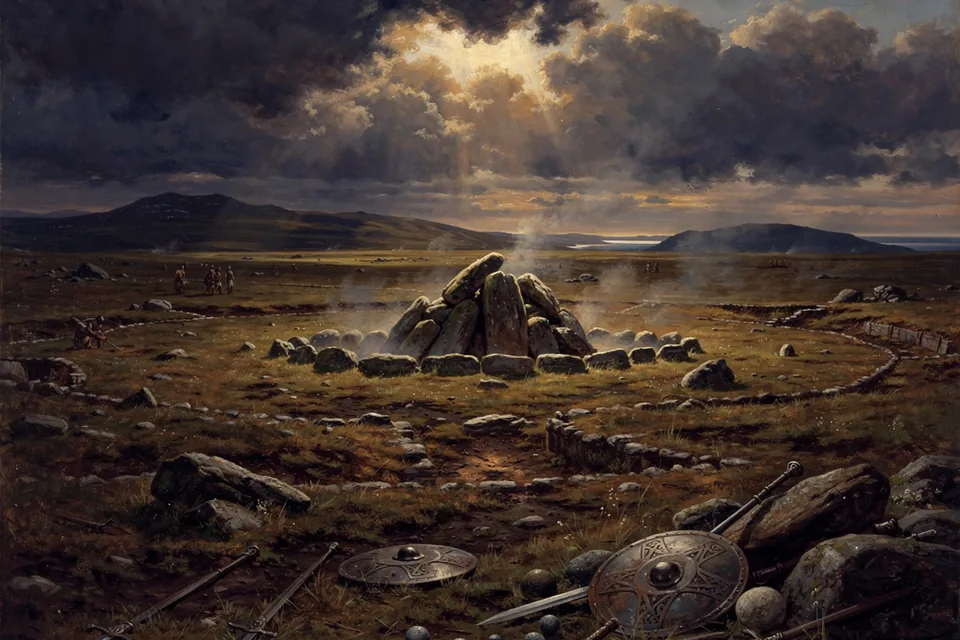
Mag Tuired (Moytirra)
The plain in County Sligo identified with the second Battle of Mag Tuired, where, in Irish mythic history, the Túatha Dé Danann defeated the Fomorians and Lug killed Balor with a sling-stone.
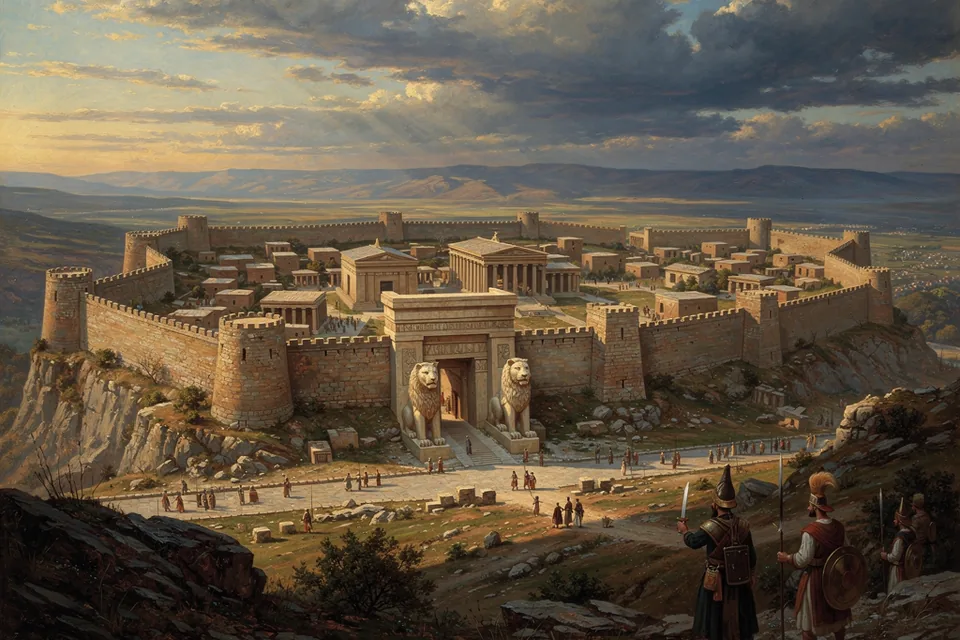
Hattusa
The Hittite capital near modern Boğazkale in central Türkiye, whose temple archives preserved almost every Hittite myth known today.
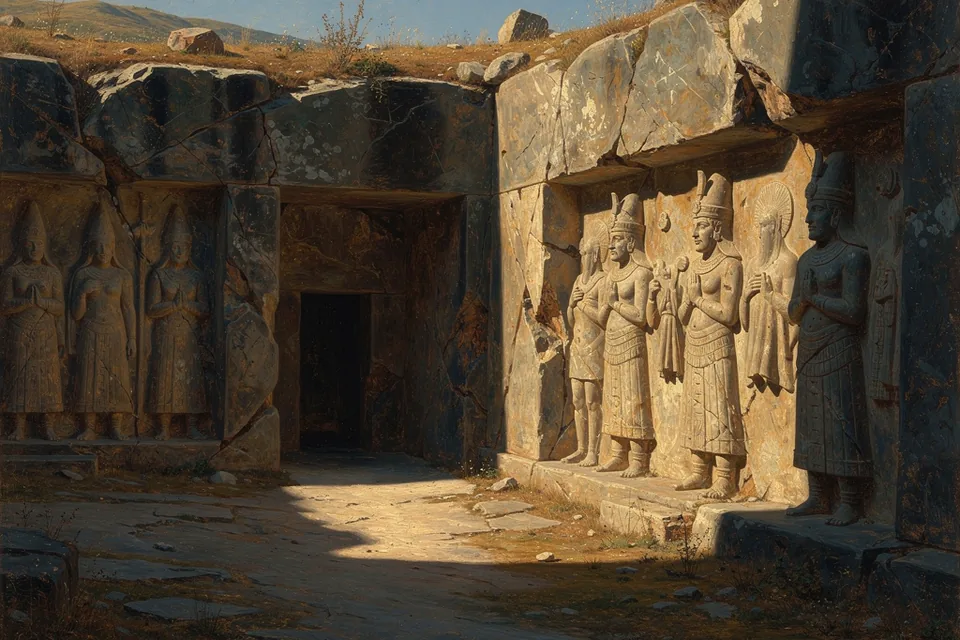
Yazılıkaya
An open-air rock sanctuary just outside Hattusa whose carved procession of gods and goddesses, labelled in Hieroglyphic Luwian, shows the Hurrian-influenced pantheon of the thirteenth century BCE.
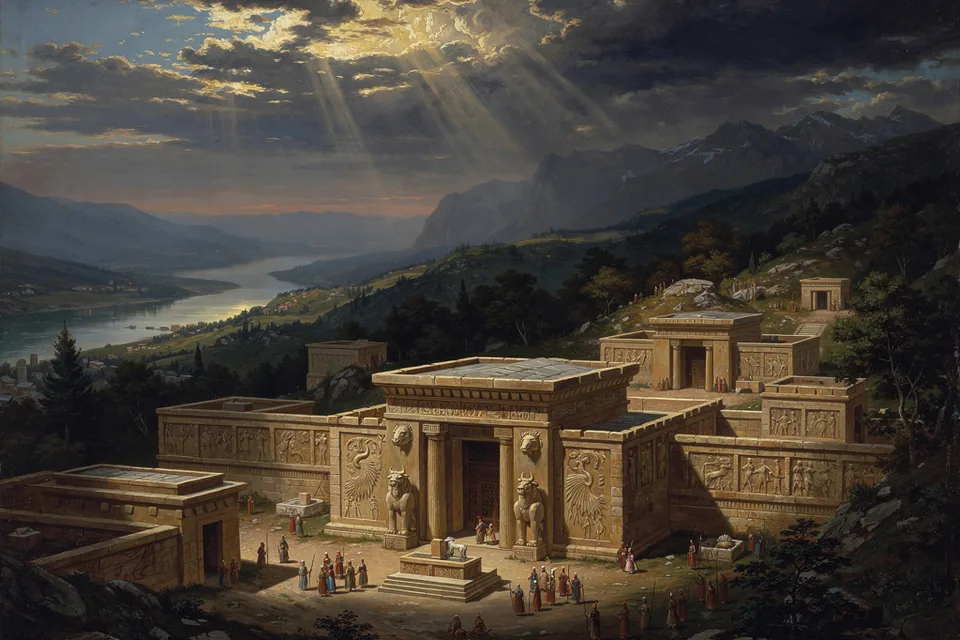
Nerik (Oymaağaç Höyük)
The holy city of the Storm-god of Nerik in the north of the Hittite lands, where the Illuyanka story was recited at the Purulli festival; identified with Oymaağaç Höyük near Vezirköprü.
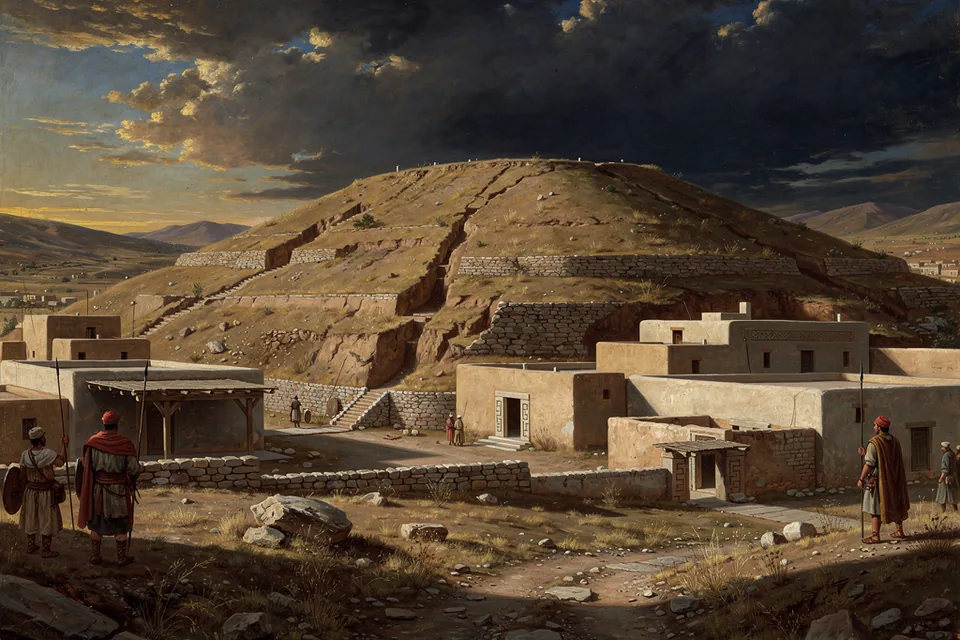
Urkeš (Tell Mozan)
The ancient Hurrian city in northeastern Syria that the Kumarbi cycle names as Kumarbi's home, identified with the mound of Tell Mozan.
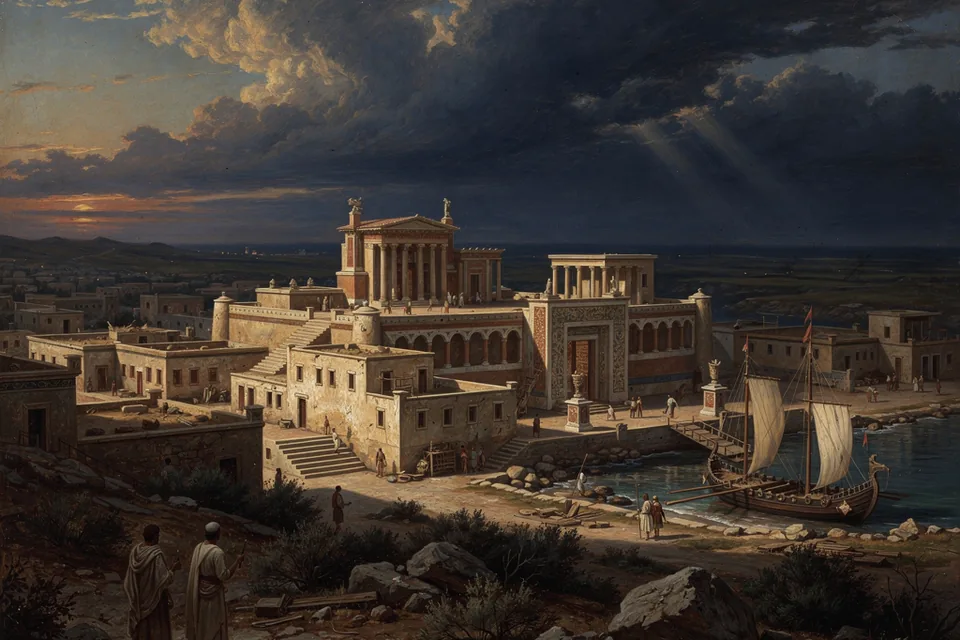
Ugarit (Ras Shamra)
The Late Bronze Age port city on the Syrian coast whose archives of alphabetic cuneiform tablets preserve the Baal Cycle and the epics of Aqhat and Kirta; destroyed around 1185 BCE.
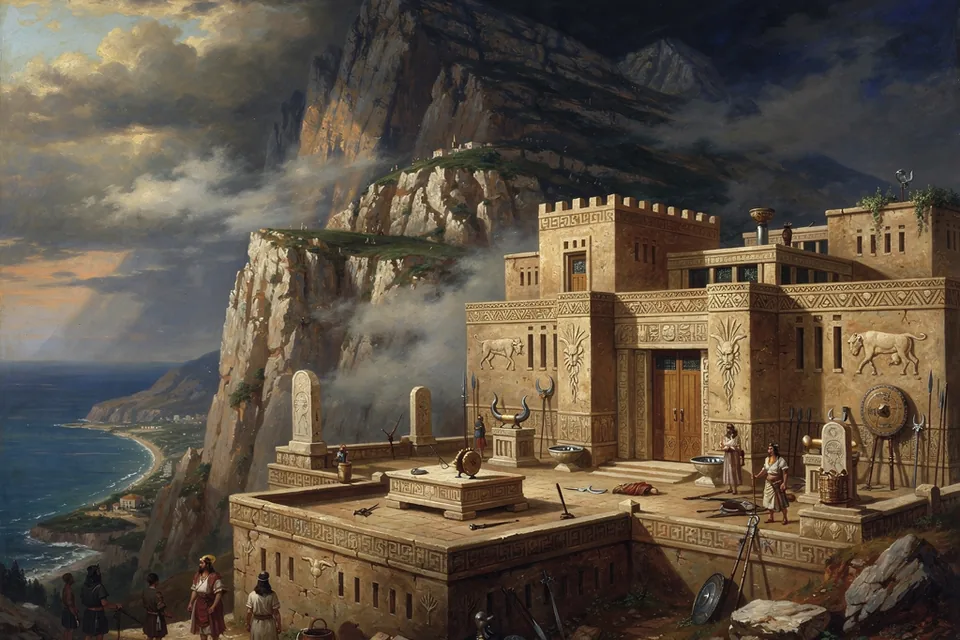
Mount Zaphon (Jebel Aqra)
The mountain north of Ugarit, now Jebel Aqra on the Syrian-Turkish border, where Baal's palace stands in myth; the Hurrian-Hittite Mount Hazzi and the Greek Mount Kasios.
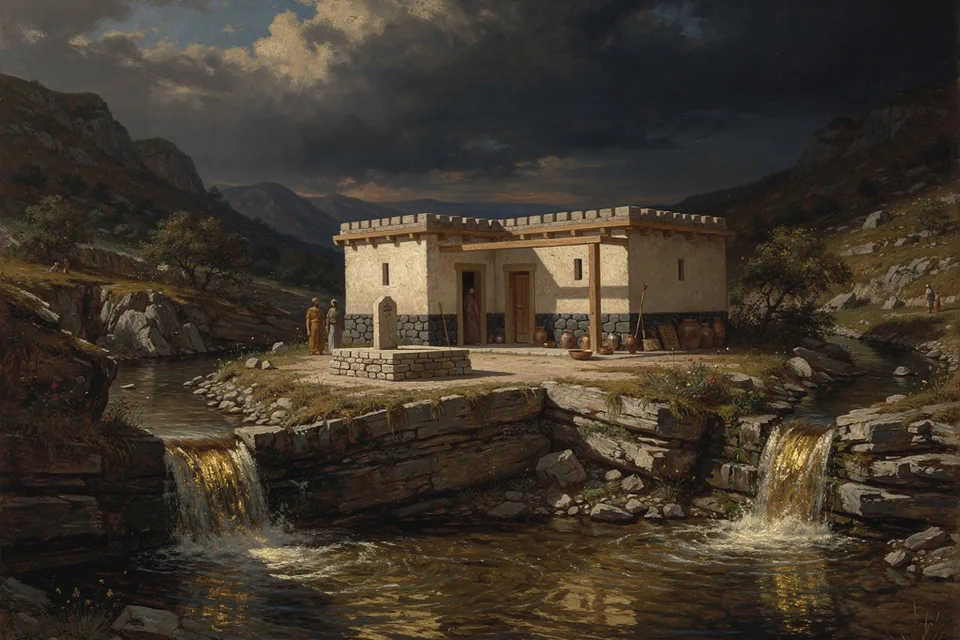
The Source of the Two Rivers
El's remote dwelling 'at the source of the two rivers, in the midst of the springs of the two deeps', where gods and messengers go to seek his decisions; a mythical place without a known earthly location.
Cumberland Sound (Kangiqtualuk)
The deep inlet on the east coast of Baffin Island, Nunavut, where Franz Boas recorded the story of Sedna and her father Anguta in 1883-84; home of the community of Pangnirtung.
Igloolik (Iglulik)
The island community in the Foxe Basin, Nunavut, whose people told Knud Rasmussen about the Sea Woman, the Moon Spirit, and Sila in the 1920s, and whose elders continue to share that knowledge.
Tikiġaq (Point Hope)
The Iñupiaq whaling village on a gravel spit in the Chukchi Sea, northwest Alaska, whose land, in the community's tradition, is the body of a sea creature harpooned by Raven Man.
Torngat Mountains
The mountains of northern Labrador and Nunavik whose name is usually explained as 'place of spirits', from the Inuktitut tuurngait; now a national park co-managed with the Inuit of Nunatsiavut and Nunavik.
Baiame's Ngunnhu (Brewarrina Fish Traps)
Stone fish traps in the Barwon River at Brewarrina, New South Wales, whose design the ancestral creation being Baiame revealed; National Heritage listed in 2005 and cared for by the Ngemba people and their neighbours.
Bunjil's Shelter
A rock shelter in the Black Range near Stawell, Victoria, on Djab Wurrung Country, holding the only known rock painting of Bunjil.
Derbarl Yerrigan (Swan River)
The river that runs through Perth, Western Australia, whose course Whadjuk Noongar tradition attributes to the Wagyl; its resting places, including Goonininup below Kaarta Gar-up (Kings Park), are important Noongar places.
Uluṟu
The great sandstone monolith in Uluṟu-Kata Tjuṯa National Park, Northern Territory, shaped by the actions of Aṉangu ancestral beings, including Kuniya and the Liru; jointly managed by Aṉangu and Parks Australia.
Sisnaajiní (Blanca Peak)
The sacred mountain of the east bounding Diné Bikéyah, in the Sangre de Cristo Range of southern Colorado, associated with white shell and the dawn.
Tsoodził (Mount Taylor)
The sacred mountain of the south, in New Mexico, associated with turquoise; near it the Hero Twins killed Yéʼiitsoh, whose blood is said to have become the lava flows of the region.
Dookʼoʼoosłííd (San Francisco Peaks)
The sacred mountain of the west, near Flagstaff, Arizona, associated with abalone shell; sacred to many Native nations, and the subject of long legal disputes over a ski resort.
Dibé Ntsaa (Hesperus Mountain)
The sacred mountain of the north, usually identified with Hesperus Mountain in the La Plata Mountains of southwestern Colorado, associated with jet.
Chʼóolʼį́ʼí (Gobernador Knob)
A small peak in the Dinétah region of northern New Mexico where, in many tellings, First Man found the infant Changing Woman.
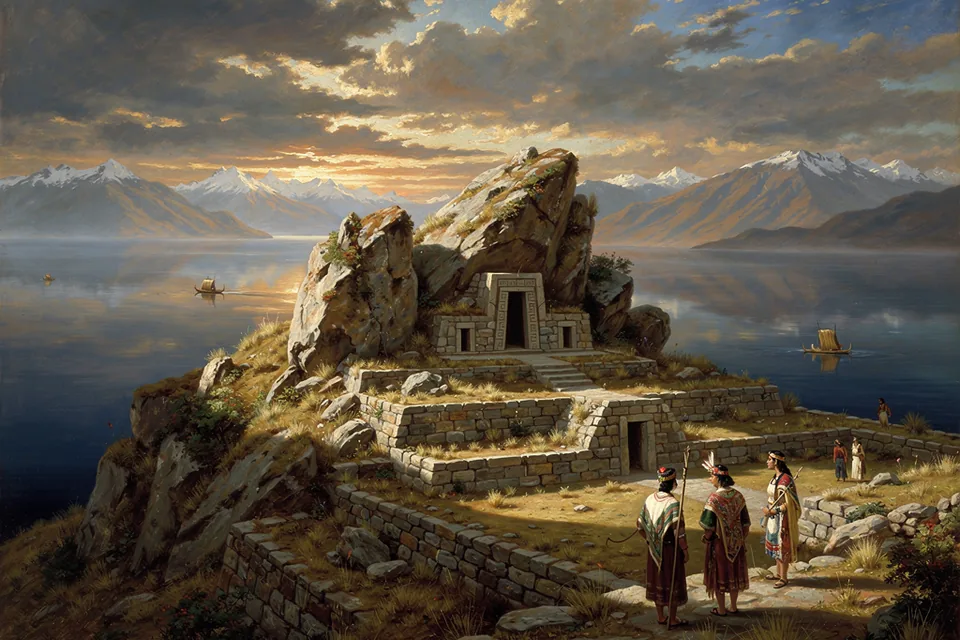
Island of the Sun (Lake Titicaca)
The island in the Bolivian part of Lake Titicaca honored in Inca times as the place where the Sun first rose, site of a major Inca pilgrimage sanctuary centered on a sacred rock.
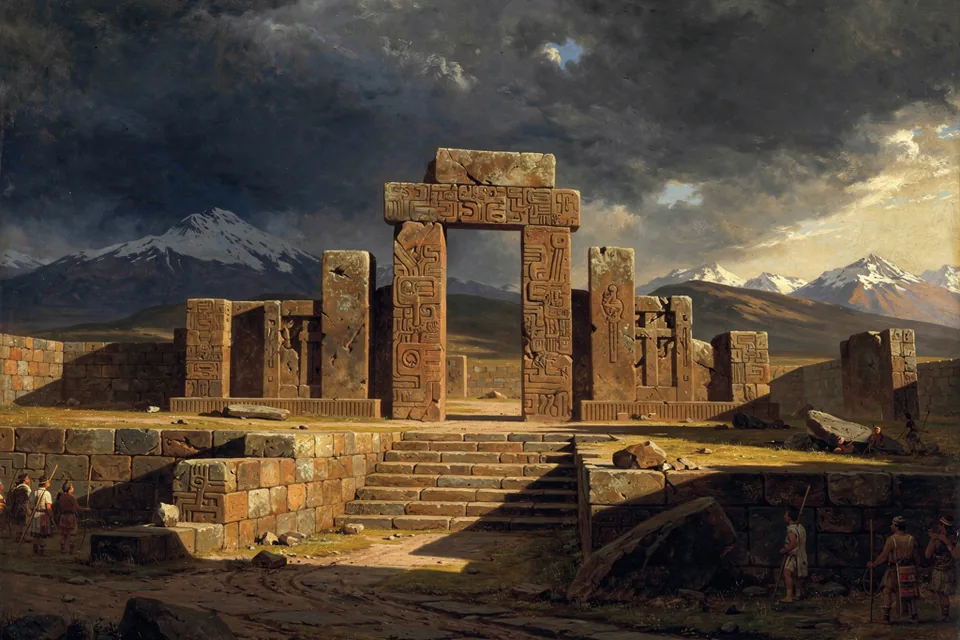
Tiwanaku
The ruined ceremonial city south of Lake Titicaca, capital of an Andean civilization of about 500-1000 CE, which the Incas claimed as the place where Viracocha made the sun, moon, and peoples.
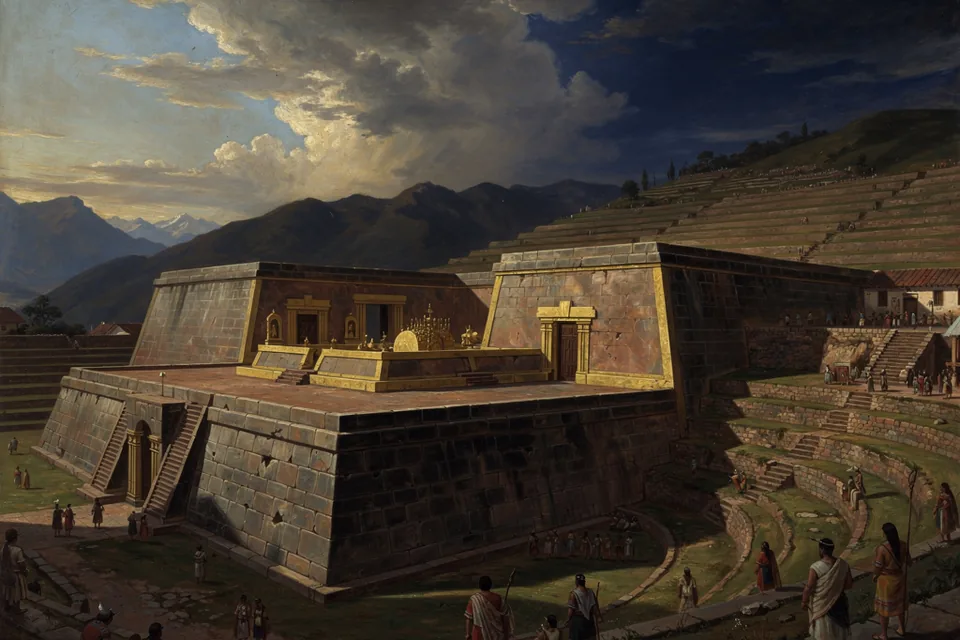
Coricancha
The 'golden enclosure', chief temple of the Sun in Cusco, where the images of the Creator, Sun, Moon, Thunder, and other powers were kept; its Inca stonework survives beneath the church and convent of Santo Domingo.
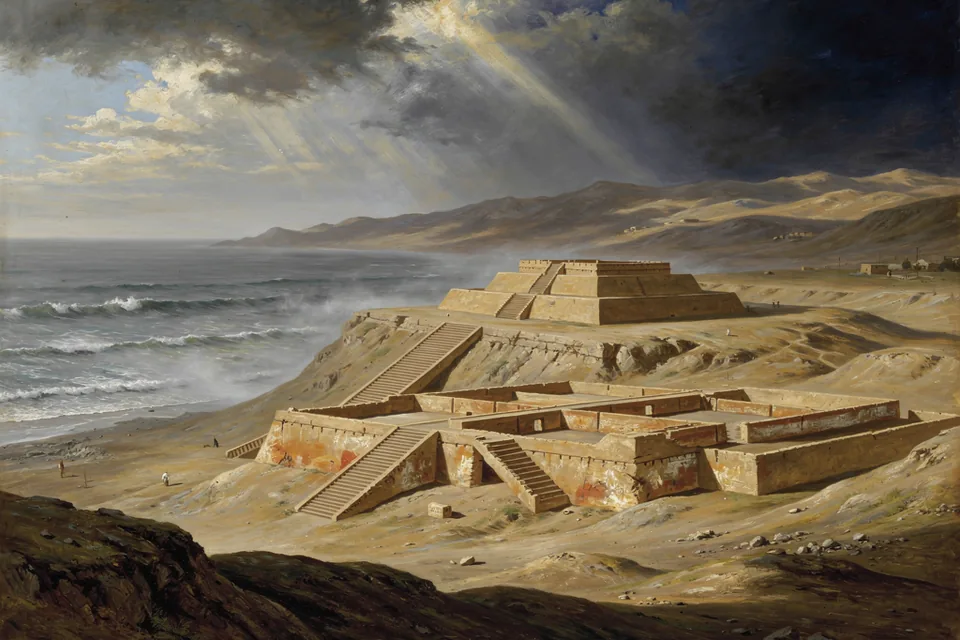
Sanctuary of Pachacamac
The great oracle sanctuary near the mouth of the Lurín River south of Lima, center of Pachacamac's cult for over a thousand years, where the Incas added a Temple of the Sun and Hernando Pizarro broke the idol in 1533.
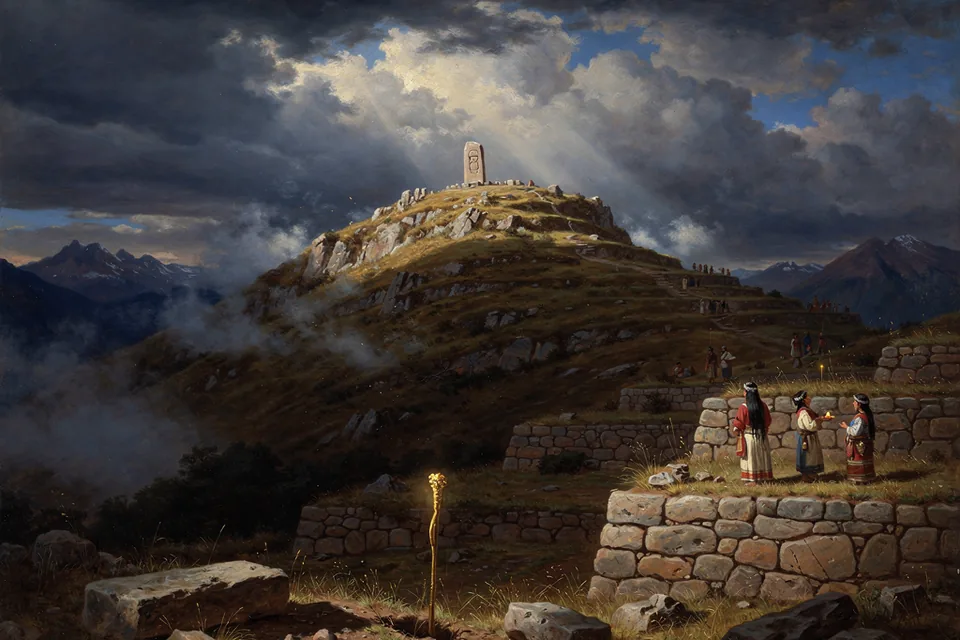
Huanacauri
The sacred hill southeast of Cusco where, in Garcilaso's account, the Sun's golden rod sank into the earth, and where in the Pacaritambo tradition Ayar Uchu turned to stone; one of the holiest huacas of the Inca capital.
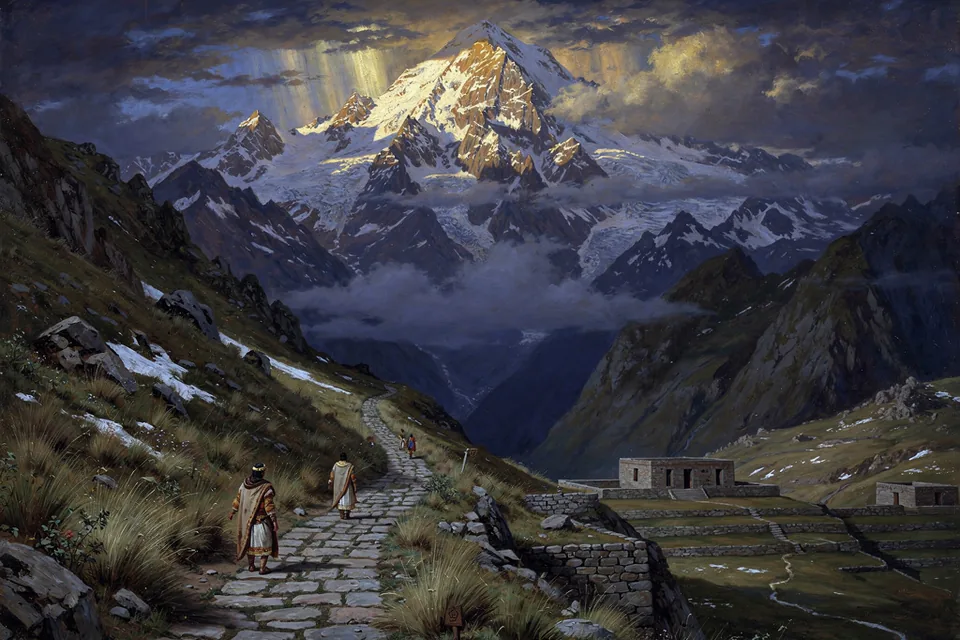
Pariacaca Mountain
The glaciated peak on the border of Peru's Lima and Junín regions that was, and was the home of, the god Pariacaca of the Huarochirí Manuscript, crossed by an Inca road from Jauja to the coast.
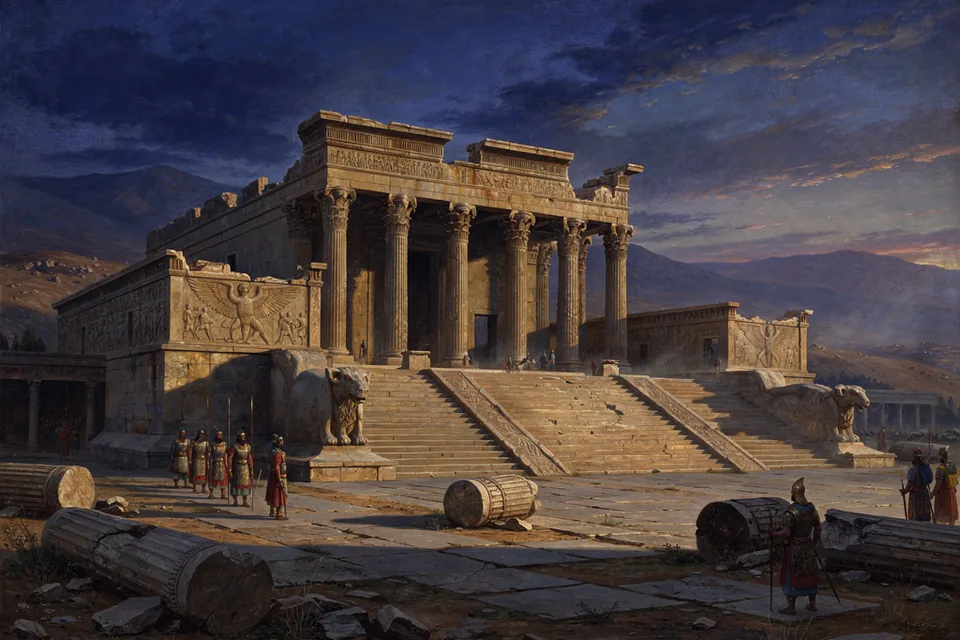
Persepolis
The ceremonial capital of the Achaemenid kings in Fars, begun by Darius I around 518 BCE and burned by Alexander in 330 BCE, whose reliefs show the winged figure in a disc; later called Takht-e Jamshid, 'the Throne of Jamshid'.
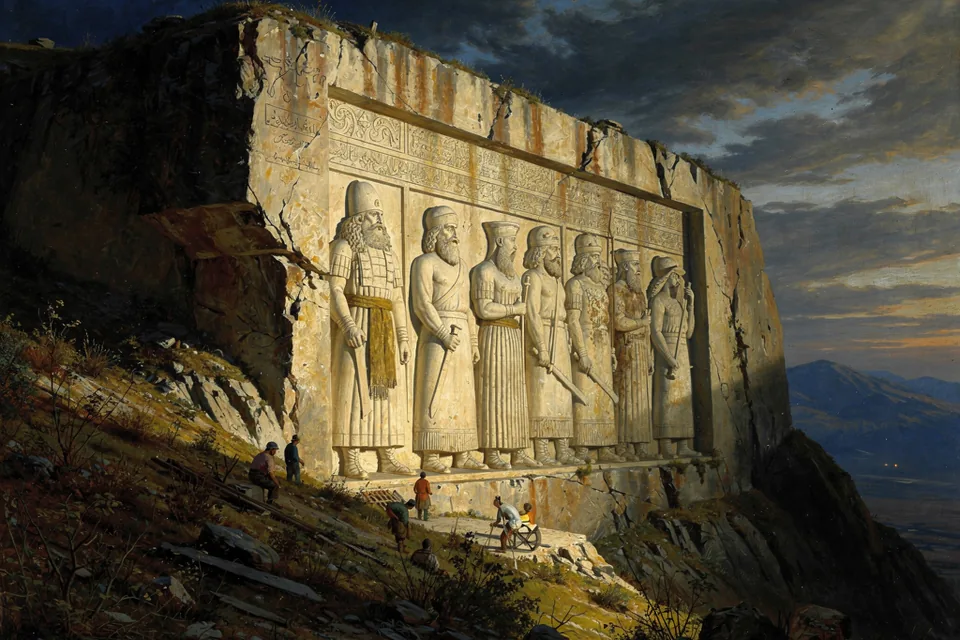
Behistun
The cliff at Bisotun in western Iran where Darius I carved a trilingual inscription and relief around 520 BCE, attributing his rise to 'the favor of Ahuramazda'; the key to the decipherment of cuneiform.
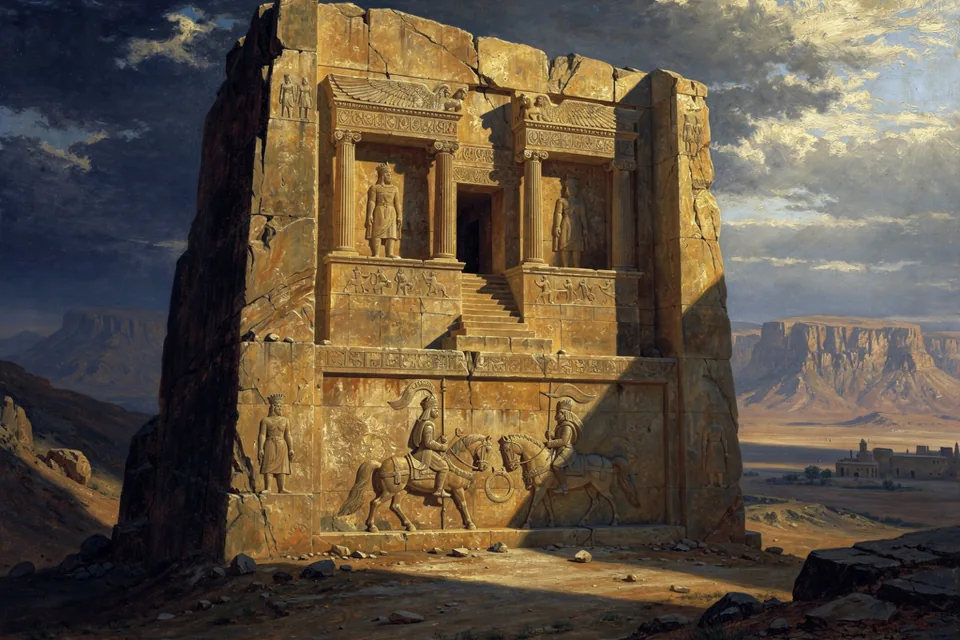
Naqsh-e Rostam
The cliff near Persepolis bearing the rock-cut tombs of Darius I and other Achaemenid kings and the Sasanian relief of Ardashir I receiving the ring of kingship from Ohrmazd, whose horse tramples Ahriman.
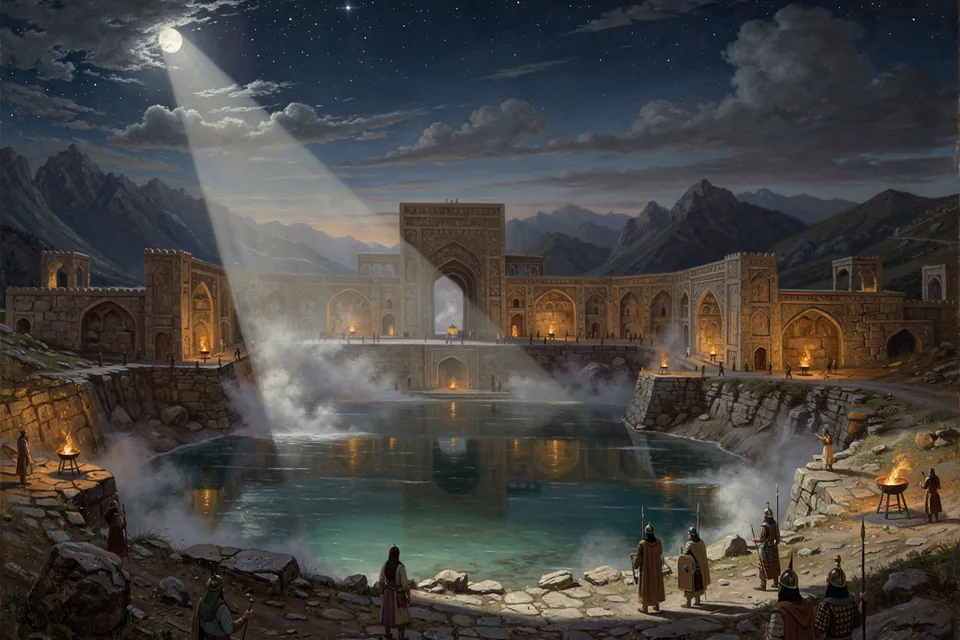
Takht-e Soleyman
The Sasanian royal sanctuary in northwestern Iran built around a crater lake, home of Adur Gushnasp, the great fire of the warriors and kings, one of the three most sacred fires of Sasanian Zoroastrianism.
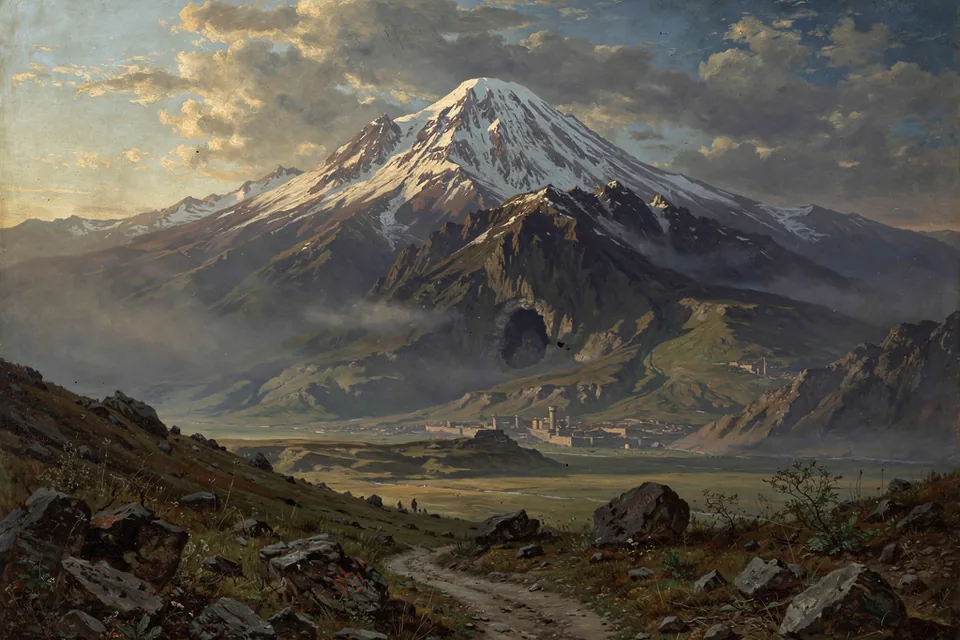
Mount Damavand
The volcanic peak in the Alborz range northeast of Tehran, the highest mountain in Iran, in which the Shahnameh's tyrant Zahhak lies chained in a cave, and which Middle Persian tradition connects with the binding of the dragon Azhi Dahaka.
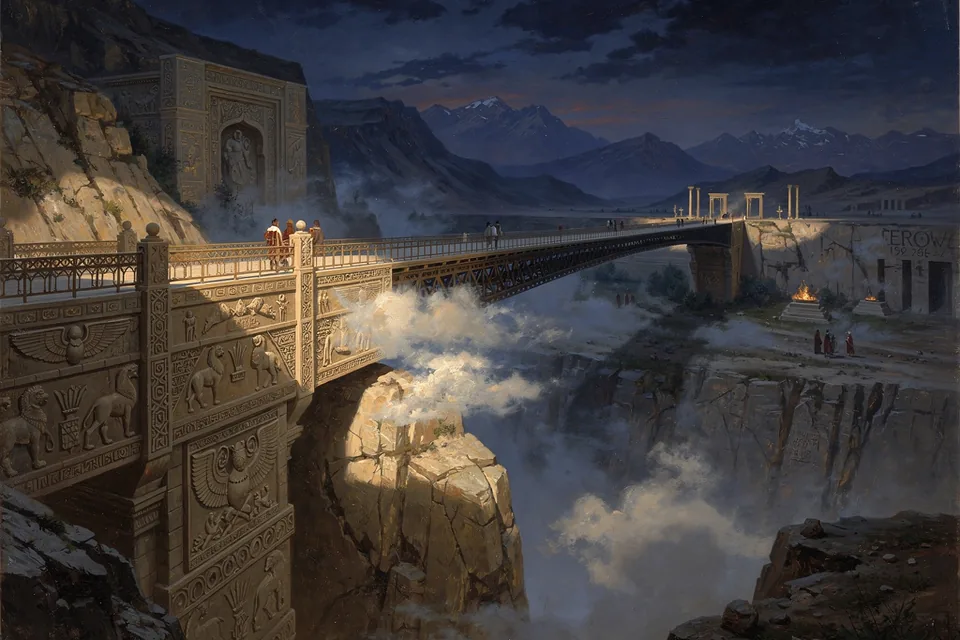
Chinvat Bridge
The Bridge of the Separator, which every soul must cross on the fourth dawn after death: broad for the righteous, who are met by a beautiful maiden, and narrow as a blade for the wicked, who fall into the House of the Lie.
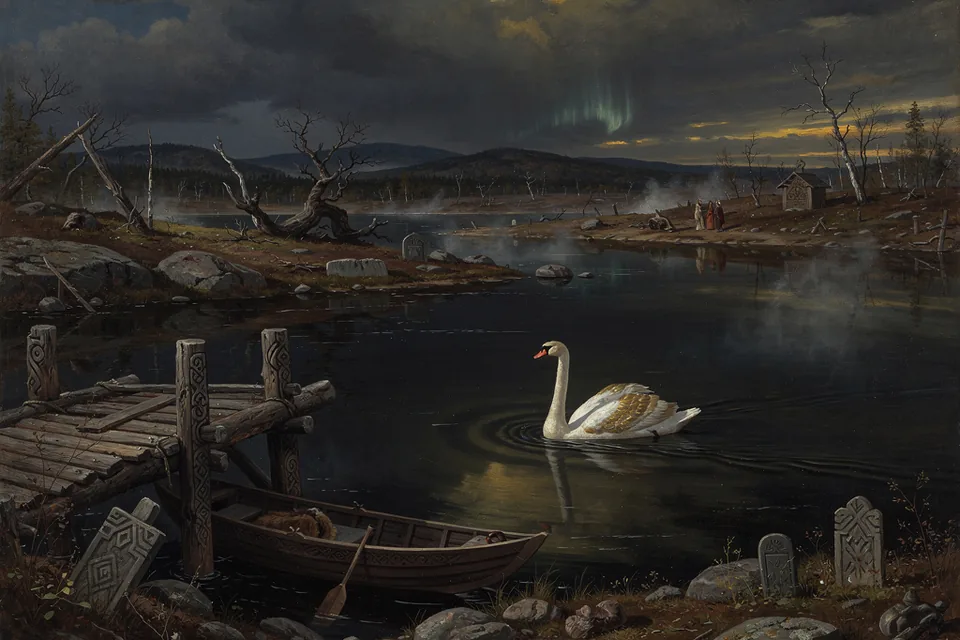
Tuonela
The land of the dead in Finnish tradition, ruled by Tuoni, lying beyond a black river on which the swan of Tuonela swims and across which Tuoni's daughter ferries the dead.
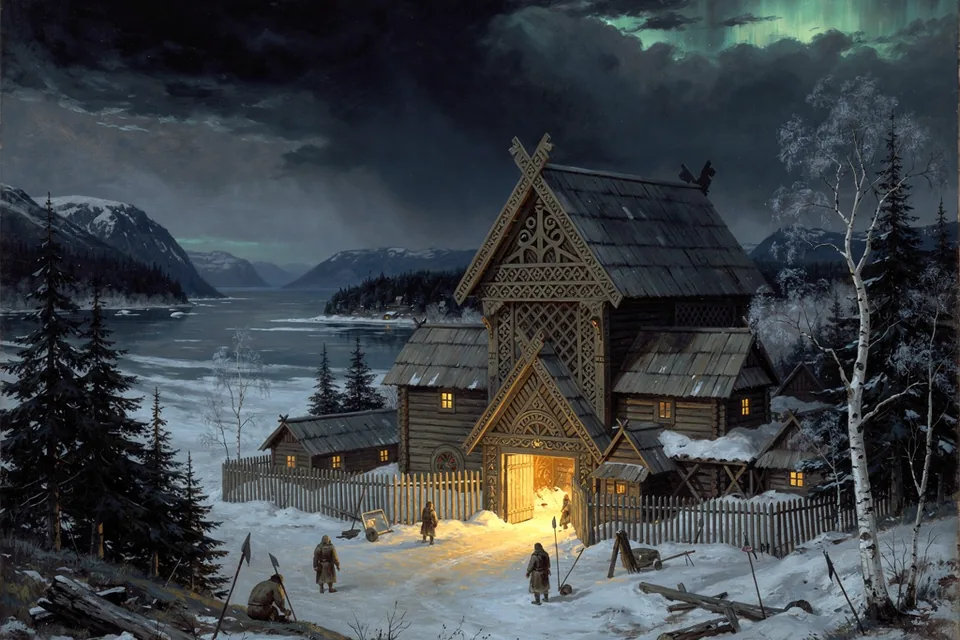
Pohjola
The dark, cold land of the North ruled by Louhi, home of the Sampo and of the maidens the Kalevala heroes seek as brides, a hostile and magical realm opposite the heroes' home of Kalevala.
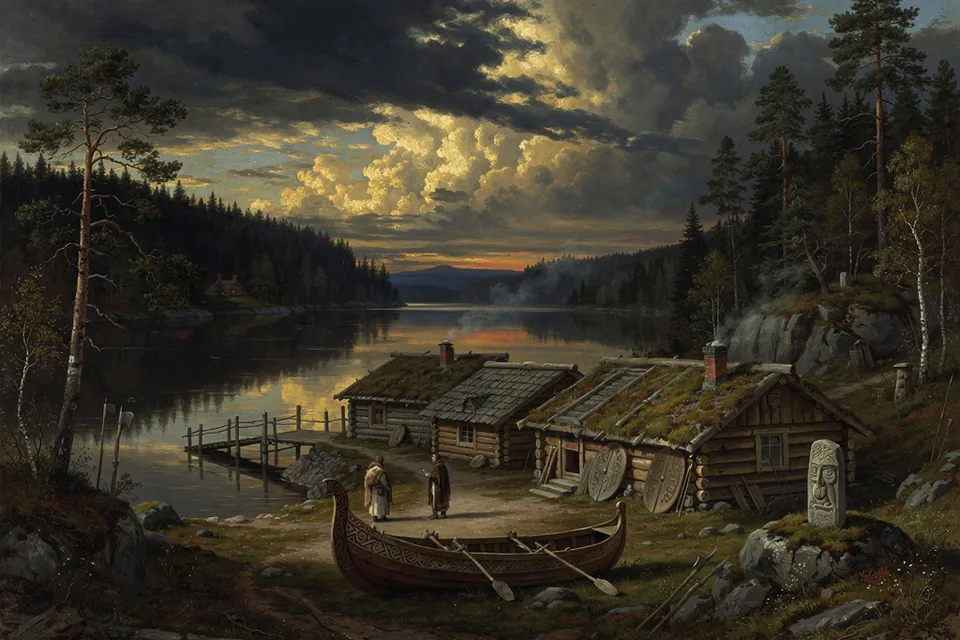
Kalevala (Väinölä)
The heroes' homeland in the Kalevala, the land of Kaleva's descendants where Väinämöinen, Ilmarinen, and Lemminkäinen live, and which Lönnrot's title names; a mythic counterpart to the dark North of Pohjola.
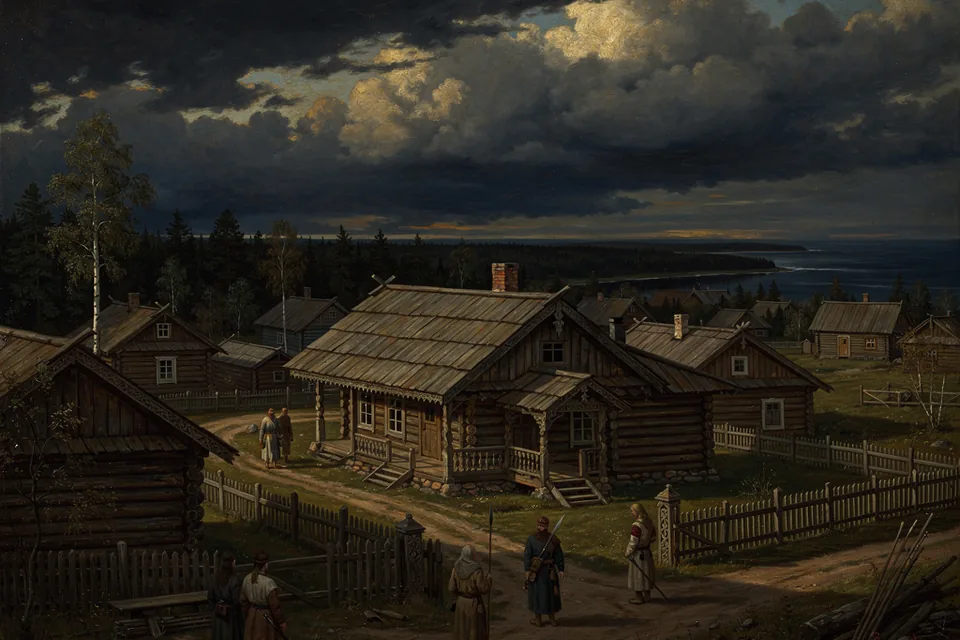
Vuokkiniemi (Voknavolok)
The village and parish in Viena (White Sea) Karelia, now in the Russian Republic of Karelia, whose runo-singers, above all Arhippa Perttunen of nearby Latvajärvi, sang thousands of lines to Elias Lönnrot in 1834.
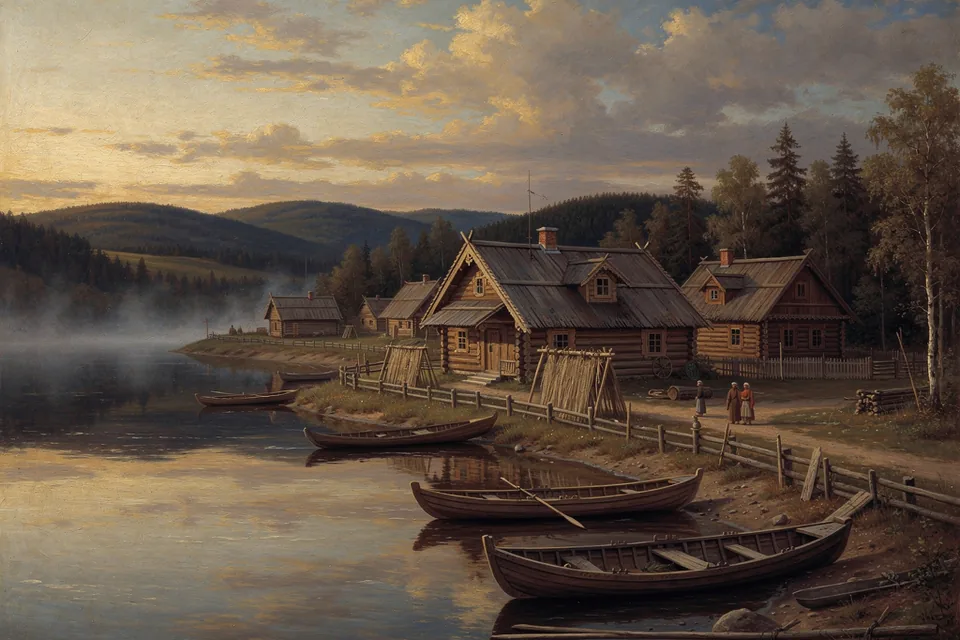
Kalevala (Uhtua)
The Viena Karelian village formerly called Uhtua, visited by Lönnrot and other collectors of runo-song, and renamed Kalevala in 1963 in honor of the epic; now the center of the Kalevala district of the Republic of Karelia.
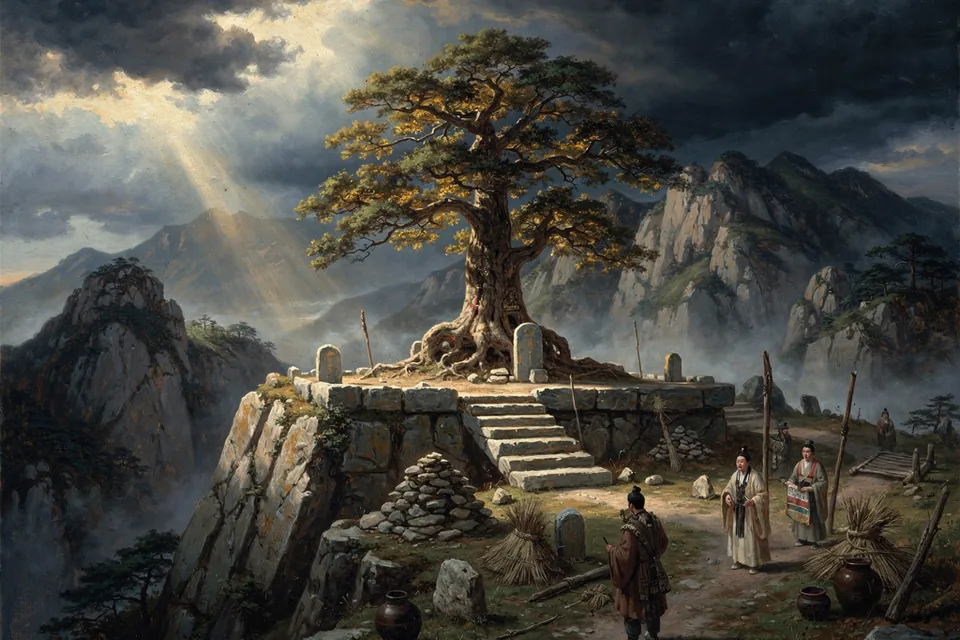
Mount Myohyang (Taebaek of the Dangun myth)
The mountain in North Korea that Iryeon's thirteenth-century note identifies as Mount Taebaek, where Hwanung descended beneath the sacred altar tree; other traditions place Taebaek at Baekdusan or at Taebaeksan in the south.
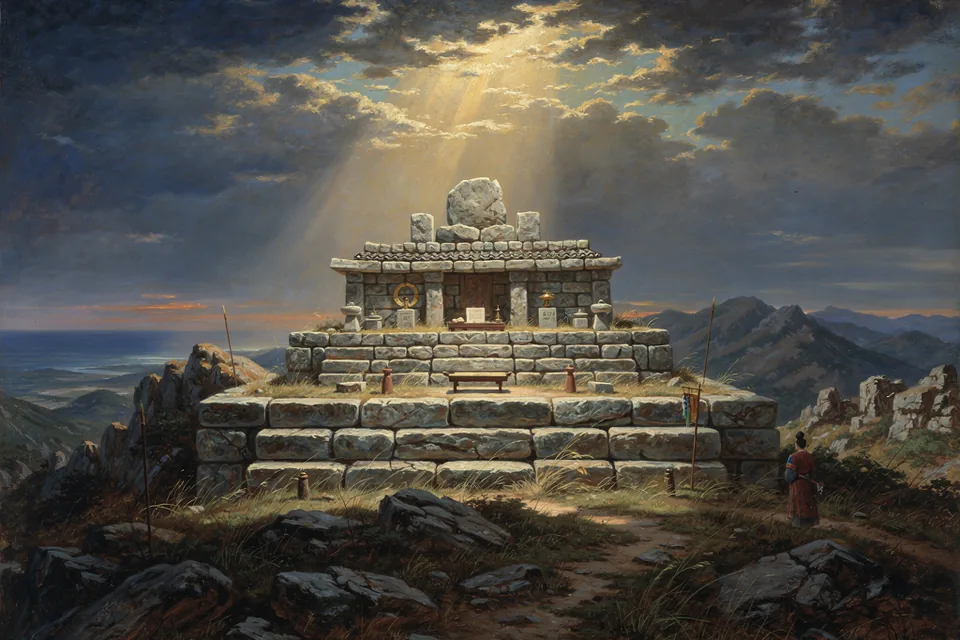
Chamseongdan
The stone altar on the summit of Mount Mani on Ganghwa Island, traditionally said to have been built by Dangun for sacrifices to heaven, where rites are held on National Foundation Day and the National Sports Festival torch is lit.
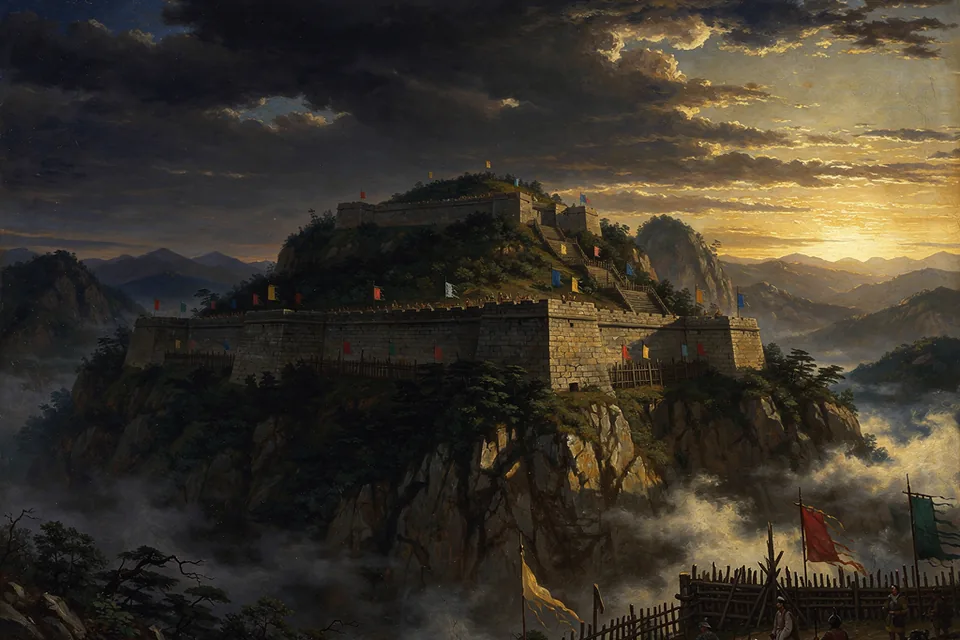
Wunü Mountain (Jolbon)
The flat-topped mountain fortress near Huanren, Liaoning, China, widely identified as Holbon or Jolbon, where the Gwanggaeto Stele and the Samguk Sagi say Jumong founded Goguryeo's first capital.
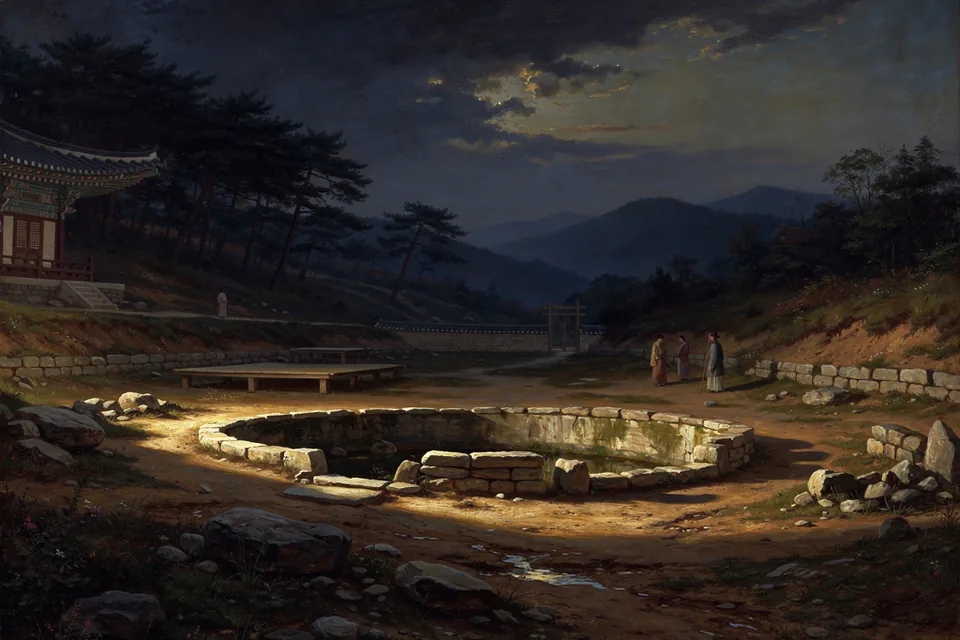
Najeong
The well site in Gyeongju where, in the Samguk Yusa and Samguk Sagi, a white horse knelt beside the egg from which Silla's founder Bak Hyeokgeose was born; excavated as the site of an ancient shrine.
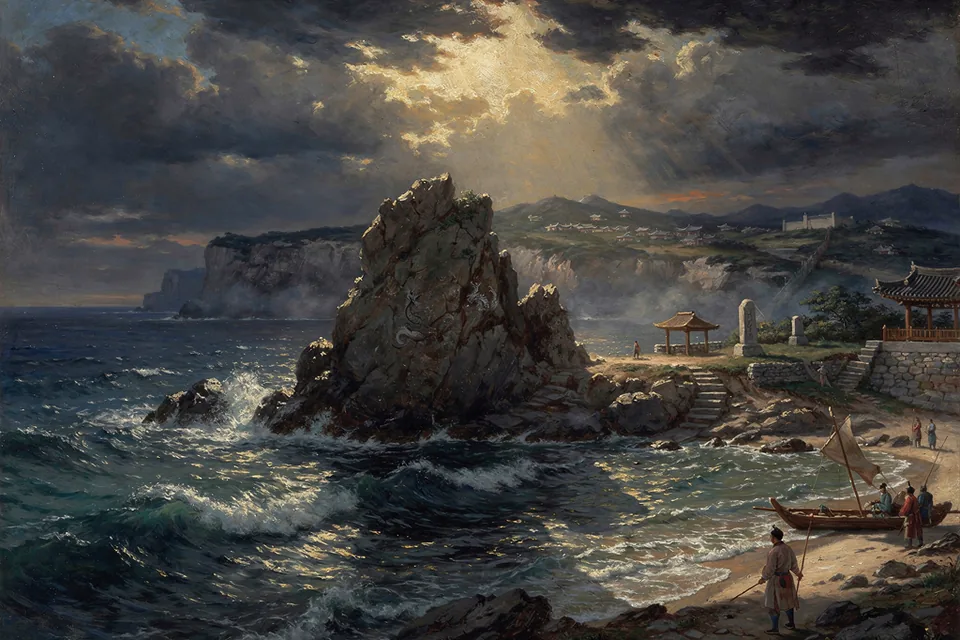
Daewangam
The rocky islet off the Gyeongju coast traditionally identified as the underwater tomb of King Munmu of Silla, who asked to be buried in the East Sea so that he could become a dragon and guard the kingdom.
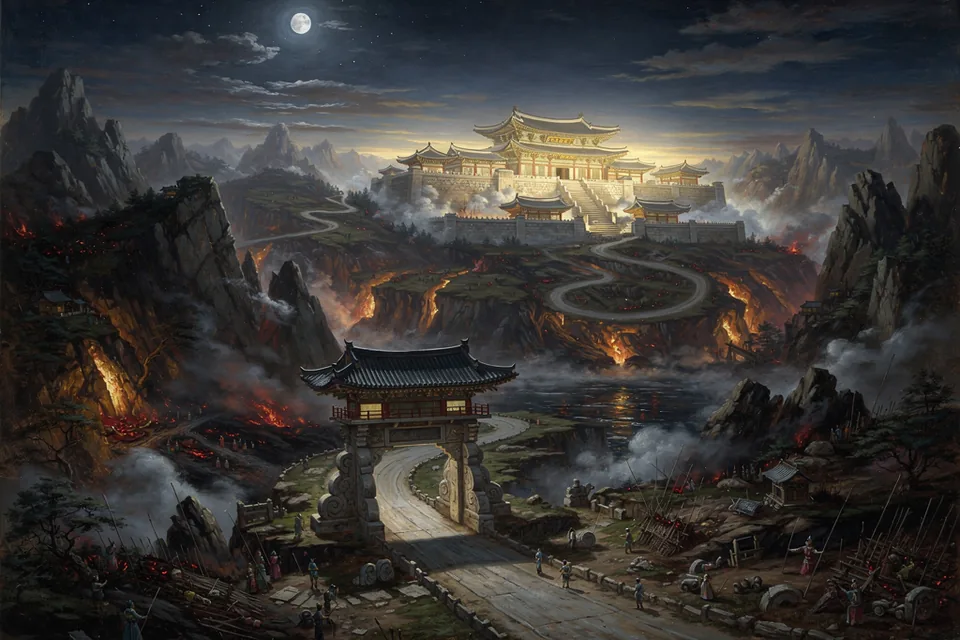
Jeoseung
The 'other world' of the dead in Korean belief, reached by a long road across mountains, rivers, and hells, beyond which lies the Western Heaven where Princess Bari found the water of life; the realm to which she guides the souls of the dead.
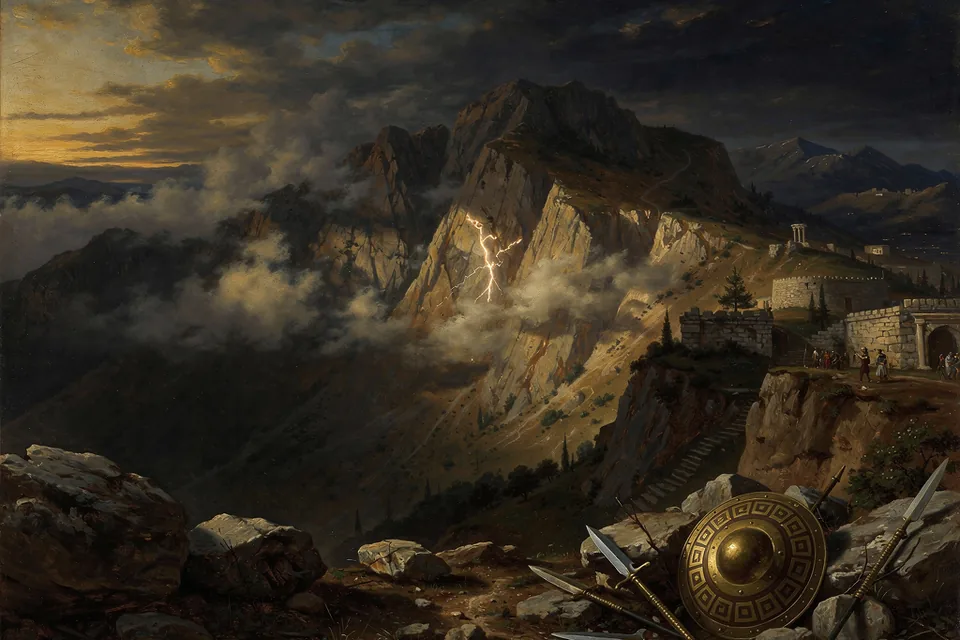
Mount Othrys
The mountain range in central Greece, south of the Thessalian plain, from which Hesiod says the Titans fought their ten-year war against the Olympian gods on Olympus.