


Hindu Mythology
Hindu Mythology traditions, cosmology, and ancient mythology.
Mythological Figures & Lore
Showing all 34 records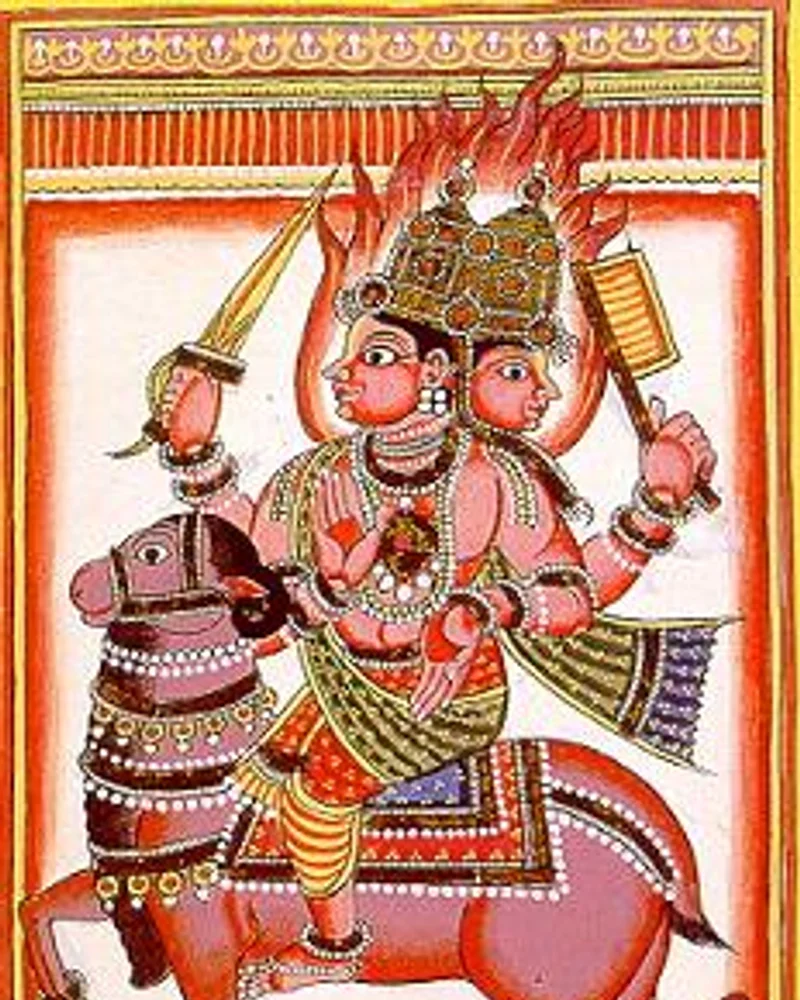 deity
Agni
God of fire and messenger between gods and humans. Central to Vedic ritual, he carries offerings to the gods. Represents the sacrificial fire, digestive fire, and cosmic fire.
 artifact
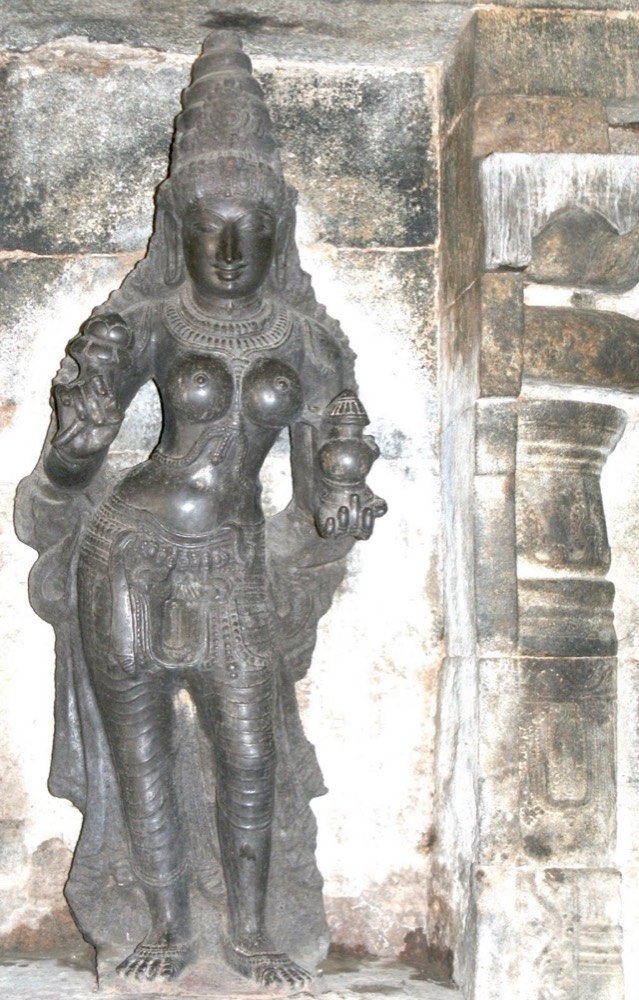
Amrita
The nectar of immortality churned from the milky sea, borne up in a pot by Dhanvantari. Rahu stole a sip and lost his head; Garuda seized it to free his mother; the Kumbh Mela bears its vessel's name.
 hero
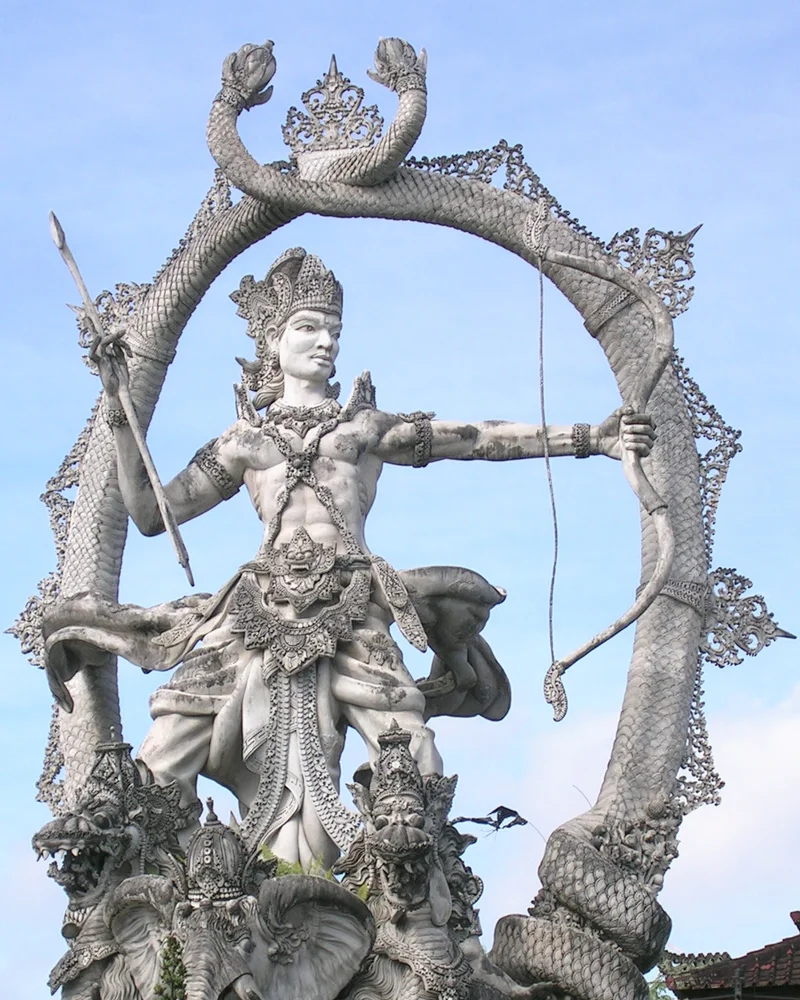
Arjuna
Third of the five Pandava brothers and the Mahabharata's greatest archer, whose crisis of conscience on the battlefield of Kurukshetra prompts the god Krishna's teaching, the Bhagavad Gita.
 deity
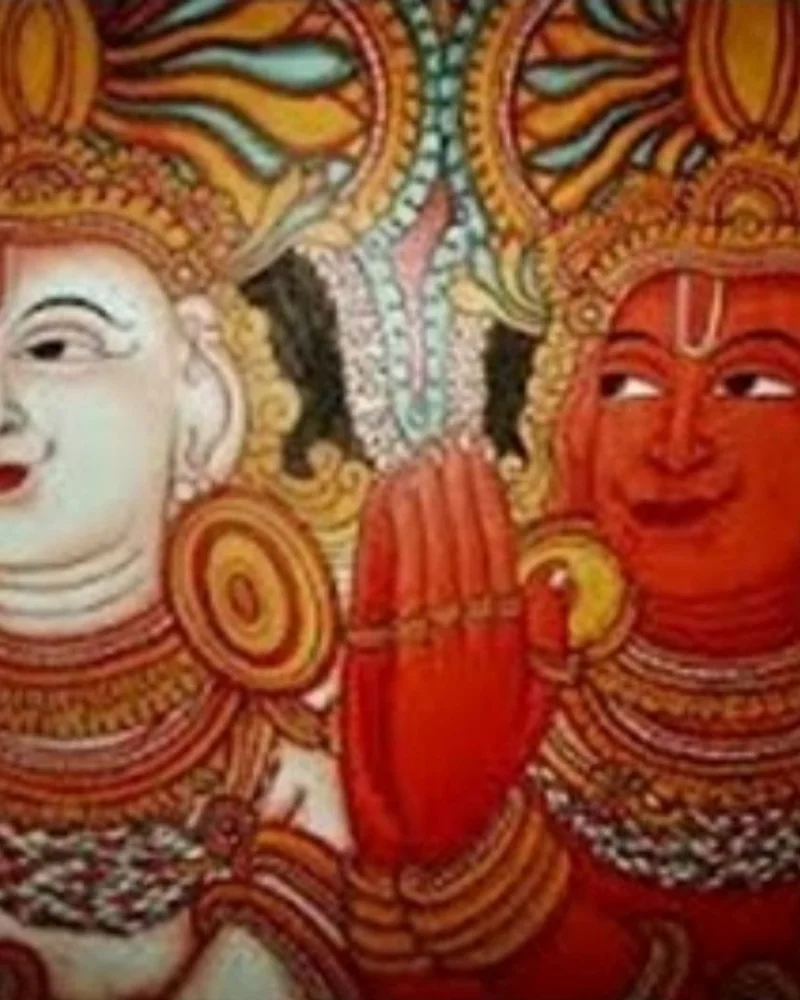
The Ashvins
The divine twin horsemen of the Rigveda, physicians of the gods who arrive in their chariot at dawn to heal the sick, rescue the shipwrecked, and restore youth to the old. More than fifty Rigvedic hymns are addressed to them.
 deity
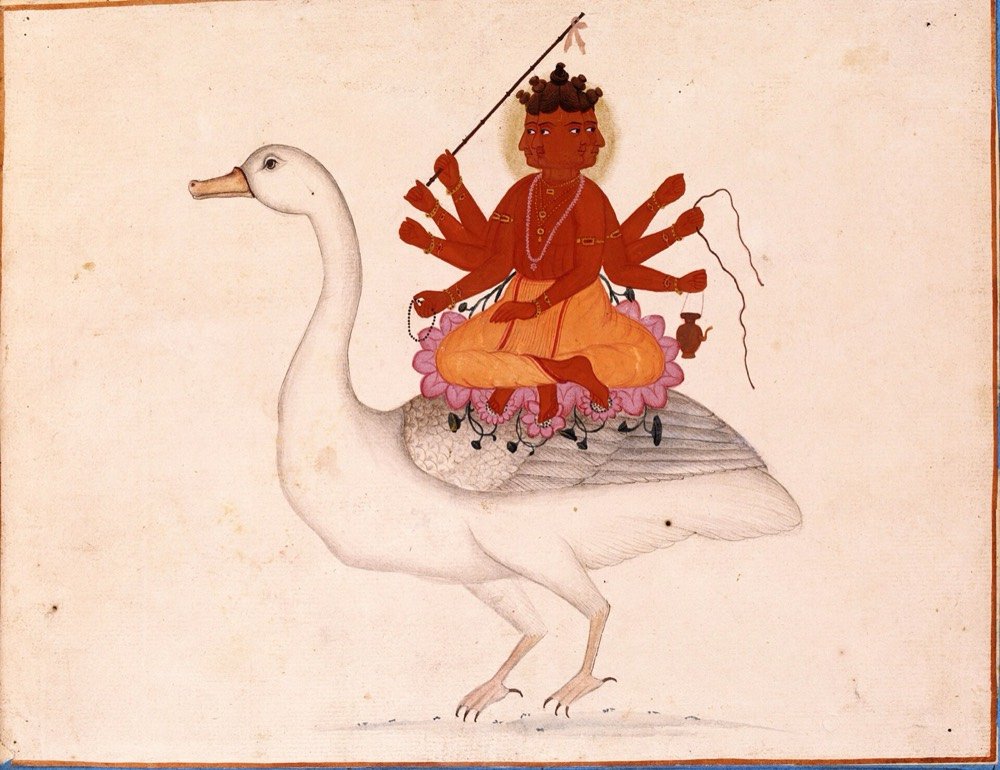
Brahma
The four-faced creator god, born from a lotus rising from Vishnu's navel. First of the Trimurti, yet temples dedicated to him are famously rare.
 deity
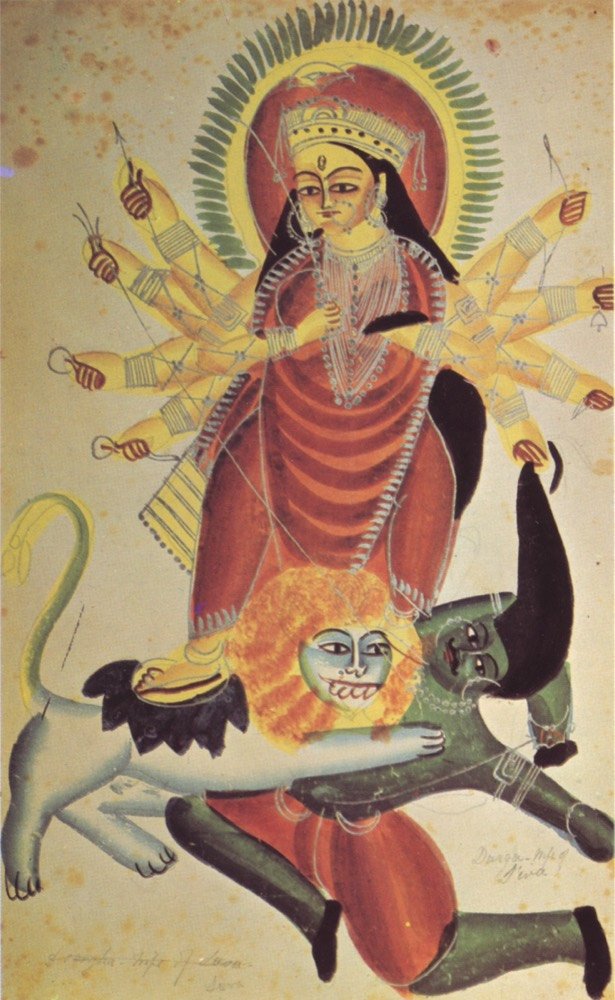
Durga
The ten-armed goddess on a lion, forged from the combined powers of the gods to slay the buffalo demon Mahishasura, whom no male god could defeat. Bengal's Durga Puja is among India's greatest festivals.
 deity
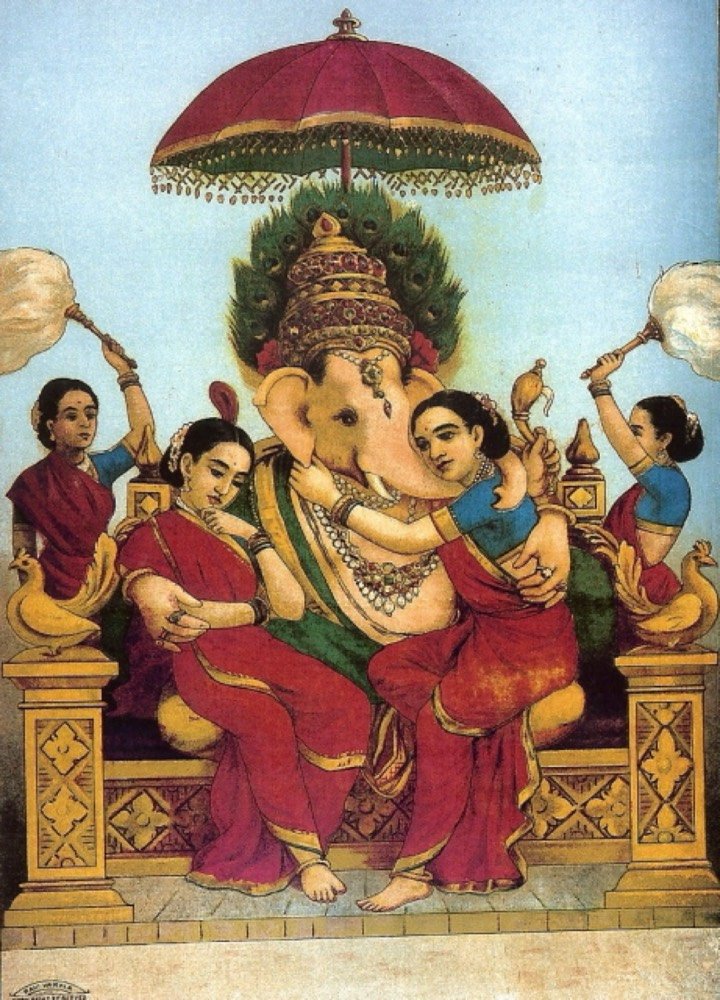
Ganesha
The pot-bellied, elephant-headed god of wisdom, son of Shiva and Parvati, riding a mouse. Every beginning—a journey, a ledger, a book—opens with an invocation to him.
 deity
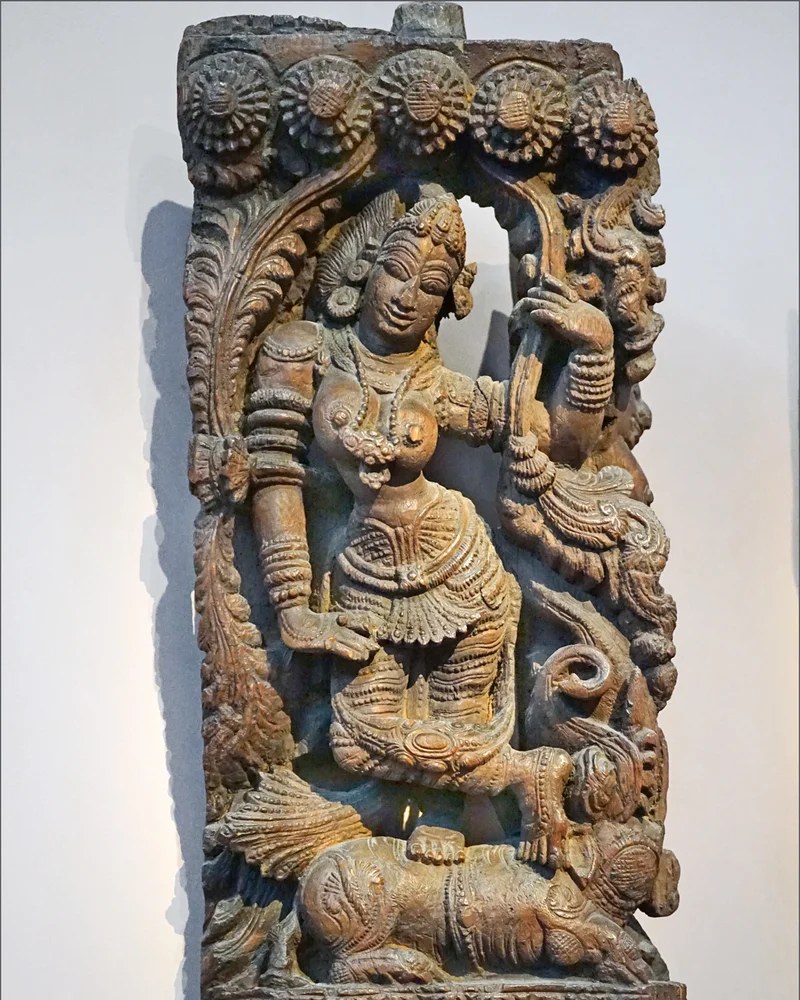
Ganga
The sacred river Ganges as a goddess, who descended from heaven to purify the ashes of King Sagara's sons and was caught in Shiva's matted hair to break the force of her fall. Bathing in her waters and immersing ashes in them are among the most important acts of Hindu devotion.
 creature
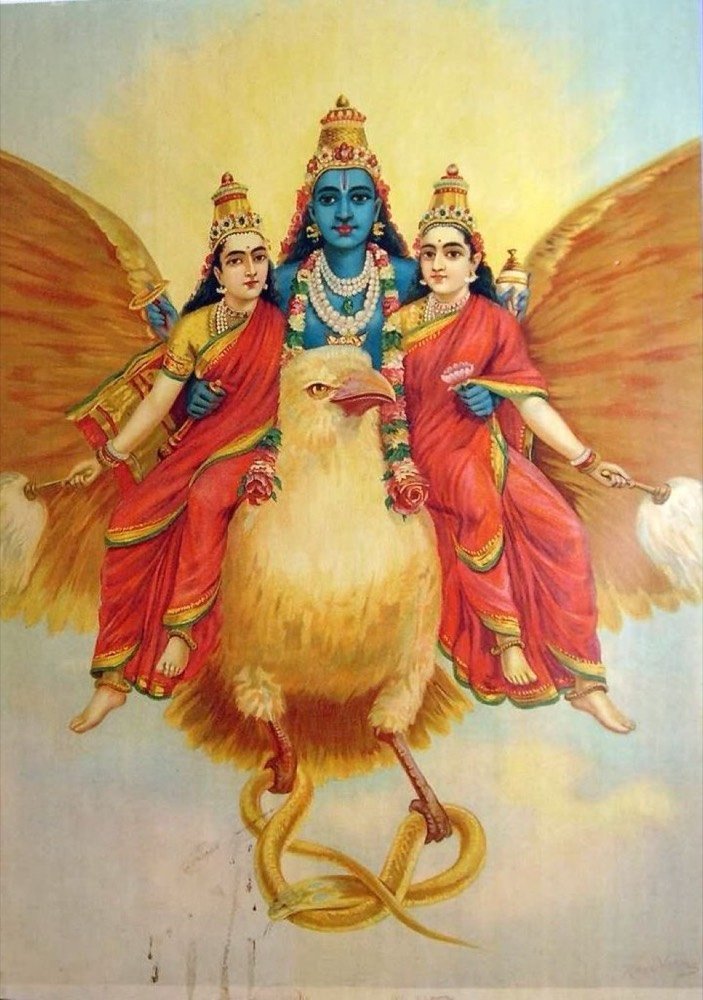
Garuda
The golden eagle king whose wings darken the sun. To ransom his enslaved mother he stormed heaven and seized the nectar of immortality, beginning his eternal feud with the naga serpents.
 hero
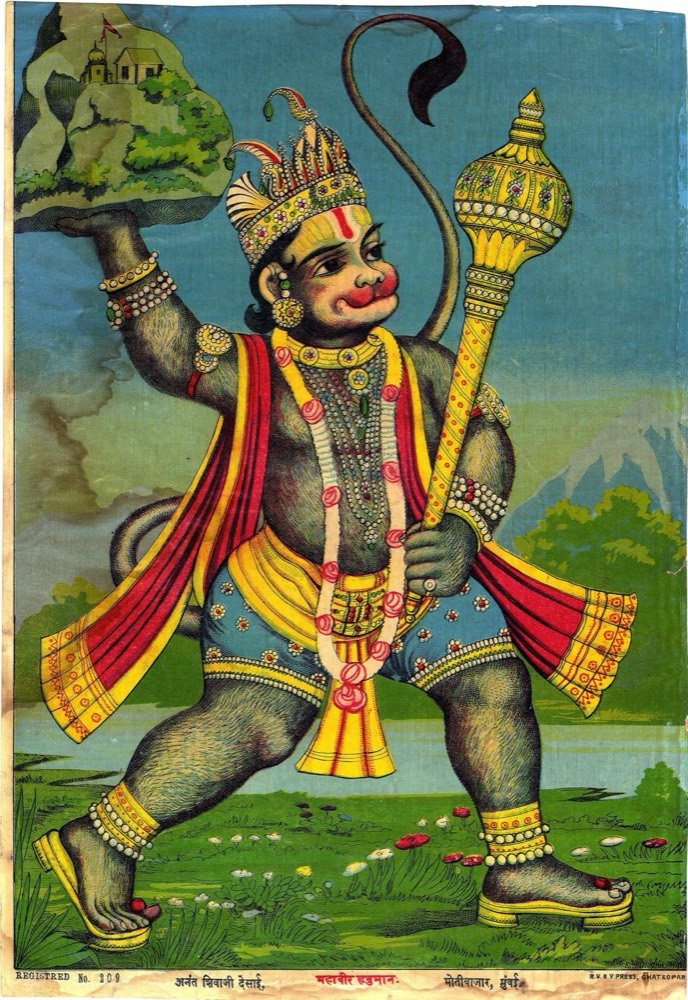
Hanuman
The mighty monkey son of the wind god: he leapt the ocean to find Sita, burned Lanka with his tail, and carried a mountain of herbs to save Lakshmana. Devotion to Rama made him India's best-loved champion.
 deity
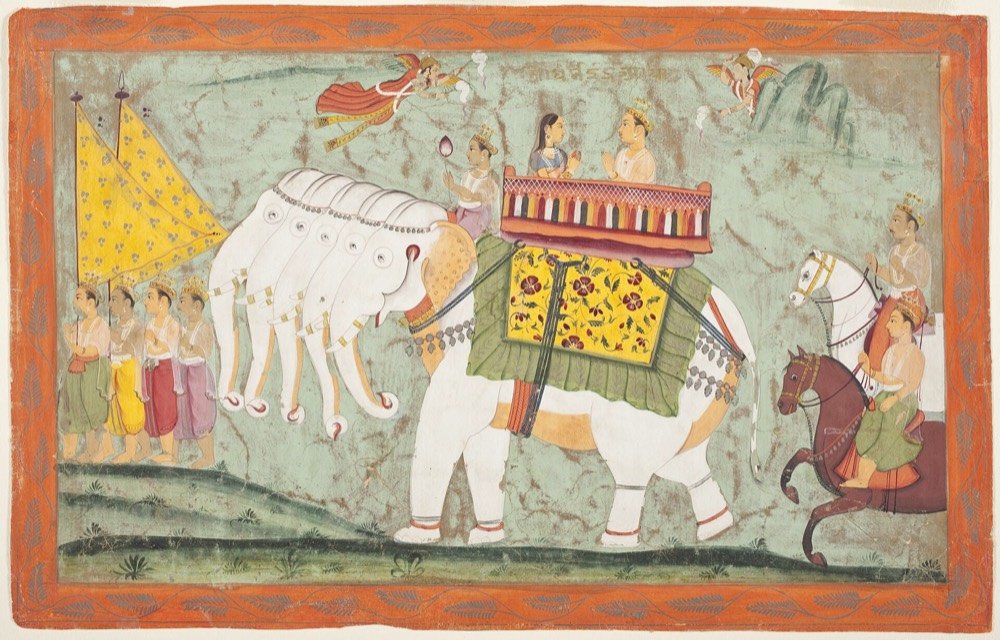
Indra
Thunder-god and king of the devas who slew the drought-serpent Vritra with his vajra to free the waters. The most-hymned god of the Rigveda, later eclipsed by the Trimurti.
 deity
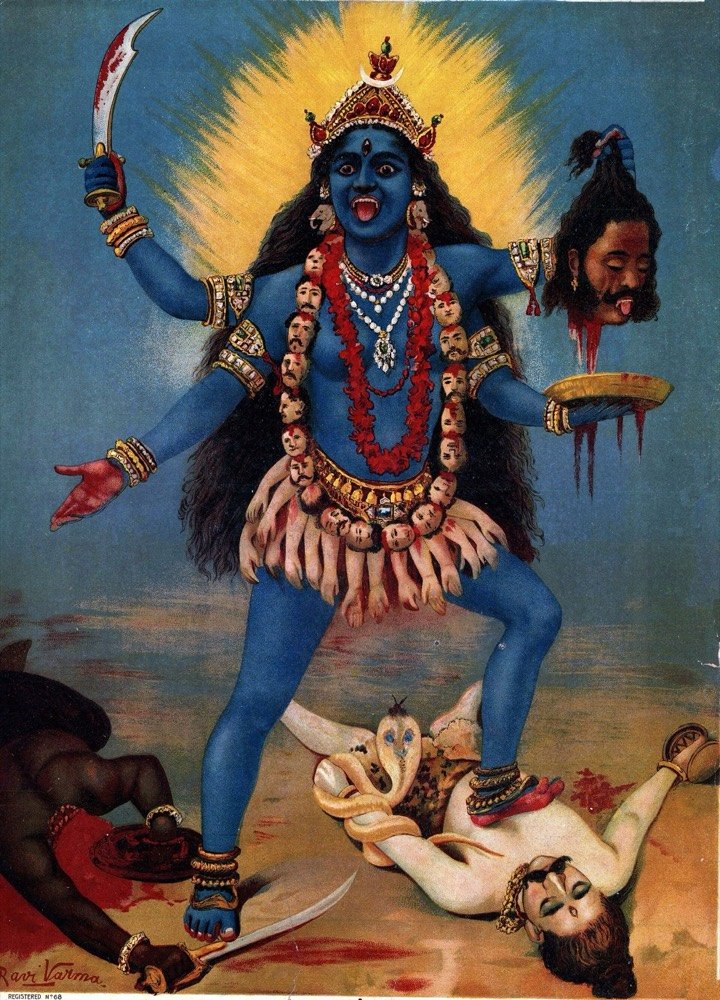
Kali
The night-black goddess with lolling tongue and a garland of severed heads, sword in hand, standing on the prone Shiva. She drinks demon blood, yet devotees revere her as the fiercest of mothers.
 deity
Kartikeya
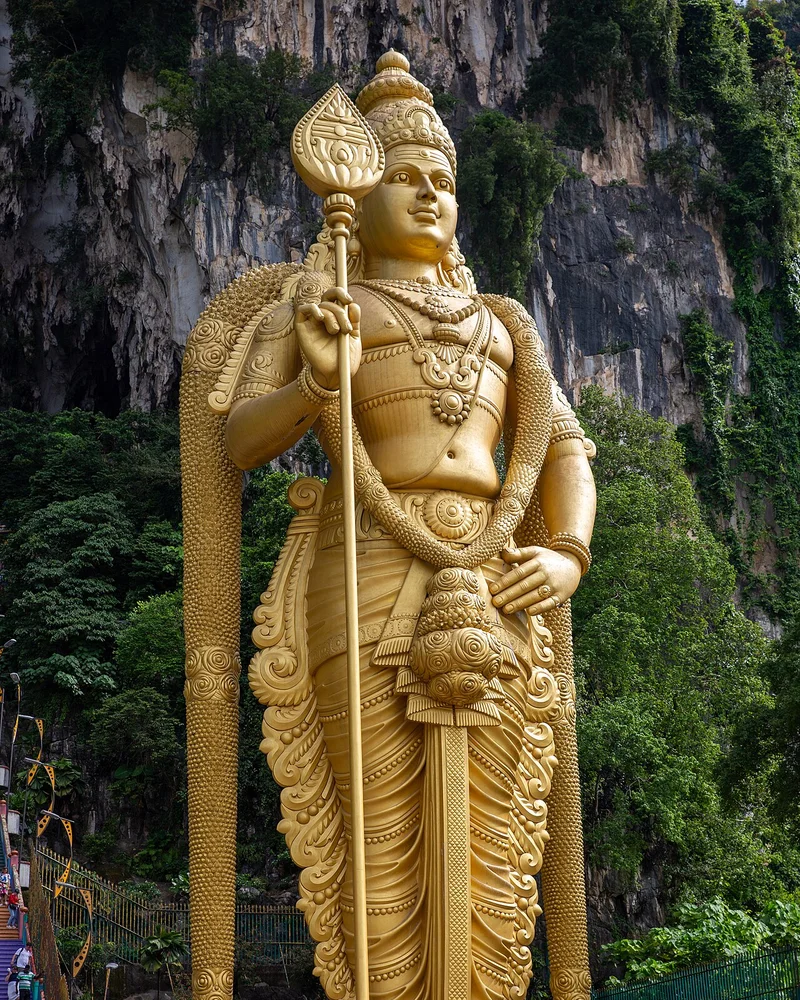
The god of war and commander of the gods' army, son of Shiva, born to destroy the demon Taraka. Raised by the six Krittikas (the Pleiades), he is often shown with six faces; in the Tamil south he is worshipped as Murugan, one of the most beloved gods of the region.
 deity
Krishna
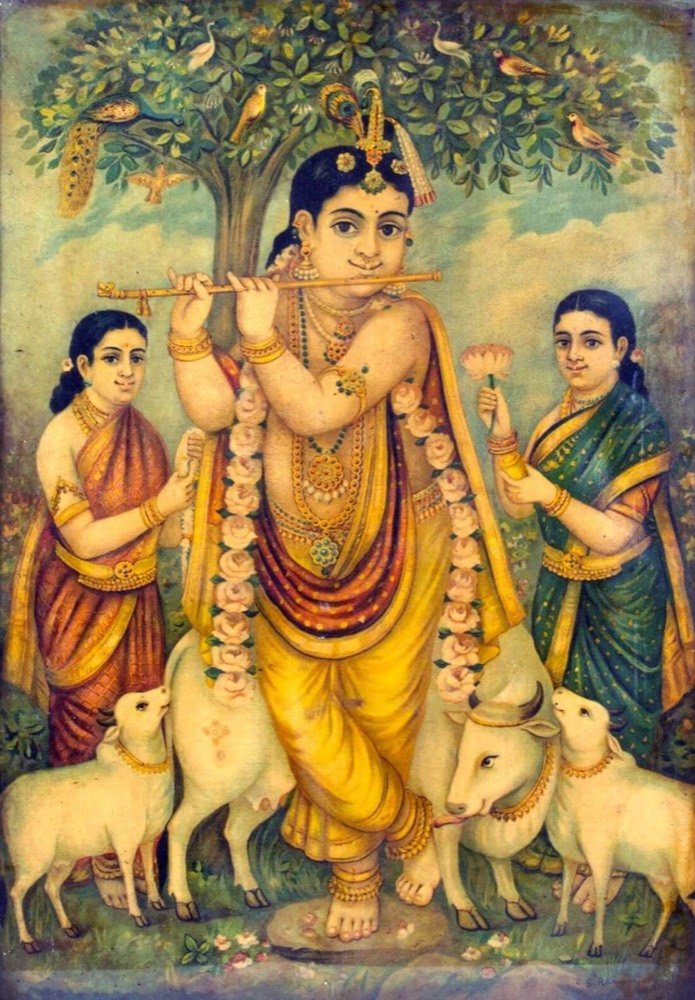
Vishnu's eighth avatar: the blue cowherd with a flute who lifted Mount Govardhana on one finger, slew the tyrant Kamsa, and as Arjuna's charioteer spoke the Bhagavad Gita on the battlefield.
 deity
Lakshmi
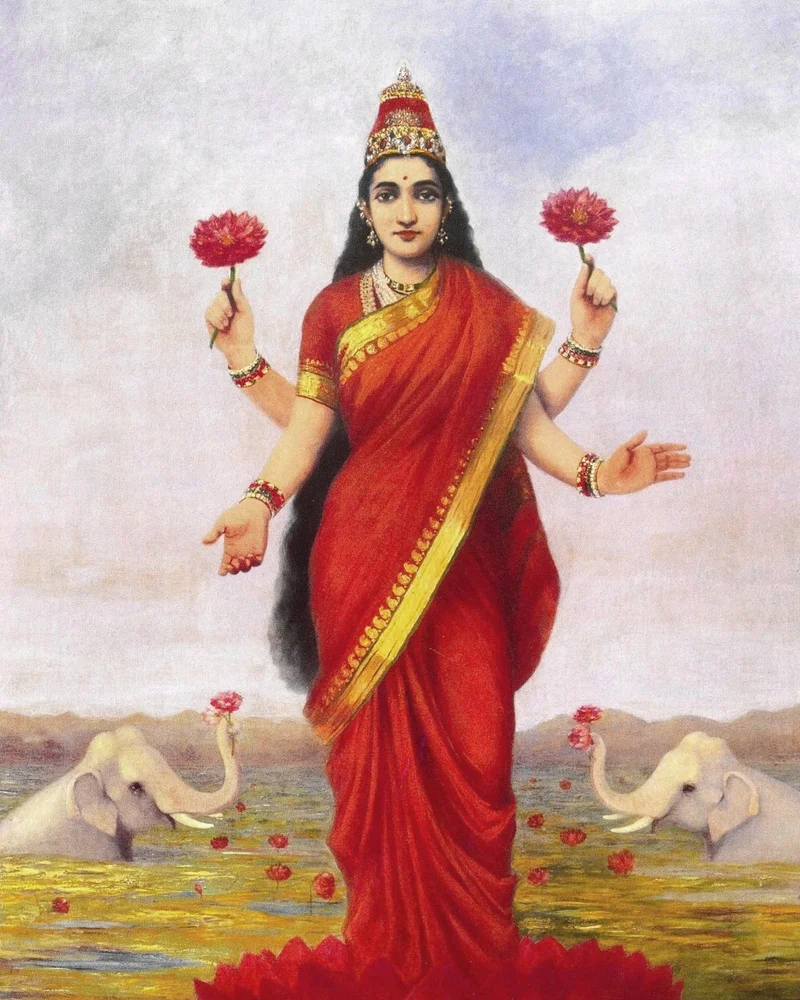
Goddess of wealth, fortune, prosperity, and beauty. Consort of Vishnu, she incarnates alongside him in his avatars. She represents both material and spiritual prosperity.
 creature
Makara
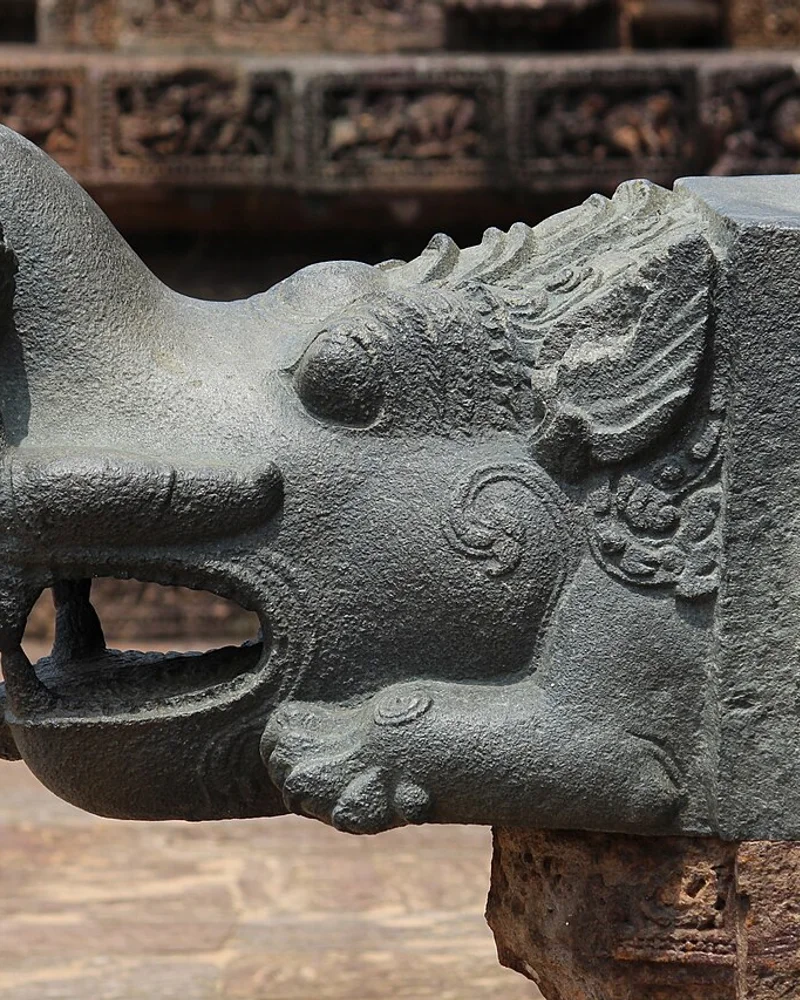
A legendary sea creature that serves as the mount of the river goddess Ganga and the god Varuna. It combines features of a crocodile, elephant, and fish in its hybrid form.
 place
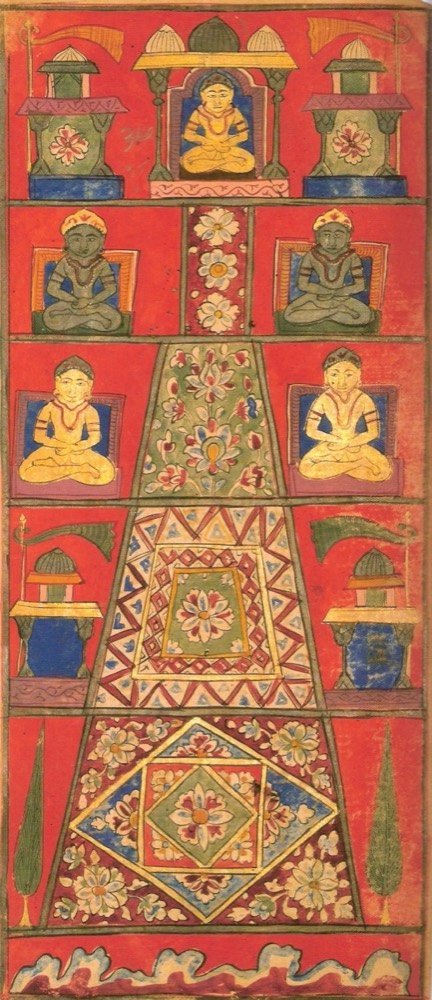
Mount Meru
The golden mountain at the world's centre, 84,000 yojanas tall, around which sun, moon and stars revolve; on its summit stand Brahma's city and the seats of the gods. Buddhism inherited it as Sumeru.
 creature
Naga
Half-human, half-cobra beings dwelling in the jewel-lit underworld. Shesha the thousand-headed bears Vishnu and the earth; Vasuki served as the churning rope; Takshaka's vengeance sparked the great snake sacrifice.
 deity
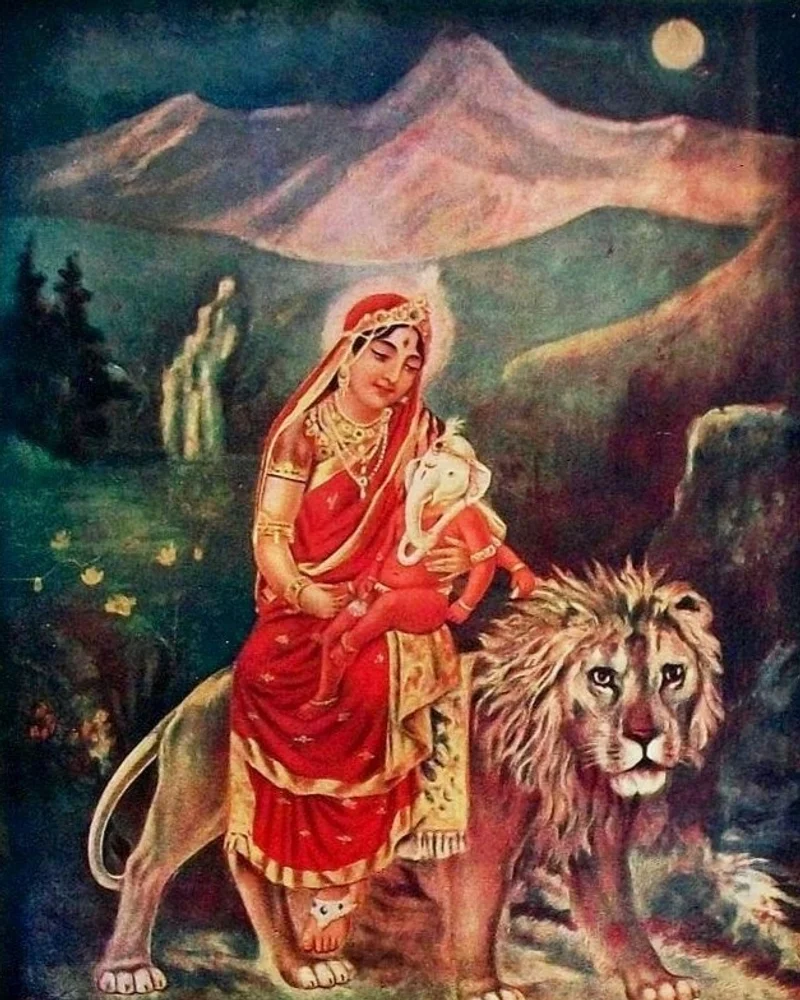
Parvati
Goddess of power, fertility, love, and devotion. Consort of Shiva and mother of Ganesha and Kartikeya. Represents Shakti, the divine feminine creative power.
 artifact
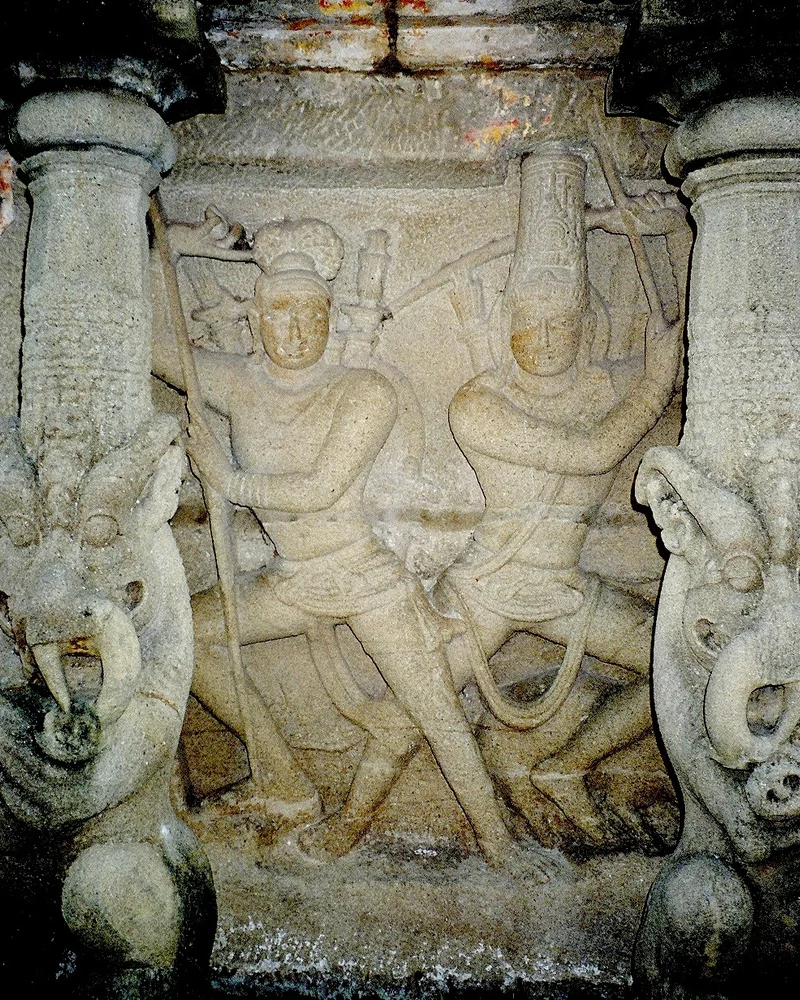
Pashupatastra
The most destructive weapon in Hindu mythology, capable of annihilating all of creation. It can destroy any target and cannot be countered by any other divine weapon.
 deity
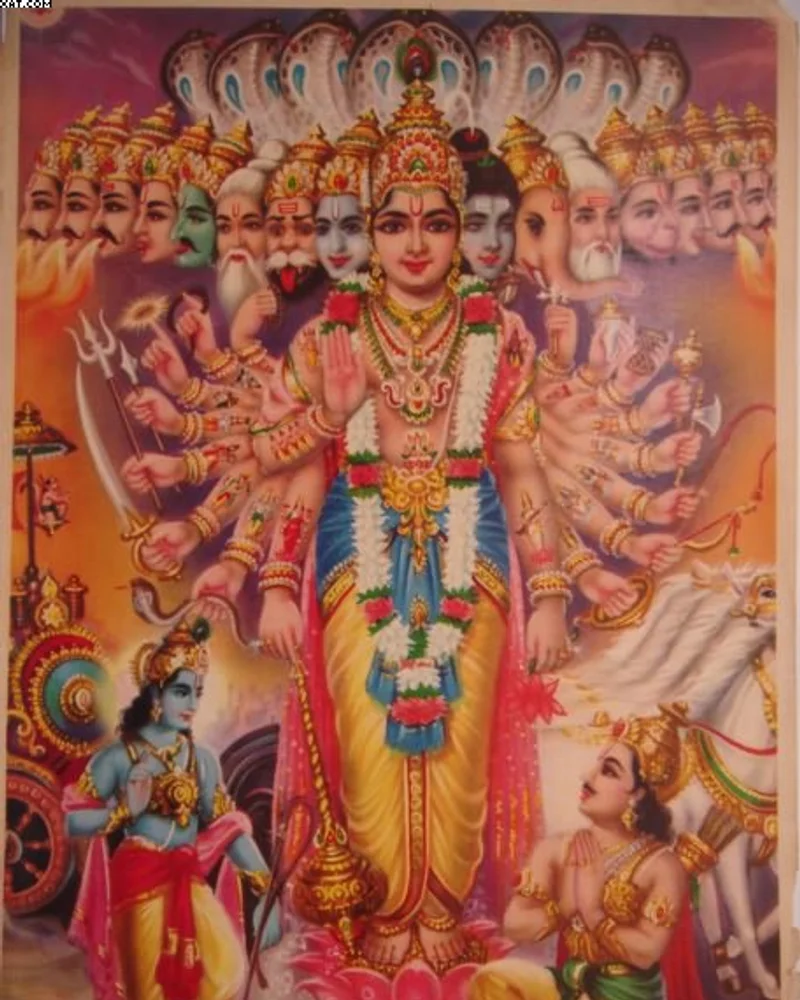
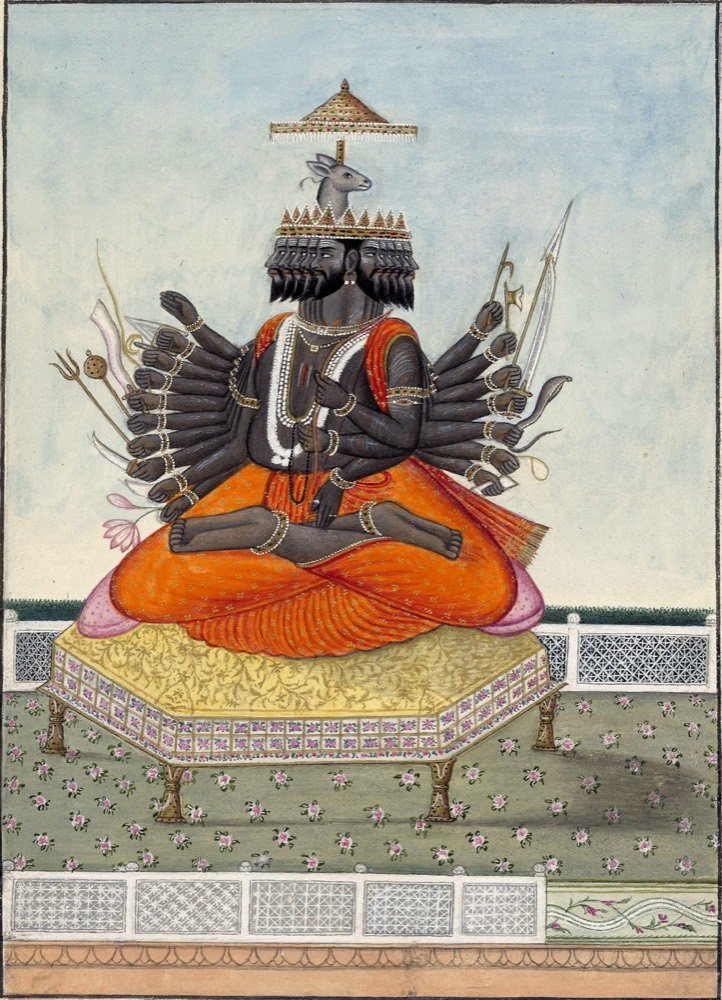
Purusha
The primordial cosmic being of Rigveda 10.90, the Purusha Sukta, whom the gods sacrificed so that the world could be made from his body: the sun from his eye, the moon from his mind, the sky from his head, the earth from his feet, and the four social classes from his mouth, arms, thighs, and feet.
 spirit
Rakshasa
Shape-shifting man-eaters strongest after dark, fanged and clawed, defilers of sacrifices. Ten-headed Ravana is their king—though some, like his brother Vibhishana, chose the side of dharma.
 hero
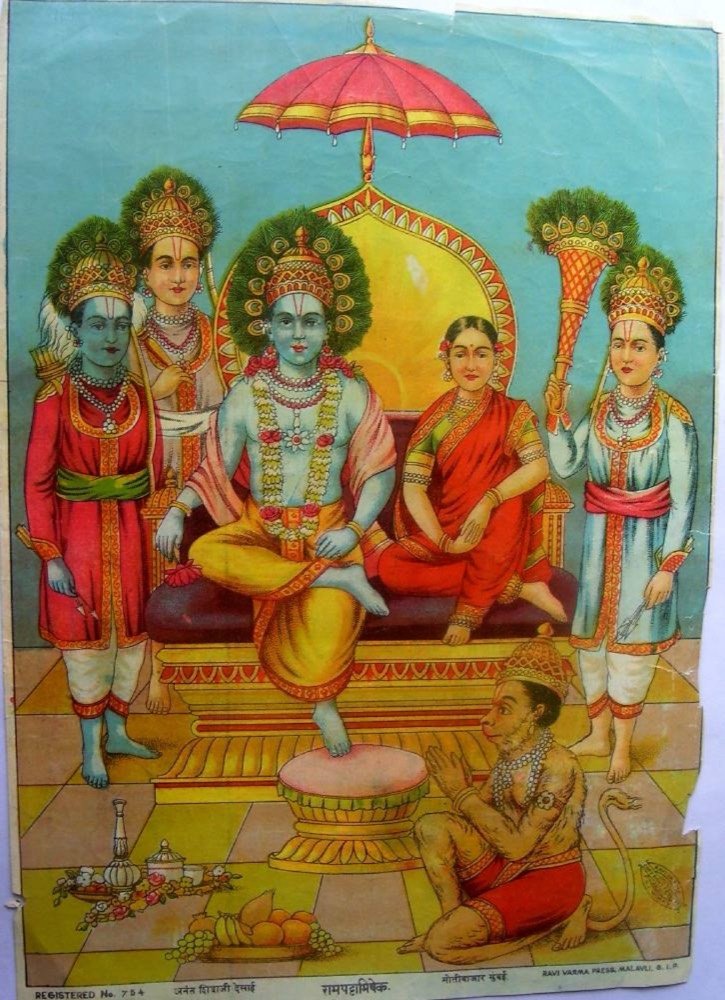
Rama
Hero of the Ramayana: exiled fourteen years to honour his father's word, he led an army of monkeys and bears across the sea to Lanka, slew Ravana, rescued Sita, and returned to be crowned.
 deity
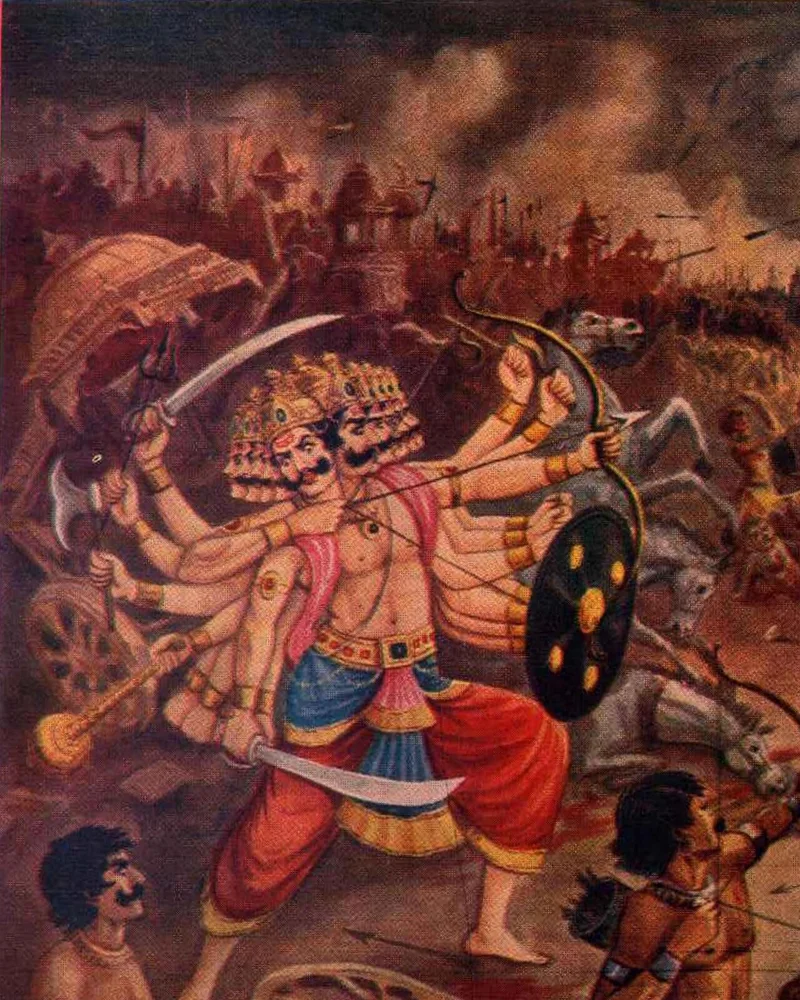
Ravana
The ten-headed rakshasa king of Lanka and principal antagonist of the Ramayana. A grandson of the sage Pulastya and devout worshipper of Shiva who won great boons through austerity, Ravana's abduction of Sita brings about his own destruction at the hands of Rama.
 tale
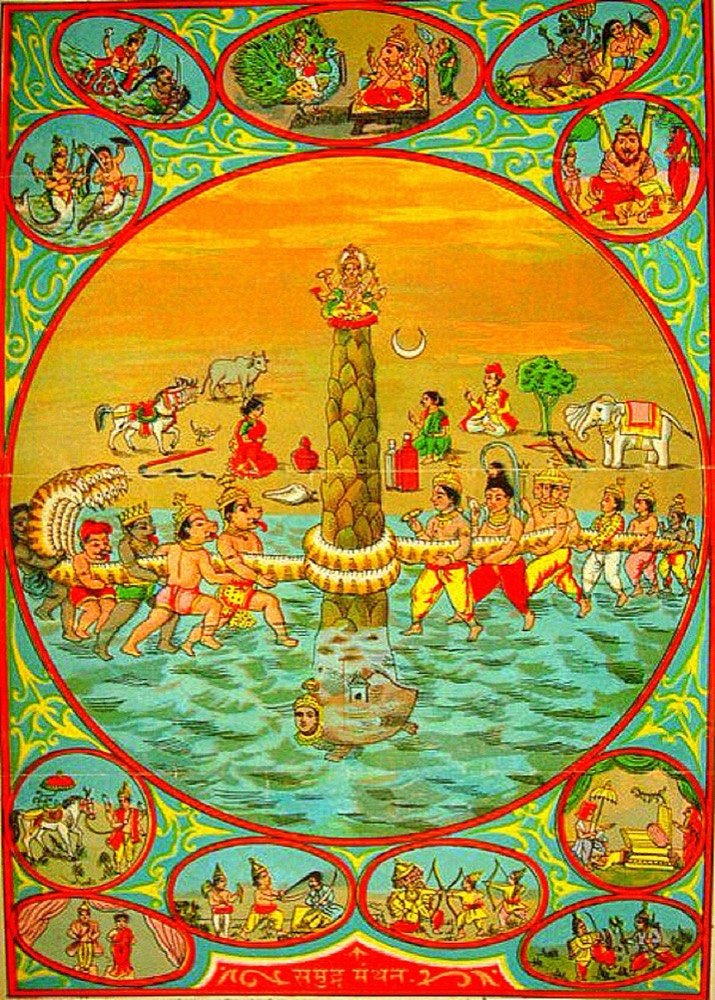
The Churning of the Ocean of Milk
Gods and demons churned the milky sea with Mount Mandara as the rod and the serpent Vasuki as the rope: first world-killing poison, then treasure after treasure, and at last the nectar of immortality.
 deity
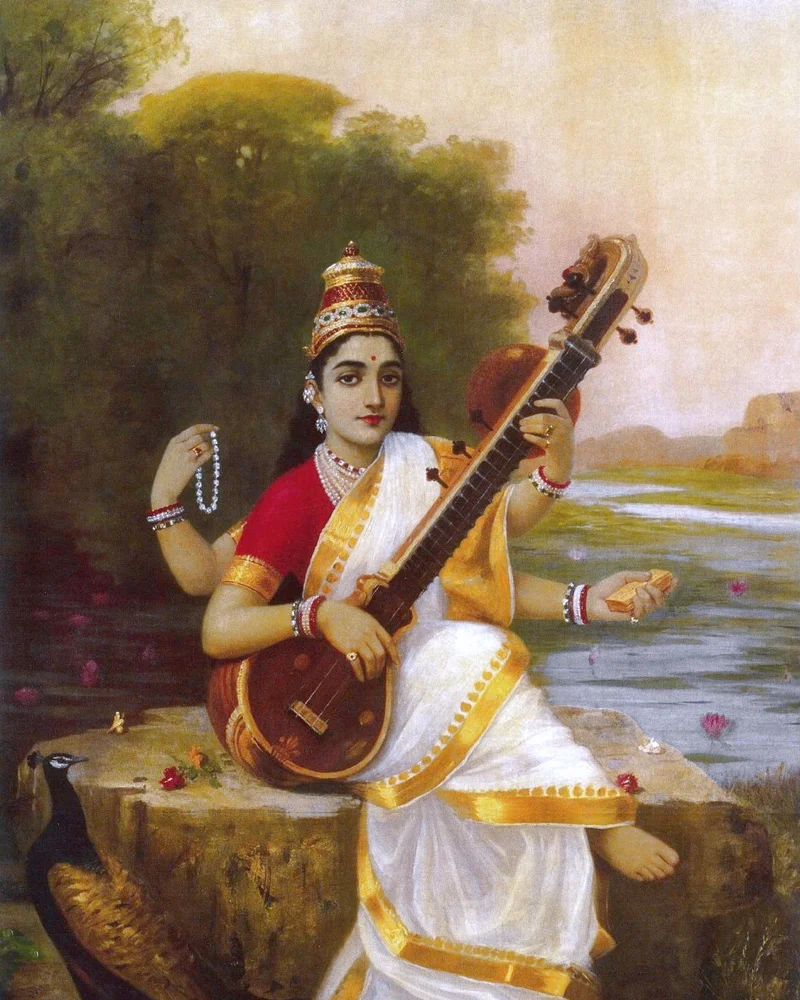
Saraswati
Goddess of knowledge, music, arts, wisdom, and learning. Consort of Brahma. She invented Sanskrit and the Devanagari script. Patron of students, artists, and scholars.
 deity
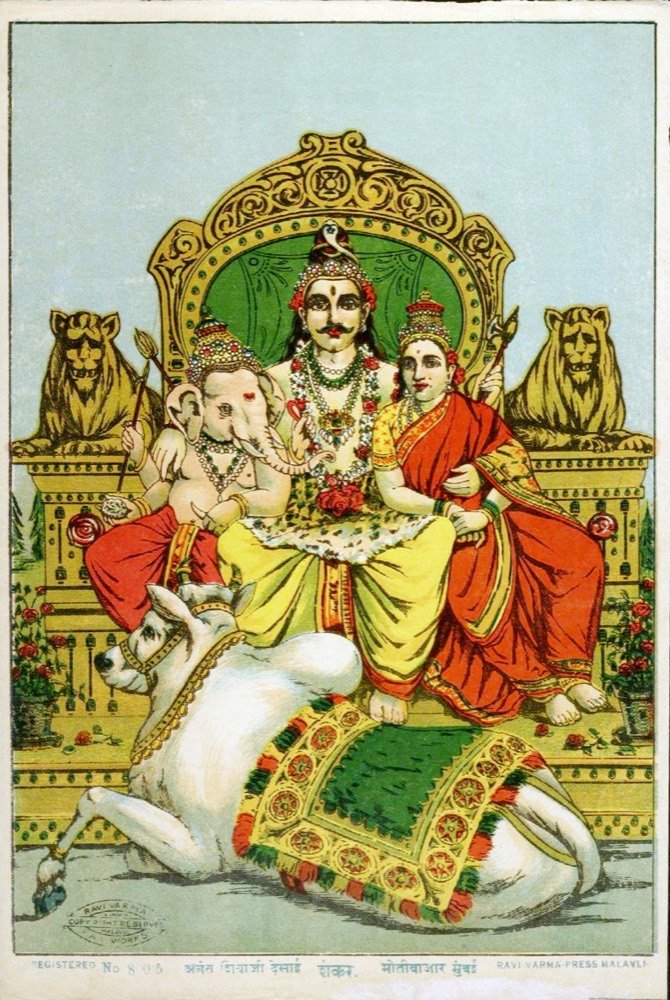
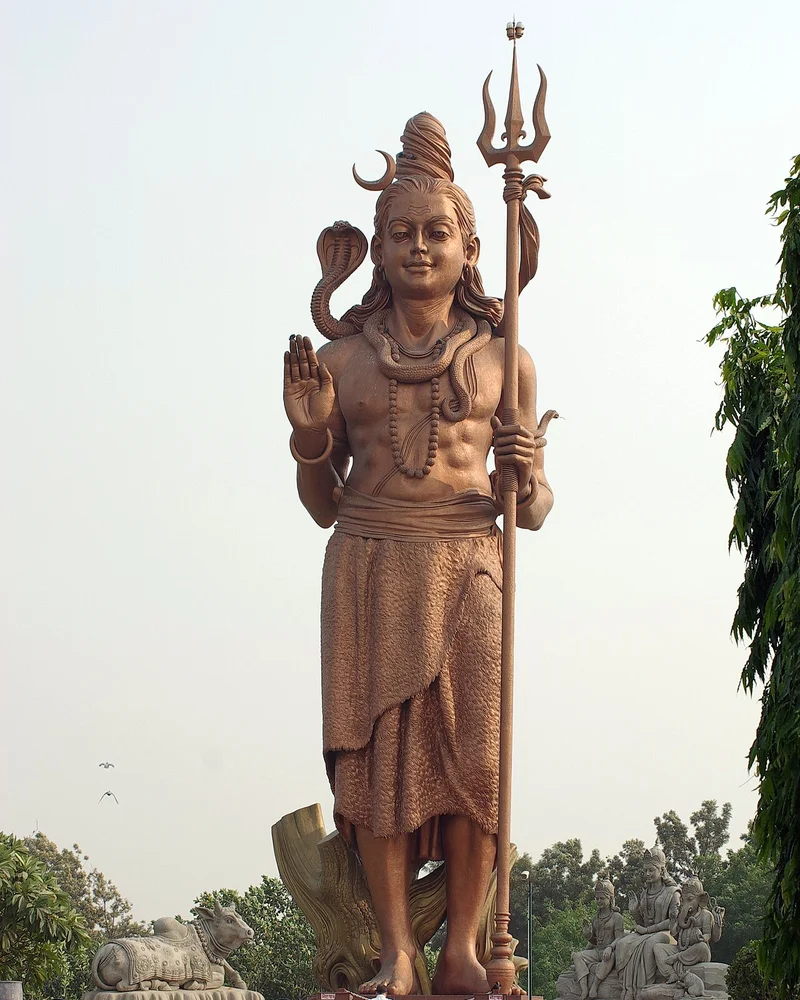
Shiva
The three-eyed god of destruction and renewal, blue-throated and moon-crowned, the Ganges falling through his matted hair. From Mount Kailash he dances the universe to its end and rebirth.
 deity
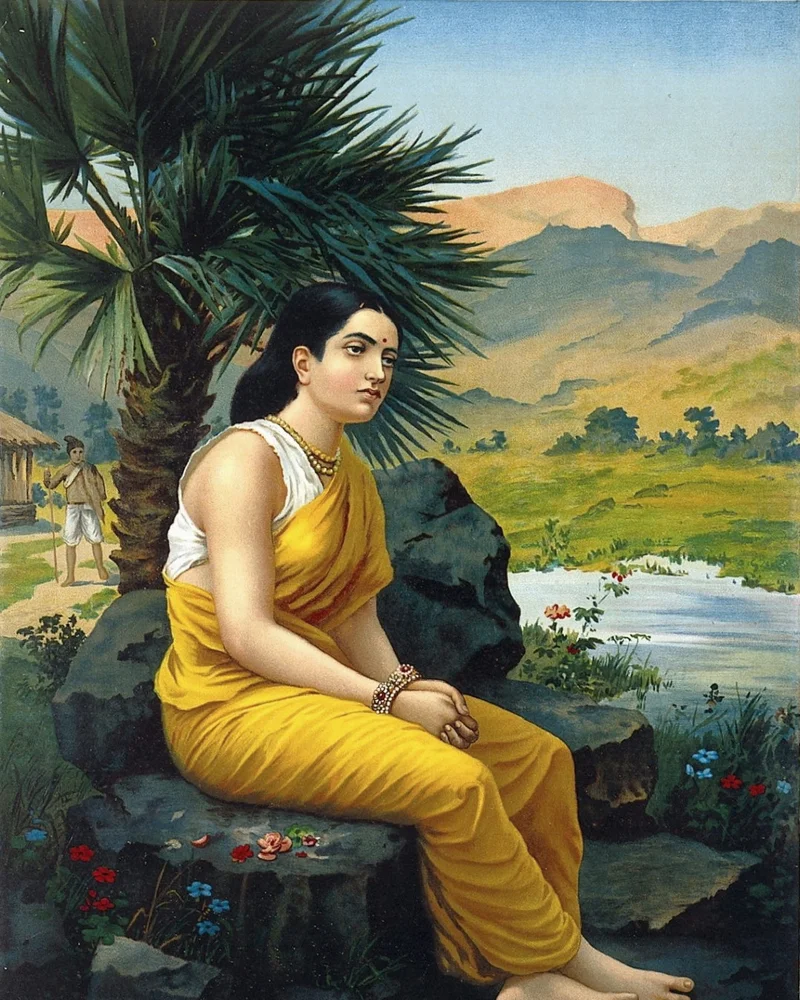
Sita
Wife of Rama and central heroine of the Ramayana. Found by King Janaka in a ploughed furrow, Sita is abducted by the demon king Ravana, endures captivity with unwavering fidelity, and is later identified in Puranic tradition as an avatar of the goddess Lakshmi.
 artifact
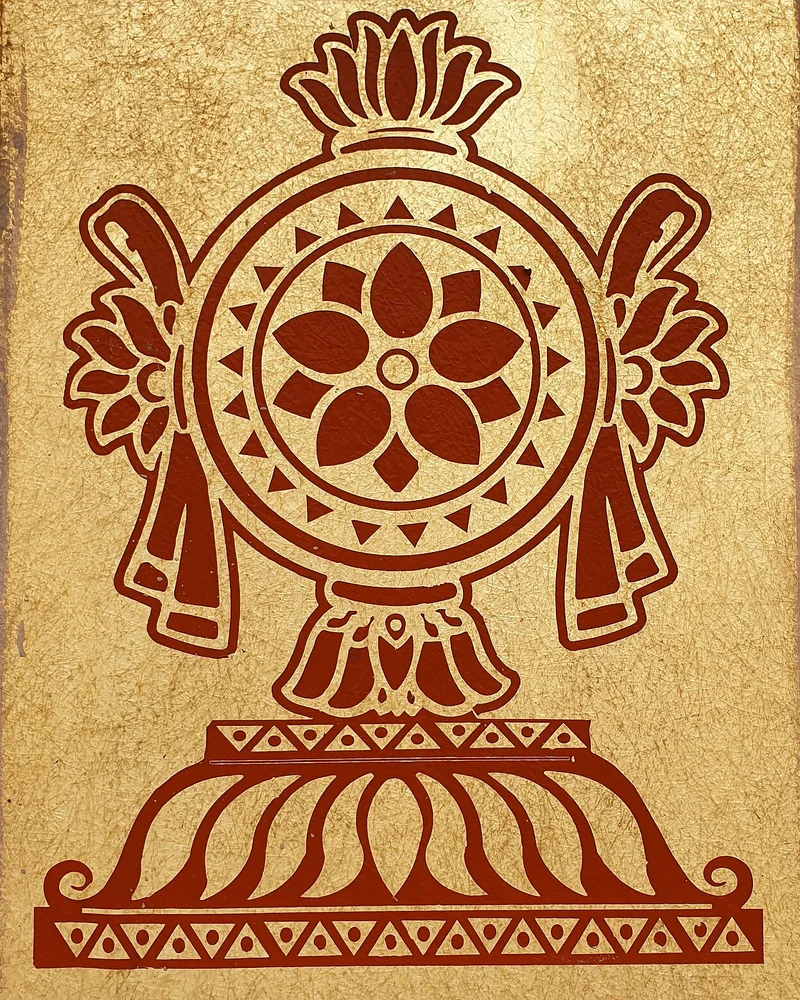
Sudarshana Chakra
Vishnu's divine spinning discus with 108 serrated edges, blazing with the fire of the sun. It destroys evil, protects devotees, and can pursue enemies across any distance.
 artifact
Trishula
Shiva's three-pronged trident representing the three aspects of consciousness, the three gunas, and the power to destroy, preserve, and create. It is the symbol of Shiva's supreme authority.
 deity
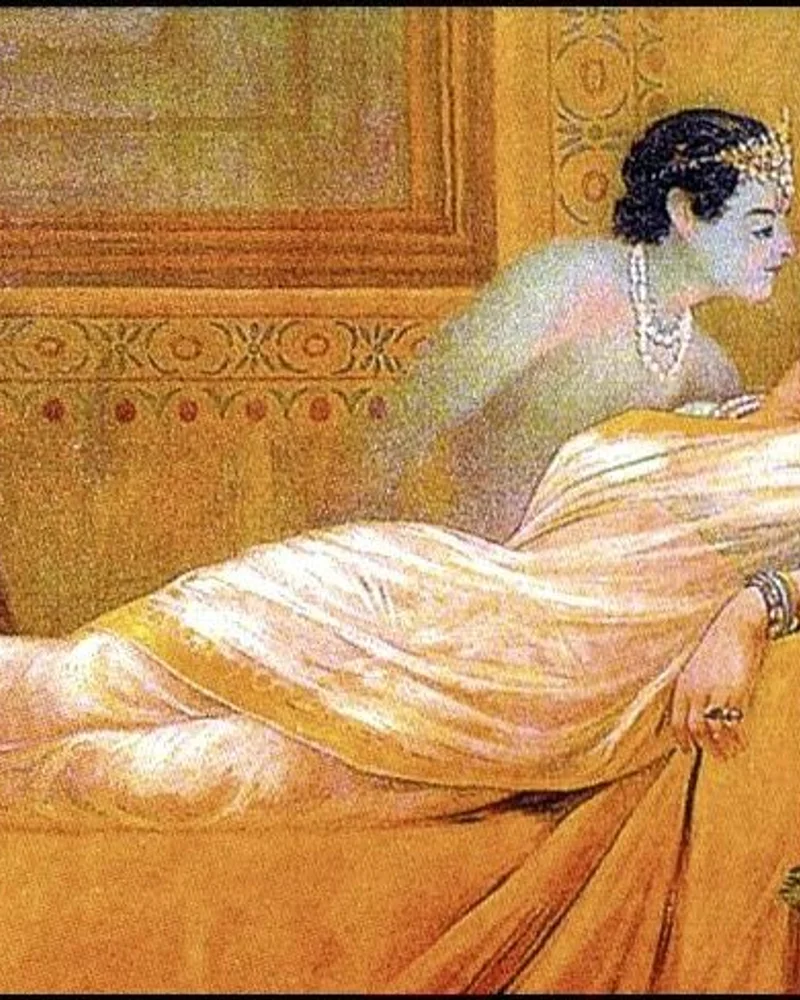
Usha
The Vedic goddess of dawn, praised in some twenty hymns of the Rigveda as a radiant young woman who drives away darkness, wakes every living creature, and returns each morning ever young while the generations of mortals pass away.
 artifact
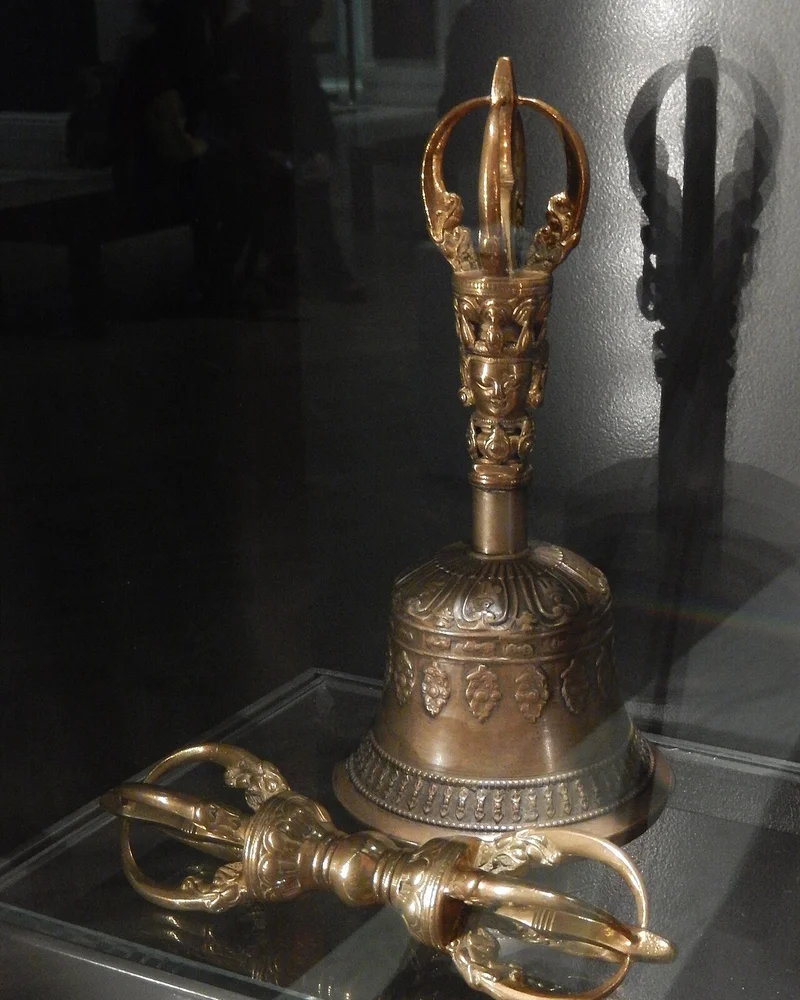
Vajra
Indra's thunderbolt, the weapon of the king of gods. Indestructible and irresistible, it represents both the hardness of diamond and the unstoppable force of lightning.
 deity
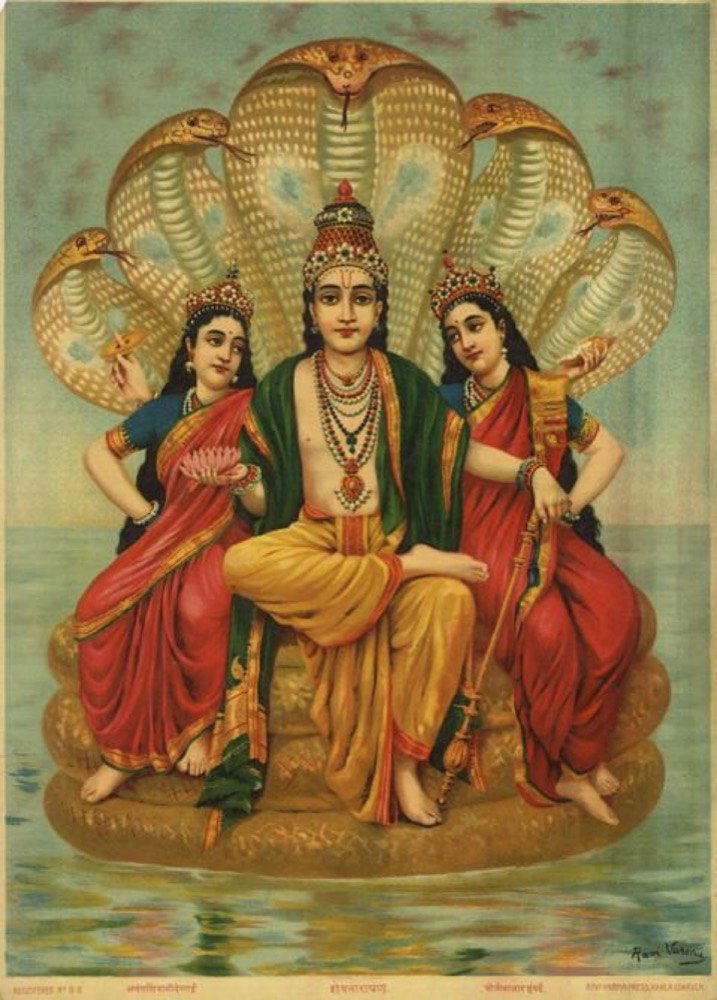
Vishnu
The blue-skinned preserver who reclines on the serpent Shesha upon the ocean of milk, descending as avatars—Rama and Krishna among them—whenever cosmic order fails.
 deity
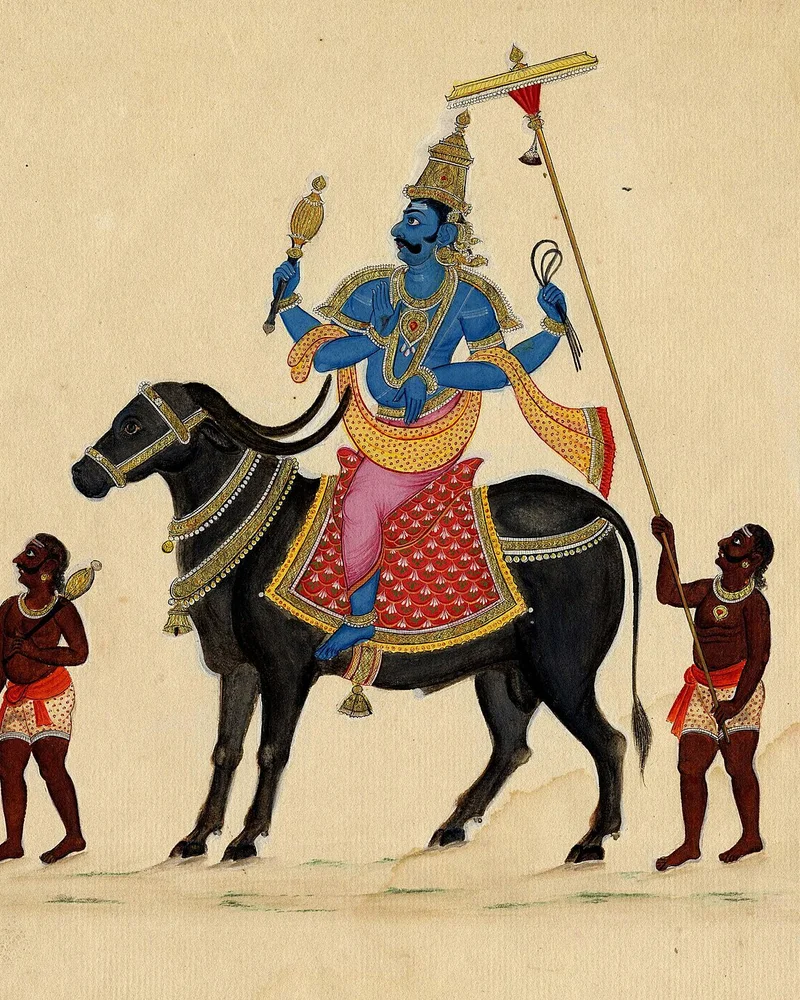
Yama
God of death and, in later tradition, the formal judge of the dead. The Rigveda names Yama as the first mortal to die, who found the path to the afterlife that all who follow him must travel; later texts make him ruler of Yamaloka and keeper of cosmic and moral order.