

Enkidu
Also known as: Eabani
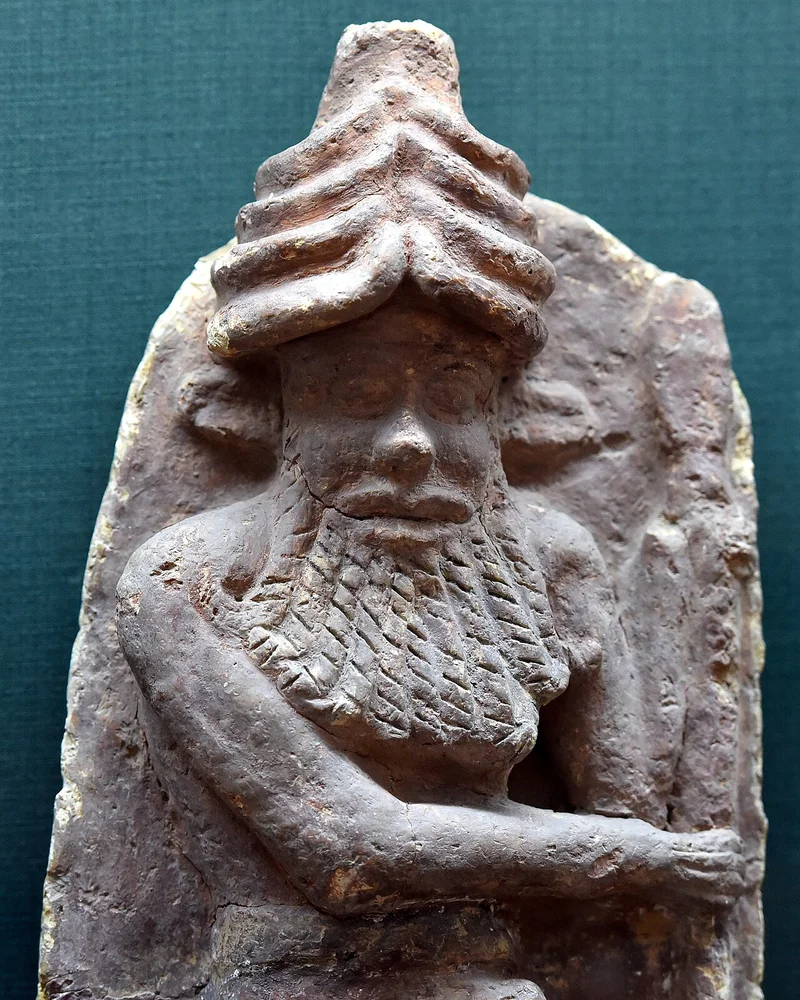
Mythological Narrative
The wild man created by the gods to be Gilgamesh's equal. Enkidu embodies the natural world and, through his civilization and friendship with Gilgamesh, represents the journey from beast to human to divine consciousness.
Scholarly Commentary & Evolution
## The Wild Man of the Steppe
Enkidu was created by the mother goddess Aruru from clay to be Gilgamesh's equal and counterbalance. Born fully grown, he lived among the wild animals, eating grass and drinking at the water-holes, not knowing he was human. His body was covered with hair, and he knew nothing of civilization.
### The Transformation
A hunter discovered Enkidu and, frightened by his strength, sought the advice of Gilgamesh. The king sent Shamhat, a temple priestess of Inanna, to civilize the wild man. After seven days and nights of lovemaking, Enkidu found himself changed: the animals fled from him, for he had become human. He could no longer run with the gazelles, but he had gained wisdom and understanding.
### The Perfect Friend
When Enkidu arrived in Uruk and challenged Gilgamesh, they fought evenly matched until neither could prevail. From this contest grew an unbreakable friendship. Enkidu became Gilgamesh's constant companion, advisor, and the moderating influence that transformed the tyrant king into a hero.
### The Cedar Forest
Enkidu accompanied Gilgamesh to the Cedar Forest to slay Humbaba. When Gilgamesh hesitated, it was Enkidu who urged him forward. Ironically, this victory would seal Enkidu's fate, as the gods later decreed that one of the heroes must die for their impiety.
### The Omen of Death
Enkidu dreamed of the assembly of gods decreeing his death. He fell ill and, over twelve days, wasted away. His death scenes are among the most moving in ancient literature, as he cursed his civilization (which had led to his death) before blessing it (which had given him friendship and meaning).
### The Catalyst
Enkidu's death became the catalyst for Gilgamesh's quest for immortality. In his grief, Gilgamesh confronted mortality for the first time, understanding that if mighty Enkidu could die, so could he. Enkidu's death thus becomes the beginning of Gilgamesh's true journey.
Cross-Pantheon Parallels & Archetypes
Academic Discussion & Critique
Exchange peer-reviewed hypotheses, comparative Indo-European etymologies, and archaeological field interpretations regarding Enkidu.
You Might Also Like
Prometheus
Son of the Titan Iapetus, his name meaning forethought. For stealing fire for mankind he was nailed to a Caucasian crag, an eagle feeding daily on his liver, until Heracles freed him.
Anu
King of the gods and lord of the heavens. Anu is the supreme deity of the Mesopotamian pantheon, father of the gods, and source of all royal authority.
Dumuzi
Shepherd god and consort of Inanna, taken to the underworld in her place after her return from the land of the dead. Dumuzi's death and the yearly mourning for him, later widely known as Tammuz, became one of the most enduring cult patterns of the ancient Near East.
Enki
God of wisdom, fresh water, and crafts, Akkadian Ea, dwelling in the Abzu at Eridu. He proposed the creation of humankind and leaked the secret of the coming Flood through a reed wall.