

Shu
Mythological Narrative
Scholarly Commentary & Evolution
## God of the Air
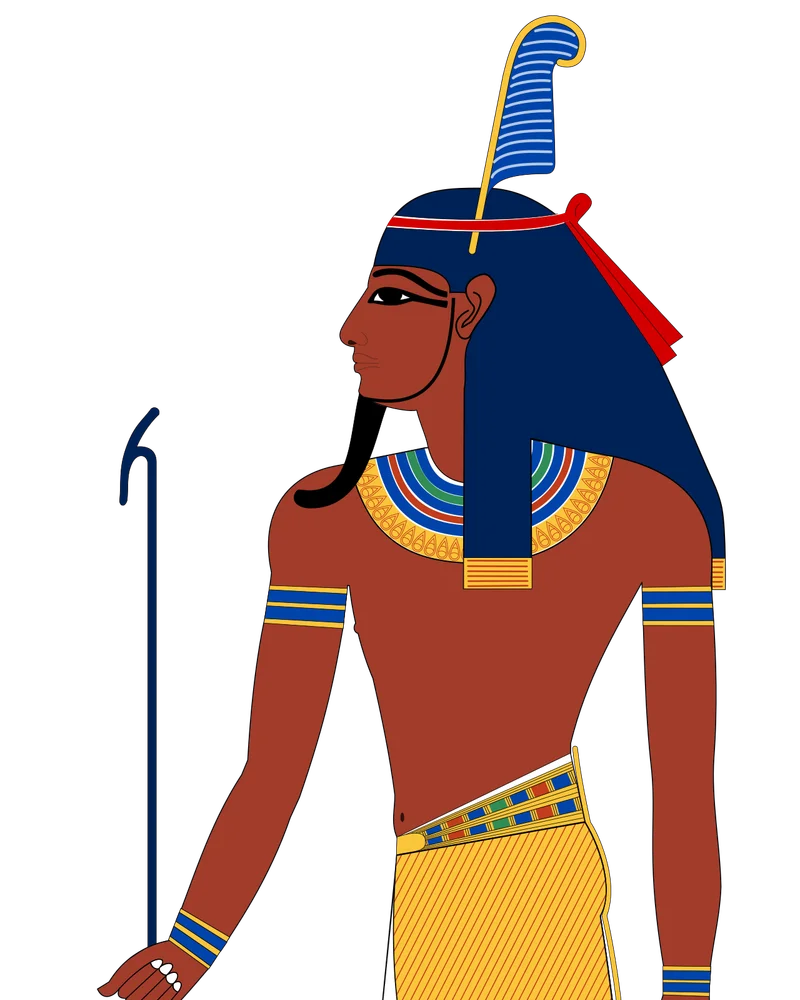
Shu is the personification of air and the dry, light-filled space that separates sky from earth. In the Heliopolitan cosmogony recorded in the Pyramid Texts, he was produced by the creator god Atum, who is said to have sneezed or spat him out along with his twin sister Tefnut, goddess of moisture, at the very beginning of creation.
### Father of Geb and Nut
Shu and Tefnut, in turn, gave rise to the next generation of the Ennead: Geb, god of the earth, and Nut, goddess of the sky. One of the most iconic images in Egyptian religious art shows Shu standing between his two children, his arms raised to physically hold Nut's star-covered body aloft above the reclining figure of Geb, keeping heaven and earth eternally separated after they had once been locked together in embrace. This scene appears repeatedly on papyri, coffins, and tomb ceilings throughout Egyptian history.
### Light and Order
As the personification of sunlight-filled air, Shu was closely tied to concepts of order and stability within the created world, sometimes described as bearing up the sky in an act that maintained the very structure of the cosmos against collapse back into primeval chaos. In the succession of divine kingship recorded in Egyptian theology, Shu was said to have ruled the earth after his father Atum, later passing kingship down through Geb to Osiris.
### Later Turmoil
In some New Kingdom mythological texts, Shu's reign as king of the gods is troubled by conspiracies and attacks from the followers of the serpent Apep (Apophis), reflecting the broader Egyptian theme of order under constant threat from chaos, which every king, divine or human, was required to hold at bay.
Cross-Pantheon Parallels & Archetypes
Classical Art & Museum Artifacts
High-resolution museum artifacts, classical sculptures, pottery reliefs, and bronze idols preserving authentic historical representations of Shu.
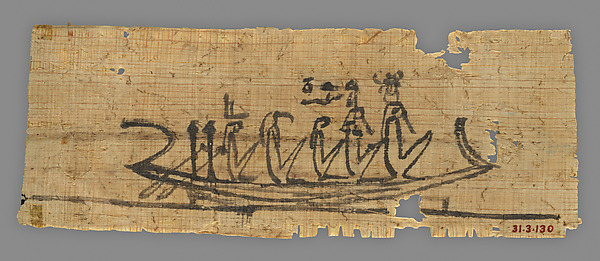
Papyrus fragment with a painting of Khepri, Shu, Tefnut, Thoth, and Isis in a solar boat
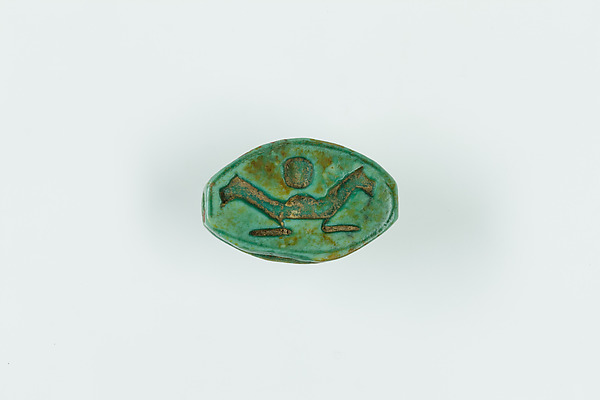
Cowroid with Outward-facing Merged Lions and Sun Disk
Academic Discussion & Critique
Exchange peer-reviewed hypotheses, comparative Indo-European etymologies, and archaeological field interpretations regarding Shu.
You Might Also Like
Uranus
Primordial personification of the Sky, born from and united with Gaia (Earth). Father of the Titans, Cyclopes, and Hecatoncheires, Uranus was castrated by his son Cronus, an act whose aftermath shaped the early generations of Greek gods.
Amun
The Theban god whose name means 'the Hidden One'; fused with Ra as Amun-Ra, he became Egypt's state god, housed at Karnak, and Alexander the Great sought his oracle at Siwa.
Anubis
The black jackal-headed god of embalming who made the first mummy for Osiris; he guards cemeteries, guides the dead, and steadies the scales at the judgment of the heart.
Bastet
The cat-headed goddess of the home, fertility, and festivity. Her annual festival at Bubastis was Egypt's largest, and her sanctuaries have yielded cat mummies by the tens of thousands.