

Maat
Also known as: Mayet
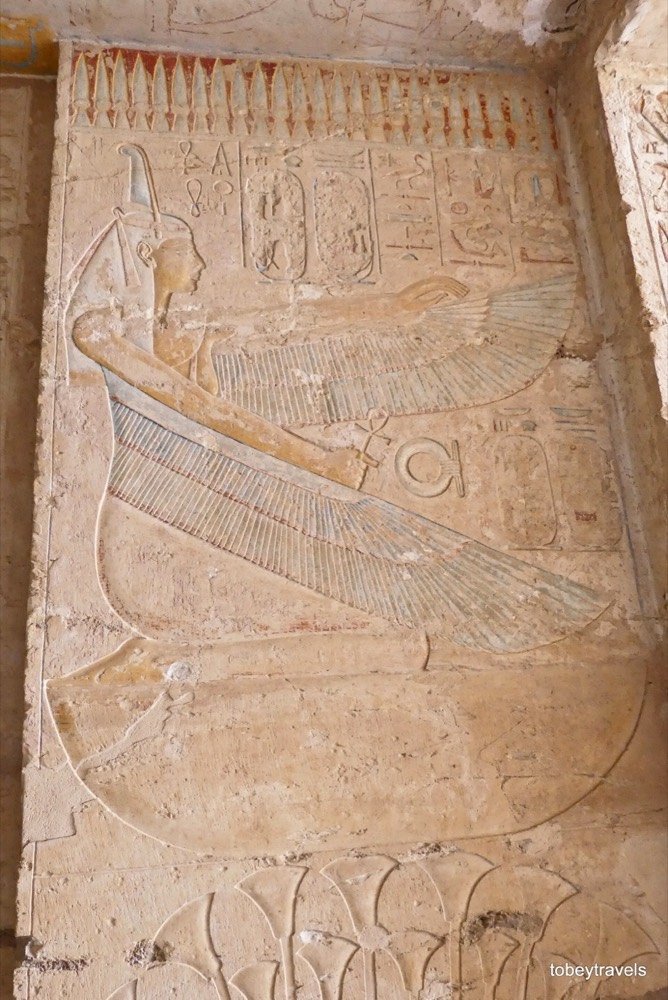
Mythological Narrative
Maat is a seated or standing goddess marked by a single upright ostrich feather on her head, sometimes with winged arms. Her name is itself the central term of Egyptian thought: maat covers truth, justice, balance, and the cosmic order fixed at creation, opposed to isfet — chaos, falsehood, violence. That the sun rose on time, that the Nile flooded on schedule, that lawsuits were justly settled: all were signs that maat was being upheld.
She was called the daughter of Ra and rode in the solar barque. Upholding maat was the charter of royal legitimacy, and the most common royal offering scene on temple walls shows the pharaoh presenting a palm-sized seated figurine of Maat to a god, a declaration that his rule kept the world in order. Judges bore the title 'priest of Maat,' and the vizier wore her image when sitting as chief magistrate. In the Middle Kingdom classic 'The Eloquent Peasant,' the wronged commoner's refrain is precisely that officials must 'do maat.'
In the judgment described in Book of the Dead spell 125 she is everywhere: the tribunal sits in the Hall of the Two Maats, forty-two assessor gods hear the deceased deny a list of sins, and on the scales the heart is weighed against nothing other than the feather of Maat. If the heart is no heavier than the feather, the dead person is declared 'true of voice' and passes to the Field of Reeds.
Scholarly Commentary & Evolution
## Cosmic Order
Ma'at is not just a goddess but the fundamental concept of truth, balance, order, law, morality, and justice. Without Ma'at, the universe would crumble into chaos.
### The Feather of Truth
She is depicted with an ostrich feather on her head. This is the very feather against which the hearts of the dead are weighed in the afterlife.
Cross-Pantheon Parallels & Archetypes
Academic Discussion & Critique
Exchange peer-reviewed hypotheses, comparative Indo-European etymologies, and archaeological field interpretations regarding Maat.
You Might Also Like
Ra
The Egyptian sun god and creator, falcon-headed and crowned with the solar disk, who sails the sky by day and battles the chaos serpent Apep in the netherworld each night.
Osiris
Murdered by his brother Set and revived by his wife Isis, the green-skinned mummiform god rules the underworld and presides over the judgment of the dead.
Thoth
The ibis-headed god of writing and wisdom, scribe of the gods, inventor of script and keeper of the calendar, who records the verdict at the judgment of the dead; the Greeks equated him with Hermes.
Weighing of the Heart
The dead stand trial in the Hall of Two Truths: the heart is balanced against Maat's feather while Thoth records and the monster Ammit waits — a heavy heart is devoured on the spot.