


Aztec Mythology
Aztec Mythology traditions, cosmology, and ancient mythology.
Mythological Figures & Lore
Showing all 29 records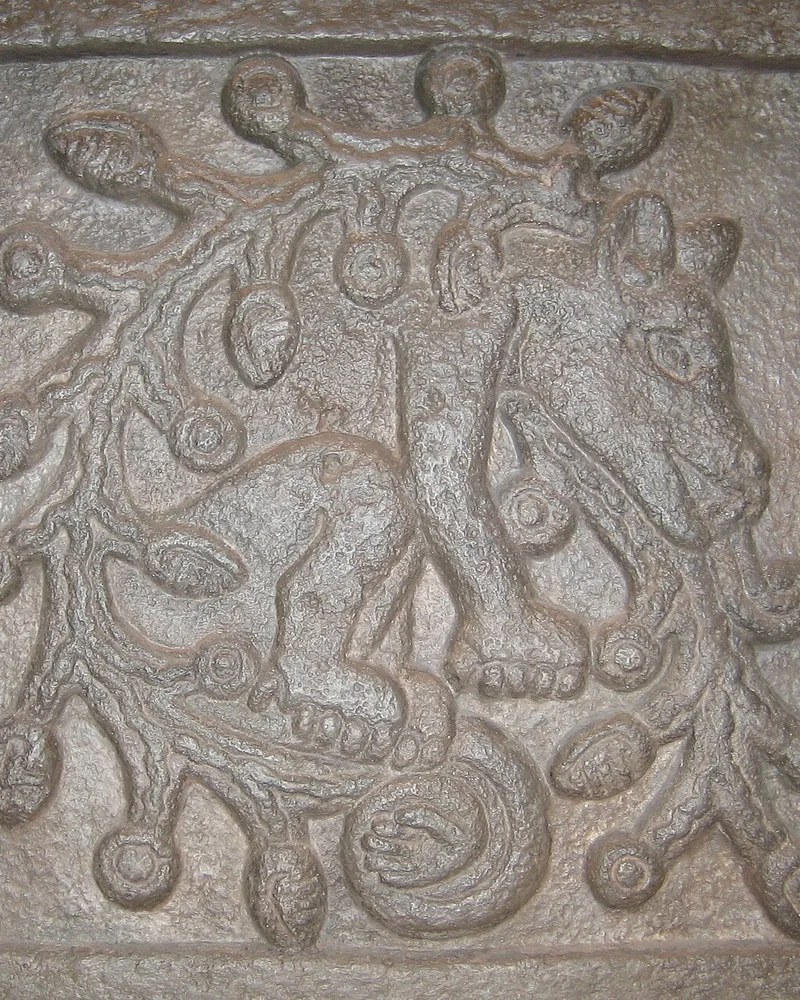 creature
Ahuizotl
A fearsome aquatic creature from Aztec mythology resembling a dog with monkey-like hands and a human hand at the end of its tail. It lurks in lakes and rivers, using the hand on its tail to snatch unsuspecting victims and drag them underwater. Those it drowns are found with their eyes, teeth, and nails removed, offerings destined for Tlaloc, the rain god.
 place
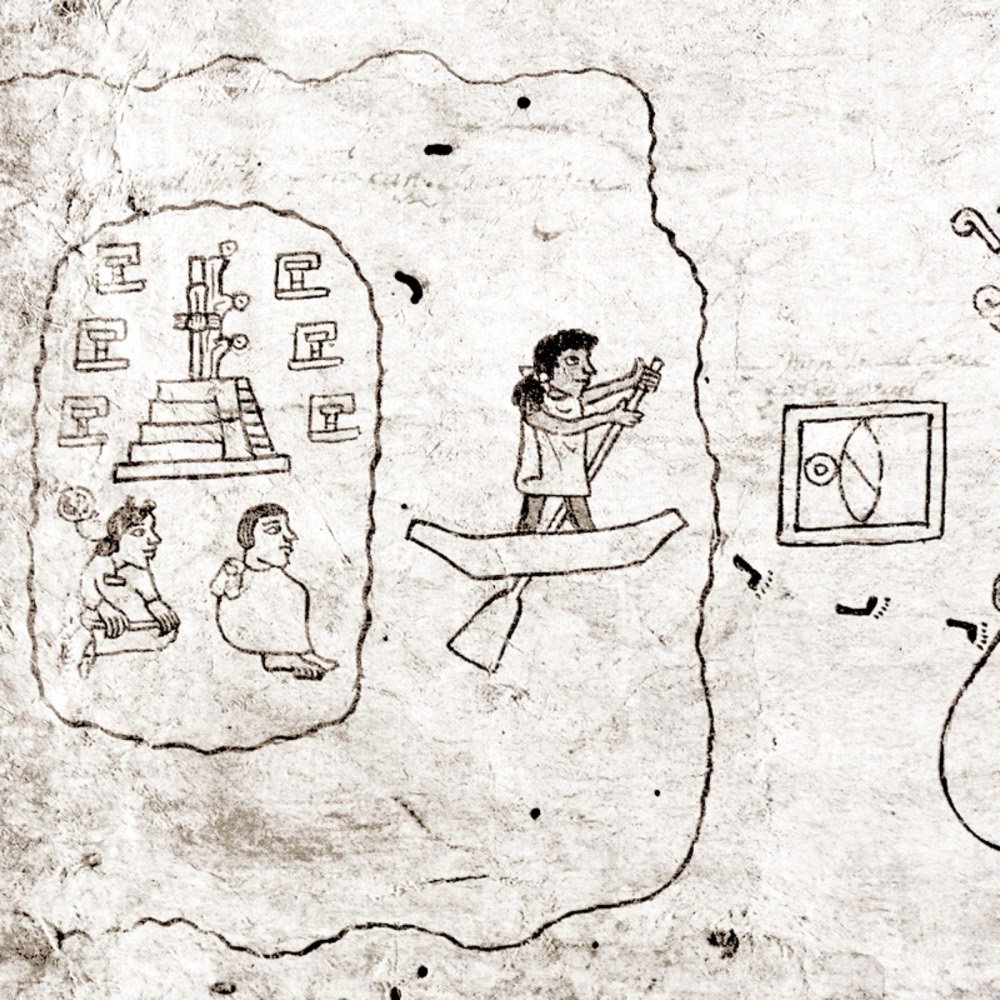
Aztlan
The legendary island homeland of the Mexica, often read as Place of the Herons. At Huitzilopochtli's command they left it for a two-century migration ending at Tenochtitlan; the name Aztec derives from it.
 creature
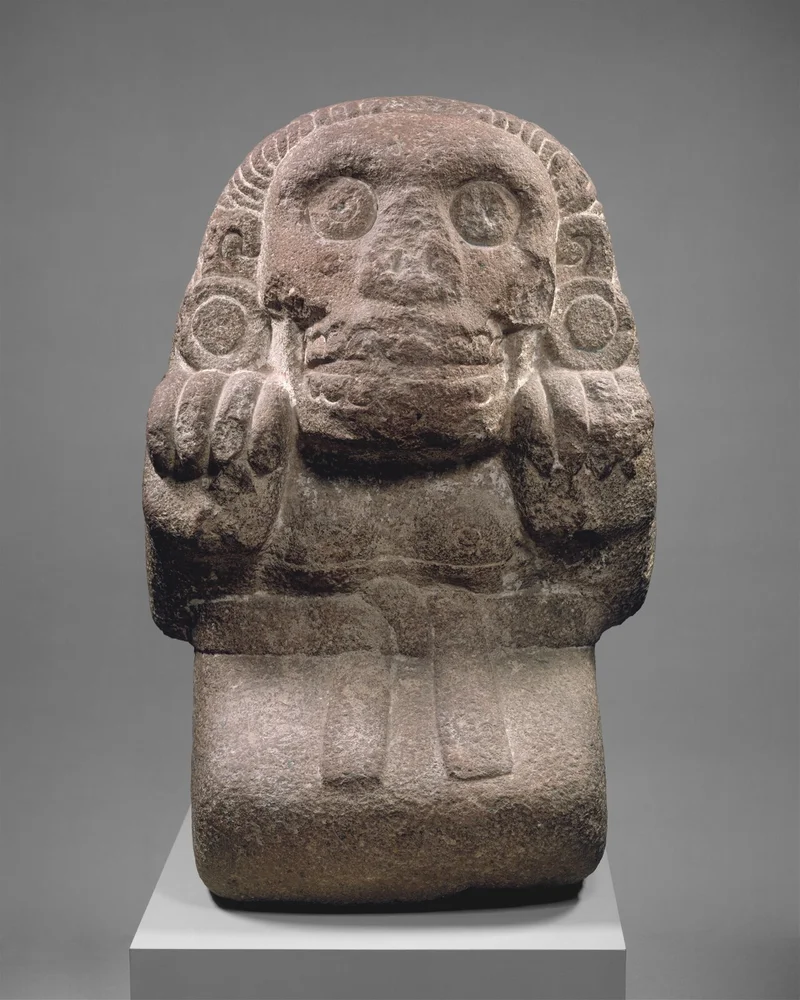
Cihuateteo
The spirits of women who died in childbirth, honoured by the Mexica as warriors who accompanied the sun from noon to sunset, and feared because on certain days of the calendar they descended to crossroads to strike children with sickness.
 creature
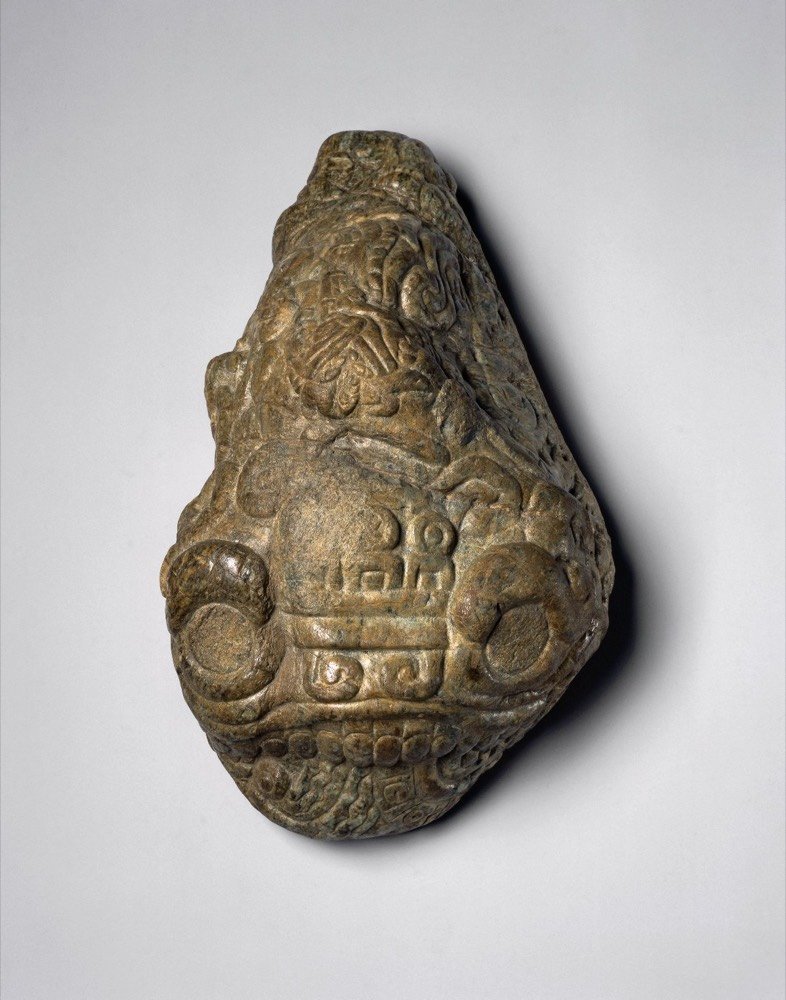
Cipactli
A crocodilian monster of the primordial sea, mouths gaping at every joint and never sated. Tezcatlipoca lured it with his own foot as bait, and the gods made the earth from its body.
 deity
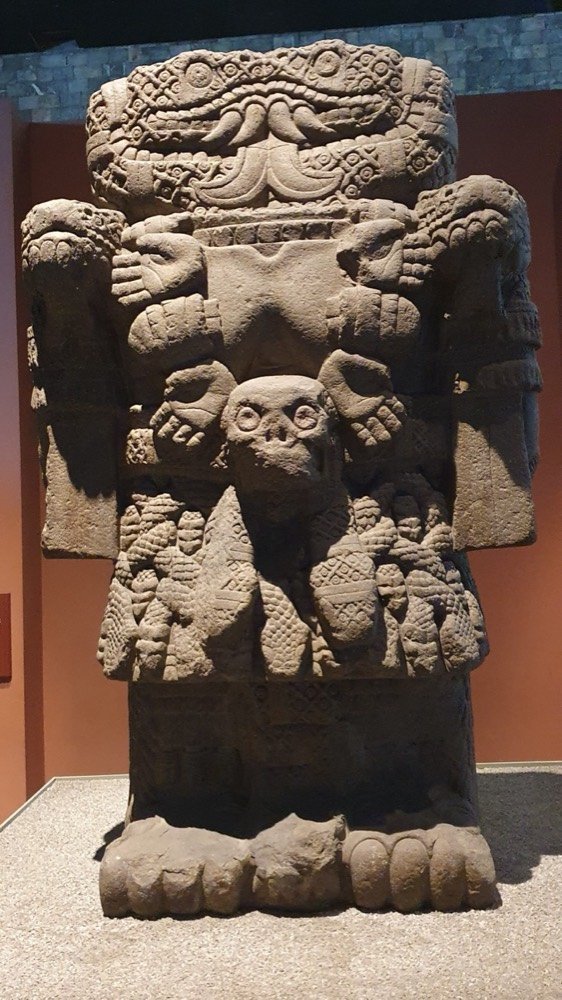
Coatlicue
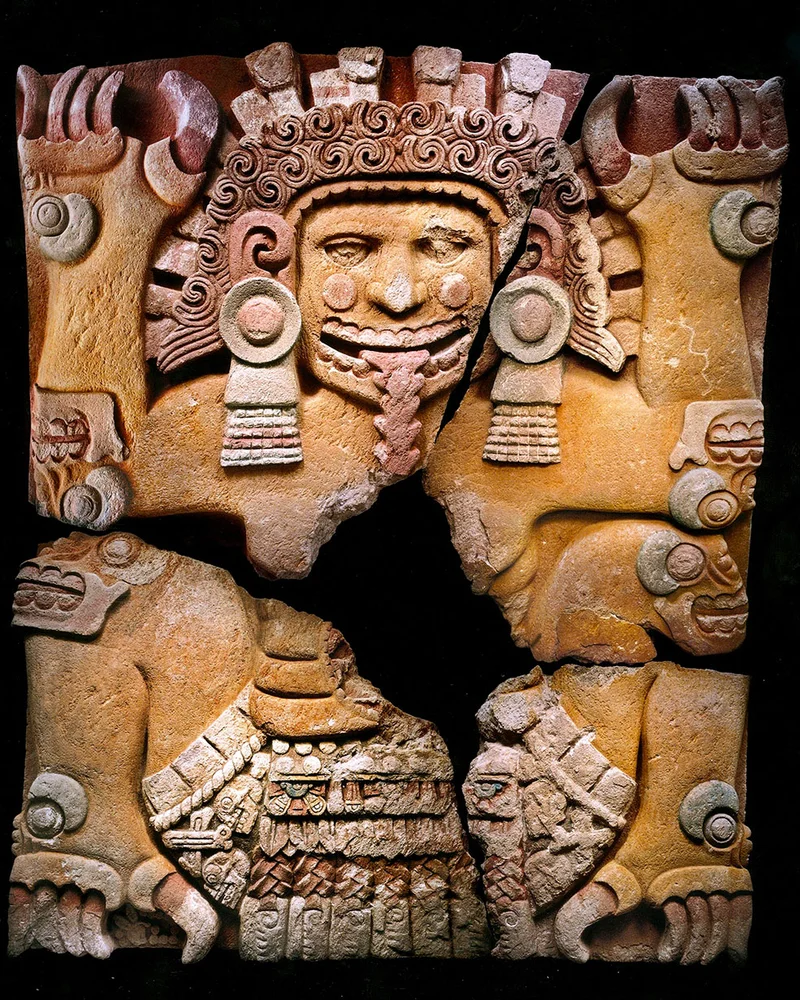
She of the Serpent Skirt, the earth mother who conceived Huitzilopochtli from a ball of falling feathers. Her colossal statue, unearthed in 1790, is a masterwork of Aztec sculpture.
 artifact
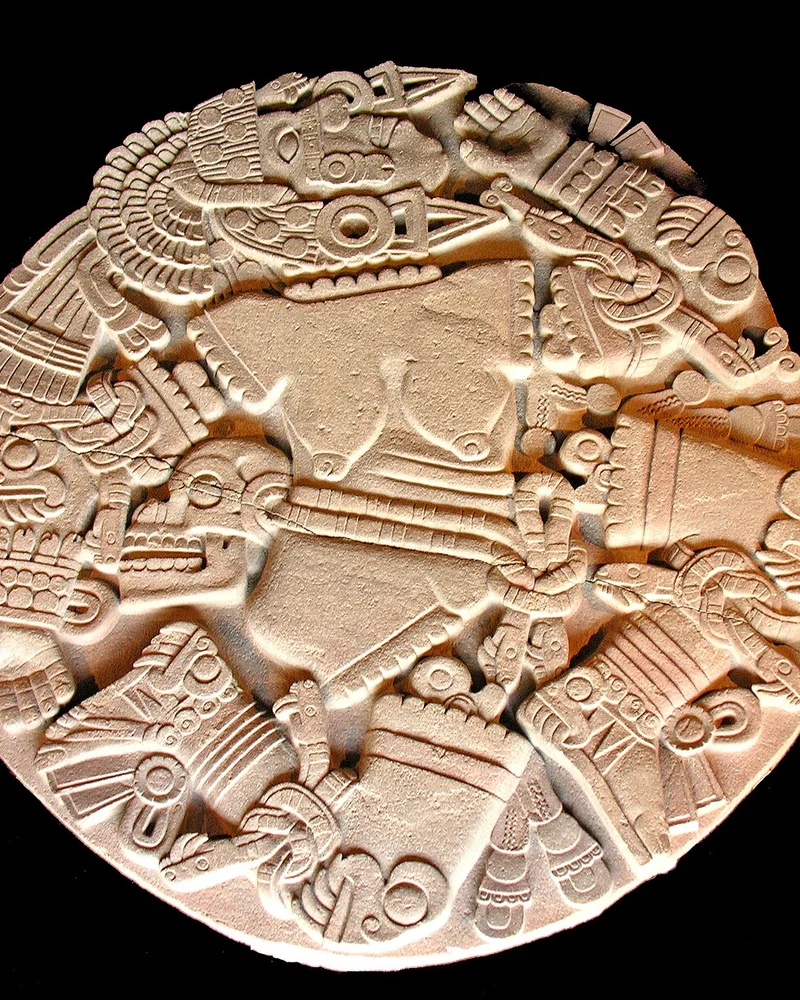
Coyolxauhqui Stone
The great disk depicting the dismembered moon goddess Coyolxauhqui, a cosmic emblem of defeat beneath the Templo Mayor.
 deity
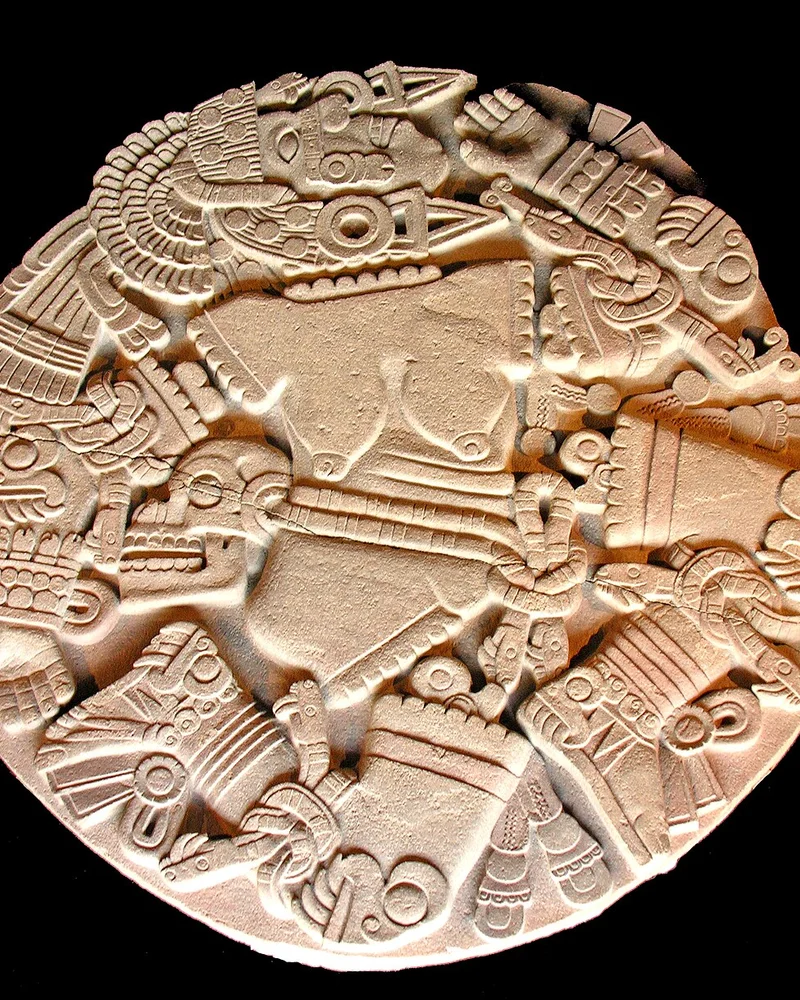
Coyolxauhqui
The moon goddess, daughter of Coatlicue and leader of the 400 stars. Coyolxauhqui was slain and dismembered by her brother Huitzilopochtli at his miraculous birth, her defeat reenacted at every sunrise.
 tale
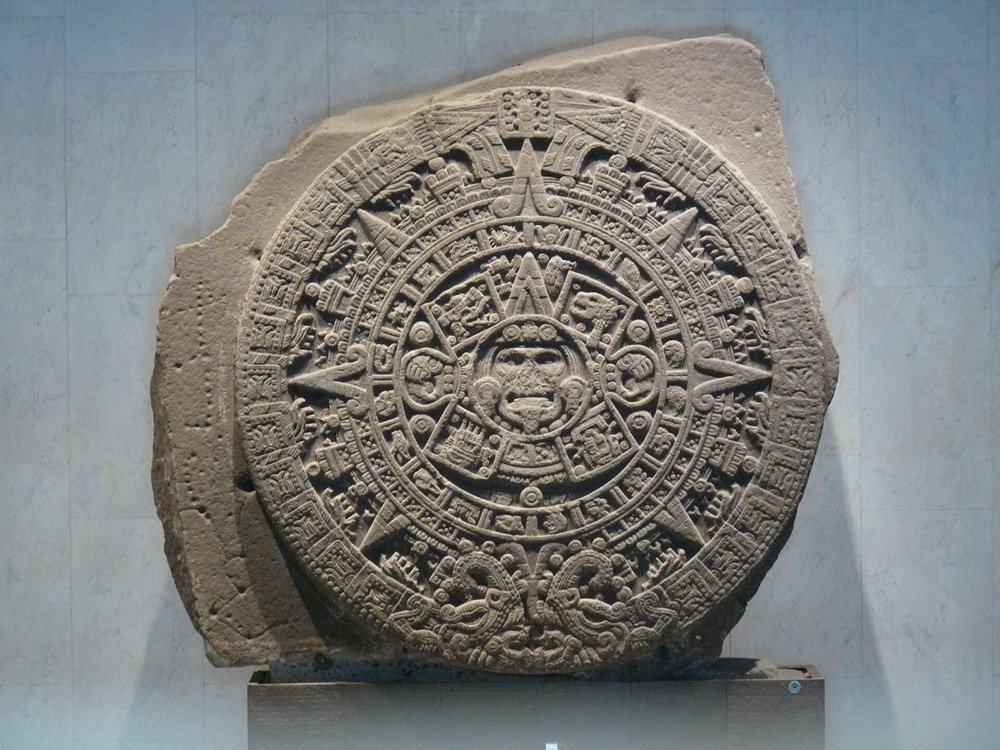
The Five Suns
In Aztec cosmology four previous world-ages perished by jaguars, hurricane, fiery rain, and flood. The present Fifth Sun, kindled at Teotihuacan, is fated to end in earthquakes.
 deity
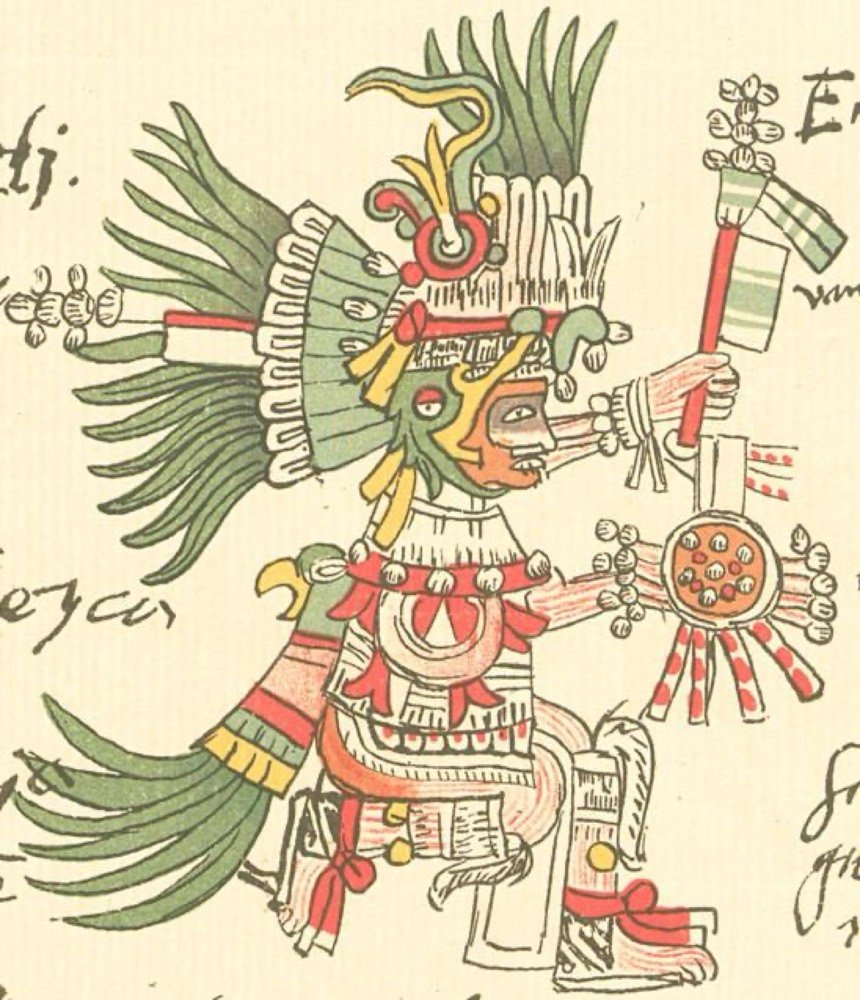
Huitzilopochtli
Tribal patron of the Mexica, god of war and the sun. Born fully armed on Serpent Hill, he slew his sister Coyolxauhqui with the fire serpent and guided his people from Aztlan to Tenochtitlan.
 creature
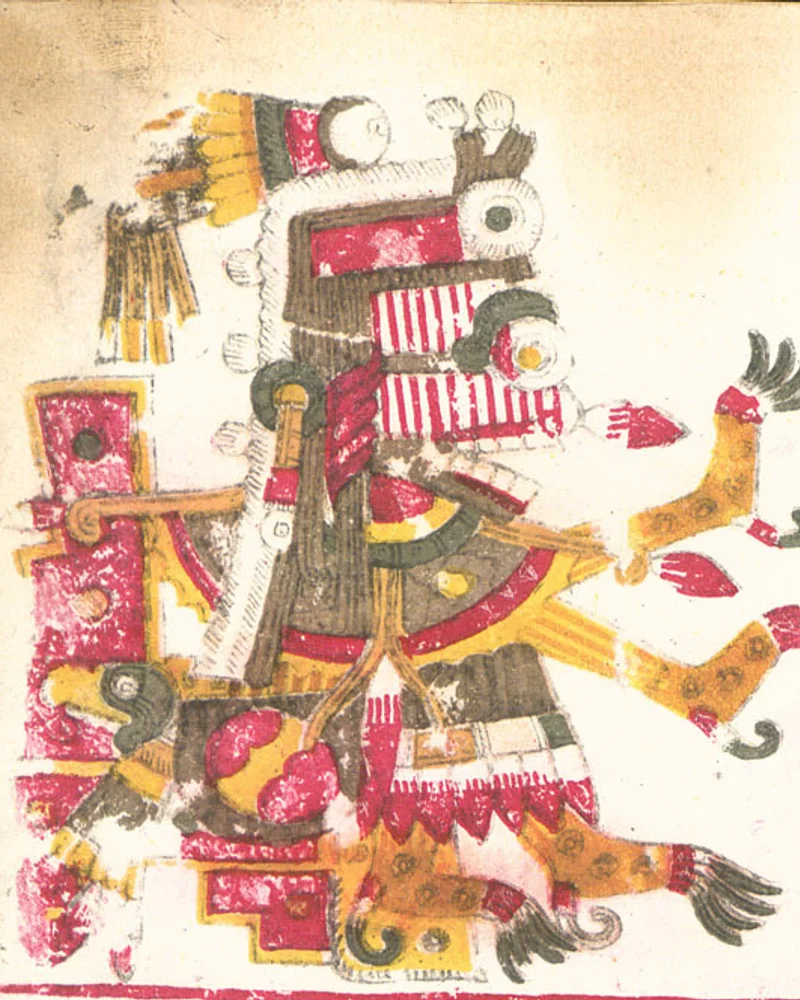
Itzpapalotl's Obsidian Host
Obsidian-butterfly warriors of the paradise Tamoanchan — beautiful, jagged, and lethal to the uninitiated.
 artifact
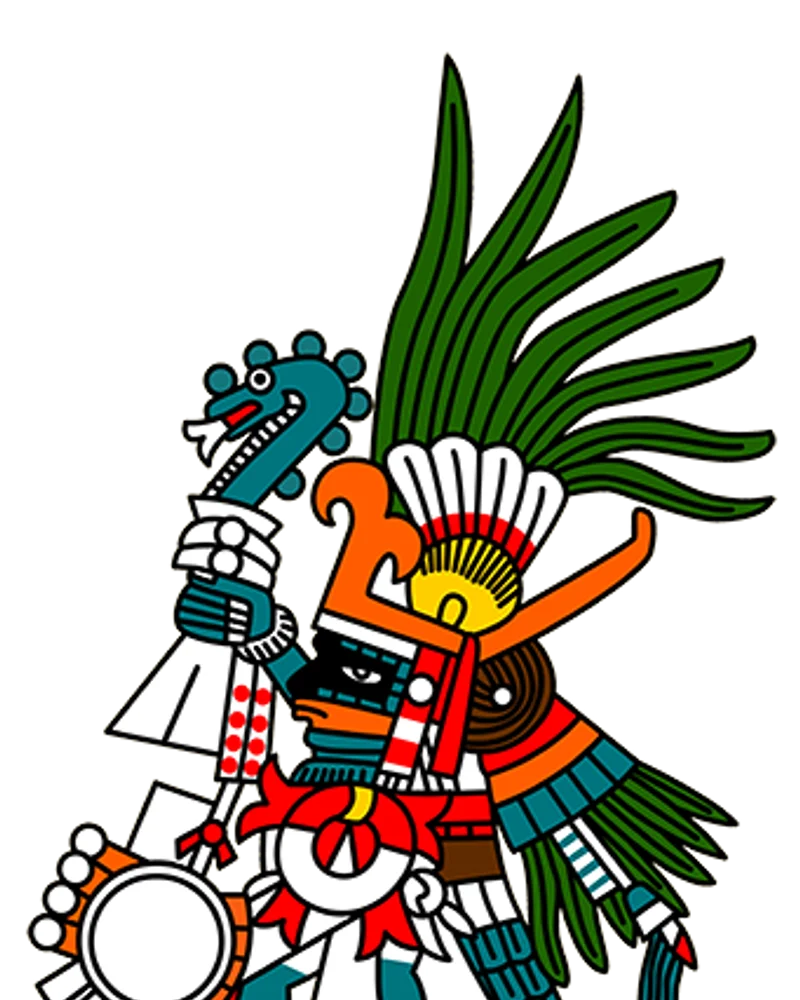
Macuahuitl of Huitzilopochtli
An obsidian-edged war club associated with the Mexica war god — a weapon that cuts like a blade and carries solar war-fire into battle.
 creature
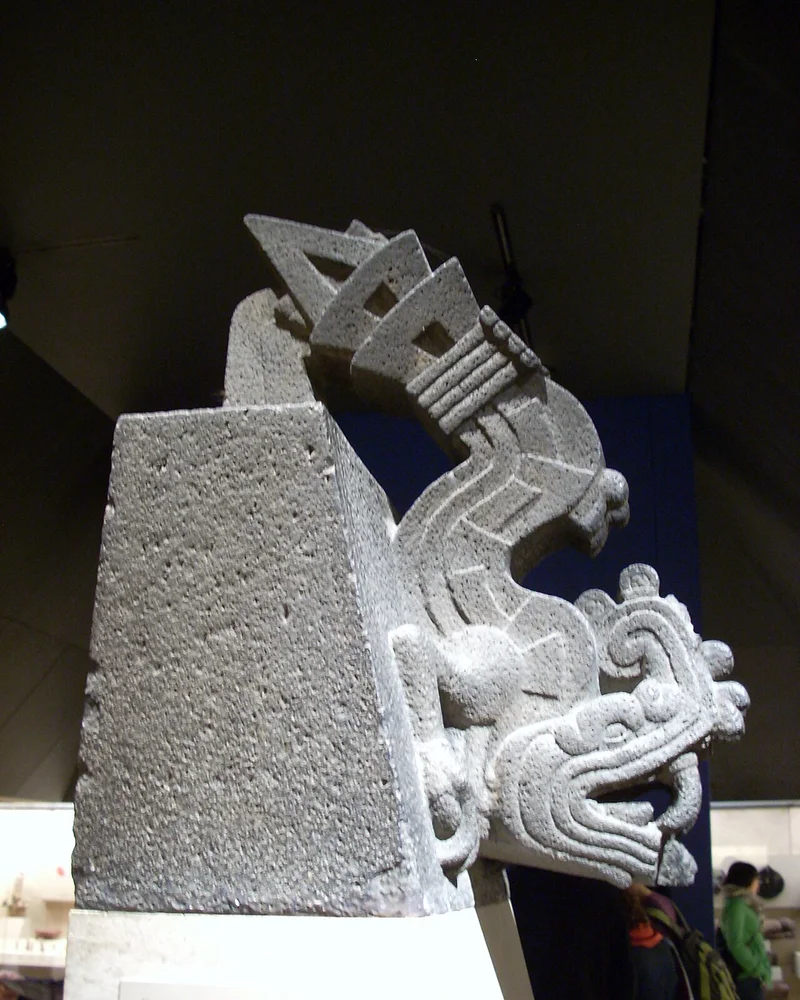
Maquizcoatl
The 'bracelet serpent' of Nahua lore, a snake with a head at each end, listed and drawn among the serpents of New Spain in the Florentine Codex; two-headed serpents were regarded as bearers of bad omens.
 deity
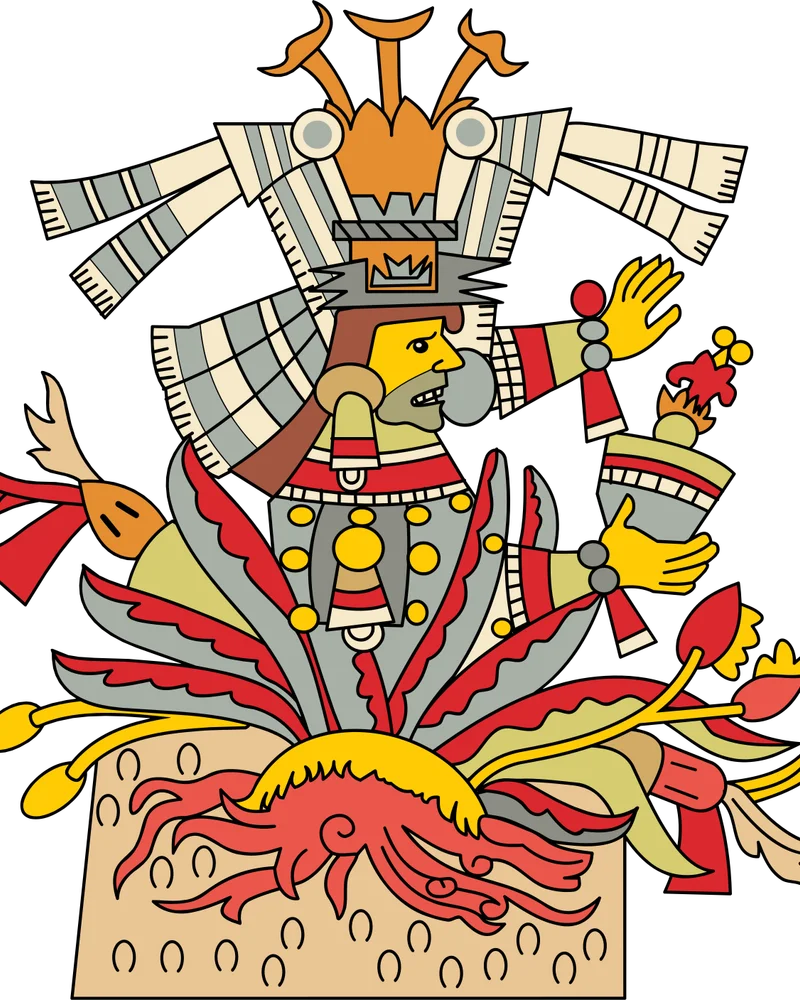
Mayahuel
The goddess of the maguey plant and its fermented drink pulque. Mayahuel is depicted with 400 breasts to nurse her 400 children, the Centzon Totochtin (400 Rabbits) of intoxication.
 deity
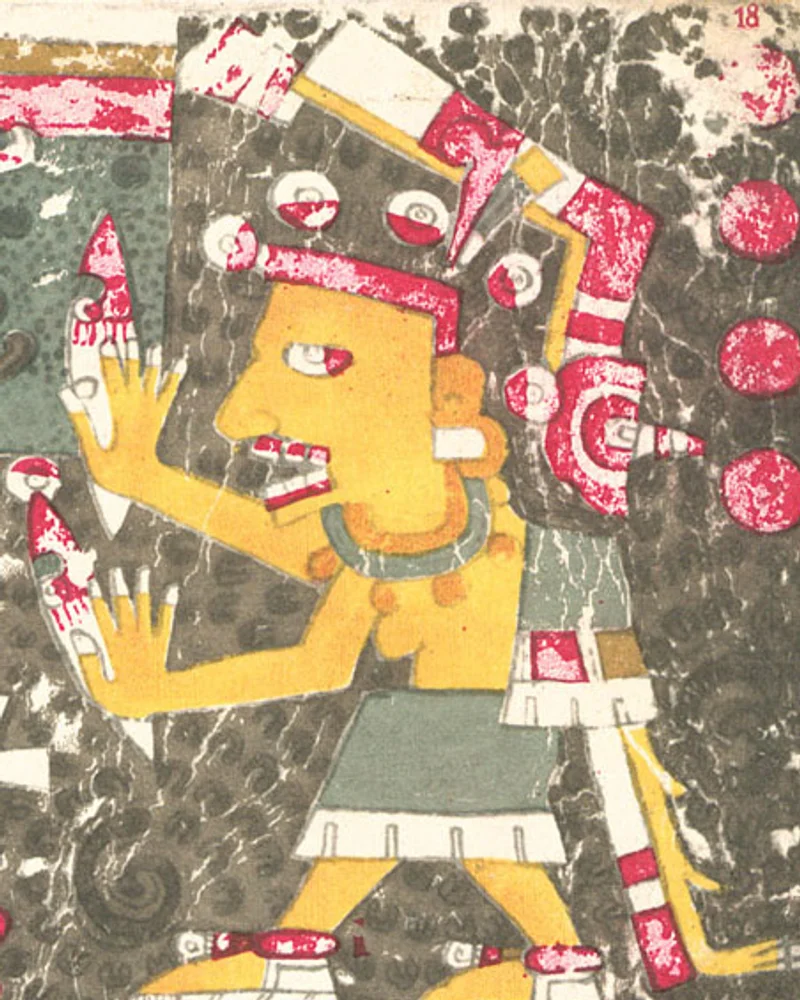
Mictecacihuatl
Queen of Mictlan, the Aztec underworld, ruling alongside her husband Mictlantecuhtli over the ninth and deepest level of the land of the dead. Mictecacihuatl presided over the bones of the deceased and the festivals honoring the dead within the Aztec calendar.
 deity
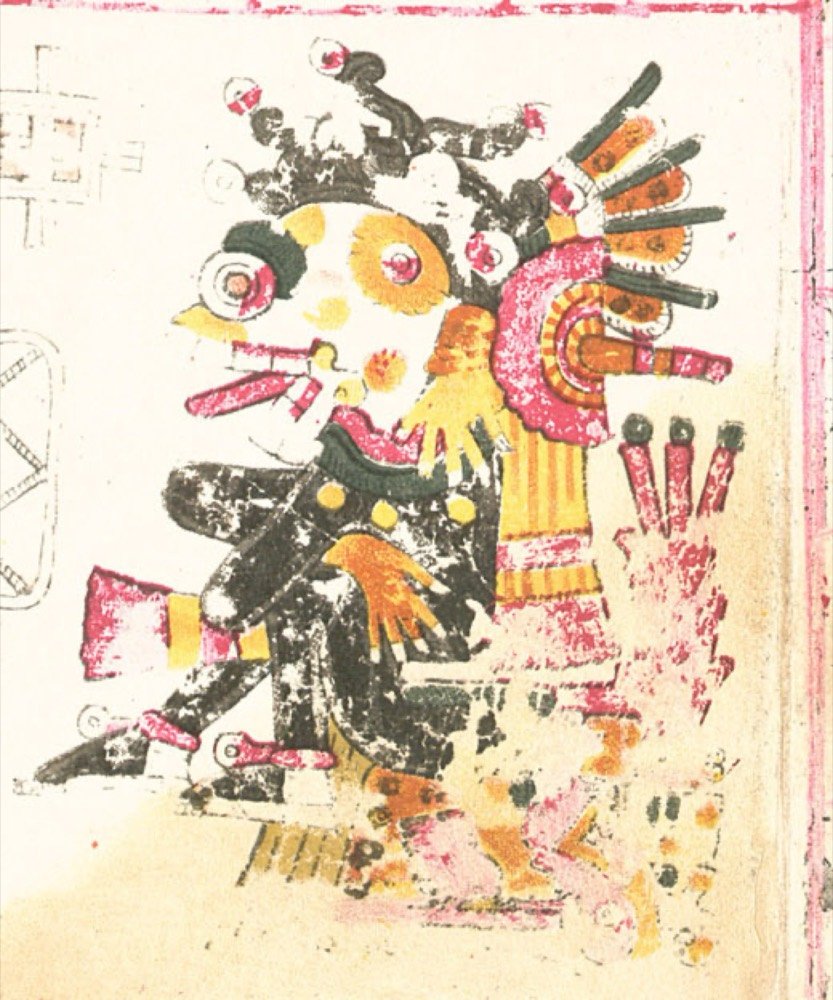
Mictlantecuhtli
Skeletal lord of Mictlan, enthroned with his wife Mictecacihuatl in the ninth and deepest level of the underworld. His traps shattered the human bones Quetzalcoatl came to reclaim.
 deity
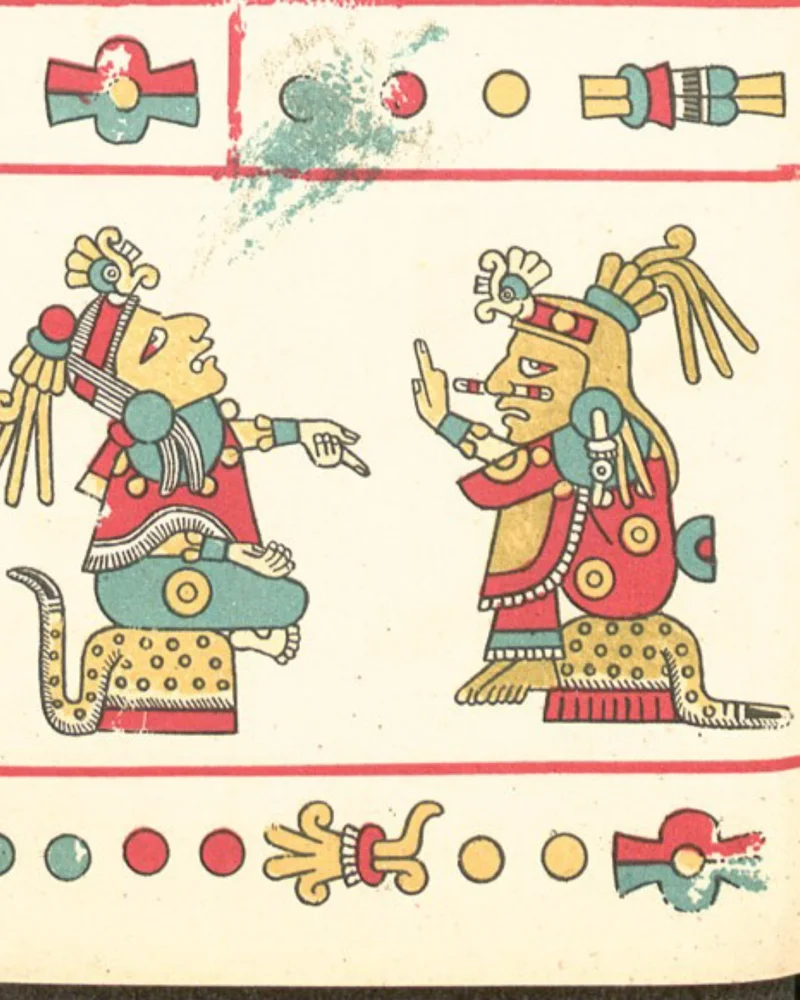
Ometeotl
A primordial dual-gendered creative principle described in some colonial-era Nahua sources as residing in Omeyocan, the highest level of the heavens, and identified with the paired deities Ometecuhtli and Omecihuatl. Whether Ometeotl represents a single, named pre-Columbian deity or is chiefly a later scholarly synthesis of the paired creator gods is a genuinely unresolved debate among specialists.
 deity
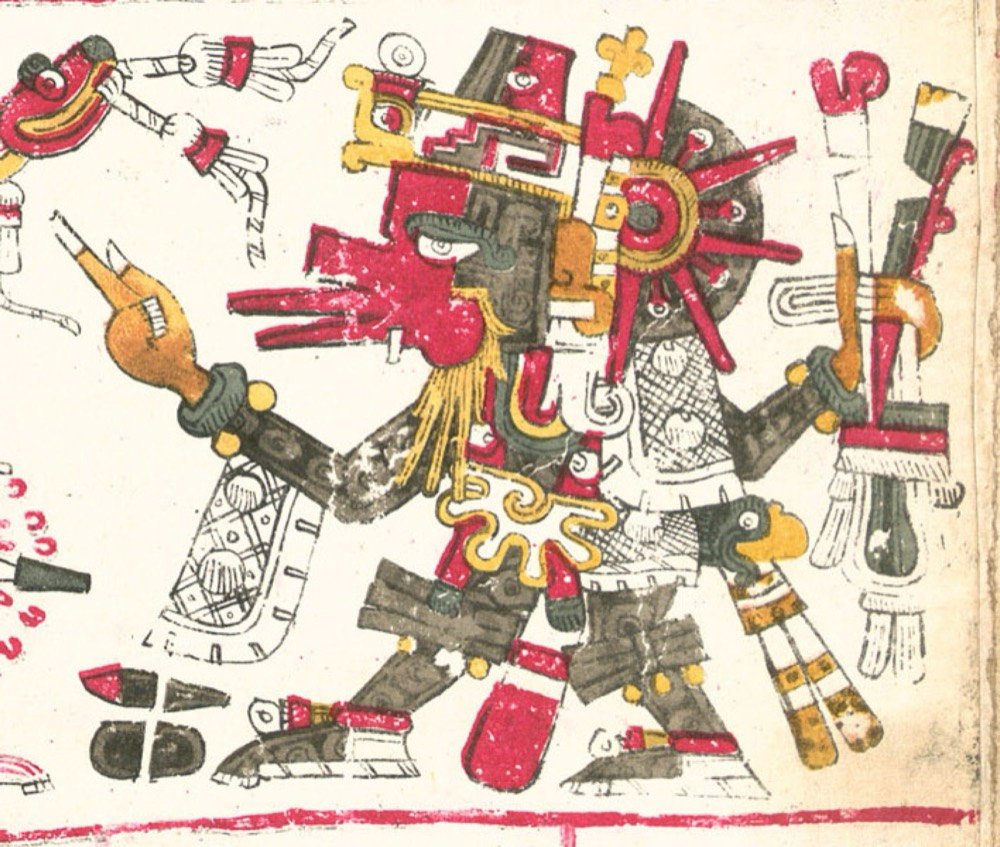
Quetzalcoatl
The Feathered Serpent, god of wind and knowledge. He retrieved the bones of past humanity from the underworld and bled on them to create the people of the Fifth Sun.
 artifact
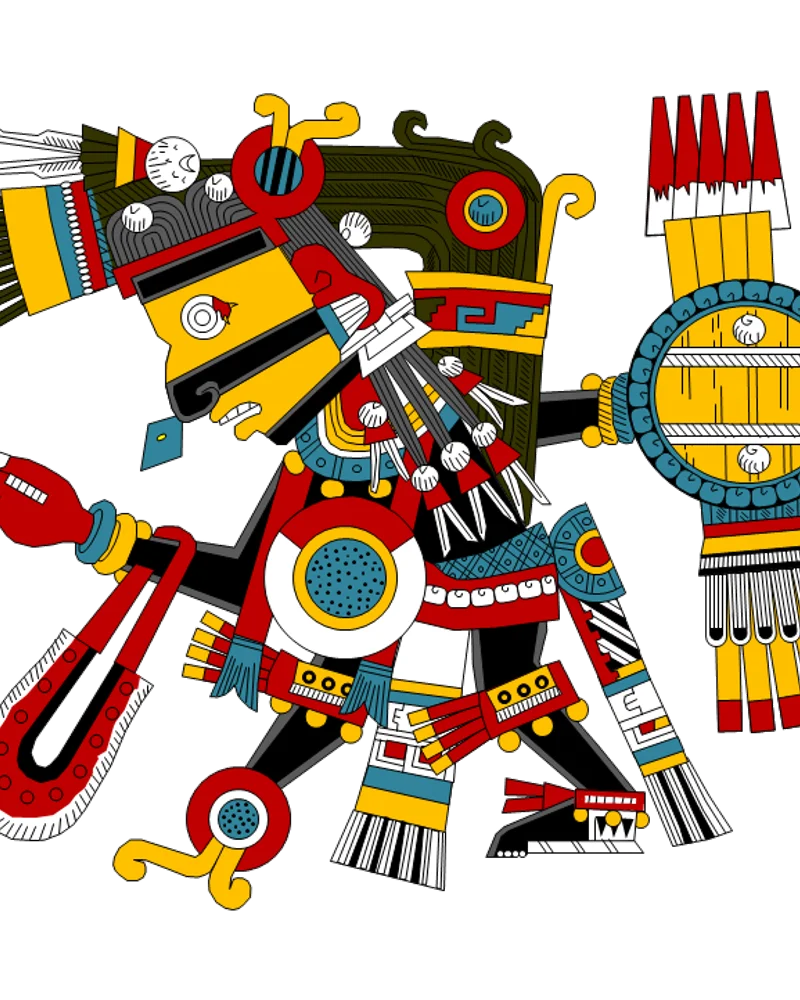
Smoking Mirror of Tezcatlipoca
Obsidian mirror of the night lord Tezcatlipoca, used for divination and revealing hidden truths. Smoke rises from its dark surface — a window into destiny and war.
 place
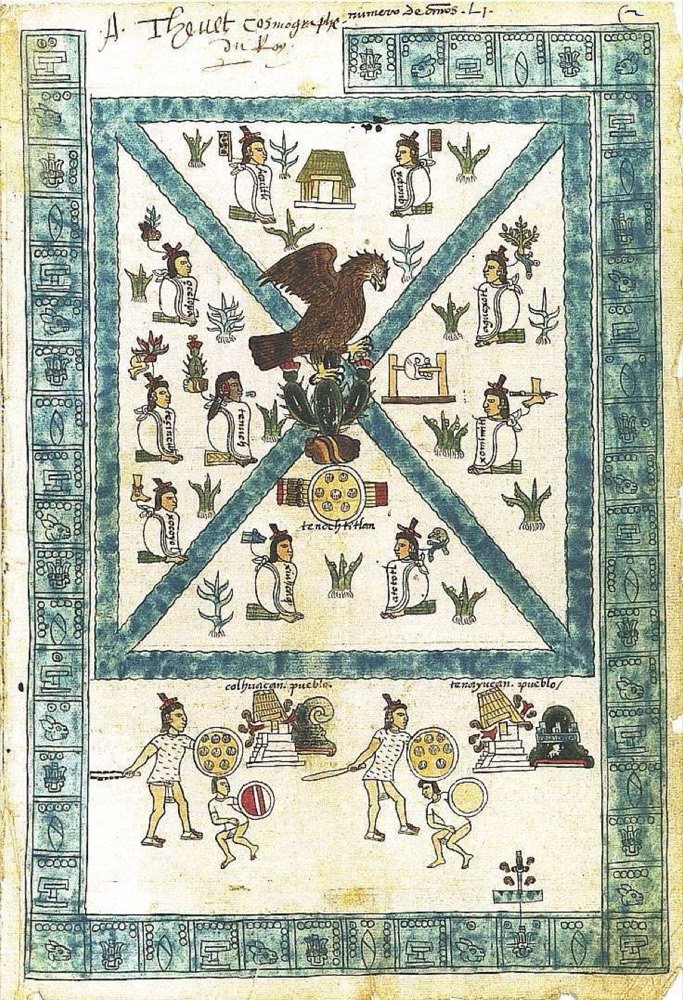
Tenochtitlan
Island capital of the Aztec empire, founded by tradition in 1325 where Huitzilopochtli's sign appeared — an eagle on a stone-borne cactus, the image at the center of the Mexican flag today.
 deity
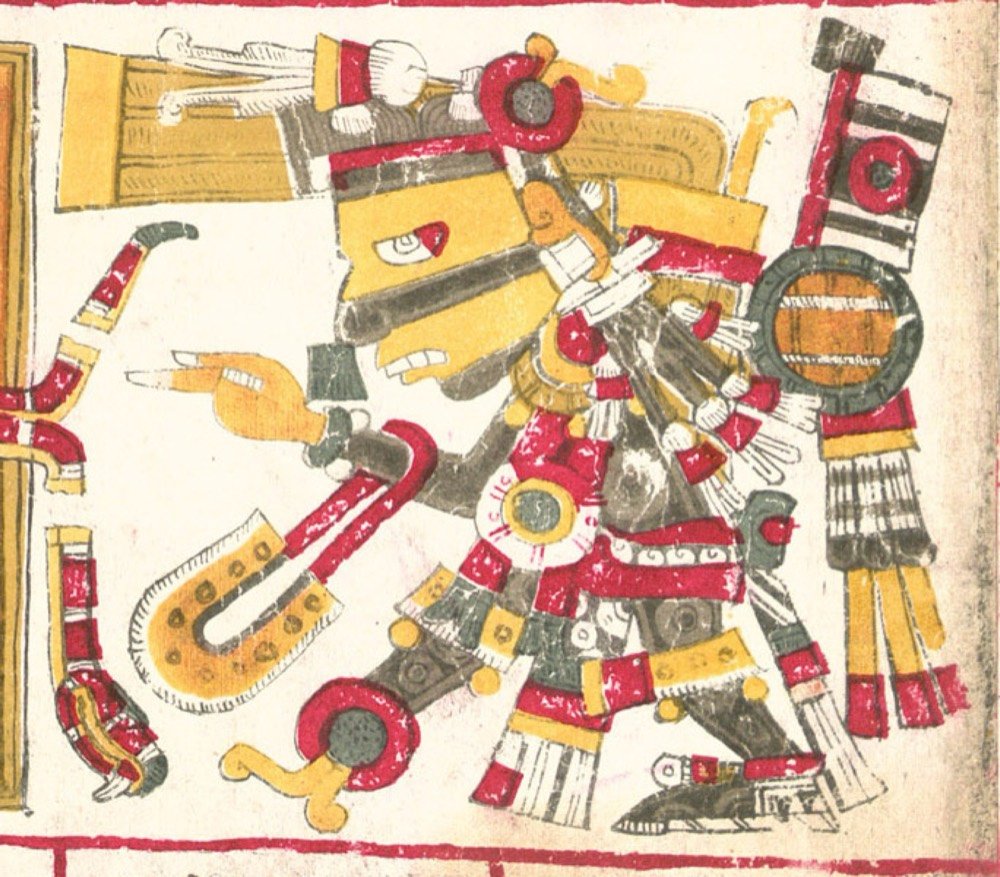
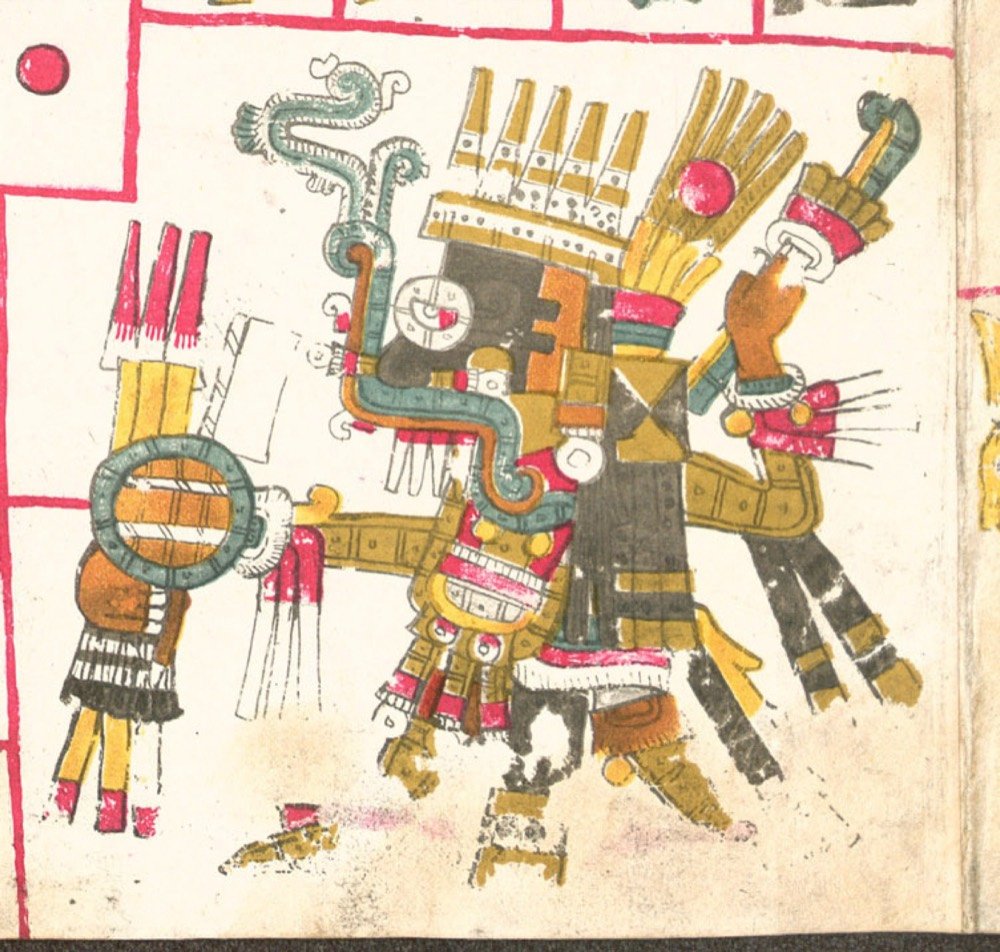
Tezcatlipoca
The Smoking Mirror, god of the night sky, sorcery, and fate. He sees all hearts in his obsidian mirror; his right foot, lost baiting the earth monster, is replaced by a mirror.
 deity
Tlaloc
The rain god, masked with goggle eyes and jaguar fangs. His helpers pour rain from jars at the four directions; those killed by water or lightning go to his green paradise, Tlalocan.
 deity
Tlaltecuhtli
The monstrous earth deity from whose dismembered body the world was created. Tlaltecuhtli devours the dead and demands blood in return for crops, embodying the earth's duality as giver and taker of life.
 deity
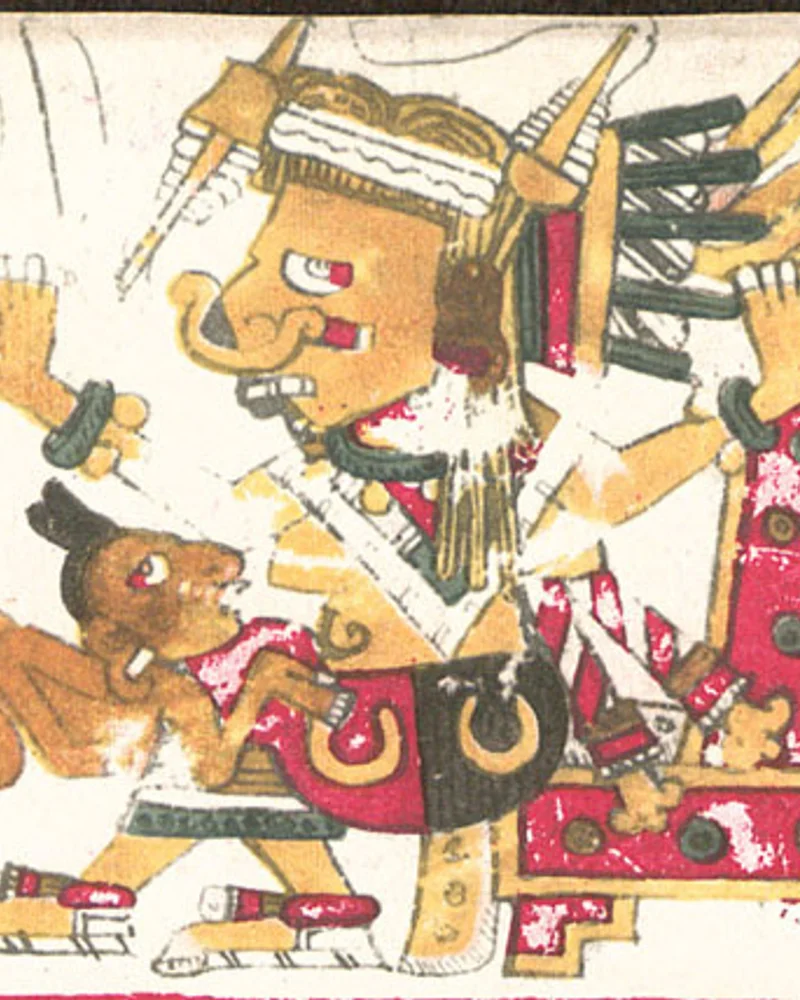
Tlazolteotl
The goddess of purification, sin, and confession. Tlazolteotl consumed the moral filth of humanity, absorbing confessed sins and granting absolution before death.
 deity
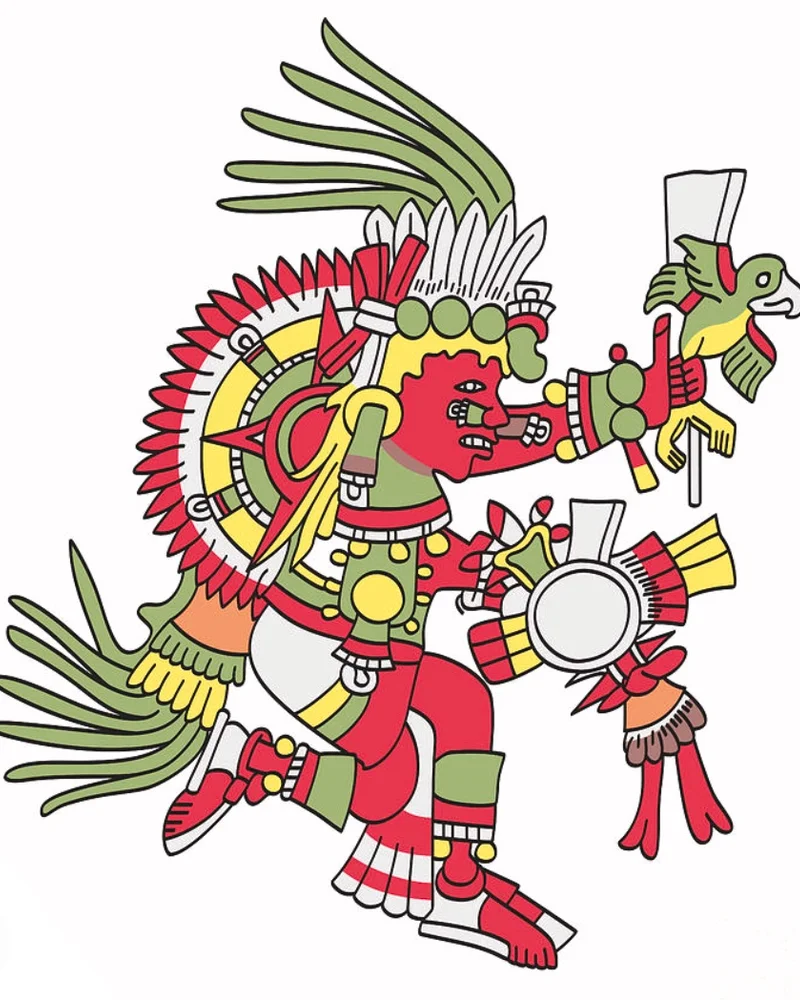
Tonatiuh
The sun god of the Fifth Sun (the current world age). Tonatiuh demanded human hearts and blood to fuel his daily journey across the sky, driving the Aztec system of ritual sacrifice.
 creature
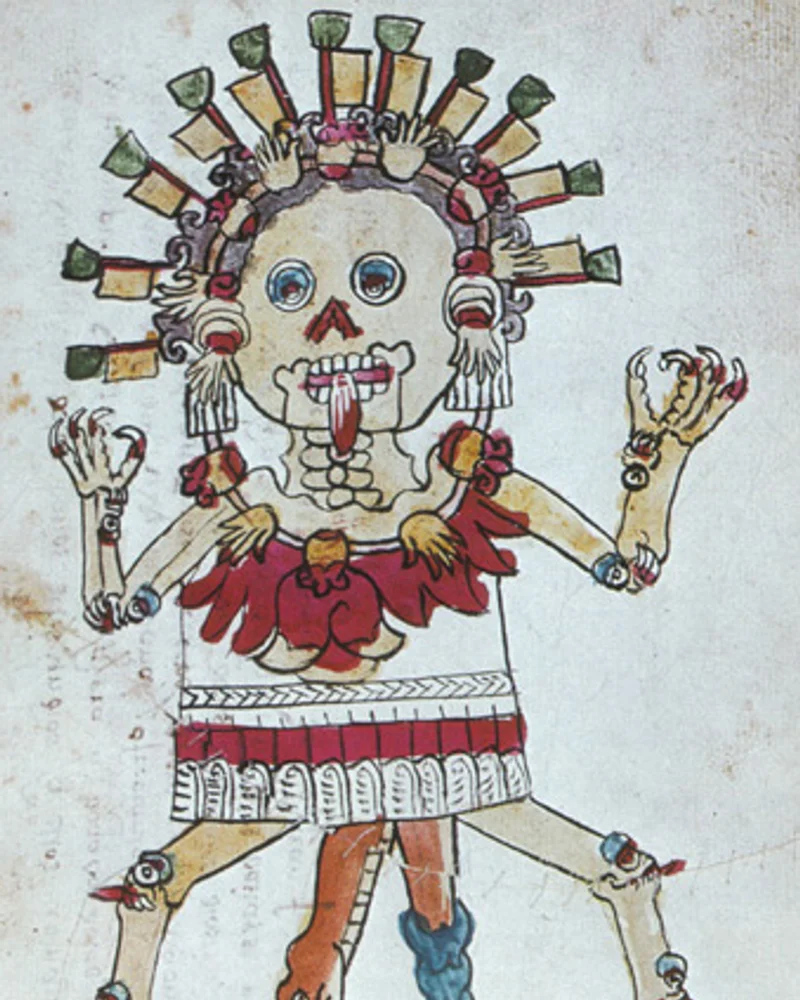
Tzitzimime
Fearsome skeletal star demons from Aztec cosmology, feminine spirits who dwell in the heavens and threaten to descend during solar eclipses to devour humanity. Led by the goddess Itzpapalotl, they represent the stars that battle the sun at dusk and dawn, waiting for the moment when the Fifth Sun dies to consume all living things.
 artifact
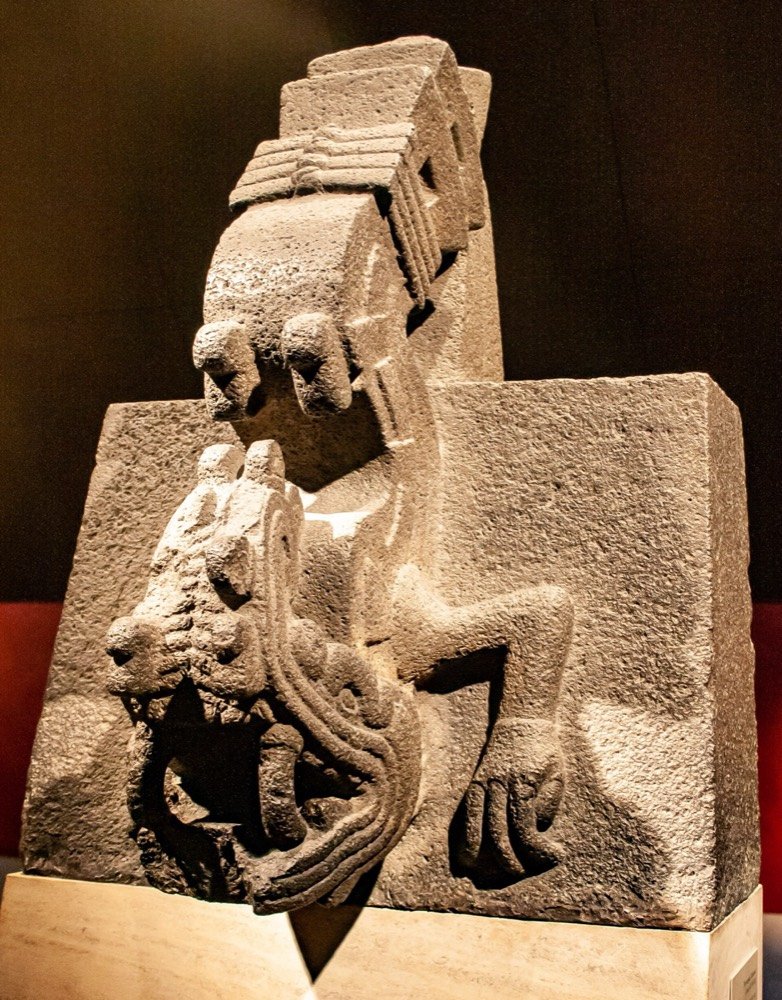
Xiuhcoatl
The Turquoise Serpent, a weapon of living fire with which the newborn Huitzilopochtli slew the moon goddess Coyolxauhqui. Two fire serpents encircle the rim of the Sun Stone.
 deity
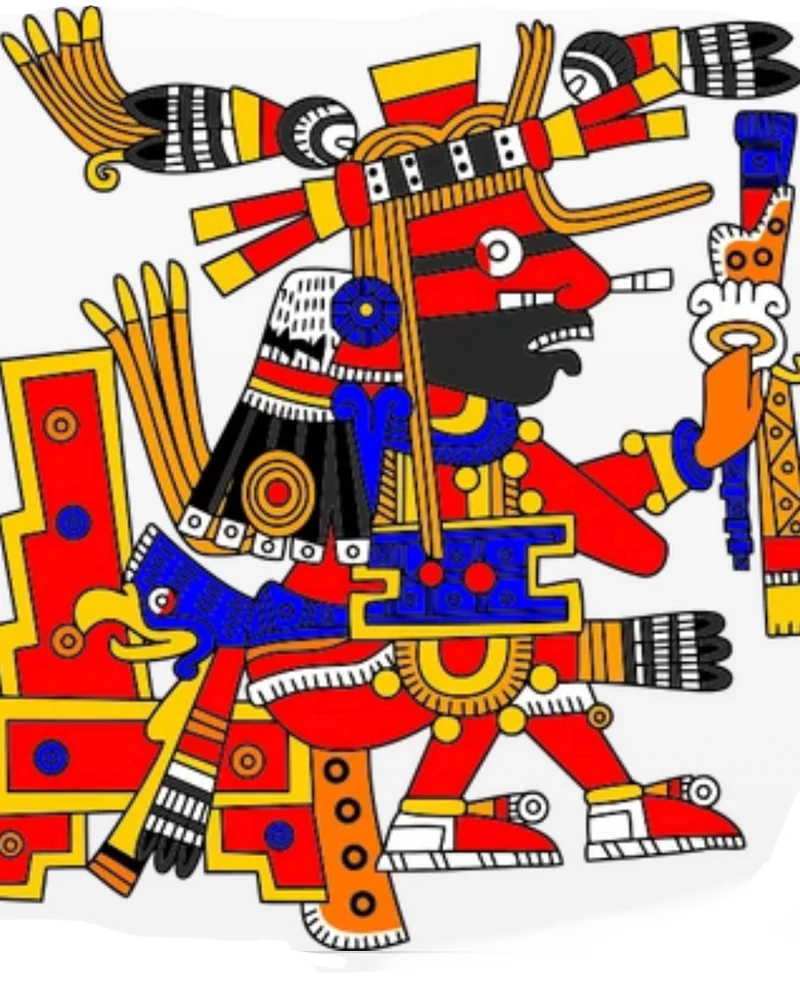
Xiuhtecuhtli
The god of fire, time, and the calendar. Xiuhtecuhtli was the oldest deity, dwelling at the center of the universe in the hearth fire that connected all realms. He presided over the New Fire ceremony every 52 years.
 deity
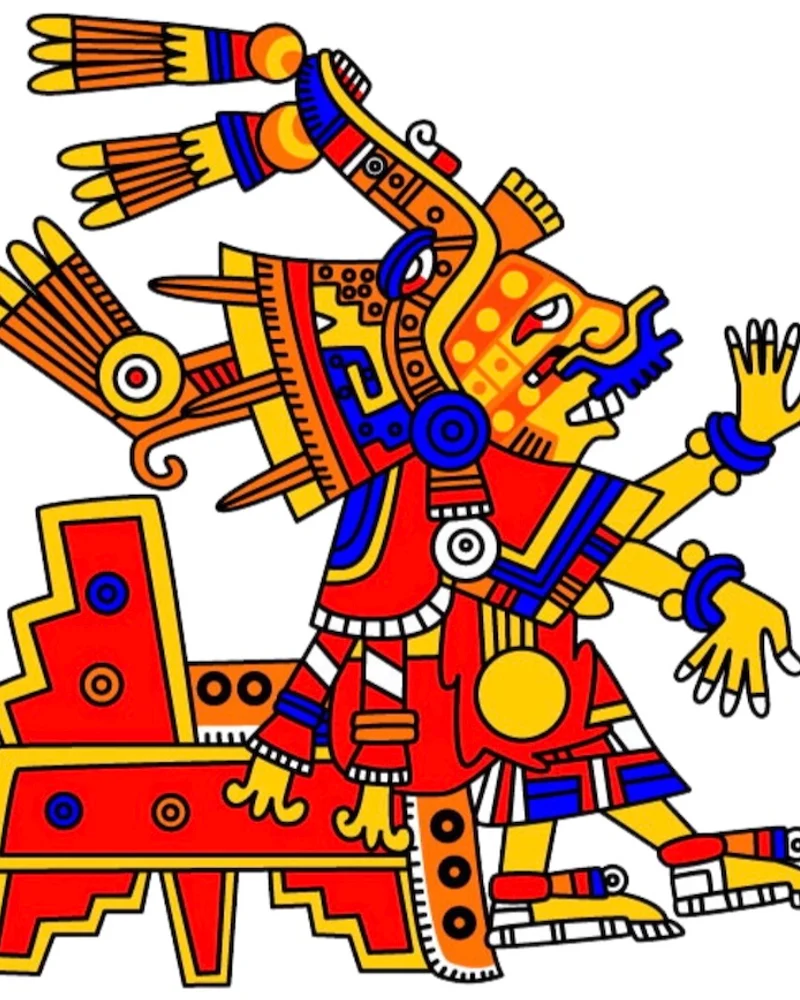
Xochiquetzal
The goddess of beauty, love, flowers, and female sexuality. Xochiquetzal was patron of artisans, weavers, and pregnant women, and dwelt in the paradise of Tamoanchan.
 deity
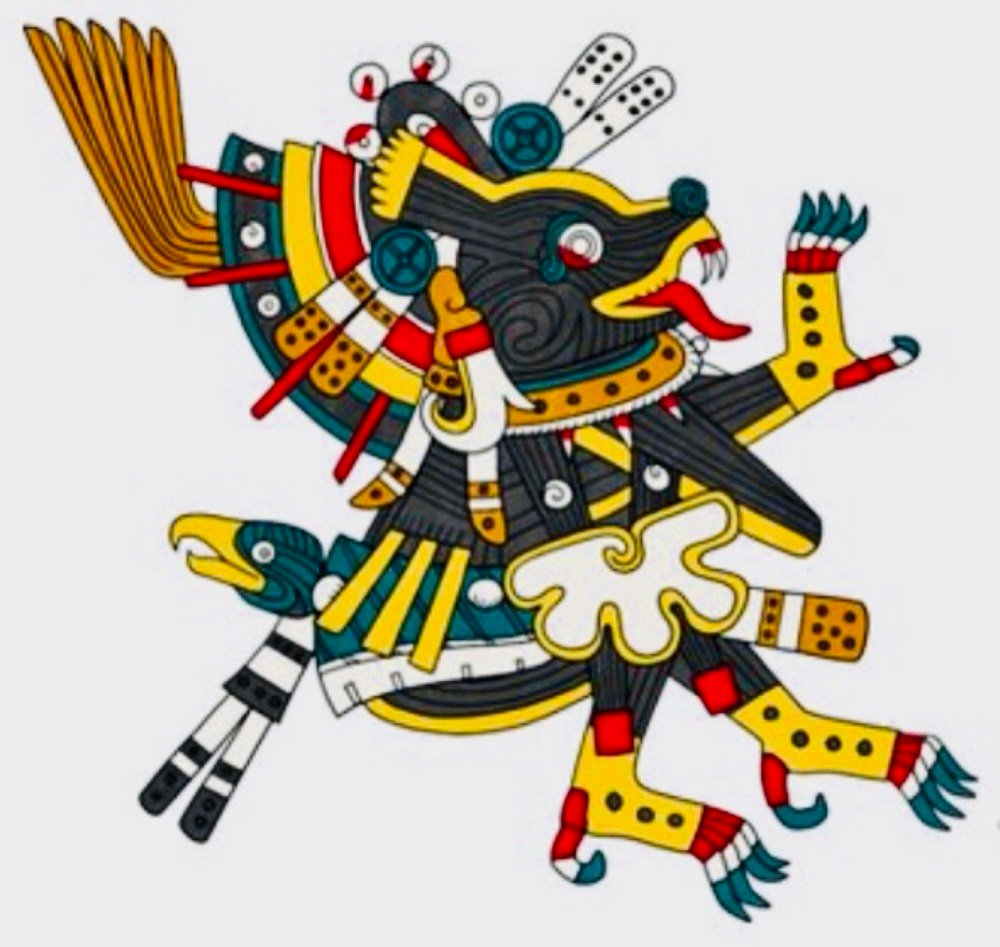
Xolotl
Dog-headed twin of Quetzalcoatl, god of the evening star, twins, and deformity, who escorts the sun through the underworld each night. Fleeing sacrifice, he transformed last into the axolotl.