


Arabian Lore
Arabian Lore traditions, cosmology, and ancient mythology.
Mythological Figures & Lore
Showing all 12 records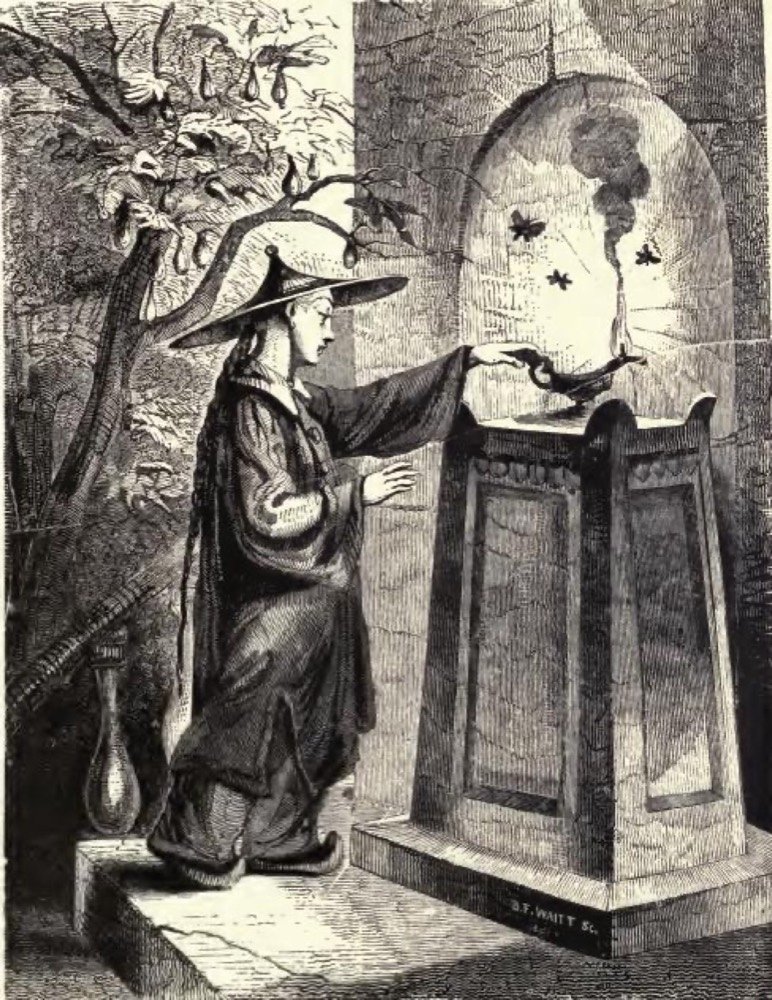 artifact
Aladdin's Lamp
A shabby oil lamp from an underground treasure cave; rub it and a jinni appears, slave to whoever holds it. No early Arabic manuscript contains the tale — the Syrian Hanna Diyab told it to Galland in 1709.
 creature
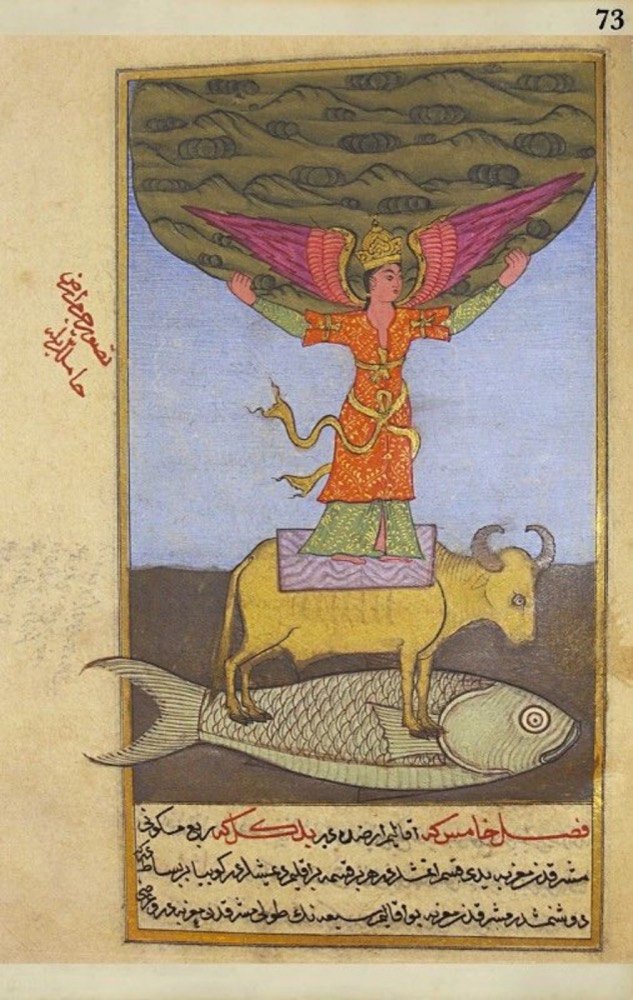
Bahamut
The immense fish at the base of medieval Islamic cosmography: the earth rests on an angel, the angel on a rock, the rock on a bull, the bull on Bahamut. All the seas in its nostril: a mustard seed.
 artifact
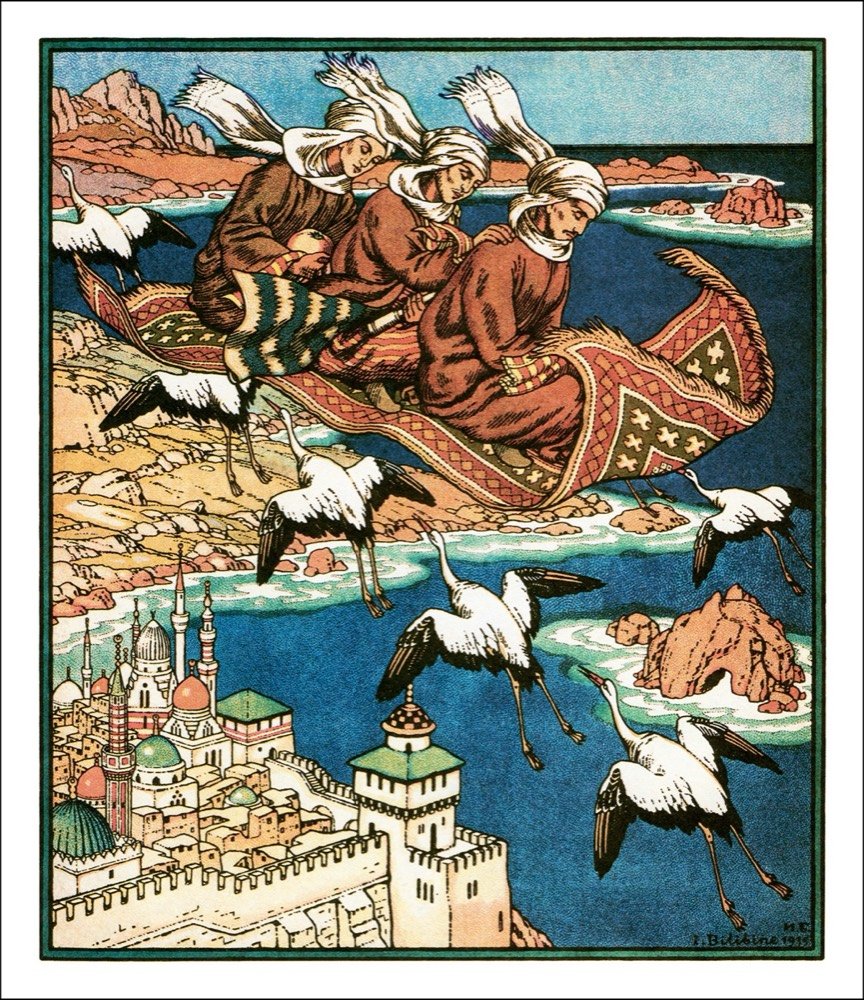
Flying Carpet
The carpet that flies. In Islamic legend Solomon's vast green silk carpet bore his whole court upon the wind; in the Nights' tale of Prince Ahmed, a plain-looking little rug carries its rider anywhere in an instant.
 creature
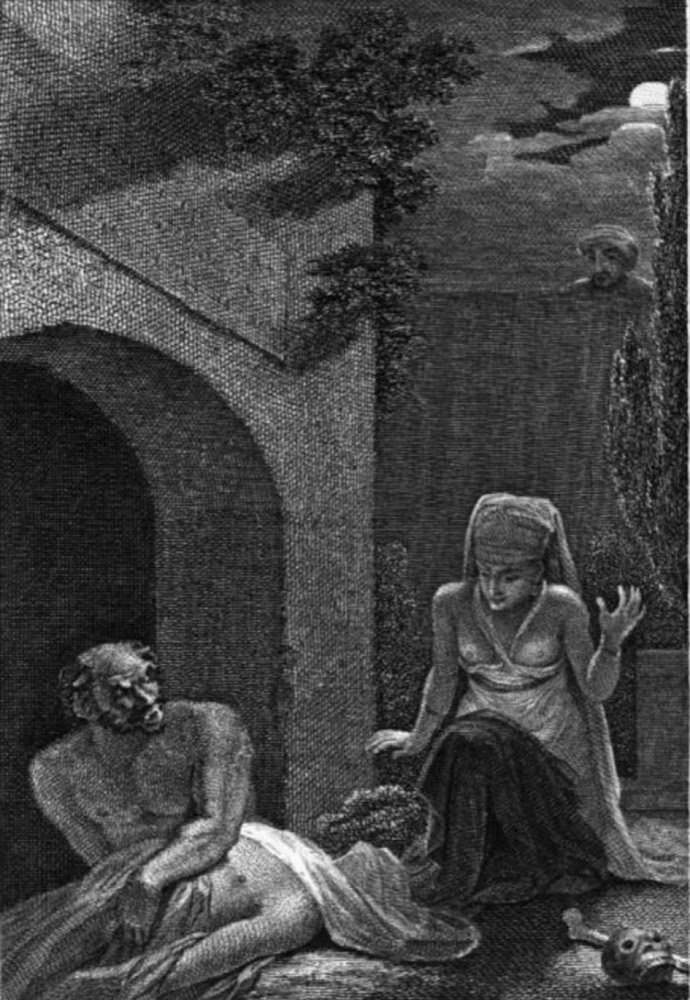
Ghoul
A shapeshifting man-eater of the Arabian desert, often female, luring lone travellers off the road to devour them, or digging up graves. The pre-Islamic poet Ta'abbata Sharran claimed to have killed one; English 'ghoul' derives from its name.
 spirit
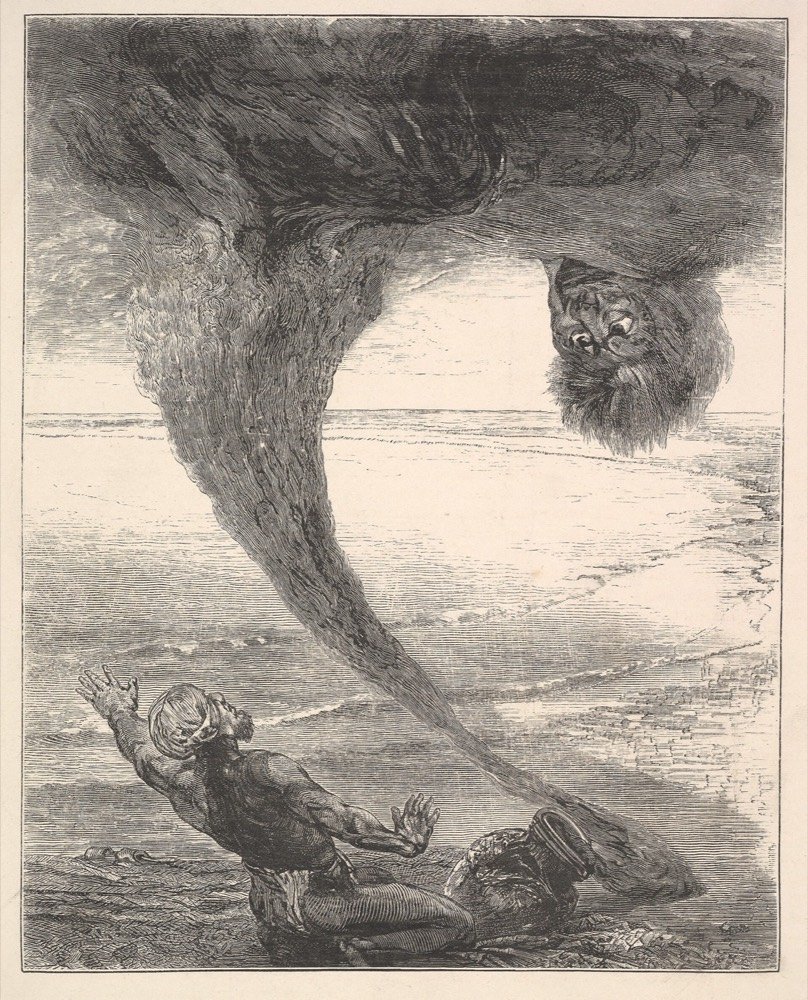
Ifrit
The strongest and most violent class of jinn. In the Quran an ifrit offers to fetch the Queen of Sheba's throne before Solomon can rise; in the Nights they appear as pillars of smoke and giants of fire.
 place
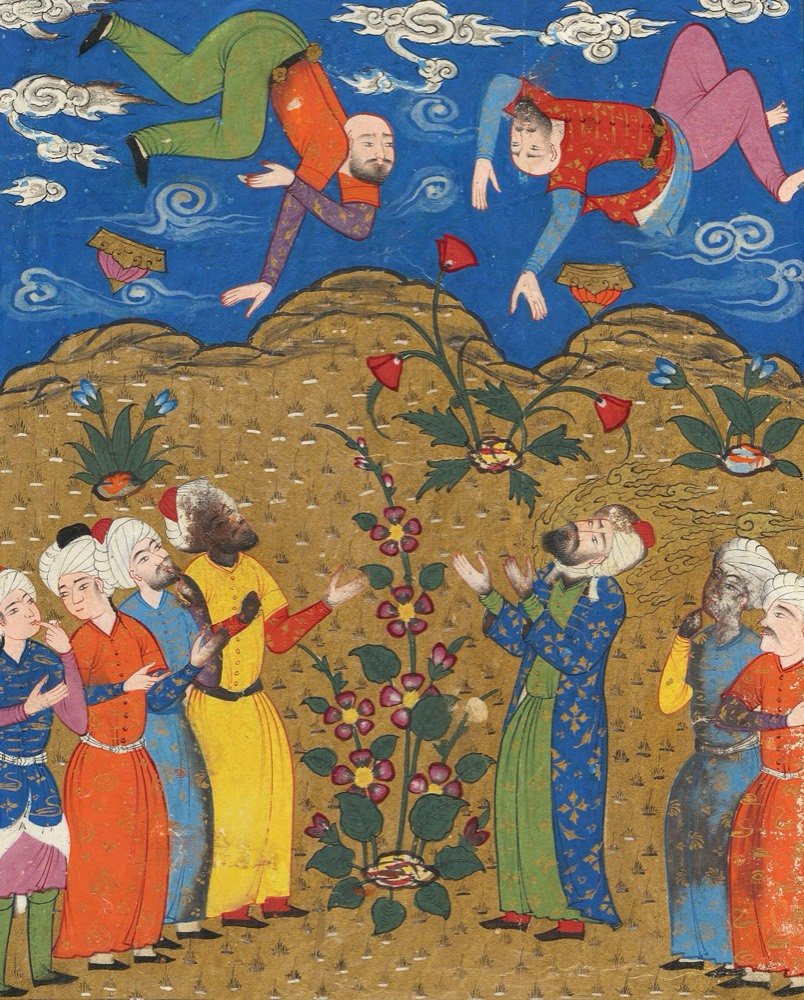
Iram of the Pillars
'Iram of the pillars' in the Quran, city of the people of 'Ad, 'the like of which was never created in the lands'. The tyrant Shaddad built it to rival Paradise; a cry from heaven erased it into the sands.
 spirit
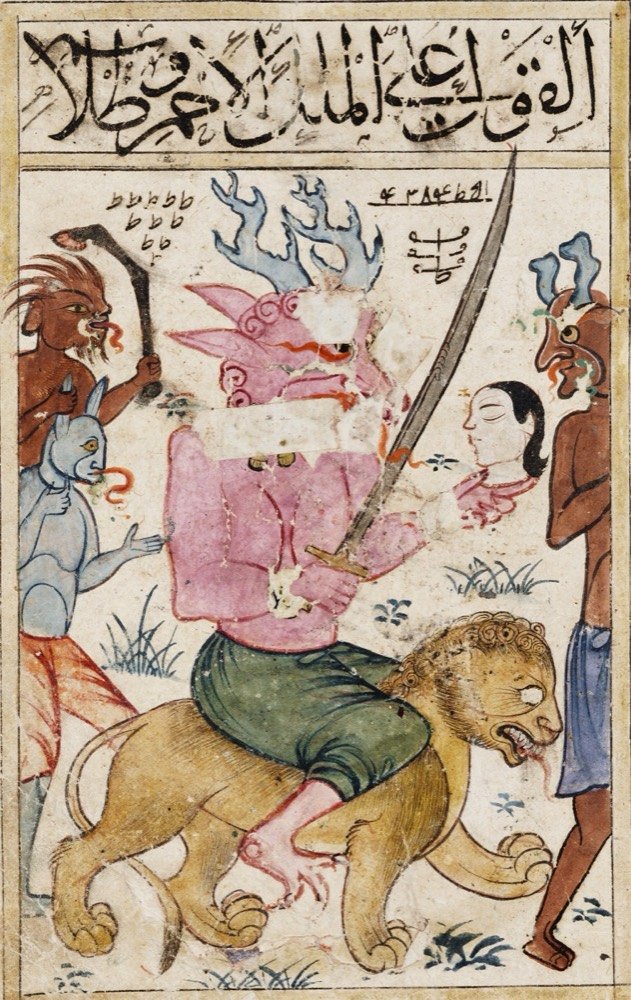
Jinn
The invisible race of Arabian belief, created from smokeless fire. Feared in the pre-Islamic desert, acknowledged in the Quran, and stuffed into bottles and lamps by the Thousand and One Nights.
 place
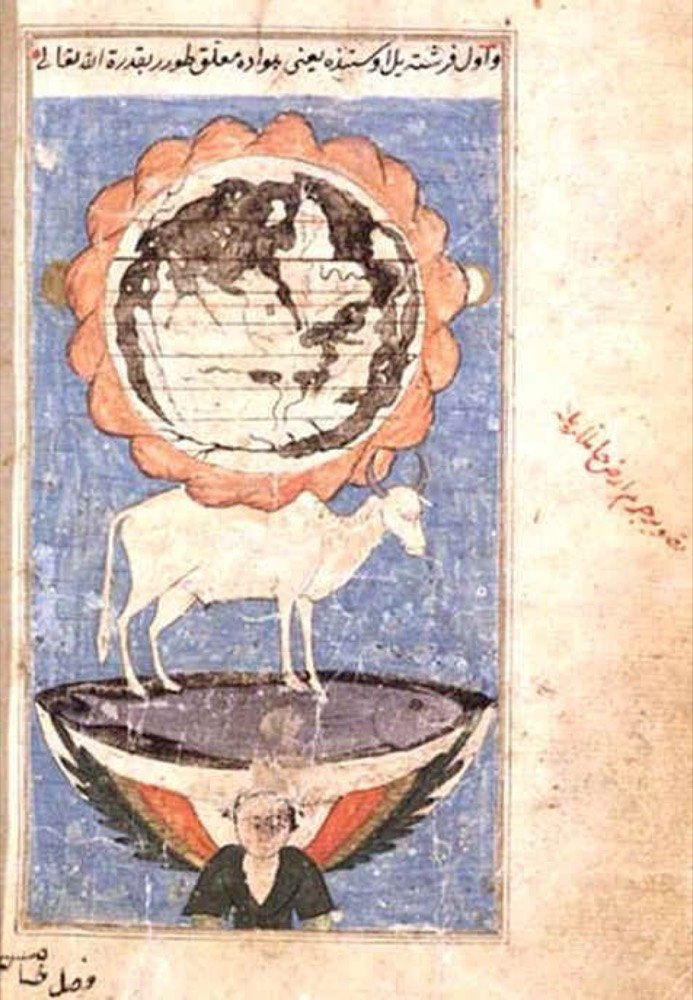
Mount Qaf
The emerald mountain range encircling the inhabited world; the sky takes its colour from its reflection. Mother of all mountains, its roots joined underground, with the lands of the jinn beyond. To cross Qaf is to leave the human world.
 creature
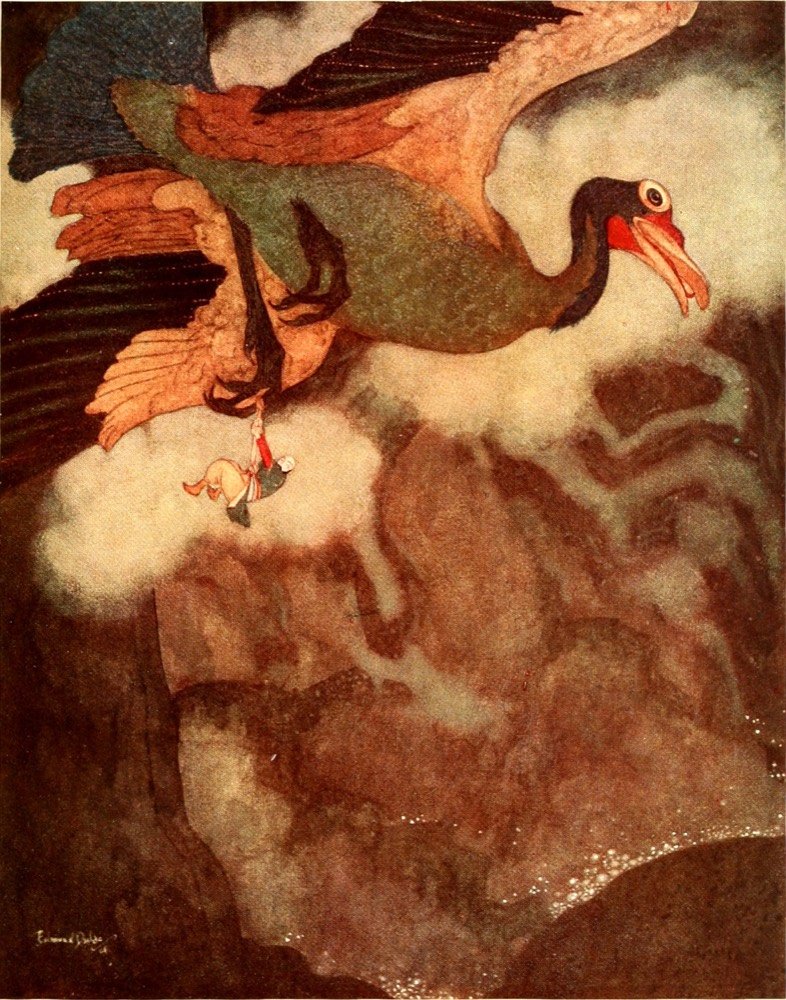
Roc
The giant bird of Arab seafaring lore, its egg the size of a dome, able to carry off elephants to feed its young. Sinbad escaped an island tied to its leg; Marco Polo placed it in the seas off Madagascar.
 hero
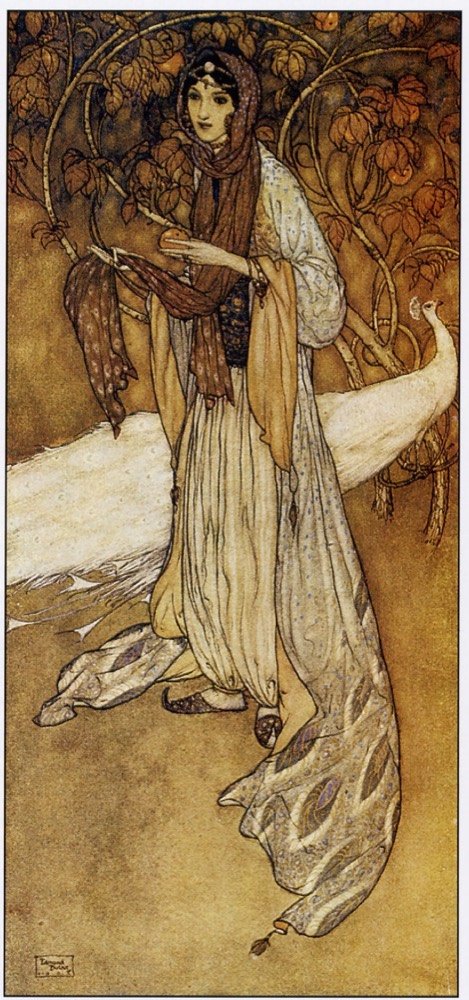
Scheherazade
The frame heroine of the Thousand and One Nights. King Shahriyar weds and kills a bride each dawn; the vizier's daughter volunteers, tells stories that break off at daybreak, and after 1001 nights the sword never falls.
 hero
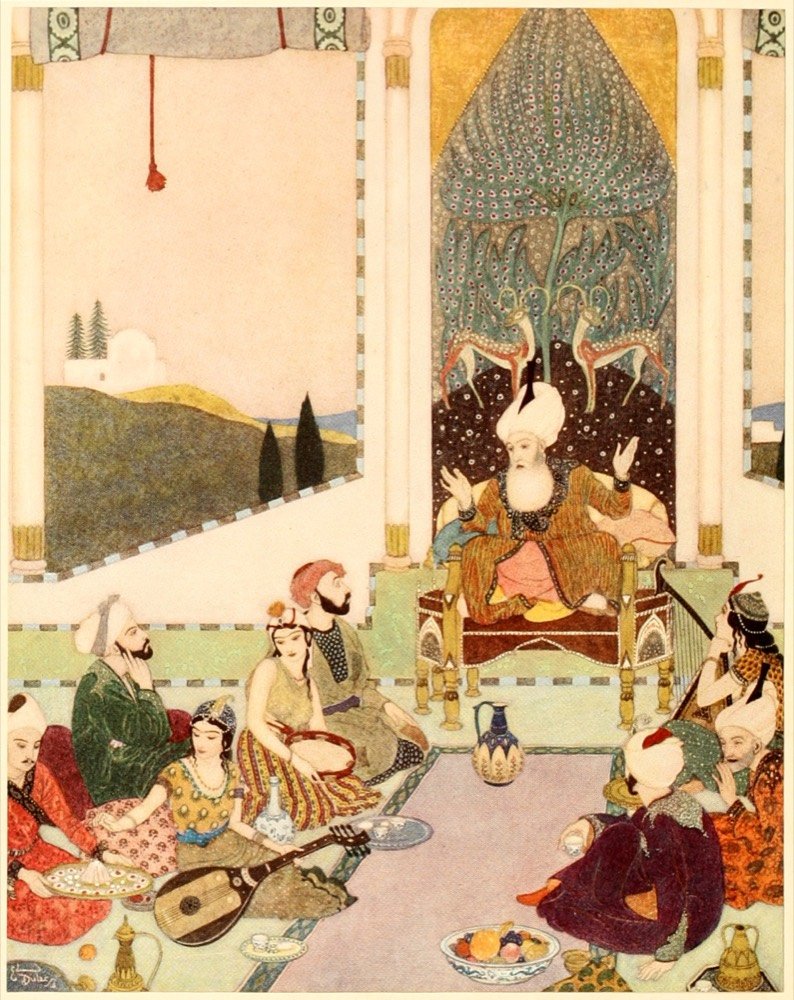
Sinbad the Sailor
The Baghdad merchant who sailed seven times and was wrecked seven times: he camped on a whale's back, flew tied to a roc's leg, carried the Old Man of the Sea, and came home rich in diamonds and stories.
 tale
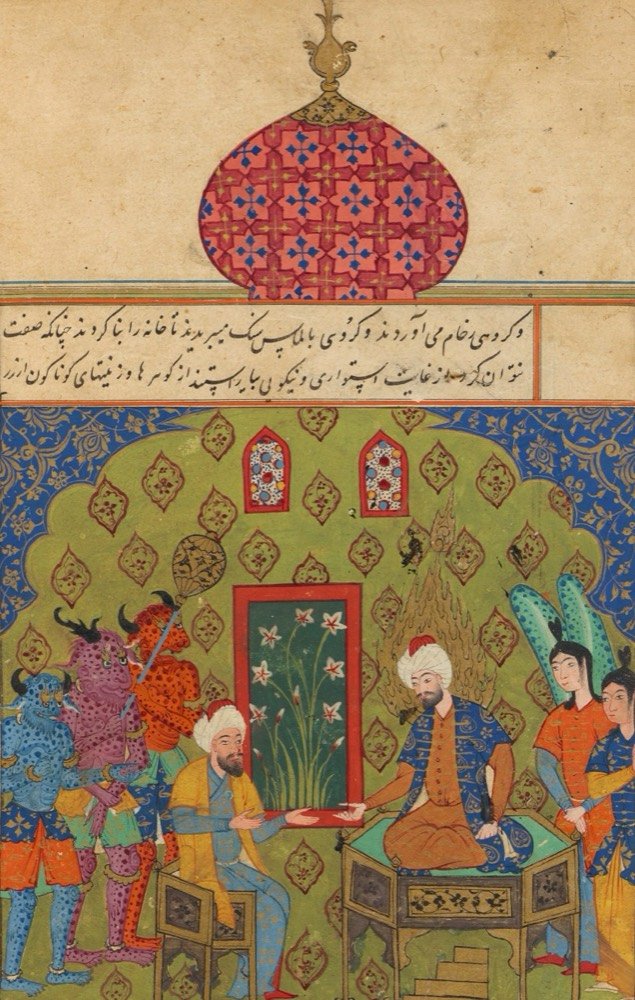
Solomon and the Jinn
In the Quran God subjects the wind and jinn to Solomon: they build sanctuaries and dive for pearls, rebels bound in fetters. Legend adds the seal-ring by which he corked defiant jinn into bottles sunk in the sea.