

Juru
Mythological Narrative
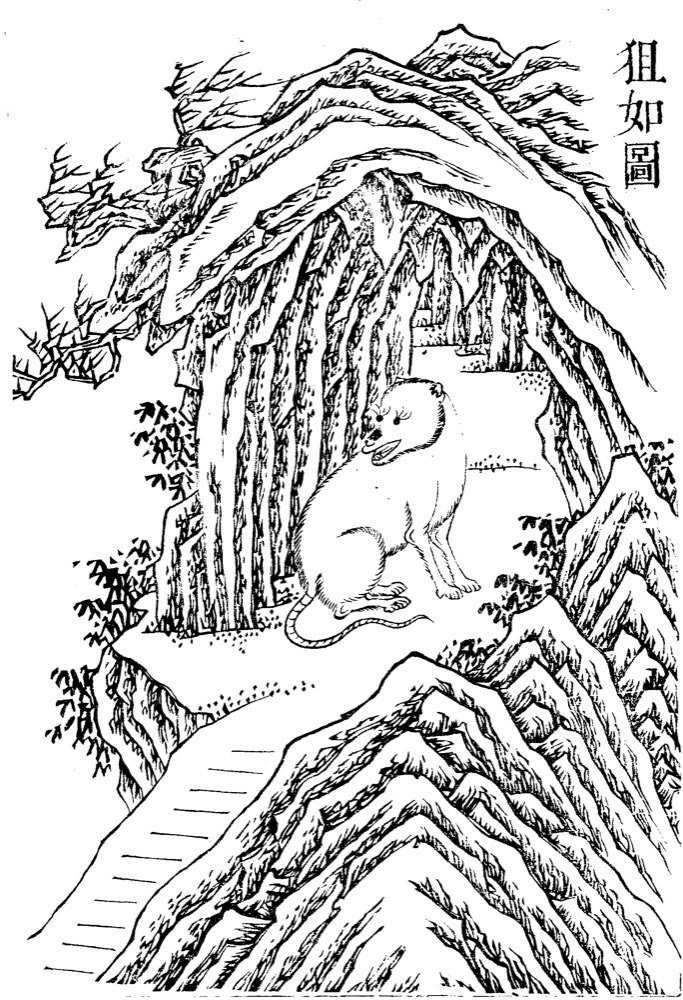
Mount Yidi carries jade above and gold below. Its beast, the Juru, is shaped like a fei-rat — one of the rodents listed in the Erya glossary, which commentators since Han times have failed to identify with any certainty — with white ears and a white muzzle. The formula of consequence stands out of all proportion to the animal: wherever it appears, that state will see great armies raised.
The eleventh central sequence is thick with such omen beasts. On Mount Feng the Yonghe, an ape-like creature with red eyes and a red muzzle, portends great panic; on Mount Fuzhou the Qizhong, an owl-shaped bird with a single foot and a pig's tail, portends plague. Panic, pestilence and war each have their courier in these hills, and the little white-eared herald of war is the least conspicuous of them all.
Academic Discussion & Critique
Exchange peer-reviewed hypotheses, comparative Indo-European etymologies, and archaeological field interpretations regarding Juru.
You Might Also Like
Fuzhu
A beast of Mount Ao'an shaped like a white deer but bearing four horns; wherever it appears, that town will be struck by a great flood.
Gengfu
Spirit of Mount Feng who haunts the Qingling pool, surfacing in light; wherever he appears, that state falls to ruin. Han court exorcists chanted to lock him back in his pool.
Feiyi
A serpent of Mount Taihua with six legs and four wings whose appearance brings drought to the whole world; Guo Pu records that it was seen at Mount Yang in the days of King Tang.
Aohen
A man-eating beast of Mount Sanwei: shaped like an ox, white-bodied with four horns, its long hair hanging like a straw rain-cape.