

Torngarsuk
Mythological Narrative
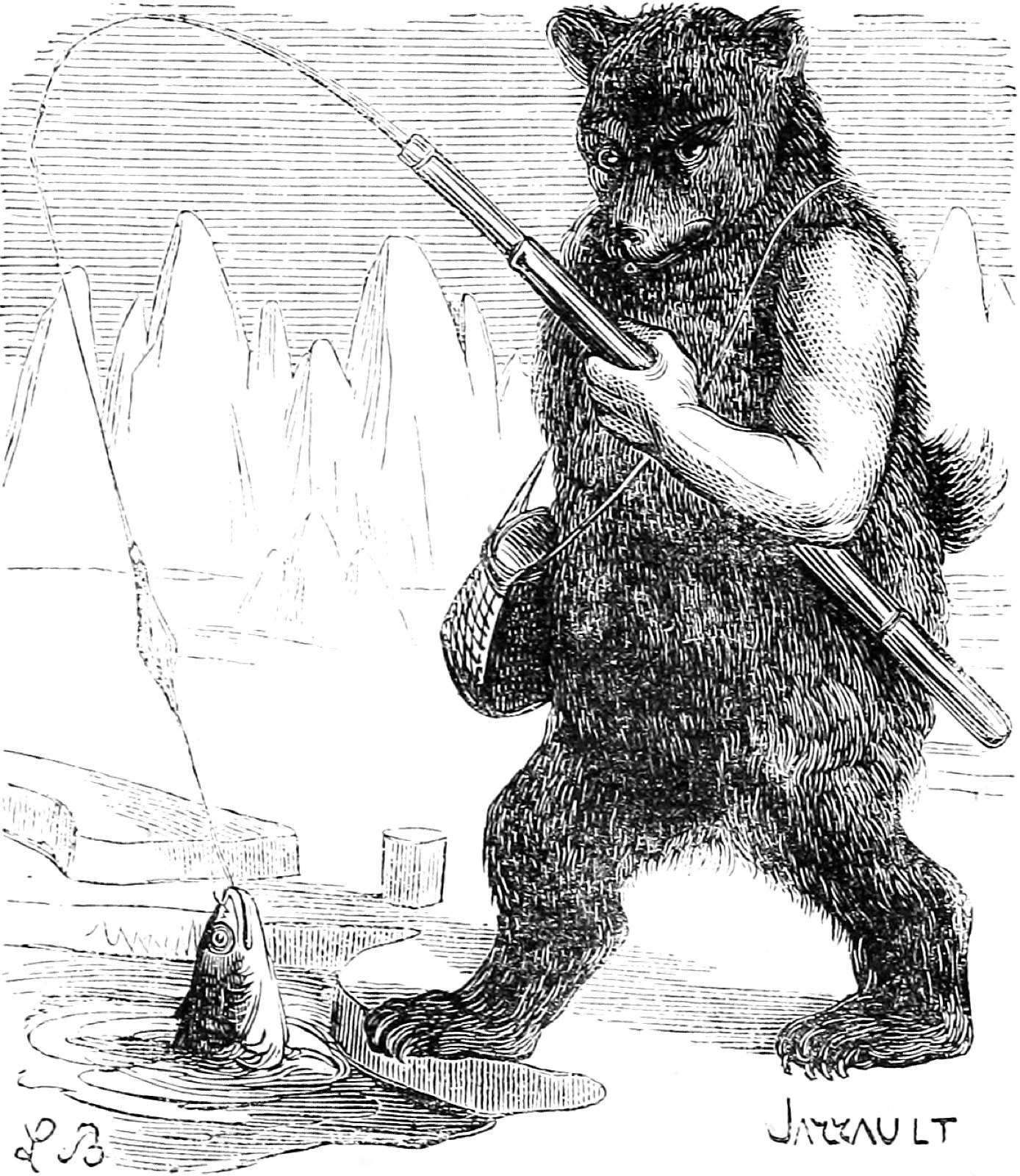
In eighteenth-century missionary accounts, Torngarsuk appears as a great bear, a one-armed person, or a marine being summoned by an angakkuq for illness, hunting, and travel into the spirit world. The name is related to tornaq, a helping spirit, and may not denote one god with a settled biography. It can instead mark a particular shaman’s relationship with exceptional spiritual power. Its dwelling may be sea, mountain, or an invisible region, while its form depends on ritual and teller. European writers such as Hans Egede were eager to identify a native “supreme god” and a devil, compressing a field of negotiated relations into a Christian opposition.
The nineteenth-century Dictionnaire infernal pushed the change further, drawing Torngarsuk as a weapon-bearing demon. Later occult books recycled that image as though it were an ancient portrait. The revealing object is the fracture itself. Greenlandic shamanism did not require a Satan ruling every dangerous spirit. A helper could heal and still be perilous; its force emerged from training, exchange, and relationship. Torngarsuk cannot be cut from a European demonology and pasted back onto the ice. It reminds us that archives also manufacture mythology, and that the devil printed on paper may be far younger than the spirit encountered in snow.
Academic Discussion & Critique
Exchange peer-reviewed hypotheses, comparative Indo-European etymologies, and archaeological field interpretations regarding Torngarsuk.
You Might Also Like
Sila
The air, weather, and intelligence moving through human beings, unseen but never absent.
Sedna
The Sea Woman below the ocean, whose tangled hair can close an entire season of hunting.
Tupilaq
A secretly made avenging being that may be turned back upon the person who sent it.
Nanuq
Polar bear and master of bears, approached through a hunter’s exact obligations to the slain animal.