

Alalu
Also known as: Alalus
Mythological Narrative
Scholarly Commentary & Evolution
## The first king
The Song of Kumarbi opens by calling on the Former Gods to listen, and then tells how, in earlier years, Alalu was king in heaven. Anu, the mightiest of the gods, served him as cup-bearer, bowing at his feet and handing him his drink. After nine years Anu rebelled and defeated him, and Alalu fled down to the Dark Earth.
## Father of the plotter
Kumarbi, who later overthrows Anu, is described as Alalu's offspring, so the struggle for kingship in heaven becomes a feud between two lineages: Alalu and his descendant Kumarbi on one side, Anu and the storm-god conceived from his seed on the other. Alalu himself plays no further part in the surviving text.
## Among the Former Gods
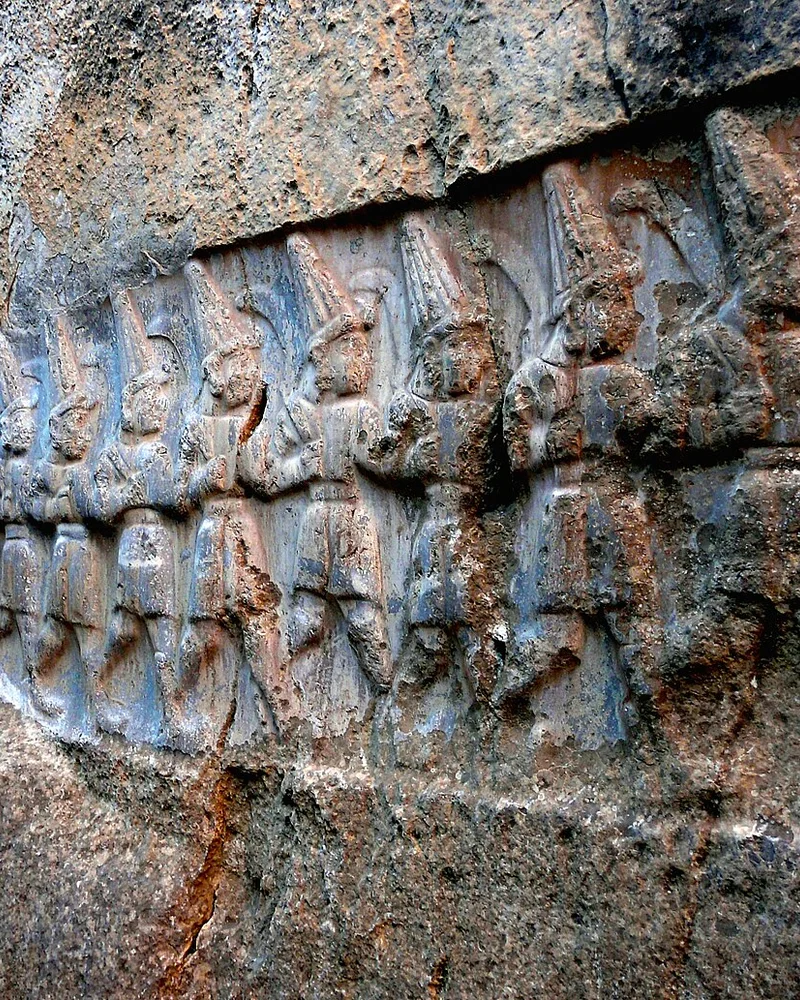
Alalu belongs to the group Hittite texts call the Former Gods (karuileš šiuneš), primeval deities who were banished to the underworld and who are invoked in rituals as a group. The idea of a whole older generation of gods deposed and confined below the earth is another point of contact with the Greek Titans, but Alalu himself has no clear Greek equivalent.
Academic Discussion & Critique
Exchange peer-reviewed hypotheses, comparative Indo-European etymologies, and archaeological field interpretations regarding Alalu.
You Might Also Like
Hannahanna
The Hittite mother goddess, 'the Grandmother', who when every other god has failed sends a bee to find the missing Telipinu.
Inara
A Hattian goddess of the wild who helps the Storm-god defeat the serpent Illuyanka by laying out a great feast and recruiting the mortal Hupašiya.
Kamrušepa
Goddess of magic and healing rites, who in the Telipinu myth performs the ritual that draws out the angry god's rage and sends it to the Dark Earth.
Kumarbi
Hurrian father of the gods who seizes kingship in heaven by biting off the sky-god Anu's loins, unwittingly conceives the storm-god Teššub, and spends the rest of the Kumarbi cycle fathering monsters to overthrow him.