

Dagwanoenyent, the Storm Wind
Mythological Narrative
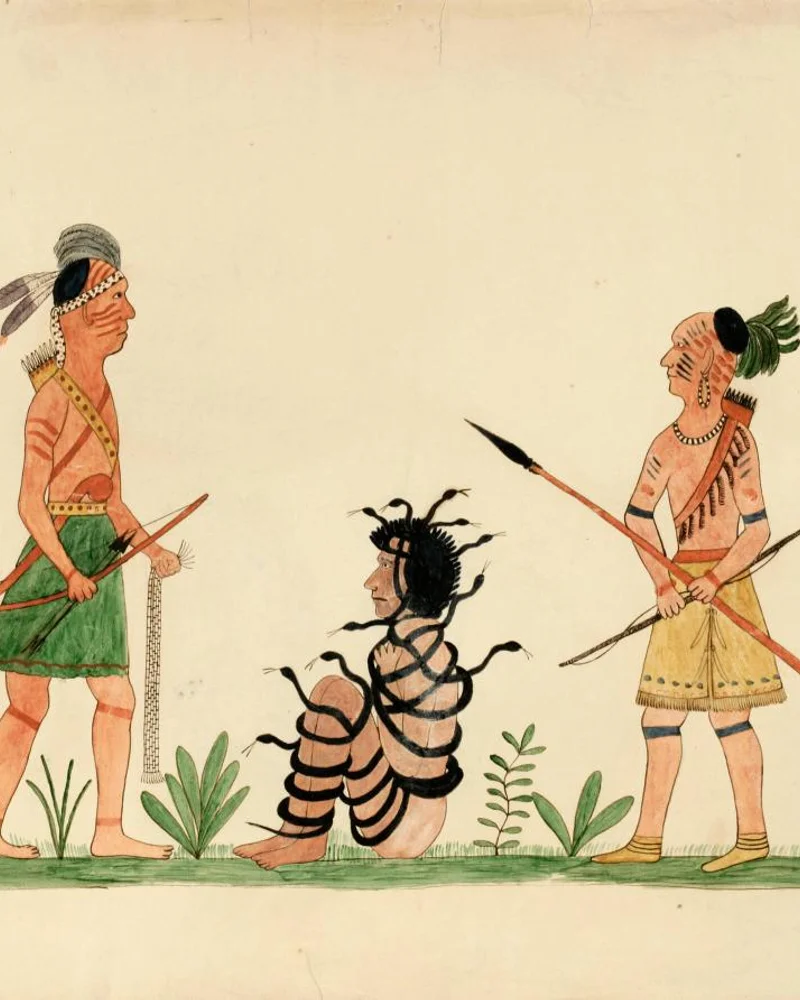
The violent storm wind of Seneca tradition, which appears as a flying head with long streaming hair, set against the gentle wind Ga'ha'.
Scholarly Commentary & Evolution
## A head with streaming hair
Parker lists Dagwanoeient, the Storm Wind, among the nature beings of Seneca tradition and describes it appearing as a flying head with long streaming hair. It is the violent counterpart of Gä'ha', the kindly zephyr, and its passage tears through forests. The Flying Heads of Haudenosaunee story, enormous heads that fly through the air on their own hair, belong to the same family of images, and the Tuscarora writer David Cusick already described flying heads troubling the people in 1827.
## Kept apart from ceremony
Masks and the societies that use them are ceremonial matters the Haudenosaunee have asked outsiders not to depict or describe, and some winds and faces in Seneca tradition are connected with that practice. This entry is therefore limited to the storm wind as it appears in published descriptions and stories.
Academic Discussion & Critique
Exchange peer-reviewed hypotheses, comparative Indo-European etymologies, and archaeological field interpretations regarding Dagwanoenyent, the Storm Wind.
You Might Also Like
Djogeon
The Little People of Seneca tradition, who live in caves and gulches, generally do not harm people, and, in return for small gifts, warn them of danger or help them to good fortune.
Horned Serpent
The great horned serpent of the deep waters in Seneca tradition, able to take the form of a handsome man to lure people away, and the chief enemy of the Thunderer.
Nia'gwahe, the Monster Bear
The most feared of the magic beasts of Seneca tradition, a gigantic bear that challenges people to race for their lives and can be killed only by striking a hidden spot on the sole of its foot.
Stone Giants
Giants of Seneca and wider Haudenosaunee tradition, shaped like people but of enormous size and covered with coats of flint that turned aside the arrows of men.