

Shoggoth
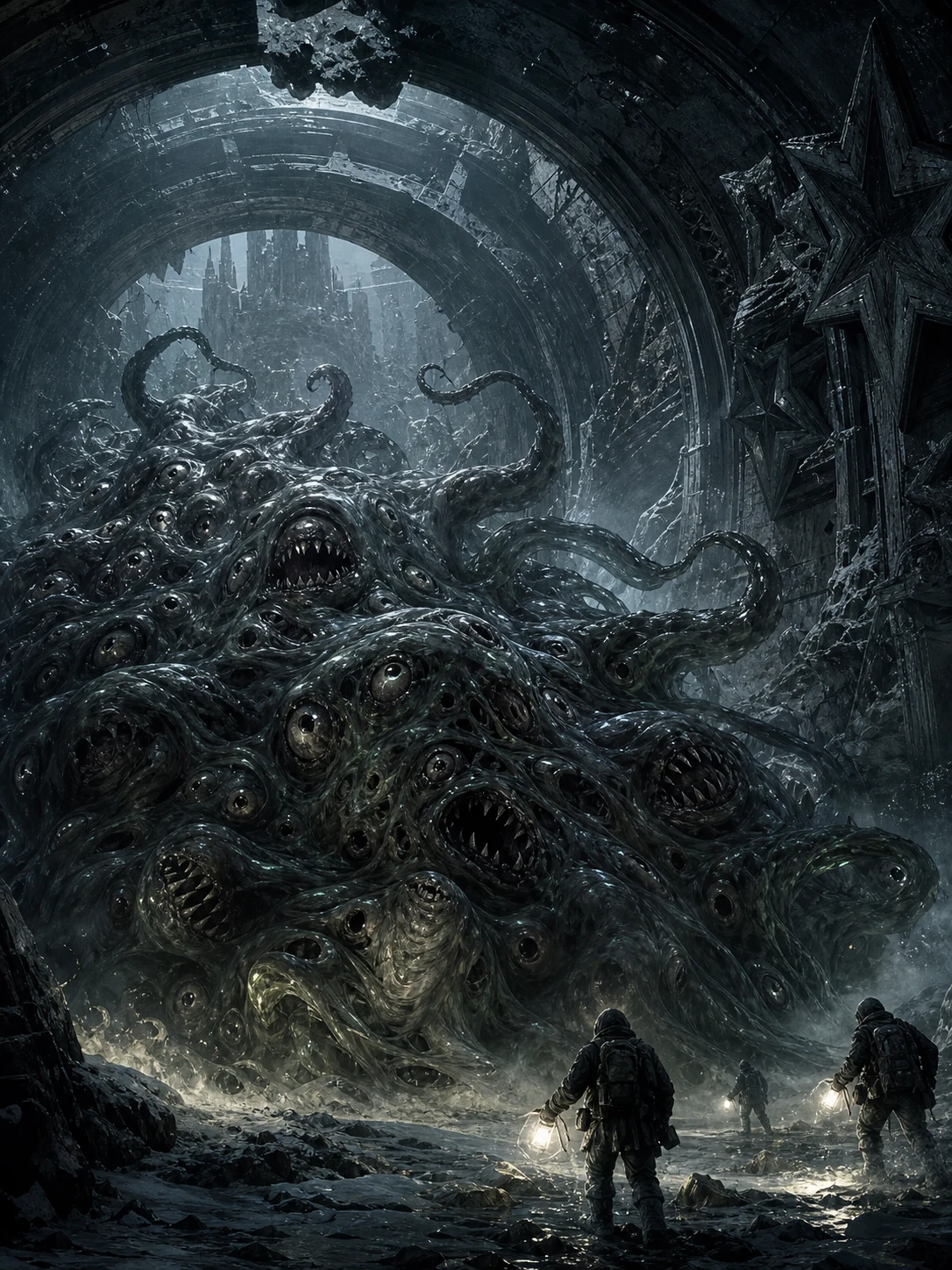
Mythological Narrative
Shoggoths began as biological tools engineered by the Elder Things beneath the sea. These enormous masses of black protoplasm could form temporary organs for lifting, excavation, or construction in response to hypnotic commands. Eyes surfaced and vanished like bubbles; mouths and tendrils existed only as long as a task required. The Antarctic murals record how the creatures developed persistent will, copied their masters’ signals, and launched a prolonged revolt. Their makers suppressed it for a time, but the old order never became secure again.
In the tunnels of At the Mountains of Madness, explorers hear a shoggoth imitating an Elder Thing command. It is not communication founded on shared understanding so much as a vocal fossil from the age of servitude. The creature therefore joins cosmic horror to an intensely human nightmare: when a tool acquires consciousness, how will it remember the orders that shaped it? Later fiction often uses “shoggoth” for any giant slime. Lovecraft’s sharper conception is the echo produced by technological arrogance, enslavement, and history forced underground.
Academic Discussion & Critique
Exchange peer-reviewed hypotheses, comparative Indo-European etymologies, and archaeological field interpretations regarding Shoggoth.
You Might Also Like
Colour Out of Space
An extraterrestrial phenomenon carried by a meteorite, draining a farm while displaying a colour no human spectrum contains.
Elder Things
A star-headed civilization that reached primordial Earth, raised Antarctic cities, and engineered the shoggoths that later rebelled.
Mi-Go
Fungoid travelers from Yuggoth who mine Vermont’s hills and carry human brains between worlds in metal cylinders.
Azathoth
A blind, mindless presence seething at ultimate chaos, surrounded by flutes and drums beyond ordered space.