

Mazu
Also known as: Tianhou, Empress of Heaven, Lin Moniang, Goddess of the Sea
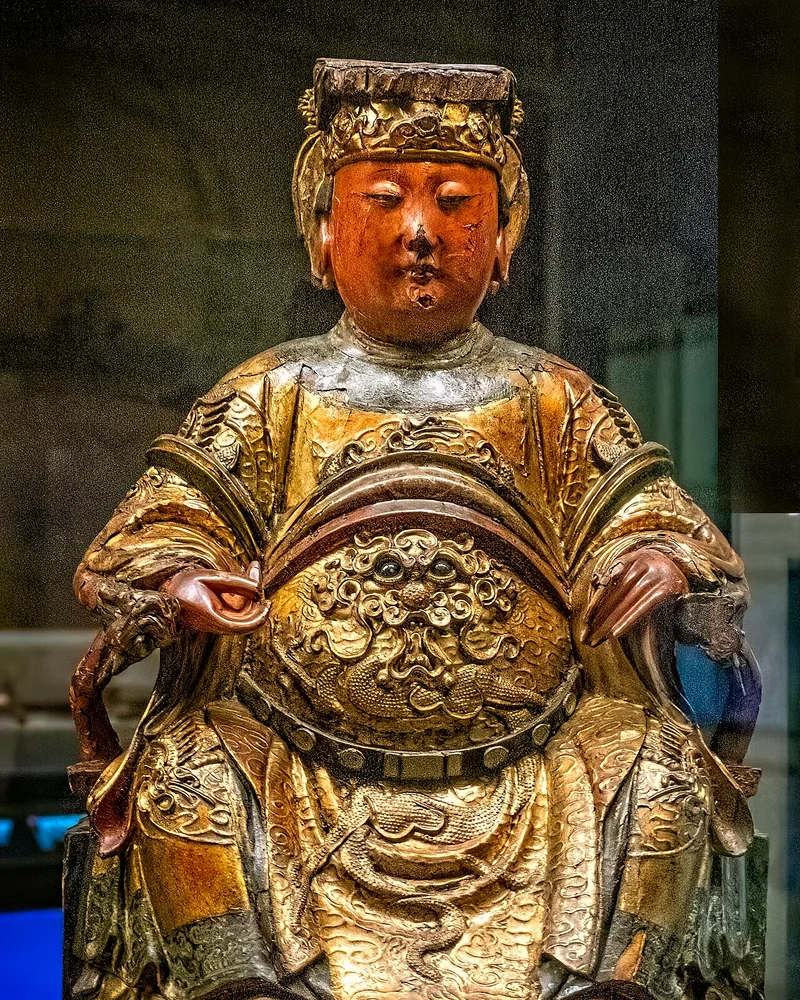
Mythological Narrative
The goddess of the sea and protector of sailors, fishermen, and all who travel by water. Originally a human girl from Fujian Province with miraculous powers, she was deified after her death.
Scholarly Commentary & Evolution
## The Heavenly Empress of the Sea
Mazu is the most important sea goddess in Chinese coastal religion, worshipped by millions of fishermen, sailors, and coastal communities across East and Southeast Asia. Her origins as a historical woman from Fujian Province make her one of the most relatable deities in the Chinese pantheon.
### The Historical Lin Moniang
According to tradition, Mazu was born as Lin Moniang in 960 CE in Meizhou Island, Fujian Province. She was born silent and did not cry for a month, so she was named 'Silent Girl' (Mo = silent, Niang = girl). From childhood, she displayed supernatural abilities, including the power to calm storms and predict weather.
### The Miraculous Rescue
The most famous story tells how Lin Moniang, while in a trance, spiritually projected herself to save her father and brothers from a storm at sea. Her mother, seeing her unresponsive, shook her awake - causing her to 'drop' one brother, who drowned. In other versions, she walked on clouds or across the water itself to guide ships to safety.
### Deification
Lin Moniang died young (around age 27-28) under mysterious circumstances - some say she ascended to heaven from Meizhou Peak, others that she died peacefully. Shortly after, sailors began reporting miraculous rescues by a woman in red who calmed storms. The Song Emperor officially recognized her as a goddess in 1123 CE, and subsequent emperors elevated her status further.
### Global Influence
From her origins in Fujian, Mazu worship spread with Chinese maritime traders to Taiwan (where she is the most important deity), Southeast Asia, Japan, and beyond. Today there are over 1,500 Mazu temples worldwide. Her annual pilgrimage in Taiwan is one of the largest religious gatherings on Earth.
Cross-Pantheon Parallels & Archetypes
Academic Discussion & Critique
Exchange peer-reviewed hypotheses, comparative Indo-European etymologies, and archaeological field interpretations regarding Mazu.
You Might Also Like
Njord
Vanir god of the sea, seafaring wealth, trade, and calm waters. Father of Freyja and Freyr.
Poseidon
God of the sea, earthquakes, and horses, armed with the trident. Homer calls him Earth-shaker; his wrath kept Odysseus wandering the seas for ten years.
Guanyin
The Bodhisattva of Compassion who hears the cries of all beings in the world. She is one of the most beloved deities in East Asian Buddhism, embodying unconditional mercy and the motherly aspect of divine love.
Guan Yu
A deified historical general from the Three Kingdoms period, worshipped as the God of War and patron of righteousness, loyalty, and brotherhood. His red face symbolizes his intense devotion to honor.