

Asase Yaa
Also known as: Asase Efua, Aberewa (Old Woman), Mother Earth
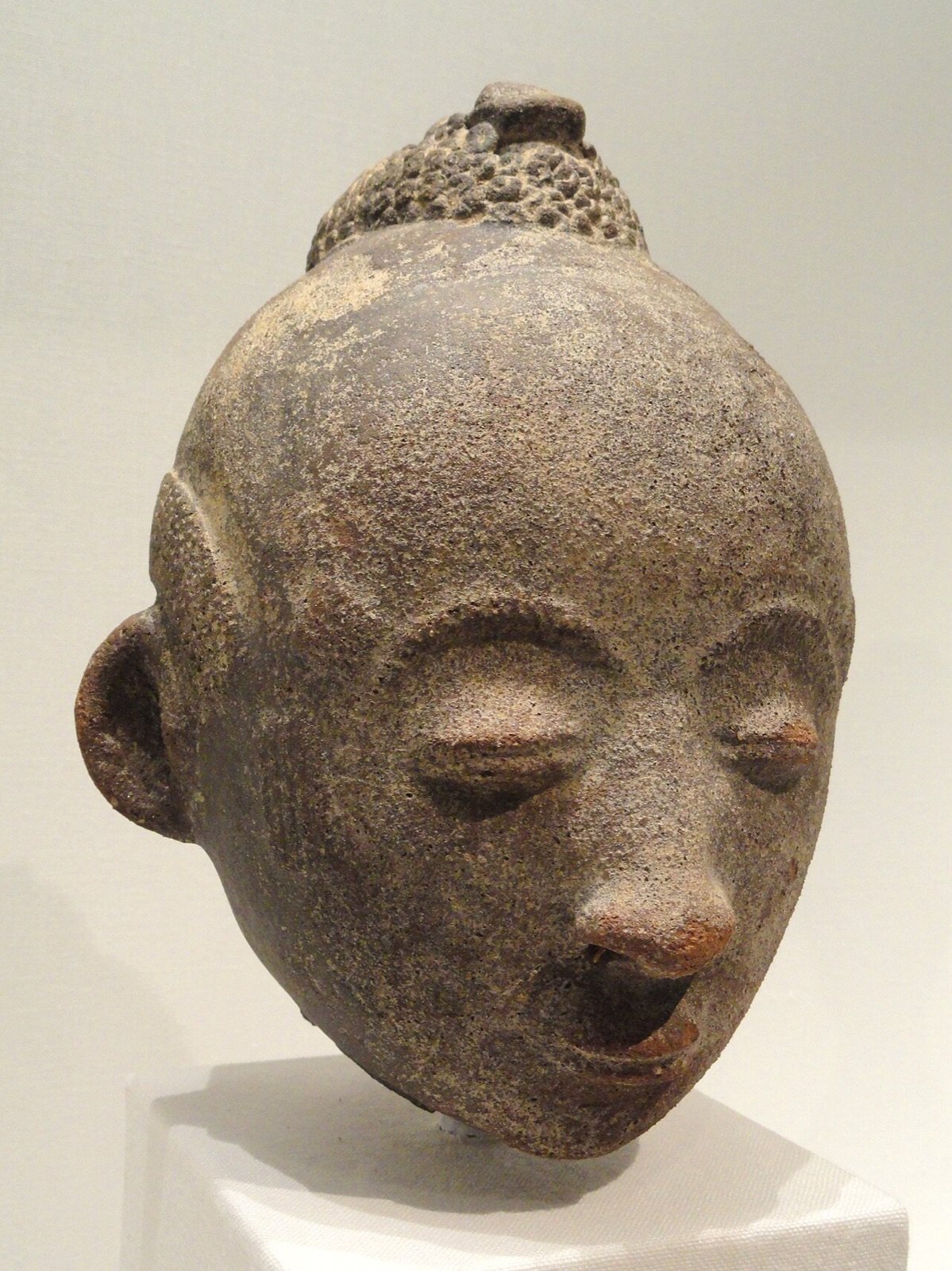
Mythological Narrative
Asase means earth, while Yaa is the female day-name associated with Thursday in Akan naming. In much of Asante country the earth is addressed as Asase Yaa; Fante and other Akan communities may use forms such as Asase Efua. She possesses no distant celestial palace because house, field, and grave all rest upon her. Before cultivation, water or drink may be poured to the soil. A grave oath can be sealed by touching or tasting earth, and burial returns the body to its mother. Bloodshed also stains the ground and may demand ritual repair. She and Nyame are often paired as earth and sky, though no single divine marriage should be forced across every Akan community.
Earth has a day of rest. Many Asante localities avoid farm work on Thursday, while other Akan groups observe a different sacred day. Stillness of the hoe is not idleness but recognition that the provider has an inviolable rhythm. Asase Yaa is bound to fertility, truthful speech, and the ancestors; a false oath sworn upon her brings judgment from beneath the speaker’s feet. She is seldom contained in one standardized idol because her holiness lies in being everywhere. No person can walk beyond her territory. At each clearing, burial, and first pouring of water, people can only ask again whether the ground is willing to bear them.
Scholarly Commentary & Evolution
## The earth herself
Rattray's Asante informants in the early 1920s described Asase Yaa as the second great power after the sky god: the earth that bears crops and receives the dead. Unlike the abosom, she had no priests and no shrine; she was addressed in the libation poured on the ground at the start of prayers, and in the invocation that names the sky god first and the earth second. Her name is the word for earth joined to a day-name: Yaa for a female born on Thursday, which is why Thursday was kept as her rest day and farming on it was avoided in many Asante communities. In Fante areas, where her day is Friday, she is Asase Efua.
## Earth, the dead, and truth
Because the dead are buried in her, the earth is closely tied to the ancestors, and she was invoked when land was cleared, graves were dug, and oaths were sworn. Rattray records that permission was asked of the earth before breaking ground. Some modern writers describe her as Nyame's wife; that pairing is widely repeated but is a relationship of complementary powers, sky and earth, more than a narrative marriage with its own myths.
## A living practice
Pouring libation to the earth remains a common part of Akan ceremony in Ghana today, including at civic events, which is the clearest continuity with the tradition Rattray recorded.
Cross-Pantheon Parallels & Archetypes
Academic Discussion & Critique
Exchange peer-reviewed hypotheses, comparative Indo-European etymologies, and archaeological field interpretations regarding Asase Yaa.
You Might Also Like
Akua’ba
The round-headed fertility figure carried and cared for after Akua’s legendary prayer for a child.
Nyame
The Akan sky and Supreme Being, remote but not absent, source of rain, destiny, and stories.
Abosom
Divinities of place who possess priests, keep forbidden days, and guard particular communities.
Gaia
Primordial goddess of the Earth, one of the first beings to emerge from Chaos. Gaia is the mother of the sky (Uranus), the sea (Pontus), the Titans, the Cyclopes, and, through the blood of Uranus, the Giants and the Furies.