


Aboriginal Australian Mythology
Aboriginal Australian Mythology traditions, cosmology, and ancient mythology.
Mythological Figures & Lore
Showing all 16 records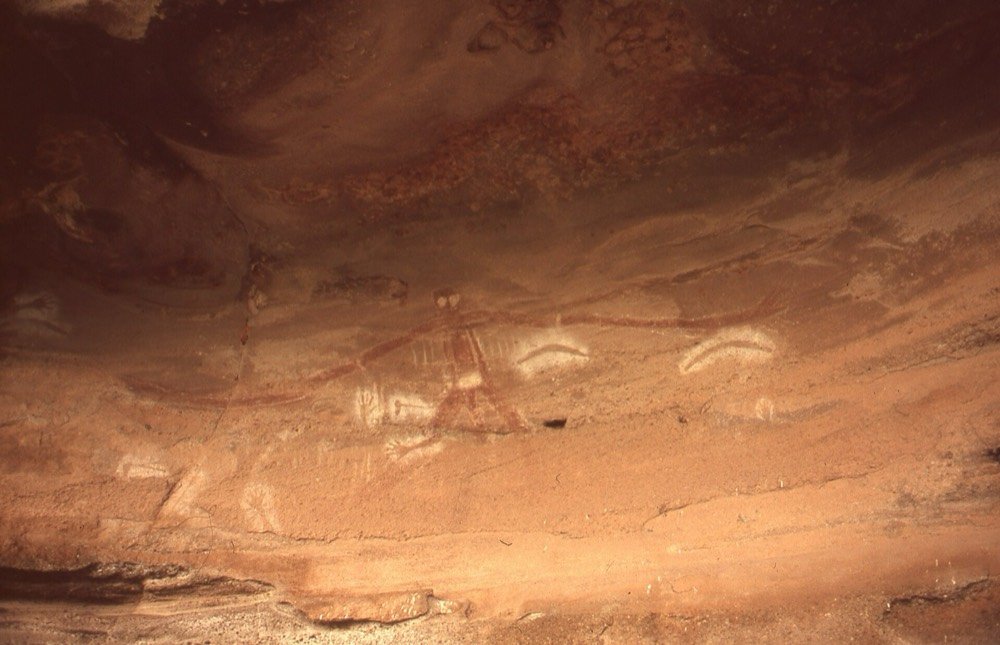 deity
Baiame
Creator and law-giver of the Wiradjuri, Gamilaraay, and neighbouring peoples of New South Wales: he shaped rivers and people, instituted the Bora initiation ground, then withdrew into the sky.
 deity
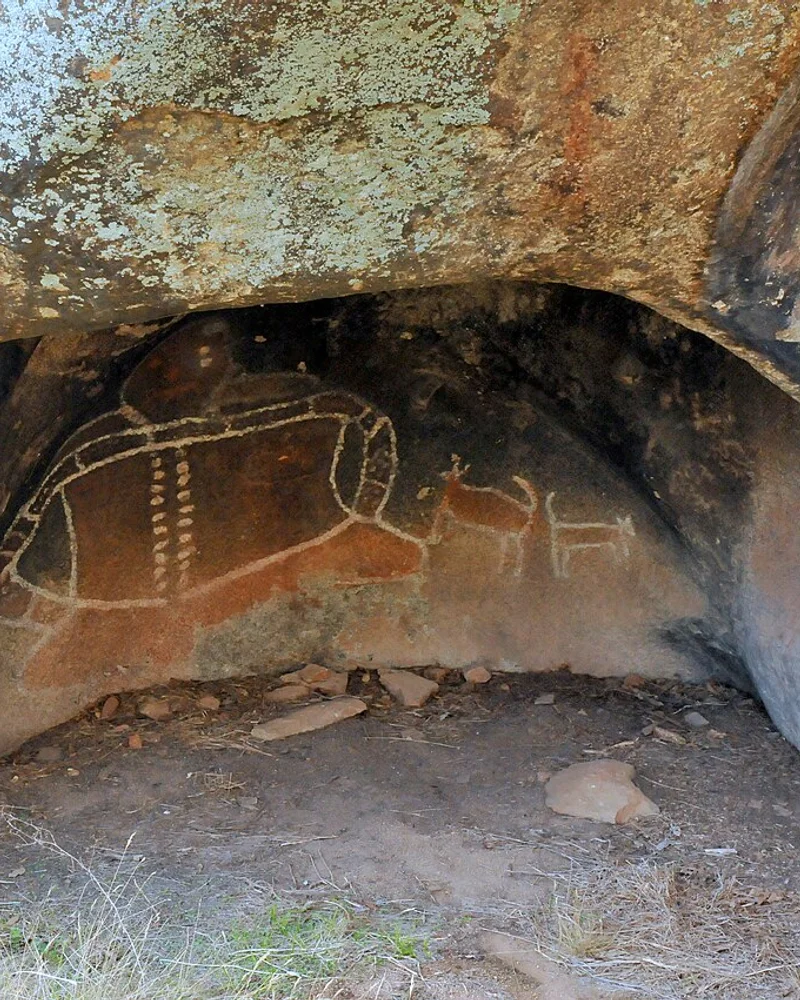
Bunjil
The creator ancestor of the Kulin nations of central Victoria, a wedge-tailed eagle who shaped the land, made people, gave them law, and rose into the sky, where the Wurundjeri and Boon Wurrung see him as the star Altair.
 creature
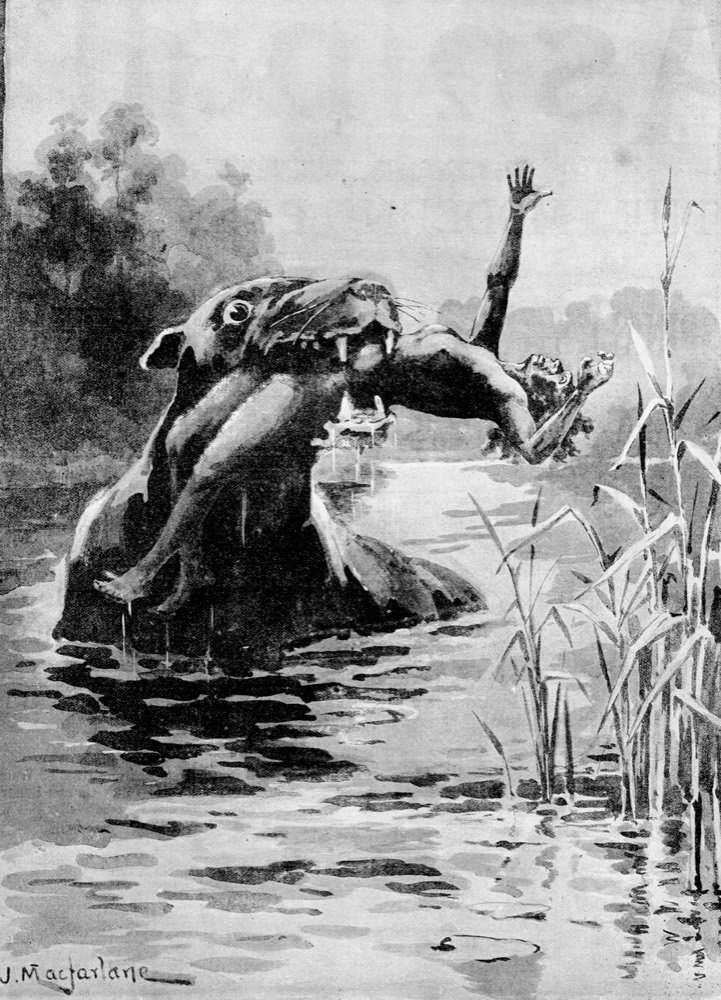
Bunyip
A monster of the billabongs and swamps of south-eastern Australia: it bellows in the night and seizes those who linger at the water's edge. The name comes from the Wemba-Wemba language of Victoria.
 deity
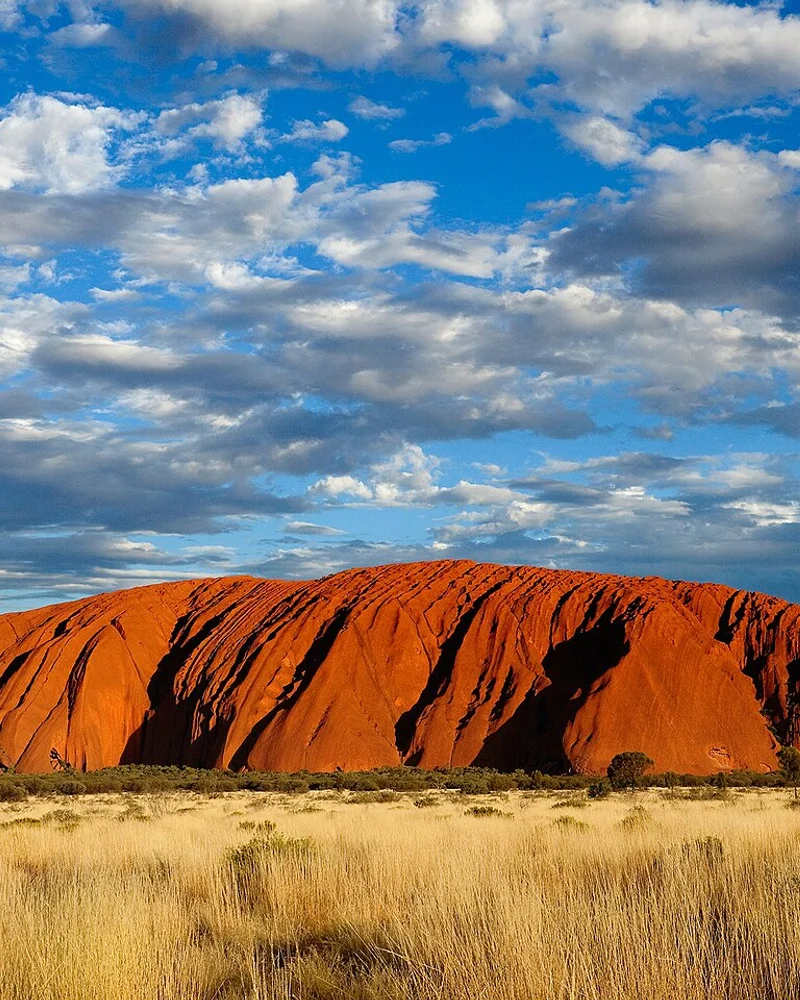
Kuniya
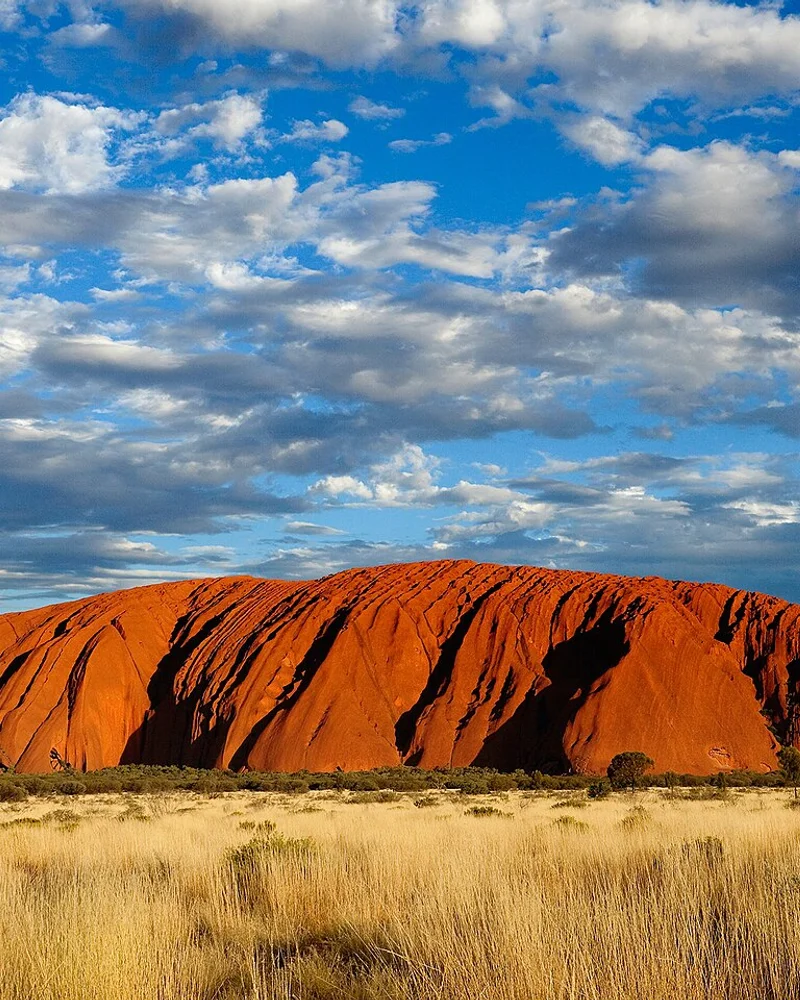
The woma python woman of Aṉangu Tjukurpa who came to Uluṟu and, when her nephew was killed by Liru warriors, confronted and struck down a Liru warrior at Muṯitjulu Waterhole; the marks of the fight remain in the rock.
 deity
Liru
The venomous snake men of Aṉangu Tjukurpa, a war party who attacked and killed Kuniya's nephew and one of whom Kuniya struck down at Muṯitjulu.
 spirit
Mimih Spirits
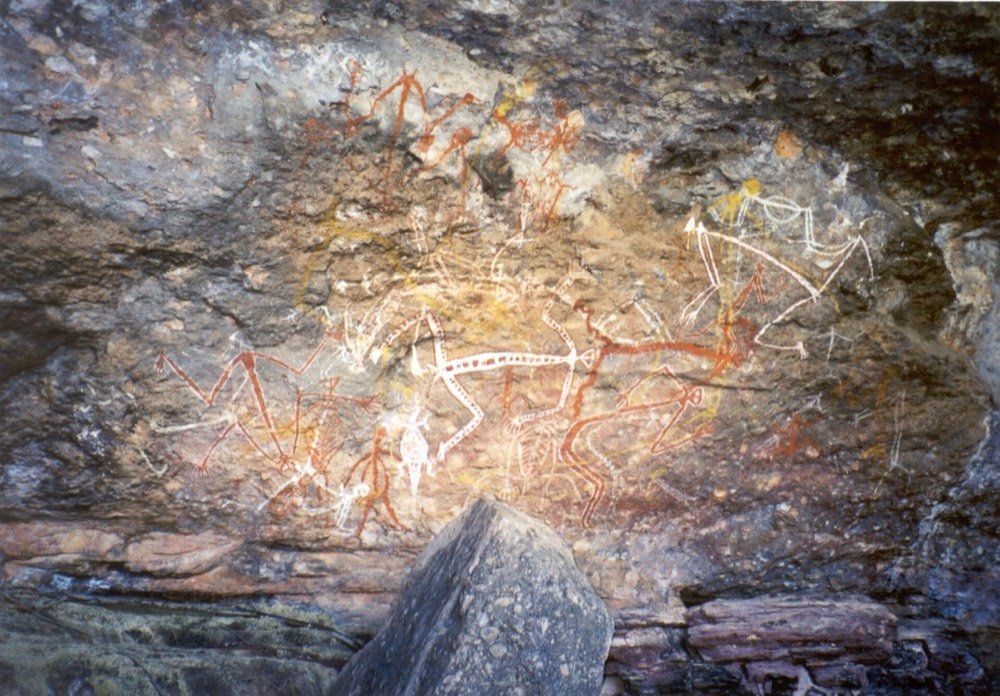
Reed-thin spirits of the rock crevices in Bininj tradition of western Arnhem Land: they hunted and painted before humans arrived, and taught the first people fire, butchering, and painting. Playful, and quick to take offence.
 deity
Namarrkon
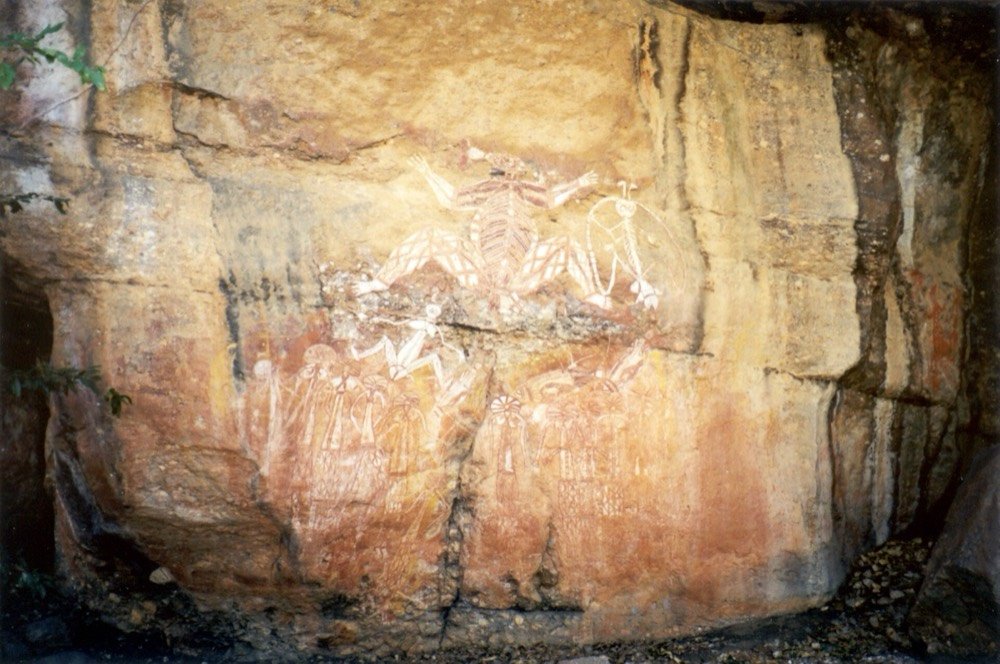
The lightning being of the Bininj of western Arnhem Land: a band of lightning arcs around his body, and the stone axes at his head and knees strike thunder from the clouds. His Nourlangie rock painting is world famous.
 deity
Pallian
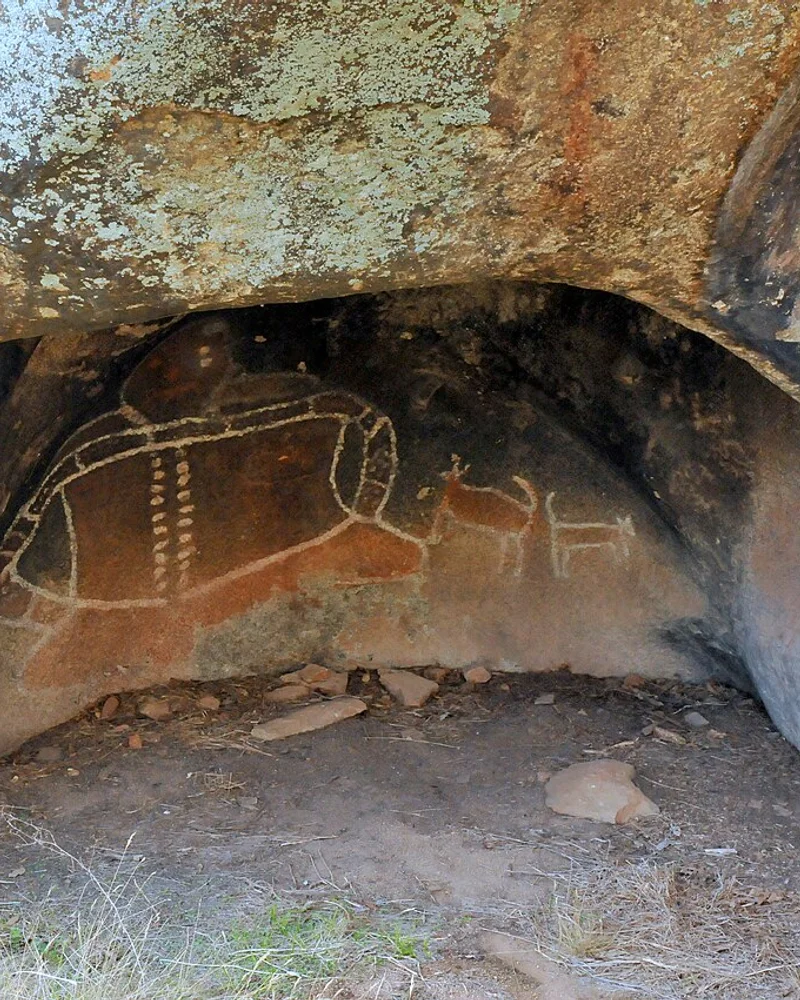
In Kulin tellings, Bunjil's brother, who had charge of the waters and who, beating the water with his hands, brought forth the first women.
 deity
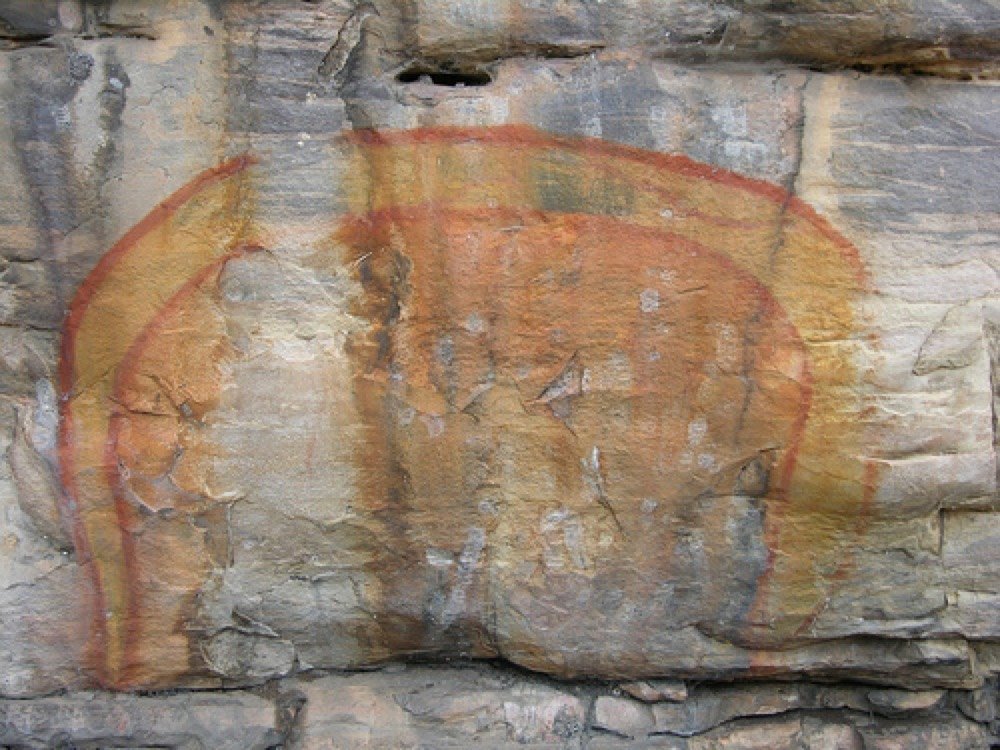
Rainbow Serpent
A vast serpent creator known across the continent: it carved rivers, guards waterholes, and arcs overhead as the rainbow. Called Ngalyod in western Arnhem Land and Wagyl by the Noongar, among many regional names.
 tale
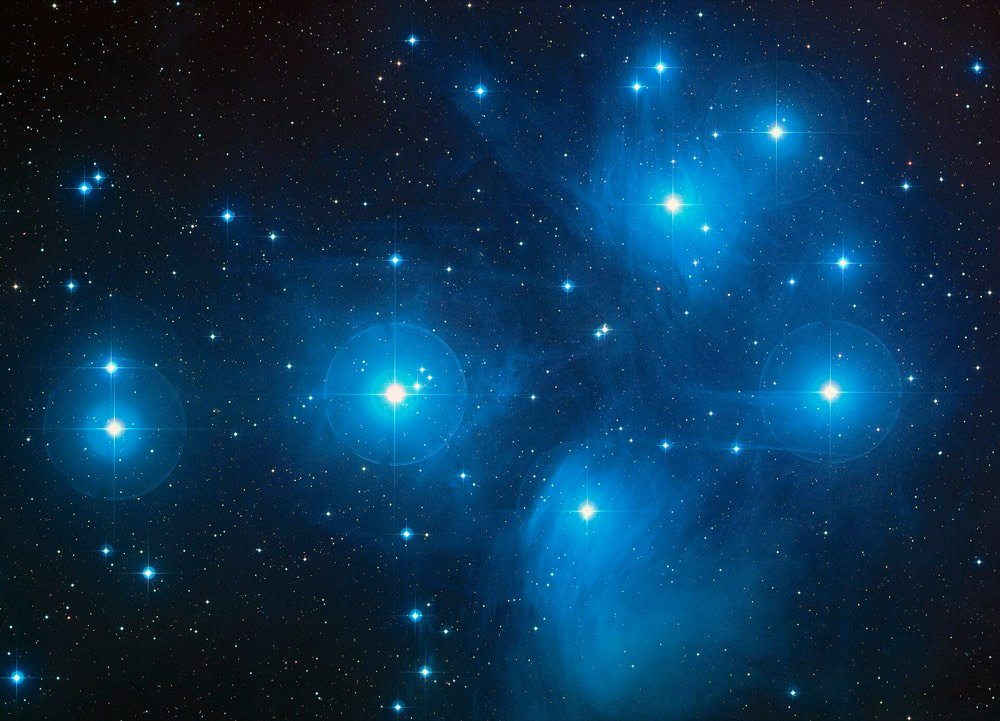
The Seven Sisters
The origin of the Pleiades: seven sisters flee Wati Nyiru, a man forbidden to them under kinship law, across the Western Desert until they leap into the sky. The songline crosses half the continent.
 tale
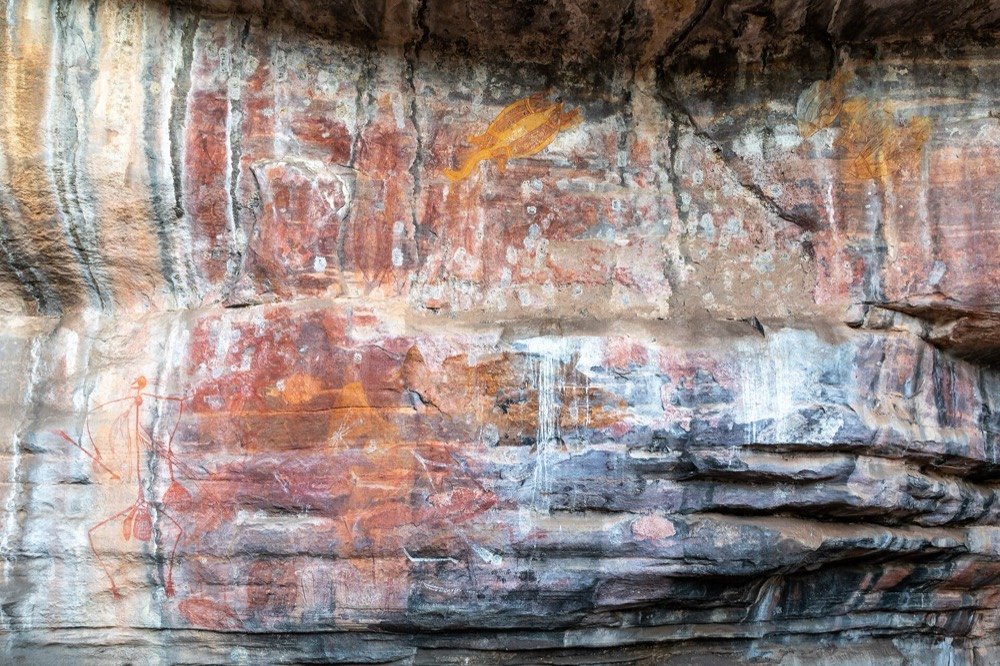
The Dreaming
The framework of Aboriginal cosmology: ancestral beings walked the land, shaped it, and laid down law and songlines — an age that never closed, still present in country and ceremony.
 creature
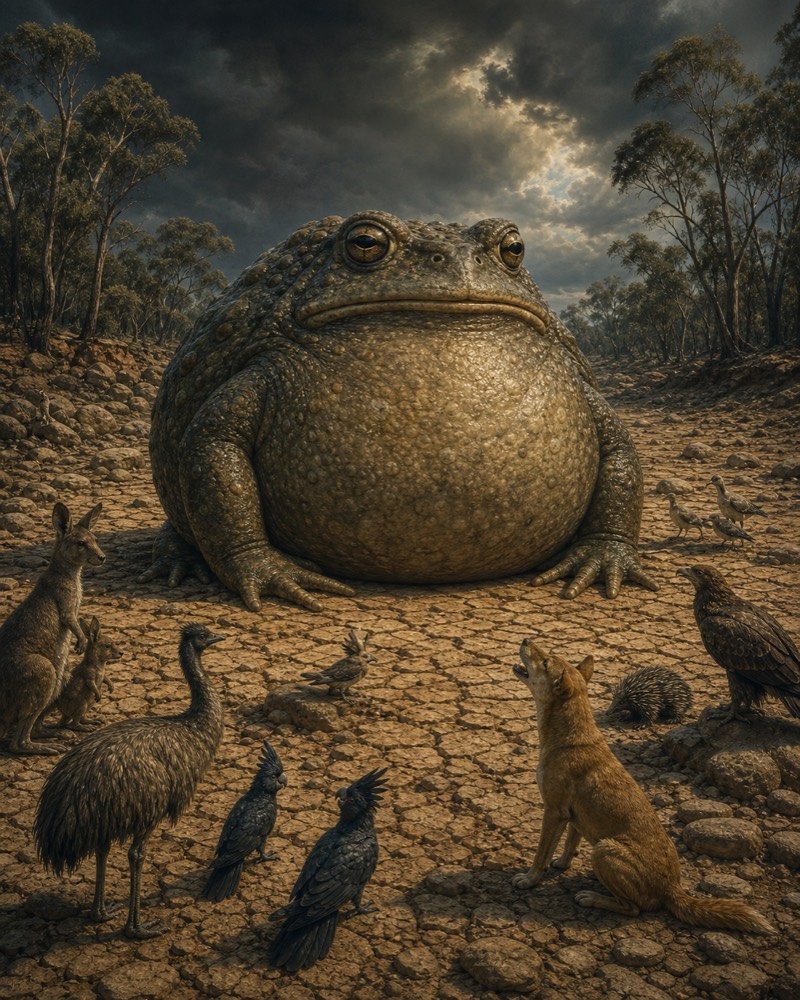
Tiddalik
In a Gunaikurnai telling, Tiddalik drinks the waterhole, creek, and river dry. The animals must make the frog laugh before the waters can surge back across Country.
 place
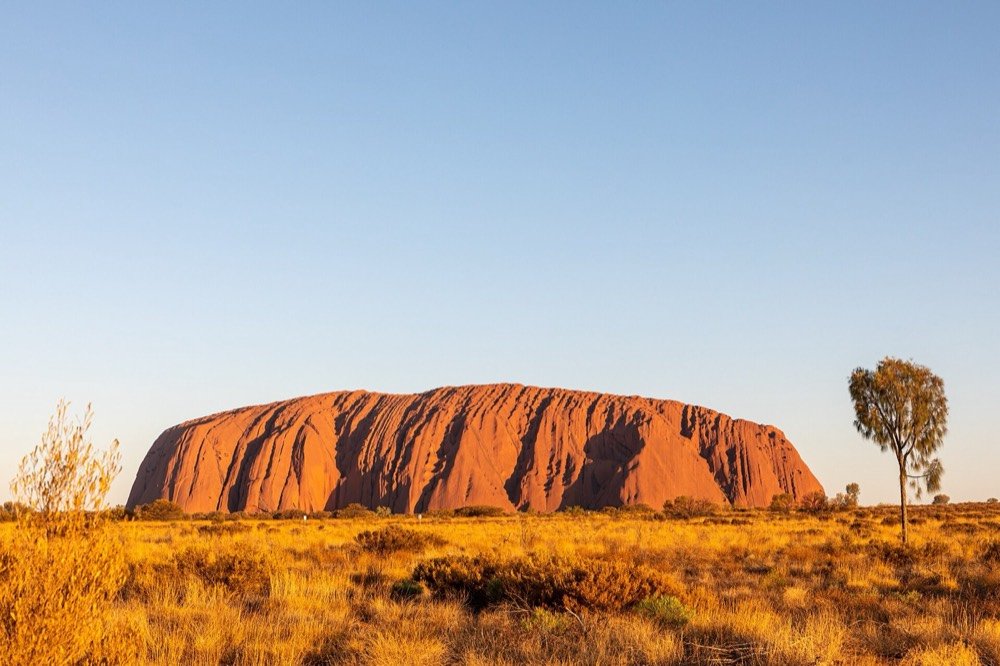
Uluru
The great sandstone monolith of the Central Desert, sacred under Anangu Tjukurpa: its gullies and caves are read as the physical record of the battle between Kuniya the python woman and the Liru venom-snake warriors.
 deity
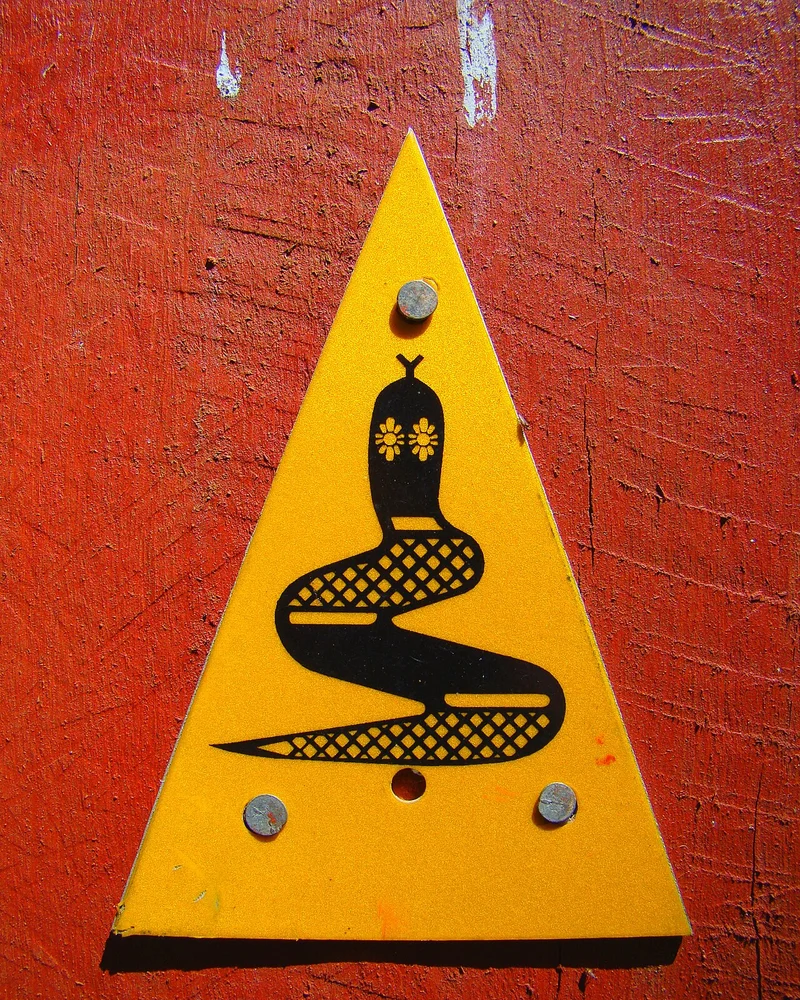
Wagyl (Waugal)
The serpent being of the Noongar people of south-western Western Australia, who in the Nyitting (creation time) moved across the land shaping its rivers, lakes, and wetlands, including the Derbarl Yerrigan (Swan River) at Perth.
 spirit
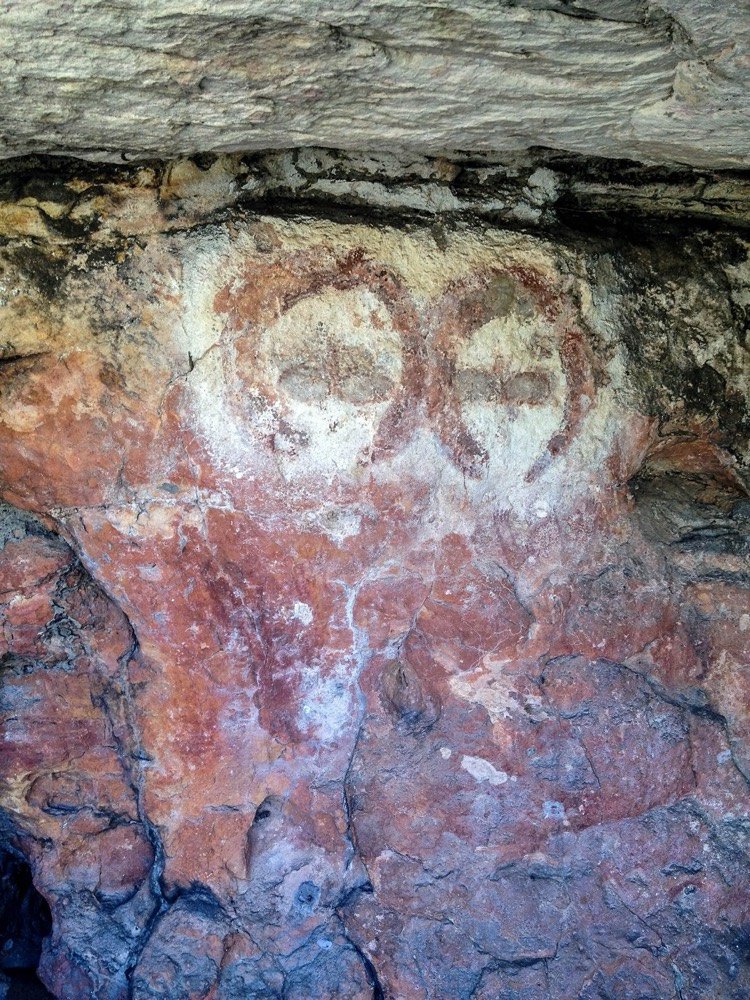
Wandjina
Cloud and rain spirits of the Worrorra, Ngarinyin, and Wunambal peoples of the Kimberley: white-faced, dark-eyed, mouthless figures crowned with halo-like headdresses, painted in rock shelters to govern the monsoon.
 deity
Wati Nyiru (Yurla)
The man who pursues the Seven Sisters across the deserts, using magic and changing his shape to trick them; called Wati Nyiru by Aṉangu and Yurla by the Martu.